Office Real Estate Rebounds as Industrial Faces Hidden Crisis 2026
“`html
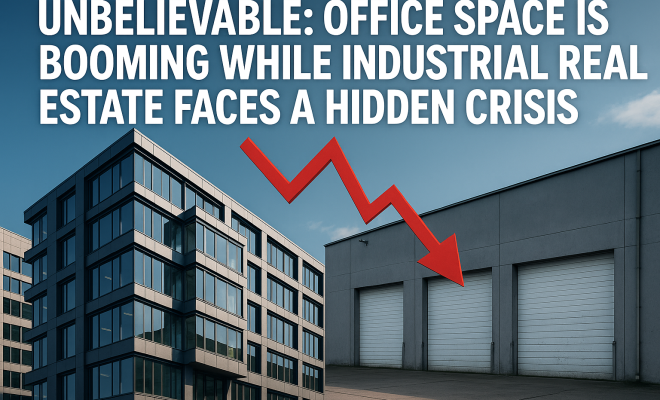
If you’ve been following the news about commercial real estate, you’ve probably heard a lot of talk about the struggles of the office market. Hybrid work, rising interest rates, and a general shift in how we do business have certainly taken their toll. Yet, in what feels like a plot twist straight out of a financial thriller, recent data suggests that the office sector might just be staging a comeback, even as a less-talked-about crisis brews in another corner of the market: industrial real estate. It’s a complex picture of stress and selective renewal, where the obvious problems aren’t always the deepest ones.
The narrative around commercial real estate distress has been dominated by office vacancies for good reason. We’ve seen headlines about record loan delinquencies and buildings sitting empty. But what if I told you that while everyone’s focused on the office, a far more insidious problem is quietly taking root in the industrial sector, threatening to unravel a market once considered unshakeable? This isn’t just about shifting trends; it’s about a fundamental reevaluation of what makes commercial property valuable in 2026 and beyond. Understanding these nuances is absolutely critical for anyone involved in real estate, from investors to businesses looking for space, and even those providing essential legal and financial services.
1. Office Loan Delinquencies Hit a 26-Year High: The Obvious Pain Point
Let’s start where much of the conversation has been centered: the office market. For months, if not years, we’ve watched with bated breath as the sector grappled with the fallout from the pandemic and the subsequent embrace of hybrid work models. The numbers have been stark, and they reached a truly alarming peak in January 2026. Data shows that office loan delinquencies soared to an unprecedented 12.34%. To put that into perspective, you’d have to go all the way back to the year 2000 to find a delinquency rate anywhere near that level. This isn’t just a bump in the road; it’s a clear signal of significant commercial real estate distress, reflecting the deep challenges many office building owners face.
Why such a dramatic rise? It’s a perfect storm of factors. On one hand, you have persistent high vacancy rates because companies simply aren’t requiring their entire workforce to be in the office five days a week anymore. This reduces demand for space and, consequently, the rental income for landlords. On the other hand, elevated interest costs have made it significantly more expensive for property owners to service their existing debt or refinance maturing loans. When rental income drops and financing costs skyrocket, it creates an unsustainable squeeze that pushes many properties into delinquency. This combination has made the office sector a poster child for commercial real estate distress.
2. Major Market Office Availability Rates Remain Stubbornly High: A Persistent Challenge
Even with some recent glimmers of hope (which we’ll get to), the reality on the ground in many major U.S. markets is that office availability remains incredibly high. We’re talking about availability rates – which include both vacant and sublease space – hovering between 20% and 30%. Think about that for a moment: in some of our most prominent urban centers, nearly one-third of all office space is sitting empty or is available for lease. This isn’t just about a few empty floors; it’s entire buildings, sometimes even entire blocks, struggling to find tenants.
This persistent oversupply creates a landlord’s nightmare. It gives tenants immense leverage, allowing them to demand lower rents, more concessions, and better terms. For property owners, it means reduced cash flow, difficulty securing new financing, and a downward pressure on property values. It’s a vicious cycle that contributes significantly to commercial real estate distress, making it challenging for even well-managed properties to maintain profitability. The sheer volume of available space indicates that while the market might have hit bottom in some areas, the road to full recovery will be a long and arduous one for many.
3. The Unexpected Twist: Industrial Sublease Space Surpasses Office: A Hidden Crisis
Now, here’s where the narrative takes a truly unexpected turn. While the world has been focused on the glaring issues in the office sector, a silent tsunami of commercial real estate distress has been building in what was once considered the darling of the market: industrial real estate. You might be surprised to learn that, as of recent reports, the industrial market is actually facing a more significant sublease problem than the office sector. Let that sink in for a moment.
Nationally, there are approximately 250 million square feet of industrial sublease space available. Compare that to the office market, which stands at around 170 million square feet of sublease space. This is a staggering revelation. For years, the industrial sector, fueled by e-commerce growth and supply chain expansions, was seen as virtually bulletproof. Warehouses, distribution centers, and logistics hubs were in high demand, leading to rapid development. However, a combination of factors – perhaps overbuilding, a slight cooling of e-commerce growth, and companies optimizing their supply chains – has led to a situation where many businesses now find themselves with more industrial space than they need, and they’re trying to offload it.
4. Overbuilding and Shifting Demand in Industrial: A Deeper Dive
So, why is the industrial sector suddenly struggling with such a massive amount of sublease space? Part of it comes down to a classic real estate phenomenon: overbuilding. When a sector performs exceptionally well, developers tend to rush in, sometimes creating more supply than the market can sustainably absorb. The rapid expansion of e-commerce during the pandemic led to an unprecedented demand for logistics and fulfillment centers. Companies signed long-term leases for vast amounts of space, anticipating continued exponential growth.
However, as consumer spending habits have normalized somewhat and supply chains have begun to optimize, some of that initial frantic demand has softened. Businesses are now taking a more measured approach to their inventory management and distribution networks. This leaves them with excess capacity, and rather than carrying the cost of unused space, they are putting it on the sublease market. This influx of available space, often offered at competitive rates, puts downward pressure on rents and occupancy for direct leases, contributing significantly to commercial real estate distress within the industrial segment. It’s a reminder that no sector, no matter how strong, is immune to market corrections. (See: Office market struggles and recovery.)
5. The Surprising Office Rebound: Strongest Occupancy Growth in Seven Years: A Silver Lining?
Now for the truly counterintuitive part of the story. While we’ve discussed the record delinquencies and high availability rates, recent data from Q2 2026 paints a surprisingly optimistic picture for the U.S. office market. It experienced its strongest occupancy growth in seven years, with a remarkable 16.9 million square feet of net absorption. Yes, you read that right. After what felt like an endless downward spiral, the office market actually saw more space occupied than vacated during this period. This pushed the national vacancy rate down to 18%, a noticeable improvement.
What’s driving this unexpected turnaround? It’s not a uniform recovery across all office properties. Instead, it’s a highly selective rebound, heavily concentrated in higher-quality Class A properties. Companies are increasingly prioritizing amenities, modern design, and prime locations to entice employees back to the office, even if only for a few days a week. This flight to quality means that while older, less desirable Class B and C buildings continue to struggle, top-tier properties are seeing renewed interest and absorption. This creates a fascinating dichotomy within the office sector, where commercial real estate distress is still prevalent but pockets of strong performance are emerging.
6. The Flight to Quality: Why Class A Offices Are Thriving: A Strategic Shift
The distinction between Class A and other office properties is more critical than ever. The 16.9 million square feet of net absorption we just discussed? A significant portion of that was in Class A buildings. What makes these properties so attractive in a hybrid work world? It’s simple: companies are using their office space as a tool for recruitment, retention, and culture building. They want spaces that offer exceptional amenities – think state-of-the-art gyms, high-quality food options, collaborative workspaces, and advanced technology infrastructure.
Furthermore, these prime locations often offer better access to public transportation, vibrant retail and dining options, and a more appealing environment for employees. For businesses that are now requiring employees to come in even a few days a week, the office needs to be a compelling destination, not just a place to sit at a desk. This strategic shift means that while the overall commercial real estate distress in the office sector is real, top-tier properties are effectively immune, commanding higher rents and attracting premium tenants. It’s a powerful lesson in adapting to evolving workplace demands.
7. Adaptive Reuse Strategies: A Path Out of Distress for Older Properties
So, what about those older, less desirable office buildings that aren’t benefiting from the flight to quality? Are they doomed to remain vacant, contributing to the broader commercial real estate distress? Not necessarily. This is where adaptive reuse strategies come into play, offering a creative and increasingly popular solution. Instead of letting these properties languish, developers and investors are exploring ways to convert them into something entirely different.
Think about transforming an outdated office tower into residential apartments, a hotel, or even specialized laboratory space. This isn’t a simple undertaking; it requires significant capital, creative vision, and navigating complex zoning regulations. However, for many properties, it might be the only viable path to unlock new value. As urban populations continue to grow and housing shortages persist in many major cities, converting underutilized office space into residential units presents a compelling opportunity. This forward-thinking approach is crucial for mitigating long-term commercial real estate distress in the office market and revitalizing urban cores.
8. Investment Platforms for Distressed Property: Opportunities Amidst the Chaos
The current climate of commercial real estate distress, particularly in the office and now surprisingly in the industrial sectors, isn’t just a challenge; it’s also a significant opportunity for savvy investors. Specialized investment platforms are emerging, focusing specifically on distressed property investment. These platforms aim to acquire underperforming assets at a discount, either to implement adaptive reuse strategies, reposition them for new tenants, or simply hold them through the downturn for future appreciation. (the upcoming market challenges)
This type of investment requires a deep understanding of market cycles, strong financial backing, and the ability to identify properties with genuine turnaround potential, rather than those that are simply unsalvageable. For investors with a long-term horizon and a tolerance for risk, the current environment presents a unique chance to acquire prime assets at prices that were unthinkable just a few years ago. It’s a high-stakes game, but one that can yield substantial returns for those who play it right, effectively transforming commercial real estate distress into profit.
9. Legal Services for Distressed Asset Resolution: The Unsung Heroes
With such widespread commercial real estate distress, particularly evident in the record office loan delinquencies, there’s a growing demand for specialized legal services focused on distressed asset resolution. This isn’t just about simple foreclosure; it’s a complex field involving everything from loan workouts and restructuring agreements to bankruptcy proceedings and asset sales. Property owners, lenders, and investors all need expert legal guidance to navigate these treacherous waters.
Law firms specializing in real estate, finance, and insolvency are playing a crucial role in helping parties find equitable solutions, whether that means renegotiating loan terms, facilitating recapitalizations, or managing the orderly disposition of troubled assets. Their expertise is invaluable in preserving value, minimizing losses, and ensuring that transactions comply with all regulatory requirements. In a market fraught with uncertainty, these legal professionals are the unsung heroes, helping to untangle the complicated web of financial and contractual obligations that arise from widespread commercial real estate distress.
10. The Broader Economic Implications: More Than Just Buildings
It’s easy to look at commercial real estate distress as just a problem for landlords and investors, but its implications ripple much further through the economy. When commercial properties struggle, it impacts local tax revenues, which fund essential public services like schools, roads, and emergency services. Empty buildings can lead to urban blight, affecting the vibrancy and safety of neighborhoods. Furthermore, the financial health of the commercial real estate sector is deeply intertwined with the banking system. A wave of defaults could put significant strain on banks, potentially tightening credit conditions for other sectors of the economy. (See: Recent trends in commercial real estate.)
On the other hand, the selective recovery in Class A office spaces and the innovative adaptive reuse projects create new jobs, stimulate local economies, and breathe new life into communities. The shifting dynamics, particularly the unexpected industrial sublease issue, highlight how quickly market conditions can change and the importance of diversification and foresight. This complex interplay of challenges and opportunities means that the current state of commercial real estate isn’t just a market story; it’s an economic bellwether, signaling broader shifts in how we work, live, and invest. Understanding these underlying currents is vital for policymakers, businesses, and individuals alike, as the sector continues to evolve in unpredictable ways.
11. The Role of Technology in Mitigating Distress and Driving Recovery
Technology isn’t just a disruptor in commercial real estate; it’s also a powerful tool for navigating distress and fostering recovery. In the office sector, smart building technologies are making Class A spaces even more attractive. We’re talking about advanced HVAC systems for better air quality, touchless entry, intelligent lighting, and occupancy sensors that optimize space usage. These aren’t just fancy gadgets; they’re essential for creating healthier, more efficient, and more appealing work environments that meet the demands of today’s workforce. For older buildings considering adaptive reuse, digital twins and advanced modeling software can help developers visualize potential transformations, assess feasibility, and streamline the design and construction process, significantly reducing risks and costs.
In the industrial sector, the same technological advancements that fueled the initial boom are now helping to manage the current oversupply. Warehouse automation, robotics, and sophisticated inventory management systems allow companies to maximize the efficiency of their existing space. This means they might need less square footage overall, contributing to the sublease challenge, but it also means those spaces are becoming more productive. Data analytics platforms are also becoming critical for investors and developers to identify emerging trends, pinpoint areas of distress, and make informed decisions about acquisitions and dispositions. The ability to quickly analyze vast amounts of market data can be the difference between a successful distressed asset play and a costly mistake.
12. Expert Perspectives: What Industry Leaders Are Saying
To truly grasp the gravity and nuance of commercial real estate distress, it helps to hear from those on the front lines. Many prominent real estate economists and fund managers are emphasizing the bifurcation of the market. For example, Sarah Chen, a senior analyst at a major real estate investment trust, recently noted, “We’re not seeing a uniform downturn; it’s a tale of two markets. High-quality, well-located assets, especially those with robust ESG credentials, are holding their value remarkably well, even attracting bidding wars. It’s the older, functionally obsolete properties that are truly facing an existential crisis.”
On the lending side, John Davies, a veteran commercial real estate lender, warns about the upcoming ‘wall of maturities.’ He explains, “Many loans originated during lower interest rate environments are coming due. Refinancing these at today’s rates, especially for properties with diminished cash flow, is proving incredibly difficult. We’re seeing more lenders willing to extend and pretend, but that only kicks the can down the road. Real solutions, like significant capital infusions or property sales, are needed.” These perspectives underscore that while there’s optimism in certain segments, the underlying challenges for many properties are deeply structural and won’t simply resolve themselves with time.
13. Comparison to Past Real Estate Downturns: Learning from History
Is the current commercial real estate distress similar to previous downturns, like the S&L crisis in the late 80s or the Great Financial Crisis of 2008? There are certainly parallels, but also distinct differences. In the late 80s, overbuilding across almost all sectors, coupled with lax lending standards, led to a massive wave of foreclosures. In 2008, it was primarily a residential mortgage crisis that spilled over into commercial real estate, impacting credit availability across the board. There’s a fuller look at signs of recovery in 2026.
Today, the distress is more sector-specific and driven by fundamental shifts in how we work and shop, combined with a rapid rise in interest rates. The banking system is generally much better capitalized than in previous eras, which might prevent a systemic financial collapse. However, the secular changes in demand for office and, increasingly, industrial space represent a more profound, long-term challenge than cyclical economic slowdowns. What we’re witnessing isn’t just a blip; it’s a re-pricing and re-imagining of entire property types, which could take years, if not a decade, to fully play out. The speed of change in technology and work habits is a unique factor in this cycle.
Frequently Asked Questions (FAQ) about Commercial Real Estate Distress
Q1: What exactly does “commercial real estate distress” mean?
Commercial real estate distress refers to properties or loans that are experiencing financial difficulties, making it hard for owners to meet their obligations. This can manifest as high vacancy rates, declining rental income, inability to service debt (leading to delinquencies), negative cash flow, or a significant drop in property value. It means the property isn’t performing as expected financially.
Q2: Which commercial real estate sectors are most affected right now?
Historically, the office sector has been the poster child for distress due to hybrid work and high interest rates, leading to record loan delinquencies and high vacancies, especially in older buildings. Surprisingly, the industrial sector is also seeing a significant increase in sublease space, suggesting an emerging problem of oversupply and shifting demand after years of rapid growth.
Q3: What’s causing the office market’s struggles?
The main culprits are hybrid work models, which reduce demand for traditional office space, and rising interest rates, which make it much more expensive for landlords to finance or refinance their properties. This combination creates a severe squeeze: less income coming in and more money going out for debt service. (See: Impact of workplace design on productivity.)
Q4: Why is the industrial sector, usually a strong performer, now facing issues?
The industrial sector’s current challenges stem from a period of rapid overbuilding, fueled by booming e-commerce during the pandemic. Many companies leased vast amounts of space anticipating continued exponential growth. Now, as e-commerce growth normalizes and supply chains optimize, businesses find themselves with excess capacity and are offloading that space onto the sublease market.
Q5: Is there any good news for the office market?
Yes, there’s a selective rebound. Recent data shows strong occupancy growth, particularly in Class A properties. This “flight to quality” means that modern, amenity-rich buildings in prime locations are attracting tenants who want to entice employees back to the office. Older, less desirable buildings are still struggling, creating a bifurcated market.
Q6: What are “adaptive reuse strategies” and how do they help?
Adaptive reuse involves converting older, underperforming commercial properties (like vacant office buildings) into something entirely different, such as residential apartments, hotels, or specialized lab space. This strategy helps mitigate distress by giving obsolete properties a new purpose and unlocking new value, especially in areas with housing shortages or specific demand for other property types.
Q7: How can investors find opportunities in distressed commercial real estate?
Savvy investors are looking for distressed assets that can be acquired at a discount. They often focus on properties with turnaround potential, either through adaptive reuse, significant capital improvements to reposition them, or by simply holding them long-term through the market cycle. This requires deep market knowledge, strong financial backing, and a tolerance for risk.
Q8: What role do legal services play in this environment?
Legal services are crucial for navigating the complexities of distressed assets. Lawyers specializing in real estate, finance, and insolvency help property owners, lenders, and investors with loan workouts, restructuring agreements, bankruptcy proceedings, and the orderly sale of troubled properties. They help preserve value and ensure compliance in challenging situations.
Q9: What are the broader economic impacts of commercial real estate distress?
The distress isn’t confined to property owners. It can reduce local tax revenues, impacting public services. Empty buildings can lead to urban blight. A widespread wave of defaults could strain the banking system, tightening credit for other economic sectors. Conversely, successful redevelopments and a healthy market create jobs and stimulate local economies, making it a key economic indicator.
Q10: Is the current situation a crisis comparable to 2008?
While serious, the current situation differs from the 2008 financial crisis. The distress is more sector-specific (office, some industrial) and driven by secular shifts in work and e-commerce, combined with interest rate hikes, rather than widespread subprime lending. The banking system is generally better capitalized. However, the fundamental re-pricing of certain asset classes represents a significant, long-term challenge.
“`
Trending Now
Frequently Asked Questions
Why is the office real estate market recovering?
The office real estate market is showing signs of recovery despite challenges like hybrid work and rising interest rates. Recent data indicates a potential comeback as businesses adapt to new work models, and demand for office spaces may be shifting towards more flexible arrangements.
What is causing the crisis in industrial real estate?
The crisis in industrial real estate is largely due to a reevaluation of property values and demand dynamics. While the office sector garners more attention, underlying issues such as over-supply and changing logistics needs are creating significant stress in the industrial market.
How high are office loan delinquencies currently?
As of January 2026, office loan delinquencies have reached a staggering 12.34%, marking the highest rate in 26 years. This alarming trend reflects the ongoing struggles of the office market as it grapples with pandemic-related shifts and economic pressures.
What factors are affecting commercial real estate in 2026?
In 2026, commercial real estate is impacted by hybrid work models, rising interest rates, and a fundamental shift in how businesses operate. These factors are forcing a reevaluation of property values and market dynamics, particularly in the office and industrial sectors.
What should investors consider in the current real estate market?
Investors should closely monitor the evolving landscape of commercial real estate, especially the contrasting trends in the office and industrial sectors. Understanding the nuances of market demand, potential risks, and changing valuations is critical for making informed investment decisions.
What did we miss? Let us know in the comments and join the conversation.