Unbelievable: Gamers Are Outraged Over This New AI Game — Here’s Why
“`html
The gaming world is currently grappling with a potent mix of excitement and apprehension as artificial intelligence permeates more facets of development. For every innovative leap AI promises, there’s a growing undercurrent of skepticism, particularly when it touches the hallowed ground of artistic integrity. This tension recently boiled over with the early access launch of an indie title, Vapor World: Over the Mind. What seemed like a promising new game quickly became a lightning rod for controversy, sparking a furious debate about the ethical concerns of AI in game development and what players truly value.
Launched on August 19, 2026, Vapor World, from a small five-person studio, intended to transport players into a unique narrative. Instead, it delivered a stark lesson in player expectations and the perils of unchecked AI integration. The game’s prominent use of AI-generated cutscenes wasn’t just noticed; it was vehemently rejected. The developer’s candid admission that generative AI filled gaps where original content fell short only fueled the fire, leading to a viral backlash across social media and gaming forums. This incident isn’t just a blip on the radar; it’s a critical moment forcing us to confront the complex ethical landscape forming around AI in our beloved digital playgrounds.
The Vapor World Debacle: A Case Study in Player Rejection
Let’s unpack what happened with Vapor World: Over the Mind. Here was a small, ambitious studio, likely constrained by budget and personnel, attempting to bring a vision to life. In their words, they turned to AI as a solution when their own original content wasn’t quite hitting the mark. This isn’t an uncommon scenario in indie development; resources are always stretched thin, and developers are constantly looking for efficiencies. The problem, however, wasn’t the *desire* for efficiency, but the *method* and its impact on the final product.
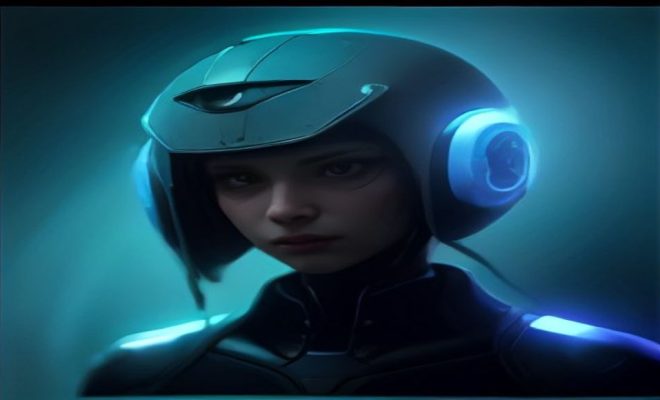
Upon its early access release, players almost immediately flagged the cutscenes. The tell-tale signs of generative AI were, for many, glaring: uncanny valleys in character design, inconsistent artistic styles, a certain flatness or lack of soul that human-crafted animation often possesses. What the developers likely saw as a practical workaround, players perceived as a betrayal of artistic effort. The backlash wasn’t just about poor graphics; it was a visceral reaction to the perceived absence of human touch, a core element many gamers expect from the art form.
Artistic Integrity vs. Technological Expediency
At the heart of the Vapor World controversy lies a fundamental question: what defines artistic integrity in an age where machines can generate creative content? For centuries, art has been synonymous with human expression, skill, and perspective. A painting, a sculpture, a piece of music – all are understood as extensions of a human creator’s mind and hand. Video games, as a relatively new art form, inherit much of this tradition, albeit with a collaborative, technological twist.
When AI steps in to create significant portions of a game’s visual or narrative elements, it challenges this established paradigm. Is it still ‘art’ if the primary creator isn’t human? For many players, the answer is a resounding ‘no,’ or at least, ‘not in the same way.’ They feel a disconnect, a sense that the soul has been leached from the product. This isn’t merely a nostalgic plea for the old ways; it’s a genuine concern about the value proposition of games. Are we paying for human creativity and vision, or for the efficient output of an algorithm?
The Uncanny Valley of AI-Generated Content
The concept of the ‘uncanny valley’ is particularly relevant here. Originally used to describe the unsettling feeling people get from robots or animated figures that appear almost, but not quite, human, it’s now often applied to AI-generated art. While generative AI has made incredible strides, it still frequently produces images, animations, or even dialogue that feels ‘off.’ Faces might be subtly distorted, movements might lack natural flow, or dialogue might be grammatically correct but emotionally hollow.
In Vapor World, these imperfections in the AI-generated cutscenes were enough to break immersion and foster player resentment. Gamers are incredibly discerning; they spend hundreds, if not thousands, of hours interacting with meticulously crafted digital worlds. They’re adept at spotting anomalies. When an AI-generated scene jars them out of the narrative experience, it doesn’t just look bad; it feels disrespectful to their engagement. It underscores the current limitations of generative AI, particularly in producing nuanced, emotionally resonant content that truly captivates a human audience.
Copyright and Intellectual Property: A Murky Future for Ethical Concerns of AI in Game Development
Beyond the aesthetic and emotional critiques, the ethical concerns of AI in game development extend deeply into legal territory, particularly regarding copyright and intellectual property. This is a rapidly evolving area, and the law is struggling to keep pace with technological advancements. When an AI generates content, who owns it? Is it the developer who prompted the AI? The company that created the AI model? Or, more controversially, the original artists whose works were used to train the AI?
Most generative AI models are trained on vast datasets of existing human-created art, often scraped from the internet without explicit consent or compensation to the original creators. This raises serious questions about derivative works and fair use. If a game features AI-generated assets that are, even unknowingly, heavily influenced by copyrighted material, what are the legal ramifications? Litigation is already beginning to emerge in other creative fields, and it’s only a matter of time before the gaming industry faces its own significant legal battles. This uncertainty creates a volatile environment for developers and potentially undermines the very foundation of creative ownership. (See: AI's impact on video game development.)
Transparency and Player Trust: The Expectation Gap
One of the critical factors in the Vapor World backlash was undoubtedly a lack of transparency – or at least, a miscalculation of player tolerance. While the developers eventually admitted to using AI, it wasn’t a selling point; it was a post-hoc explanation for a widely criticized element. This highlights a growing expectation among players for transparency regarding AI’s role in game development. Are developers obligated to disclose when AI is used to create content, and if so, to what extent?
Players invest not just money, but time and emotional energy into games. They want to feel like they’re supporting human creators and their visions. When AI’s involvement feels hidden or downplayed, it erodes trust. This isn’t to say AI can never be used, but rather that its application needs to be communicated clearly. Imagine a game proudly advertising ‘100% human-crafted art’ – it would likely resonate positively with a segment of the audience now more wary of AI. Building and maintaining player trust in this new landscape will require a conscious effort from studios to be upfront about their development processes.
The Economic Impact: Jobs and Skills in Question
The ethical concerns of AI in game development also touch upon a very tangible and often contentious issue: jobs. Game development is a massive industry, employing countless artists, writers, animators, and designers. The promise of AI to automate tasks, generate assets quickly, and streamline production raises fears about job displacement. If an AI can generate dozens of character models or environmental textures in minutes, what does that mean for the human artists who traditionally perform those roles?
While proponents argue AI will free up human talent for more complex, creative tasks, the reality on the ground often involves studios looking to cut costs. This isn’t just a hypothetical fear; it’s a concern being actively discussed and debated within artist communities. The question isn’t whether AI *can* replace certain roles, but whether it *should*, and what the long-term societal and economic consequences of such widespread automation will be for a creative industry that thrives on specialized human skill.
Navigating the Future: Ethical AI Frameworks and Best Practices
So, where do we go from here? The Vapor World incident serves as a stark reminder that simply integrating AI without careful consideration of its ethical implications is a recipe for disaster. The industry needs to develop robust ethical AI frameworks and best practices. This isn’t about halting innovation, but guiding it responsibly.
One key area is ethical data sourcing. AI models should ideally be trained on ethically acquired data, with proper licensing and compensation for original artists. This might involve entirely new business models for creative asset libraries. Another is the concept of ‘AI assistance’ rather than ‘AI replacement.’ Using AI as a tool to augment human creativity – for rapid prototyping, generating initial concepts, or handling mundane, repetitive tasks – is likely to be far more palatable to players and beneficial to developers than using it to entirely replace core artistic contributions. Think of it as a powerful paintbrush, not the painter themselves.
Furthermore, transparency remains paramount. Clear labeling of AI-generated content, especially when it forms a significant part of the player-facing experience, can help manage expectations. Studios that embrace responsible AI practices, perhaps even certifying the human origin of their artistic assets, could carve out a valuable niche in a market increasingly wary of algorithmic art.
A Call for Nuance: AI as a Tool, Not a Replacement
It’s crucial to approach this debate with nuance. AI itself is not inherently ‘bad.’ It’s a powerful technology with immense potential. The issue arises from its application, particularly when it encroaches upon human creative domains without careful thought for the consequences. We’ve seen AI used effectively in games for things like procedural generation of worlds (think No Man’s Sky), enhancing enemy AI behaviors, or even improving accessibility features. See also Gen Z's AI backlash explained.
When AI is used as a tool to empower human developers, to accelerate certain processes, or to create entirely new gameplay experiences that would be impossible otherwise, it’s often met with excitement. The distinction lies in whether AI is seen as a co-creator, a partner in the creative process, or a cost-cutting measure designed to supplant human artistry. The backlash against Vapor World suggests that players overwhelmingly prefer the former, valuing the human touch and original vision above pure expediency.
The Road Ahead: Rebuilding Trust and Redefining Creativity
The controversy surrounding Vapor World: Over the Mind is more than just an indie game’s misstep; it’s a bellwether for the gaming industry as a whole. It signals a critical juncture where the promise of technological advancement clashes directly with deeply held values of artistic integrity and human connection. The ethical concerns of AI in game development are not abstract; they have real-world consequences, impacting player sentiment, legal landscapes, and the livelihoods of countless creative professionals.
Moving forward, game developers, publishers, and the broader gaming community will need to engage in open, honest dialogue about AI’s role. This means establishing clear guidelines, promoting transparency, and above all, remembering that games are ultimately made by humans, for humans. The challenge isn’t to stop AI, but to integrate it wisely and ethically, ensuring that the magic of human creativity remains at the heart of our digital worlds. Failure to do so risks alienating the very audience we seek to entertain and inspire. (See: Ethical considerations of AI in gaming.)
The Spectrum of AI Integration: From Augmentation to Autonomy
It’s helpful to think about AI’s role in game development not as a binary choice (all AI or no AI), but as a spectrum. On one end, you have AI as a simple productivity tool, like using an AI-powered image upscaler to improve the resolution of a hand-drawn texture. This is augmentation, making human work better or faster without replacing the core creative act. Mid-spectrum might involve AI-assisted level design, where an algorithm generates initial layouts that human designers then refine and populate. This still involves significant human oversight and creative input.
At the far end of the spectrum is what we saw with Vapor World: AI used for autonomous content generation, stepping in to create entire cutscenes or significant narrative elements with minimal human intervention beyond a prompt. This is where the ethical lines become blurred and player discomfort arises. When AI becomes the primary ‘creator’ of player-facing content, especially visually impactful elements, it shifts the perceived value and authenticity of the game. Understanding this spectrum helps us pinpoint where the ethical concerns of AI in game development become most acute.
Expert Perspectives: Diverse Views on AI’s Role
The conversation around AI in game development isn’t monolithic; experts hold a range of views. Some industry veterans, like legendary designer Hideo Kojima, have expressed both fascination and caution, seeing AI as a powerful narrative tool but emphasizing the irreplaceable human element. Others, often those focused on the technological frontier, highlight AI’s potential for innovation, especially in areas like dynamic storytelling and personalized gameplay experiences that would be impossible for human developers to craft on a massive scale.
For example, some AI researchers envision games where every NPC has a unique, AI-driven personality, adapting to player choices in truly novel ways. This isn’t about replacing artists, but creating systems that enhance player agency and immersion. On the other hand, unions and artist advocacy groups are raising alarm bells, focusing on the potential for job displacement and the devaluing of creative labor. The key takeaway from these diverse perspectives is that there’s no single ‘right’ answer, and the industry needs to consider all angles to foster sustainable, ethical growth.
The Impact on Indie vs. AAA Studios
The ethical concerns of AI in game development often manifest differently for indie studios compared to AAA behemoths. For small indie teams, AI can seem like a lifeline, offering a way to compete with larger studios by generating assets or automating tasks that would otherwise require extensive resources. This was likely the motivation behind Vapor World‘s choices. However, as that incident showed, players expect a certain level of human craftsmanship even from indie titles, and cutting corners with AI can backfire spectacularly.
AAA studios, with their vast budgets and large teams, theoretically have less need to rely on AI for core artistic output. However, they’re also under immense pressure to innovate, reduce development cycles, and maximize profits. They might use AI for more subtle, behind-the-scenes tasks like optimizing game performance, generating vast environmental details that are then refined by artists, or testing game mechanics. The ethical challenge for AAA studios often lies in maintaining transparency and ensuring AI doesn’t become a tool to simply reduce headcount in creative departments, even if the public-facing content remains largely human-crafted.
Statistical Insights: Player Sentiment and Industry Trends
While specific statistics on AI content in games are still emerging, surveys on player sentiment offer some clues. A recent poll by Game Developer Conference (GDC) found that a significant portion of developers (around 35%) are already experimenting with generative AI tools, but a larger percentage (around 60%) expressed concerns about ethical issues, particularly copyright and job security. Crucially, player surveys often reveal a strong preference for “human-made” art in games, with a majority indicating they would be less enthusiastic about a game if they knew a substantial portion of its artistic content was AI-generated.
Furthermore, the market for “AI-free” certifications or labels might grow. Just as consumers seek organic produce, some gamers might actively seek out titles that guarantee human-crafted art, sound, and narrative. This isn’t to say AI-assisted games won’t find an audience, but it suggests a segmentation of the market based on production ethics. The financial implications for studios that either embrace or reject AI for core creative tasks could become a significant differentiator in the coming years.
Beyond Ethics: The Risk of Homogenization
Beyond the immediate ethical concerns, there’s another subtle but significant risk: the homogenization of creative output. If many studios rely on the same or similar generative AI models, trained on similar datasets, we might start seeing a flattening of artistic styles and narrative structures. AI, by its nature, learns patterns and replicates them. While it can produce novel combinations, true artistic breakthroughs often come from breaking patterns, from human intuition and experiences that algorithms can’t yet replicate. (See: Debate over AI in creative industries.) This builds on new regulations on generative AI.
Imagine a future where many games feature character models, environments, or even quests that feel eerily similar because they all originated from the same algorithmic “brain.” This could stifle genuine innovation and make games less distinctive. The unique voice of an artist or writer, their personal experiences and perspectives, are what often give games their lasting impact and appeal. Over-reliance on AI risks diluting this rich diversity, leading to a less vibrant and less inspiring gaming landscape.
FAQ: Addressing Common Questions About AI and Game Development Ethics
Q1: Is all use of AI in game development considered unethical?
Absolutely not. Many uses of AI are widely accepted and even celebrated. For instance, AI is fantastic for creating intelligent enemy behaviors, optimizing game performance, generating procedural terrains (like in No Man’s Sky), or providing accessibility features. The ethical concerns largely arise when AI is used to replace human creative input for player-facing artistic elements like character models, animations, storylines, or voice acting, especially without transparency.
Q2: What’s the main difference between AI as a tool and AI as a replacement?
When AI acts as a “tool,” it augments human creativity. Think of it like a powerful Photoshop filter or a sophisticated spell-checker. A human artist still conceives the idea and makes the final creative decisions. When AI acts as a “replacement,” it generates content autonomously, often filling roles traditionally held by human artists, writers, or animators. This is where the debate around artistic integrity and job displacement becomes most heated.
Q3: How do copyright laws apply to AI-generated content in games?
This is a complex and rapidly evolving legal area. Currently, in many jurisdictions, content created solely by an AI without significant human creative input may not be eligible for copyright protection. Furthermore, if the AI was trained on copyrighted material without proper licensing, there’s a risk of derivative infringement. Studios using AI for content creation need to be extremely careful about their training data sources and the legal standing of the generated assets.
Q4: Will AI take away game development jobs?
This is a major concern. While some argue AI will free up humans for more complex tasks, others fear widespread job displacement, particularly for entry-level artists, animators, and writers. The reality will likely be a mix: some roles may change or diminish, while new roles focused on AI prompting, oversight, and ethical guidelines might emerge. The industry is currently in a period of significant uncertainty regarding employment impacts.
Q5: How can players identify AI-generated content in games?
Currently, it’s often through tell-tale signs: inconsistencies in art style, “uncanny valley” effects in character faces or animations, repetitive dialogue patterns, or a general lack of unique creative flair. However, as AI improves, these signs will become harder to spot. This is why many advocate for clear transparency from developers, either through in-game labels or developer communications, to inform players about the extent of AI’s involvement.
Q6: What can developers do to use AI ethically?
Ethical AI use involves several practices:
- Transparency: Clearly communicate AI’s role to players.
- Ethical Data Sourcing: Use AI models trained on properly licensed or public domain data, ensuring artists are compensated.
- AI as an Assistant: Employ AI to augment human creativity, not replace it entirely.
- Human Oversight: Ensure human review and refinement of all AI-generated content.
- Prioritize Human Creativity: Reserve core artistic and narrative decisions for human talent.
“`
Trending Now
Frequently Asked Questions
Why are gamers outraged over Vapor World: Over the Mind?
Gamers are outraged due to the game's heavy reliance on AI-generated cutscenes, which many feel compromise artistic integrity. The developer's admission that AI filled gaps in original content sparked a viral backlash, highlighting concerns about the use of AI in game development.
What ethical concerns arise from AI in game development?
The ethical concerns surrounding AI in game development include the potential loss of artistic integrity, the impact on original content creation, and the transparency of how AI is used in games. Players are increasingly questioning the authenticity of experiences when AI is involved.
How did the release of Vapor World impact the gaming community?
The release of Vapor World ignited a fierce debate within the gaming community, focusing on the role of AI in game development. The backlash against the game's AI-generated content has prompted discussions about player expectations and the future of creativity in gaming.
What is the significance of the Vapor World controversy?
The Vapor World controversy serves as a critical case study in the ongoing dialogue about AI's place in gaming. It reflects broader anxieties about technological advancements potentially undermining the creative processes that define video games.
What can developers learn from the Vapor World backlash?
Developers can learn from the Vapor World backlash that while efficiency is important, transparency and the preservation of artistic integrity are crucial. Engaging with player expectations and being open about the use of AI can help mitigate backlash and maintain community trust.
What did we miss? Let us know in the comments and join the conversation.