Unbelievable: A Dead SpaceX Rocket Is About To Slam Into The Moon — Here’s Why It Matters
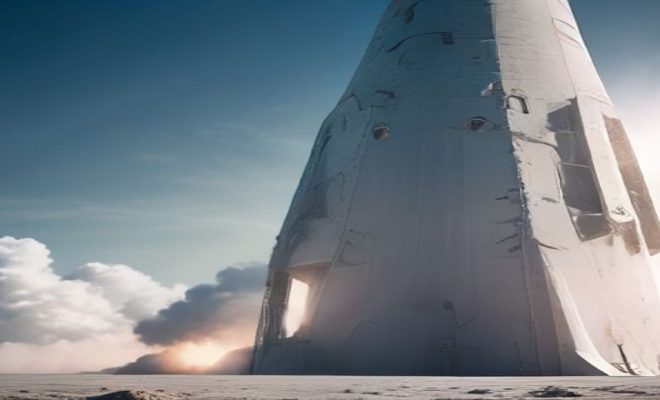
Imagine a colossal, spent piece of machinery, roughly the weight of an elephant, hurtling through the vacuum of space at thousands of miles per hour, completely uncontrolled. Now imagine it’s on a collision course with our closest celestial neighbor, the Moon. This isn’t science fiction; it’s the very real scenario unfolding with a discarded upper stage of a SpaceX Falcon 9 rocket, an object designated 2025-010D, which is projected to impact the lunar surface on Wednesday, August 5, 2026, at precisely 06:35 UTC. This unexpected and dramatic event, centered near the Einstein Crater, isn’t just a fascinating astronomical spectacle; it’s a stark reminder of the growing problem of space junk and the complex challenges it poses for humanity’s future in the cosmos. The implications of this particular SpaceX rocket moon impact stretch far beyond a simple bang, touching on everything from lunar contamination to the burgeoning space economy.
When we talk about space exploration, we often focus on the triumphs: the awe-inspiring launches, the breathtaking images from distant probes, the scientific breakthroughs. But beneath that gleaming surface lies a less glamorous truth: space is getting crowded, and it’s getting messy. This Falcon 9 upper stage, weighing in at a substantial 8,800 pounds (or approximately 4,000 kilograms), was launched on January 15, 2025. Its mission accomplished, it was simply left to drift, a common practice in the early days of spaceflight. But as traffic to Earth orbit and beyond intensifies, these discarded relics are becoming more than just cosmic litter; they’re potential hazards. The impending collision offers a unique, albeit uncontrolled, opportunity for scientists to study crater formation and lunar geology, but it also raises pressing questions about our responsibility as stewards of near-Earth space and the Moon itself.
The Unplanned Collision: What to Expect from the SpaceX Rocket Moon Impact
Let’s break down the specifics of this cosmic crash. The Falcon 9 upper stage is expected to hit the Moon at an incredible speed, estimated at around 5,400 miles per hour (roughly 8,700 km/h). To put that into perspective, that’s nearly seven times the speed of sound. When an object of this mass and velocity strikes the lunar surface, the outcome is predictable yet profound: a new crater. Scientists predict this particular SpaceX rocket moon impact will carve out a crater approximately 89 feet (about 27 meters) wide and 16 feet (nearly 5 meters) deep. While that might not sound enormous on a celestial body as vast as the Moon, it’s a significant geological alteration, one that will permanently mark the lunar landscape.
The impact zone is near the Einstein Crater, a fitting name for an event that will undoubtedly generate scientific interest. Unfortunately for casual stargazers, the actual moment of impact won’t be visible from Earth. The Moon’s rotation and the precise angle of collision mean the event will occur on the far side or just beyond the limb from our perspective. However, all hope is not lost for those eager to witness some evidence of the event. Advanced amateur astronomers, particularly those with sophisticated telescopes located in parts of North and South America, might have a chance to observe the resulting dust cloud. This plume of ejecta, thrown up by the force of the collision, could be illuminated by the sun, offering a fleeting glimpse of the aftermath. It’s a reminder that even in the age of professional observatories, dedicated amateur enthusiasts continue to play a crucial role in space observation.
A Wake-Up Call: The Growing Problem of Space Debris
The impending SpaceX rocket moon impact serves as a dramatic, high-profile example of a much larger and rapidly escalating problem: space junk. For decades, we’ve treated Earth’s orbit and the interplanetary pathways as an infinite dumping ground. Every launch, every satellite deployment, every human mission has left behind a trail of spent rocket stages, defunct satellites, fragments from collisions, and even tools accidentally dropped by astronauts. Estimates vary, but agencies like the European Space Agency (ESA) track tens of thousands of objects larger than a coffee cup, and millions of smaller pieces, all zipping around Earth at orbital velocities.
While most of this debris currently orbits Earth, the fact that a piece of space junk is now impacting the Moon highlights the expanding scope of the issue. As we venture further, so too does our debris field. The risks are manifold: operational satellites, including critical communication and navigation infrastructure, face a constant threat of collision. Even a tiny fleck of paint can cause significant damage at orbital speeds. The Kessler Syndrome, a theoretical scenario where the density of objects in low Earth orbit becomes so high that collisions generate more debris, creating a cascading effect, remains a chilling possibility. This SpaceX rocket moon impact, while not directly contributing to Earth-orbiting debris, underscores the broader need for sustainable practices across all space endeavors.
Lunar Contamination: A Precursor to Future Challenges?
Beyond the immediate spectacle and the general issue of space debris, the SpaceX rocket moon impact raises a specific and troubling concern: lunar contamination. As NASA and other space agencies lay ambitious plans for future moonbases and sustained human presence on the lunar surface, the idea of uncontrolled impacts from terrestrial objects becomes more significant. Every piece of hardware we send to the Moon carries with it materials from Earth: metals, plastics, chemical residues, and even microscopic biological contaminants.
While a single impact from a Falcon 9 upper stage won’t render the Moon uninhabitable, it sets a precedent. What happens when dozens, or hundreds, of such objects meet uncontrolled ends on the lunar surface? Scientists are keen to study the pristine lunar environment, searching for water ice, evidence of past volcanic activity, and clues about the solar system’s formation. Introducing foreign materials, especially in an uncontrolled manner, can complicate these scientific investigations. More importantly, for future human settlements, maintaining a relatively clean and predictable lunar environment will be crucial for resource extraction, scientific research, and even the psychological well-being of inhabitants. This event forces us to consider the long-term environmental impact of our space activities, not just on Earth, but on other celestial bodies. (See: NASA's overview of space junk.)
The Viral Sensation: Why This Story Captures Our Imagination
Let’s be honest: there’s something inherently dramatic and captivating about a rocket uncontrollably hitting the Moon. It sounds like something out of a pulp science fiction novel, or perhaps a B-movie from the 1950s. This isn’t a planned, scientific mission; it’s a rogue object, a ghost of a past launch, finally reaching its ultimate, fiery conclusion. This raw, almost primal nature of the event is precisely what makes it go viral. It taps into a collective sense of awe, wonder, and perhaps a touch of cosmic dread.
In an age saturated with information, stories need to stand out, to grab attention. The SpaceX rocket moon impact does just that. It combines several elements that make for compelling news: a recognizable, high-tech company (SpaceX), a familiar celestial body (the Moon), and an unexpected, destructive event (a collision). It’s a story that’s easy to understand, visually evocative even without direct observation, and carries an underlying message about humanity’s footprint in space. This virality isn’t just about clicks; it’s about drawing public attention to crucial issues that might otherwise remain in the realm of specialized scientific journals. It’s a powerful tool for raising awareness.
Monetizing the Cosmic Crash: Economic Opportunities in Space Debris
While the SpaceX rocket moon impact is a fascinating scientific and environmental event, it also highlights emerging economic opportunities within the space industry, particularly concerning space debris. Every challenge, after all, can be viewed as an opportunity for innovation and new markets. The growing volume of space junk, whether orbiting Earth or heading for the Moon, creates a demand for specialized services and technologies.
Consider specialized space insurance. As more assets are launched into orbit and beyond, the risk of collision with debris increases. Insurance policies that cover damage to satellites, launch failures, and even third-party liability for debris impacts are becoming increasingly vital. This isn’t just for multi-billion-dollar government satellites; it extends to the burgeoning commercial space sector, including constellations of thousands of small satellites. Then there are investment opportunities in space debris mitigation technologies. Companies developing active debris removal systems – grappling arms, nets, lasers, or even deorbiting sails – are attracting significant venture capital. These technologies are no longer theoretical; they’re becoming practical necessities. Furthermore, the legal services sector is seeing growth related to international space law and liability for orbital debris. Who is responsible when a piece of a rocket launched by one nation damages a satellite owned by a company in another? These are complex questions that require specialized legal expertise, creating a niche market for space law professionals.
The Role of International Space Law and Liability
The incident of a SpaceX rocket moon impact, while unintended, shines a spotlight on the often-complex and sometimes ambiguous realm of international space law. Unlike terrestrial environments with clear national jurisdictions, space is governed by a patchwork of treaties and agreements, the most foundational being the 1967 Outer Space Treaty. This treaty establishes principles like the peaceful use of space and the concept that space is not subject to national appropriation. Crucially, it also assigns responsibility to launching states for their space objects and any damage they might cause.
The Liability Convention of 1972 further elaborates on this, making a launching state absolutely liable for damage caused by its space object on the surface of the Earth or to aircraft in flight, and liable for damage caused elsewhere if fault is proven. While the Moon is considered ‘elsewhere,’ the specific implications of an uncontrolled impact like this one, especially as we consider future lunar infrastructure, are still evolving. Who bears the financial or diplomatic responsibility for a crater caused by a spent rocket stage? What if that impact, however unlikely, somehow interfered with a future lunar mission or habitat? These questions, though perhaps not immediately pressing with this single event, set precedents. As space becomes more commercialized and congested, the legal frameworks need to catch up, ensuring accountability and fostering responsible behavior among all spacefaring entities, both public and private.
Beyond the Crater: Scientific Opportunities and Data Collection
While the uncontrolled nature of the SpaceX rocket moon impact is problematic from a debris management perspective, it does present some unique scientific opportunities. Every impact on a celestial body, whether natural or man-made, is a chance to learn. Scientists can analyze seismic data, if any lunar seismometers are active and close enough, to understand the Moon’s interior structure. More directly, observations of the impact site and the ejecta cloud can provide valuable insights into lunar surface composition, regolith mechanics, and crater formation processes.
Future missions, perhaps even robotic landers, could potentially visit the newly formed crater to study its fresh geology. This could offer a pristine glimpse into the lunar subsurface, undisturbed by billions of years of micrometeorite bombardment and solar wind. While we might prefer controlled experiments, nature (or rather, unintended human actions) sometimes provides unexpected laboratories. The data gathered from observing this event, even if indirect, will contribute to our understanding of the Moon and the dynamics of impacts across the solar system, enriching planetary science. (See: CDC's report on environmental impacts.)
The Precedent of Other Lunar Impacts
It’s important to understand that this SpaceX rocket moon impact isn’t an isolated incident, though its origin from a commercial launch vehicle makes it somewhat unique. Humanity has, in fact, intentionally and unintentionally impacted the Moon many times before. The very first human-made object to reach the Moon was the Soviet Luna 2 probe in September 1959. It was a deliberate, hard landing, essentially a crash. Over the decades, numerous other probes from various nations, including the U.S. Ranger series, the Apollo mission ascent stages, and more recently, Chinese and Indian landers and orbiters, have either intentionally impacted the lunar surface or crashed due to malfunctions.
The Apollo missions, for instance, deliberately crashed the ascent stages of their Lunar Modules after the astronauts had returned to orbit. These impacts were used to calibrate seismic sensors left on the surface, providing invaluable data about the Moon’s interior. So, while the uncontrolled nature of this particular SpaceX impact is noteworthy, the Moon has certainly seen its share of human-made objects striking its surface. This historical context helps us understand that while this event is a concern regarding debris management, it’s not unprecedented in terms of human interaction with the Moon. It’s the context of increasing space traffic and the commercial nature of this particular object that truly differentiates it.
Expert Perspectives on Orbital Mechanics and Uncontrolled Trajectories
For a deeper dive into why this particular Falcon 9 upper stage ended up on a collision course with the Moon, we need to consider the intricate dance of orbital mechanics. When a rocket upper stage completes its mission, it’s usually given a “disposal burn” to either deorbit into Earth’s atmosphere for a controlled burn-up or to place it into a stable “graveyard orbit” where it won’t threaten active satellites. In some deep-space missions, like the one this Falcon 9 supported, the upper stage might be placed on a trajectory that eventually escapes Earth’s gravitational pull and heads out into the solar system.
However, small gravitational perturbations from the Earth, Moon, and Sun, along with residual thrust or even solar radiation pressure, can subtly alter a spacecraft’s path over time. In the case of this Falcon 9 upper stage, it was on a highly elliptical orbit that brought it close enough to the Earth-Moon system for the Moon’s gravity to eventually “capture” it, or at least significantly influence its trajectory. Over months and years, these gravitational nudges accumulated, eventually leading to the predicted impact. Experts in celestial mechanics, like Dr. Jonathan McDowell of the Harvard-Smithsonian Center for Astrophysics, track these objects and their complex paths. They use sophisticated models to predict their movements, highlighting just how sensitive these long-term trajectories can be to even tiny initial conditions and ongoing gravitational forces. It’s a testament to the predictive power of astrophysics, even when dealing with unpredictable “junk.”
Future Mitigation Strategies: Preventing Similar Incidents
The SpaceX rocket moon impact is a powerful illustration of why we need more robust mitigation strategies for space debris, especially for objects venturing beyond Earth orbit. There are several promising avenues being explored to prevent similar uncontrolled incidents in the future.
- Controlled Disposal Trajectories: For missions that go beyond low Earth orbit, future rocket stages could be designed with enough residual fuel to perform a controlled deorbit into a designated “disposal zone” on the Moon or a graveyard orbit far from active satellites.
- Lunar Graveyard Orbits: Similar to Earth’s graveyard orbits, the concept of specific, high lunar orbits where spent objects can be safely stored is being discussed. This would keep them away from potential lunar infrastructure and scientific sites.
- Passive Deorbiting Technologies: For objects in Earth orbit, technologies like “deorbit sails” or “electrodynamic tethers” are being developed. These can passively increase atmospheric drag or use electromagnetic forces to pull defunct satellites out of orbit faster. While not directly applicable to lunar impacts, the underlying principle of end-of-life planning is crucial.
- International Regulations and Best Practices: The most effective long-term solution involves developing and enforcing stricter international guidelines and regulations. Organizations like the United Nations Committee on the Peaceful Uses of Outer Space (COPUOS) and the Inter-Agency Space Debris Coordination Committee (IADC) are working on these, but consensus and enforcement remain significant challenges.
- Design for Demise: This involves designing spacecraft components and rocket stages from materials that will fully burn up upon re-entry into an atmosphere, minimizing the creation of smaller, dangerous fragments.
These strategies represent a shift towards a more proactive and responsible approach to space activity, recognizing that space is not an infinite resource for waste.
Frequently Asked Questions About the SpaceX Rocket Moon Impact
Q1: Is this the first time a rocket has hit the Moon?
A: No, absolutely not. The Moon has been impacted by human-made objects many times, both intentionally and unintentionally. The first was the Soviet Luna 2 in 1959. Many subsequent probes and even parts of the Apollo missions were deliberately crashed into the lunar surface for scientific purposes or disposal. What makes this SpaceX impact notable is that it’s an uncontrolled impact of a commercial rocket stage from a relatively recent mission, highlighting the growing issue of space debris extending beyond Earth’s immediate vicinity.
Q2: Will the impact be visible from Earth?
A: The exact moment of impact will not be visible from Earth. This is because the impact is predicted to occur on the far side of the Moon, or just beyond the limb from our perspective, due to the Moon’s rotation and the geometry of the collision. However, very advanced amateur astronomers with powerful telescopes and specific geographical positioning might have a fleeting chance to observe the dust cloud ejected from the impact site as it catches sunlight. (See: Scientific article on space debris.)
Q3: What kind of scientific data can we get from this uncontrolled impact?
A: While uncontrolled, the impact still offers scientific opportunities. If there are active lunar seismometers nearby (like those left by Apollo missions or future landers), they could detect seismic waves, providing data about the Moon’s interior. Observations of the ejecta cloud can offer insights into the composition of the lunar surface (regolith) at the impact site. Future missions could potentially visit the new crater to study its fresh geology, which would be undisturbed by billions of years of micrometeorite bombardment and solar wind, offering a unique glimpse into the subsurface.
Q4: Does this impact pose any danger to future lunar missions or astronauts?
A: This single impact from a Falcon 9 upper stage is highly unlikely to pose any direct danger to current or planned lunar missions or future astronauts. The Moon is an enormous body, and a single crater, even one 89 feet wide, is a tiny speck on its surface. The main concern isn’t immediate danger, but rather the precedent it sets for uncontrolled debris, potential lunar contamination over time, and the need for better space debris management practices as lunar activities increase.
Q5: Who is responsible for this impact, and what are the legal implications?
A: Under international space law, specifically the 1967 Outer Space Treaty and the 1972 Liability Convention, the launching state (in this case, the United States, as the launch occurred from a U.S. facility) holds responsibility for its space objects. While there’s no immediate financial or diplomatic claim expected for this particular uncontrolled impact on the Moon, it highlights the need for evolving legal frameworks. As space becomes more commercial and congested, questions of liability for debris impacts, especially if they were to affect future lunar infrastructure or resources, will become more critical. It serves as a reminder for all spacefaring entities to adopt responsible end-of-life disposal practices.
A Call for Sustainable Space Practices
Ultimately, the SpaceX rocket moon impact isn’t just a fascinating anomaly; it’s a powerful call to action for more sustainable practices in space. The era of simply abandoning spent rocket stages or defunct satellites must come to an end. As we plan for ambitious missions to the Moon, Mars, and beyond, we must also plan for the end-of-life of our spacecraft and launch vehicles. This means designing for deorbiting, reusability, or controlled disposal into safe zones. SpaceX, ironically, is at the forefront of reusability with its Falcon 9 first stages, but upper stages still pose a challenge.
The future of space exploration depends on our ability to manage our footprint. This includes developing and implementing international guidelines and regulations for debris mitigation, investing in technologies for active debris removal, and fostering a culture of responsibility among all space actors – governments, private companies, and researchers alike. The Moon, once a distant, pristine beacon, is now within our reach, and with that accessibility comes the responsibility to protect its environment, just as we strive to protect our own planet. The lessons from this unexpected lunar collision should resonate deeply, urging us towards a more thoughtful and sustainable approach to our cosmic endeavors.
Trending Now
Frequently Asked Questions
What will happen when the SpaceX rocket hits the Moon?
When the SpaceX Falcon 9 rocket's upper stage collides with the Moon, it is expected to create a significant impact near the Einstein Crater. This event will provide scientists with a unique opportunity to study crater formation and lunar geology, while also raising concerns about lunar contamination and the increasing problem of space debris.
Why is space junk a growing problem?
Space junk, including discarded rocket stages like the Falcon 9's upper stage, poses a growing problem as the number of satellites and missions increases. These remnants can collide with operational spacecraft, create additional debris, and complicate future space exploration efforts, making responsible management of near-Earth space essential.
How much does the SpaceX rocket weigh?
The upper stage of the SpaceX Falcon 9 rocket, which is on a collision course with the Moon, weighs approximately 8,800 pounds or about 4,000 kilograms. This substantial weight contributes to the potential impact's significance and the scientific interest surrounding the event.
When is the SpaceX rocket expected to hit the Moon?
The SpaceX Falcon 9 rocket's upper stage is projected to impact the Moon on Wednesday, August 5, 2026, at precisely 06:35 UTC. This timeline allows scientists to prepare for observation and analysis of the resulting crater and other geological effects.
What are the implications of the SpaceX rocket moon impact?
The implications of the SpaceX rocket's impending moon impact extend beyond mere spectacle. They include concerns about lunar contamination, the responsibilities of spacefaring nations, and the broader issues of space debris management as humanity continues to explore and utilize outer space.
What did we miss? Let us know in the comments and join the conversation.