UN Report: Global Economic Divide Widens, Reforms Unmet
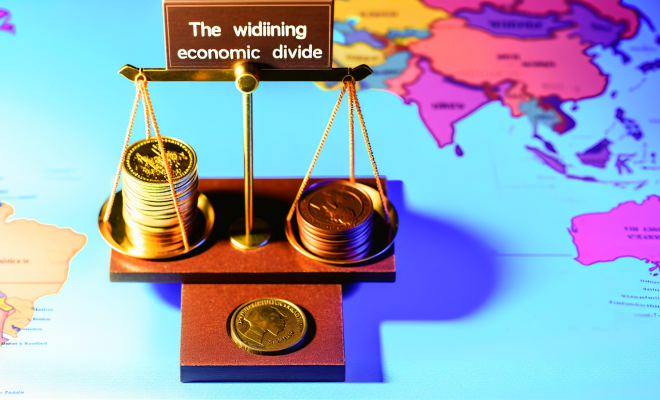
The economic disparity between affluent and developing nations is broadening, according to a recent report from the United Nations. This alarming trend is underscored by unfulfilled promises from the Seville blueprint established last year, which aimed to reform global financial institutions such as the International Monetary Fund (IMF) and the World Bank. As the international community prepares for the upcoming spring meetings in Washington, the UN’s findings raise critical questions about the future of global economic equity.
Unfulfilled Promises from the Seville Blueprint
The Seville blueprint was designed to address the systemic inequalities within global financing mechanisms. However, as highlighted by U.N. Undersecretary-General Li Junhua, these commitments have largely gone unmet. The failure to implement reforms has left many developing nations struggling to secure the essential funding needed for growth and development.
“The geopolitical tensions in recent years have exacerbated financing struggles for developing countries,” Junhua stated, drawing attention to a projected decline of 5.8% in preliminary data for 2026. This decline is particularly concerning as it reveals the struggles many nations are facing amidst a rapidly changing economic landscape.
Impact of Tariffs on Developing Nations
One of the significant factors contributing to the widening gap is the increase in tariffs, particularly those imposed during the Trump administration. Data indicates that the average tariff rates on exports from the world’s poorest nations rose dramatically from 9% to a staggering 28% by 2025. Similarly, other developing countries, excluding China, have seen their tariff rates increase from 2% to 19%.
- Tariff Increase for Poorest Nations: Average tariffs surged from 9% to 28%.
- Tariff Increase for Other Developing Nations: Rates climbed from 2% to 19%.
This steep increase in tariffs has made it increasingly difficult for poorer nations to compete in the global market, exacerbating their economic challenges. The imposition of such high tariffs not only limits their export potential but also stifles overall economic growth.
Geopolitical Tensions and Their Economic Fallout
As geopolitical tensions escalate, the economic ramifications for developing nations become more pronounced. Political instability and conflict often lead to reduced foreign investment, which is crucial for developing economies. Junhua emphasized that the current global climate is not conducive to fostering the necessary financial support for these nations.
In addition to political factors, the ongoing effects of the COVID-19 pandemic continue to hinder economic recovery efforts in many developing countries. The pandemic has resulted in significant disruptions to trade, tourism, and investment, further widening the economic divide.
The Call for Action
As the world faces these mounting challenges, the urgency for action has never been more critical. The UN report serves as a clarion call for the international community to prioritize the needs of developing nations, particularly in light of the unfulfilled promises made in the Seville blueprint.
Global financial institutions must be reformed to ensure they can effectively support developing countries. This includes revisiting the conditions tied to funding and creating more inclusive policies that consider the unique challenges faced by these nations.
Conclusion
The findings of the UN report not only highlight the growing divide between rich and poor nations but also underscore the importance of collective action. As the international community prepares for crucial spring meetings, there is a pressing need for renewed commitments to support developing countries. Without immediate and sustained efforts, the gap is likely to continue widening, leaving millions in precarious economic situations.
The future of global economic equity hangs in the balance, and it is essential for world leaders to recognize that the prosperity of one nation cannot come at the expense of another. As the UN report illustrates, a collaborative approach is vital for addressing the systemic issues that contribute to this growing divide.