Trump’s 2026 Media Assault: War Reporting Controversy
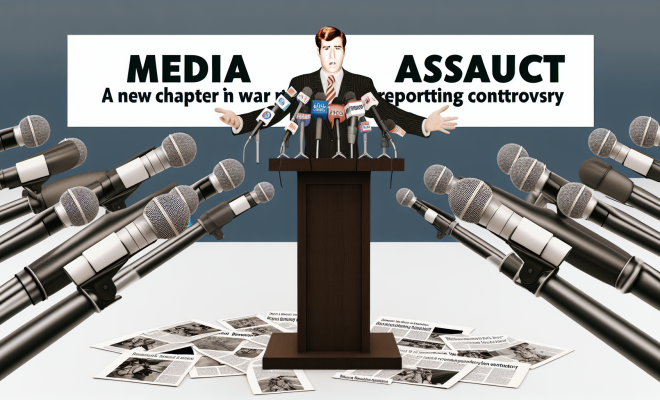
President Donald Trump has once again turned his ire towards the media, this time focusing on their reporting regarding ongoing military engagements in the Middle East. In a series of statements made public on March 16, 2026, Trump criticized major news outlets for what he termed biased and misleading coverage of the escalating tensions with Iran.
Escalating Tensions with Iran
The backdrop of Trump’s latest media attack is a significant rise in military activities involving U.S. forces and Iranian military assets. As diplomatic negotiations faltered, the situation has grown increasingly volatile, with both sides engaging in provocative maneuvers. The U.S. government has issued several warnings about potential threats from Iran, prompting a response that includes heightened military readiness.
Trump’s Accusations Against the Press
In his remarks, Trump accused news organizations of spreading misinformation that could undermine national security. He claimed that their coverage was not only inaccurate but also detrimental to the morale of U.S. troops. “The media has never been more dishonest when it comes to reporting on our military and the dangers we face. They are putting lives at risk with their irresponsible journalism,” Trump stated during a press briefing.
This is not the first time Trump has clashed with the media over war reporting. His administration has a long history of pressuring broadcasters and journalists, often accusing them of bias, especially when it comes to military actions. Critics argue that such rhetoric not only attempts to delegitimize the media but also poses a direct threat to the principles of a free press.
Media Freedom Under Fire
The current political climate has sparked heated debates about media freedom in the U.S. and the responsibilities of journalists during times of conflict. Many media analysts have raised concerns that Trump’s continuous attacks on the press could create a chilling effect, discouraging journalists from pursuing critical stories that hold the government accountable.
Responses from Journalists and Media Outlets
Several prominent journalists and media organizations have pushed back against Trump’s assertions. In a joint statement, the National Press Club and the American Society of News Editors condemned the president’s remarks, emphasizing that journalists have a duty to report the truth, regardless of political pressure.
- National Press Club: “We will not be intimidated by attacks on our profession. Our role is to inform the public, especially during times of war.”
- American Society of News Editors: “A free press is essential in a democracy, and we will continue to uphold our responsibility to provide accurate and unbiased reporting.”
Media watchdogs have also expressed their concern regarding the potential for government censorship. The Committee to Protect Journalists highlighted that Trump’s tactics could lead to self-censorship among journalists, who might fear retaliation or backlash for their reporting.
The Broader Implications for U.S. Politics
Trump’s attacks on the press come at a time when the country is grappling with several pressing issues, including economic instability, immigration policies, and healthcare reforms. As the 2026 presidential election approaches, the role of the media in shaping public opinion and the political landscape is more critical than ever.
The Impact on Voter Perception
Polling data suggests that the public’s trust in the media has been eroded in recent years, with many Americans expressing skepticism about the motivations of news organizations. Trump’s narrative that the media is “the enemy of the people” resonates with a segment of the population that feels marginalized by traditional news outlets.
As the conflict with Iran intensifies and the political atmosphere becomes more charged, how the media covers these developments will be scrutinized closely. The potential for misinformation, whether intentional or not, adds another layer of complexity to the already fraught relationship between the government and the press.
Conclusion: A Call for Responsible Journalism
As Trump continues to challenge the media’s role in war reporting, the imperative for responsible journalism has never been more critical. Journalists must navigate the fine line between providing comprehensive coverage and avoiding the pitfalls of sensationalism and bias.
In a landscape where public trust is dwindling, it is essential for media outlets to uphold their commitment to factual reporting and transparency. Only then can they effectively serve as the watchdog that democracy requires, especially in times of conflict.
As the political discourse evolves, both journalists and the public must engage in a robust dialogue about the role of the media in shaping perceptions of war and peace. The stakes are high, and the need for a well-informed citizenry has never been more paramount.