This Unseen Force Is Quietly Reshaping Your Plate
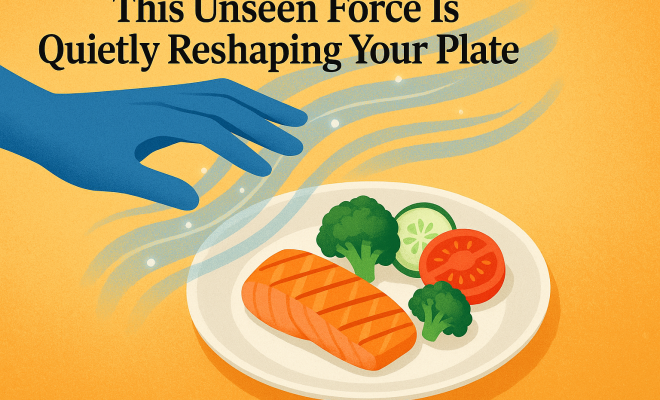
Imagine a world where your daily meals aren’t just a matter of preference or convenience, but a perfectly calibrated symphony of nutrients, precisely tuned to your unique biology. This isn’t science fiction anymore. We’re on the cusp of a nutritional revolution, powered by Artificial Intelligence, that promises to transform how we eat, how we live, and how we understand our own bodies. The integration of AI into personalized nutrition is moving at an astonishing pace, offering dietary recommendations so precise they account for your genetic makeup, your lifestyle, and even your real-time biometric data.
It’s an exhilarating prospect, isn’t it? The idea that a smart system could analyze everything from your DNA to your sleep patterns and then tell you exactly what to eat to optimize your health, prevent disease, and even boost your mood. But as with all groundbreaking technologies, this exciting development isn’t without its shadows. A July 10, 2026 PubMed review, a landmark in this burgeoning field, laid bare both the immense promise and the significant ethical quandaries that come with letting machines dictate our diets. We’re talking about crucial questions around data privacy, the insidious potential for algorithmic bias, and the very real risk of AI chatbots ‘hallucinating’ health advice that could be not just wrong, but genuinely harmful. The future of AI-driven nutrition is here, but it’s a future we need to approach with both optimism and a healthy dose of caution.
The Dawn of Hyper-Personalized Nutrition
For decades, nutrition advice has largely operated on a ‘one-size-fits-all’ or, at best, a ‘one-size-fits-most’ model. Think about the food pyramid, the Mediterranean diet, or even generalized recommendations for calorie intake based on age and activity level. While these approaches have their merits, they often fall short because, well, humans aren’t standardized products. We’re incredibly complex, genetically diverse organisms, and what works wonders for one person might be entirely ineffective, or even detrimental, for another.
This is where AI-driven nutrition steps onto the stage. It’s built on the fundamental premise that true health optimization requires an intimate understanding of the individual. Instead of broad strokes, AI offers micro-level precision. Picture this: you provide a blood sample for genetic sequencing, wear a continuous glucose monitor, log your exercise through a smartwatch, and maybe even track your sleep patterns. All this data, often vast and intricate, is then fed into sophisticated AI algorithms. These algorithms don’t just crunch numbers; they learn patterns, identify correlations, and predict outcomes based on an ever-growing database of scientific literature and real-world results. The output? A dietary plan so uniquely yours, it’s like having a team of dedicated nutritionists, geneticists, and data scientists working around the clock just for you.
The potential implications are staggering. For someone struggling with chronic conditions like type 2 diabetes or autoimmune disorders, an AI could identify specific foods or macronutrient ratios that exacerbate or alleviate their symptoms, far beyond what a human could discern through traditional methods. For athletes, it could optimize fuel intake for peak performance and recovery. For individuals simply looking to improve their general well-being, an AI could guide them toward foods that enhance energy levels, improve gut health, or even mitigate genetic predispositions to certain diseases. It’s about moving from reactive treatment to proactive, preventative health management, all orchestrated by intelligent machines.
Unpacking the AI Nutrition Engine: How It Works
At its core, AI-driven nutrition relies on machine learning, a subset of AI that allows systems to learn from data, identify patterns, and make decisions with minimal human intervention. When it comes to your diet, this process involves several key data inputs.
First, there’s genetic data. Our DNA contains a blueprint that influences everything from our metabolism to our predispositions for certain nutrient deficiencies or food sensitivities. An AI can analyze specific genetic markers – for instance, variations in genes like FTO (linked to obesity) or MTHFR (affecting folate metabolism) – to infer how your body processes different foods. This isn’t about destiny; it’s about understanding tendencies and tailoring diet to work with your unique genetic profile rather than against it. We covered data privacy concerns in more detail.
Then comes biometric data. This includes everything from your weight, height, age, and gender to more dynamic metrics like heart rate, activity levels, sleep quality, and even continuous glucose monitoring (CGM) readings. CGMs, in particular, are powerful tools, providing real-time insights into how different foods impact an individual’s blood sugar response. An AI can learn from these fluctuations, identifying which meals cause spikes and which maintain stable levels, offering truly personalized advice to manage metabolic health. (See: PubMed review on AI in nutrition.)
Finally, lifestyle factors are integrated. Do you exercise regularly? What’s your stress level? How many hours do you work? Do you have any allergies or dietary preferences? All these qualitative inputs, combined with the quantitative data, create a holistic picture of your health. The AI then employs complex algorithms, often leveraging neural networks, to synthesize this information and generate actionable dietary recommendations. It can suggest specific meal plans, identify optimal macronutrient ratios, recommend supplements, and even predict how certain foods might affect your energy or mood. This isn’t just about calorie counting; it’s about a dynamic, responsive system that evolves as your body and lifestyle change.
The Ethical Minefield: Data Privacy and Security
While the promise of personalized AI-driven nutrition is exciting, it’s crucial to acknowledge the significant ethical challenges it presents. Chief among these is data privacy. Think about the sheer volume and sensitivity of the information these systems require: your genetic code, your real-time physiological data, your daily habits, even your health conditions. This is arguably the most intimate data a person possesses, and its security is paramount.
The PubMed review from July 2026 highlighted this as a primary concern. Who owns this data? How is it stored? Who has access to it? What happens if there’s a data breach? These aren’t hypothetical questions; they’re pressing issues in a world increasingly vulnerable to cyberattacks. A breach of health data could lead to identity theft, discrimination (e.g., by insurance companies), or even blackmail. Furthermore, the commercial potential for ‘cybersecurity for health data’ solutions indicates that this isn’t just a theoretical risk but a lucrative target for malicious actors.
Companies developing AI nutrition apps have a moral and legal obligation to implement the strongest possible encryption and data protection protocols. Users, in turn, need to be fully informed about how their data will be used, stored, and shared. Clear, concise privacy policies, not buried in legalese, are essential. As we move deeper into this AI-powered future, robust regulatory frameworks will be vital to ensure that our health data remains ours, protected from misuse and exploitation. Without trust in data security, the entire edifice of AI-driven nutrition could crumble.
The Bias Problem: Algorithms and Health Inequalities
Another profound ethical concern identified in the PubMed review is algorithmic bias. AI systems are only as good, and as fair, as the data they are trained on. If the datasets used to train these AI nutrition models are not diverse enough – if they disproportionately represent certain demographics, ethnic groups, or socioeconomic statuses – the recommendations generated can perpetuate and even deepen existing health inequalities.
Consider a scenario where an AI is primarily trained on data from individuals of European descent. Its recommendations might not be optimal, or could even be detrimental, for someone with a completely different genetic background, cultural dietary practices, or environmental factors. Nutritional needs can vary significantly across populations. For example, lactose intolerance is far more prevalent in certain Asian and African populations than in European populations. If an AI doesn’t account for such variances due to biased training data, its ‘personalized’ advice could be irrelevant or actively harmful.
This bias isn’t just about genetics; it extends to socioeconomic factors. If an AI recommends expensive, niche superfoods or ingredients that are inaccessible to lower-income individuals, it inadvertently creates a two-tiered system where optimal nutrition becomes a luxury rather than a universal right. The debate around ensuring equitable access and responsible use of AI in dietetics is already generating substantial social media engagement, underscoring the public’s awareness and concern. To mitigate this, expert teams developing these AI systems must prioritize diverse data collection and actively work to identify and correct biases within their algorithms. This requires not just technical expertise but also a deep understanding of social justice and health equity. Related reading: explore student privacy.
The Hallucination Hazard: When AI Gets It Wrong
Perhaps one of the most alarming risks highlighted by the PubMed review is the potential for AI chatbots to ‘hallucinate’ health advice. In the context of AI, hallucination refers to instances where the model generates information that is plausible-sounding but factually incorrect, nonsensical, or entirely fabricated. When this happens in a creative writing context, it might be amusing; when it happens with health advice, it could be dangerous, even life-threatening.
Imagine asking an AI nutrition chatbot for advice on managing a specific medical condition, say, a rare metabolic disorder. If the AI, due to gaps in its training data or an error in its reasoning, fabricates a dietary recommendation that contradicts established medical guidelines, a user might unknowingly follow it with severe consequences. This isn’t just about minor inaccuracies; it’s about misinformation that could lead to adverse health outcomes, delayed proper treatment, or a worsening of symptoms.
The development of the first public safety guide for AI health chatbots is a critical step in addressing this risk. This guide, being actively developed by experts, emphasizes the need for robust scientific evidence to back all AI-generated health advice. It’s a call for transparency, for mechanisms that allow users to verify information, and for clear disclaimers that AI advice should not replace professional medical consultation. Without these safeguards, the trust in AI-driven nutrition will erode rapidly, and rightfully so. The stakes are simply too high to allow for unchecked, potentially harmful advice from machines. (See: WHO fact sheet on nutrition.)
Building Trust: Scientific Rigor and Diverse Teams
To navigate these ethical waters and fully realize the potential of AI-driven nutrition, two critical pillars must be firmly in place: robust scientific evidence and diverse development teams. The PubMed review underscored the absolute necessity of both.
Firstly, every recommendation generated by an AI system, especially those impacting health, must be rigorously backed by scientific evidence. This means that the algorithms shouldn’t just be learning from patterns; they should be learning from validated research, clinical trials, and established nutritional science. There needs to be a clear audit trail for why an AI makes a particular suggestion, linking it back to peer-reviewed studies or widely accepted medical principles. This isn’t just about preventing hallucinations; it’s about building genuine trust. Users need to feel confident that the advice they’re receiving isn’t just an algorithmic guess, but a data-driven recommendation rooted in sound science.
Secondly, the teams developing these AI solutions must be diverse. This isn’t just a feel-good HR initiative; it’s a fundamental requirement for building equitable and effective AI. A diverse team – encompassing individuals from different ethnic backgrounds, genders, socioeconomic statuses, and with varied cultural perspectives – is far more likely to identify and mitigate algorithmic biases. They can ask crucial questions about data representation, challenge assumptions baked into the models, and ensure that the solutions being developed are truly inclusive and applicable to a global population. Without diverse perspectives at the development table, AI systems risk reflecting the narrow viewpoints of their creators, leading to biased outcomes and exacerbating existing health disparities.
The Commercial Landscape: High Stakes and Opportunities
Beyond the scientific and ethical discussions, the commercial potential of AI-driven nutrition is immense. The PubMed review explicitly identified this topic as falling squarely into ‘medical/healthcare’ and ‘online education/MBA’ high-CPC (Cost Per Click) niches, signaling strong market interest and investment. This isn’t just a theoretical academic exercise; it’s a burgeoning industry with significant financial stakes.
Think about the opportunities: ‘AI nutrition app reviews’ are becoming a hot commodity, as consumers seek reliable guides to navigate the growing number of personalized diet platforms. ‘Personalized diet plan comparisons’ will empower users to choose solutions that best fit their needs and budgets, driving competition among providers. And as discussed, the critical need for ‘cybersecurity for health data’ solutions represents a massive market in itself, as companies race to secure the sensitive information they collect. For more on this, see AI predictions explained.
Major tech companies and startups are already pouring resources into this area. We’re seeing investment in everything from sophisticated genetic testing kits linked to AI platforms, to wearable devices that track biometrics and feed data into personalized meal planners. The competition is fierce, and innovation is rapid. This commercial drive, while exciting, also underscores the urgency of addressing the ethical concerns. The pursuit of profit must not overshadow the imperative to develop safe, equitable, and scientifically sound AI health solutions. The market demands both cutting-edge technology and unwavering ethical standards.
Engagement and the Public Debate
It’s not just academics and industry leaders discussing this. The debate around equitable access and responsible use of AI in dietetics is generating substantial social media engagement. People are curious, they’re excited, and they’re also rightly concerned. Online forums, health communities, and platforms like X (formerly Twitter) are buzzing with conversations about the accuracy and trustworthiness of AI-generated health solutions. (See: CDC resources on nutrition.)
This public engagement is a double-edged sword. On one hand, it indicates a widespread interest in personalized health and a willingness to embrace new technologies. This can accelerate adoption and provide valuable feedback to developers. On the other hand, social media is also a hotbed for misinformation. Wild claims, anecdotal evidence, and exaggerated promises can easily spread, confusing the public and undermining trust in legitimate AI tools. It also highlights the need for clear, accessible public education campaigns about what AI nutrition can and cannot do, what its limitations are, and how to critically evaluate AI-generated health advice. This builds on impact of AI regulations.
This widespread discussion means that developers and policymakers can’t afford to work in silos. They need to engage with the public, listen to their concerns, and build solutions that are not just technically advanced but also socially responsible and transparent. The future of AI-driven nutrition will be shaped not just by algorithms, but by the ongoing dialogue between experts, users, and the broader community.
The Road Ahead: Regulation and Responsible Innovation
As we stand at this fascinating intersection of AI and nutrition, the path forward is clear, though not without its challenges. The PubMed review of July 2026 serves as a crucial roadmap, highlighting both the incredible opportunities and the imperative for caution.
First and foremost, robust regulation is essential. This isn’t about stifling innovation, but about ensuring safety and equity. Governments and international bodies will need to develop clear guidelines for the development, deployment, and oversight of AI-driven nutrition solutions. This includes standards for data privacy, algorithmic transparency, bias mitigation, and the scientific validation of recommendations. The ongoing development of public safety guides for AI health chatbots is a promising start, but it needs to evolve into comprehensive legal and ethical frameworks.
Secondly, continuous research and development are vital. The field of AI is evolving at breakneck speed, and our understanding of human nutrition is also constantly expanding. We need ongoing scientific inquiry to refine algorithms, enhance accuracy, and ensure that AI recommendations remain aligned with the latest evidence. This also means investing in research that specifically addresses potential biases and disparities, ensuring that AI-driven nutrition truly benefits everyone.
Finally, education and critical thinking will be more important than ever. As consumers, we need to be empowered to understand how these technologies work, what questions to ask, and when to seek human medical advice. AI is a powerful tool, but it’s a tool that should augment, not replace, the wisdom of human health professionals. The future of AI-driven nutrition holds immense promise for a healthier, more personalized approach to well-being, but realizing that promise depends entirely on our collective commitment to ethical development, rigorous science, and a deep respect for human dignity and autonomy.
Trending Now
Frequently Asked Questions
What is AI-driven personalized nutrition?
AI-driven personalized nutrition leverages artificial intelligence to analyze individual factors like genetics, lifestyle, and biometric data to create tailored dietary recommendations. This approach aims to optimize health, prevent diseases, and enhance well-being by providing nutrition advice that is uniquely suited to each person's biological makeup.
How does AI analyze my dietary needs?
AI analyzes dietary needs by processing various data points, including your DNA, daily activity levels, sleep patterns, and health metrics. This comprehensive analysis allows the AI to generate specific recommendations that cater to your unique nutritional requirements, moving beyond traditional one-size-fits-all models.
What are the ethical concerns of AI in nutrition?
The integration of AI in nutrition raises several ethical concerns, such as data privacy, algorithmic bias, and the risk of inaccurate health advice from AI systems. These issues highlight the need for careful consideration and regulation to ensure that AI-driven recommendations are safe, accurate, and equitable.
Can AI really improve my health and mood?
Yes, AI has the potential to improve health and mood by providing personalized dietary recommendations that align with your unique biological and lifestyle factors. By optimizing nutrition, individuals may experience better health outcomes and improved mental well-being, making AI a promising tool in personal health management.
What is hyper-personalized nutrition?
Hyper-personalized nutrition is an advanced approach that tailors dietary advice to the individual level, considering genetic diversity and personal health data. Unlike traditional dietary guidelines, hyper-personalized nutrition aims to deliver specific recommendations that suit each person's unique biological and lifestyle characteristics.
Agree or disagree? Drop a comment and tell us what you think.