Unheard Ocean Sounds: Google Project Aims to Save Coral Reefs
“`html
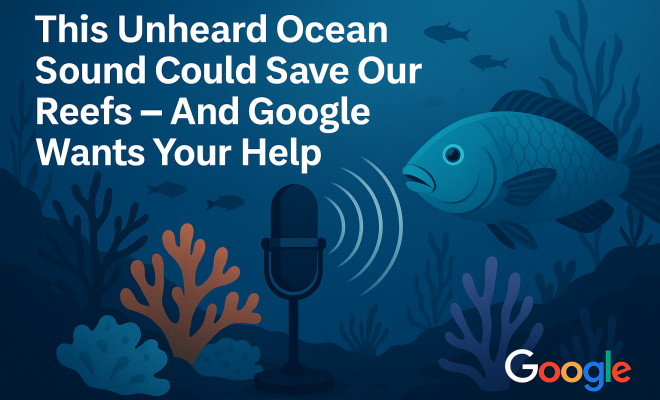
Imagine diving into the vibrant, teeming world of a coral reef. What do you picture? Brilliant colors, darting fish, perhaps the gentle sway of anemones? But what if I told you that a healthy reef isn’t just a feast for the eyes; it’s a symphony for the ears? That’s right, the ocean depths, particularly around these vital ecosystems, are anything but silent. In fact, the unique acoustic landscape of a coral reef – its collective coral reef sounds – holds critical clues about its well-being. And now, thanks to an ambitious new project from Google Arts and Culture, you can play a direct role in decoding these underwater messages.
This isn’t just a quirky technological experiment; it’s a genuine call to action, a citizen science initiative named “Calling in Our Corals.” It’s an ingenious blend of artificial intelligence, ecological urgency, and human curiosity. By inviting everyday people to listen to recordings from the deep and identify the myriad clicks, grunts, pops, and whistles of marine life, Google is tapping into a powerful resource: our collective ears. The goal? To provide marine biologists with invaluable data, helping them monitor ecosystem health, pinpoint areas desperately needing restoration, and ultimately, safeguard these indispensable underwater cities. Related reading: top marine biology programs.
The Hidden Symphony Beneath the Waves
For most of human history, we’ve perceived the ocean as a mostly silent realm, save for the roar of waves crashing on the shore or the occasional cry of a seagull. But that perception is profoundly mistaken, especially when you consider the complex, bustling environment of a coral reef. These aren’t just pretty underwater gardens; they’re bustling metropolises, vibrant hubs of biodiversity, and like any city, they generate a tremendous amount of noise. From the rapid-fire clicks of snapping shrimp, which can be surprisingly loud, to the low thrums and grunts of various fish species, a healthy reef is a veritable orchestra.
These coral reef sounds aren’t just background noise; they serve vital functions. Marine animals use sound for communication, navigation, hunting, and avoiding predators. A fish might grunt to defend its territory, a shrimp might click to stun prey, and larvae might use the acoustic cues of a thriving reef to find a suitable place to settle. It’s a rich, dynamic soundscape, and crucially, its characteristics can tell us a great deal about the health and vitality of the ecosystem producing it. Think of it like a doctor listening to your heart or lungs; the rhythm, volume, and variety of sounds offer diagnostic insights.
Why Are Coral Reef Sounds So Important to Science?
Marine biologists have long understood the significance of underwater acoustics, but the sheer scale of data collection and analysis has always been a bottleneck. Imagine deploying hydrophones – underwater microphones – across vast reef systems, recording for weeks or months on end. You’d quickly accumulate terabytes of audio data. Sifting through all of that manually to identify specific species or patterns is an incredibly time-consuming, labor-intensive, and often subjective process. This is where the power of acoustic monitoring truly shines, and why projects like “Calling in Our Corals” are so revolutionary.
A healthy coral reef boasts a diverse and complex soundscape. You’ll hear a rich tapestry of different sounds, indicating a wide array of species present and active. Conversely, a degraded reef, one suffering from bleaching, pollution, or physical damage, tends to be much quieter, or its soundscape might be dominated by a few stress-tolerant species. It’s a stark difference, akin to comparing the vibrant cacophony of a rainforest to the eerie silence of a clear-cut logging site. By analyzing these acoustic signatures, scientists can gain real-time, non-invasive insights into reef health without disturbing the delicate environment.
The AI-Powered Ear: How Technology is Transforming Reef Monitoring
This is where Google’s innovative approach truly comes into its own. The “Calling in Our Corals” project isn’t just about collecting raw data; it’s about leveraging the immense processing power of artificial intelligence and machine learning to make sense of it all. Think about it: once you have thousands of hours of underwater recordings, an AI can be trained to recognize specific sounds. It can learn to differentiate between the distinct click of a snapping shrimp, the territorial grunt of a damselfish, or even the subtle hum of a passing school of fish.
The citizen science component is crucial here. While AI is powerful, it still needs robust, human-annotated datasets to learn effectively. That’s where you come in. By listening to short snippets of audio and identifying the sounds you hear, you’re essentially helping to “teach” the AI. Each label you apply, each sound you correctly categorize, refines the machine learning model. Over time, the AI becomes more accurate and efficient, eventually capable of sifting through vast quantities of new audio data autonomously, flagging anomalies, identifying species presence, and even quantifying biodiversity based on sound alone. This accelerates research by an order of magnitude, allowing scientists to focus on higher-level analysis and intervention strategies.
Calling in Our Corals: How You Can Participate
So, how does this actually work for you, the aspiring citizen scientist? The process is remarkably straightforward and engaging. You visit the Google Arts and Culture platform, navigate to the “Calling in Our Corals” project, and you’re presented with short audio clips from real coral reefs around the world. Your task is simple: listen intently and identify the sounds you recognize. Are you hearing the tell-tale crackle of snapping shrimp? A distinct fish grunt? Perhaps some other unidentified marine sound?
The platform is designed to be user-friendly, even for those with no prior experience in marine acoustics. There are often visual aids, context, and sometimes even examples of what particular sounds might be. It’s an auditory puzzle, and each piece you place helps build a more complete picture of the reef’s health. You don’t need specialized equipment, just a pair of headphones and a willingness to listen. It’s a powerful way to contribute to scientific research from the comfort of your own home, transforming a passive activity into meaningful environmental action. (See: Ocean health and its importance.)
Beyond Identification: The Broader Implications for Reef Restoration
The insights gleaned from this project extend far beyond simply identifying what’s making noise. The ultimate goal is to empower marine biologists with actionable data for coral reef restoration efforts. Imagine a scenario where acoustic monitoring reveals that a particular reef section has gone eerily silent. This could be an early warning sign of stress, disease, or degradation, prompting scientists to investigate and intervene before it’s too late. Conversely, if restoration efforts are underway – perhaps through coral gardening or transplanting – acoustic data can provide a powerful, objective measure of success.
When a restored reef begins to attract more fish and invertebrates, its soundscape will naturally become richer and more diverse. The return of those vibrant coral reef sounds serves as an auditory indicator that the ecosystem is recovering and thriving. This feedback loop is invaluable for conservationists, allowing them to optimize their strategies, understand what works best, and allocate precious resources more effectively. It’s a dynamic, data-driven approach to environmental stewardship that moves beyond visual assessments alone.
The Global Crisis Facing Coral Reefs
It’s impossible to discuss any coral reef conservation effort without acknowledging the dire situation these ecosystems currently face. Coral reefs are in crisis globally. Climate change, with its associated ocean warming and acidification, is perhaps the most significant threat, leading to widespread coral bleaching events that can wipe out vast swathes of reef in a single season. But the threats don’t stop there. Overfishing, destructive fishing practices (like dynamite fishing), pollution from land-based sources, sediment runoff, and unchecked coastal development all contribute to the degradation and destruction of these vital habitats.
The statistics are sobering. Scientists estimate that we’ve already lost approximately half of the world’s coral reefs, and without drastic action, many more could vanish within decades. This isn’t just an aesthetic loss; it’s an ecological and economic catastrophe. Coral reefs support an estimated 25% of all marine life, protect coastlines from storm surges, and provide livelihoods for hundreds of millions of people through tourism and fisheries. Losing them would have cascading effects across the entire planet, making every conservation initiative, like the effort to monitor coral reef sounds, critically important.
The Power of Citizen Science in a Digital Age
“Calling in Our Corals” is a fantastic example of the growing trend of citizen science, where ordinary people contribute to scientific research. What makes this particular project so compelling is its accessibility and its innovative use of technology. You don’t need a PhD in marine biology or access to a research vessel. All you need is a computer and an internet connection. This democratization of science not only accelerates data collection but also fosters a deeper connection between the public and the natural world.
When you spend time listening to the intricate coral reef sounds, you gain a new appreciation for the complexity and fragility of these ecosystems. It transforms abstract environmental concerns into a tangible, personal experience. This engagement can, in turn, inspire greater advocacy, support for conservation policies, and even shifts in personal behavior. It’s a powerful multiplier effect: individual contributions aggregate into significant scientific progress, which then circles back to ignite broader public awareness and action.
What the Future Holds for Acoustic Ecology and Reef Health
The success of projects like “Calling in Our Corals” paints a hopeful picture for the future of acoustic ecology in marine conservation. As AI models become more sophisticated and data sets grow, we can expect even more nuanced insights from coral reef sounds. Imagine AI not just identifying species, but also detecting subtle changes in acoustic patterns that indicate stress before any visible signs appear. This kind of early warning system could be a game-changer for proactive conservation.
Furthermore, as recording technology becomes more affordable and widespread, we could see a global network of acoustic monitoring stations, continuously beaming data to AI systems for real-time analysis. This would provide an unprecedented, panoramic view of ocean health, allowing scientists and policymakers to respond with greater speed and precision to environmental threats. Our ability to listen to the ocean is rapidly evolving, and with it, our capacity to understand and protect its most precious habitats. So, next time you’re online, consider lending an ear to the vital, hidden world of coral reef sounds – you might just be helping to save it.
Decoding the Different Types of Coral Reef Sounds
The “symphony” of a coral reef isn’t just a metaphor; it’s a complex collection of distinct sound types, each with its own story. Understanding these different acoustic elements helps us appreciate the intricate communication happening below the surface. Let’s break down some of the most common and ecologically significant coral reef sounds you might encounter:
- Snapping Shrimp (Pistol Shrimp): These tiny crustaceans are arguably the loudest animals in the ocean. Their characteristic “snaps” or “clicks” are produced by rapidly closing a specialized claw, creating a cavitation bubble that collapses with a shockwave. This sound is used for stunning prey, territorial defense, and even communication. A healthy reef will have a constant, almost crackling background noise from millions of these shrimp, a sound that significantly diminishes on degraded reefs.
- Fish Vocalizations: Fish aren’t silent! Many species produce a variety of sounds using specialized muscles that vibrate their swim bladders or by stridulation (rubbing body parts together). These sounds can range from low-frequency “grunts” and “thumps” to “pops,” “clicks,” and even “purrs.” They use these vocalizations for a range of behaviors:
- Territorial Defense: Many damselfish, for instance, are known to emit aggressive grunts to warn off intruders from their feeding or nesting sites.
- Mating Calls: During spawning seasons, certain fish species create specific sounds to attract mates, a key indicator of reproductive activity.
- Alarm Calls: Some fish produce sounds to warn others of predators, demonstrating a complex social structure.
- Invertebrate Sounds (Beyond Shrimp): While snapping shrimp are the most prominent, other invertebrates also contribute to the soundscape. Sea urchins might create subtle scraping sounds as they graze on algae, and some crabs may produce faint clicks or rubs. These sounds, though often quieter, add to the overall acoustic richness.
- Environmental Sounds: Beyond the creatures, the reef itself generates sounds. The subtle creaks and groans of corals growing, the gentle rustle of sand, or the occasional impact of debris can all be part of the acoustic environment. While not directly biological, changes in these background noises can also indicate shifts in the physical structure of the reef.
The beauty of acoustic monitoring lies in its ability to capture this entire spectrum of sound, providing a holistic picture of the ecosystem. A vibrant mix of these different coral reef sounds tells scientists that the reef is bustling with life and functioning as it should. (See: Understanding ocean health.)
The Challenges of Underwater Acoustics
While listening to coral reef sounds offers a powerful window into marine health, it’s not without its challenges. The underwater environment presents unique hurdles that researchers must overcome:
- Sound Propagation: Sound behaves differently in water than in air. It travels faster and further, meaning a single hydrophone can pick up sounds from a wide area. While this is beneficial for broad monitoring, it can make pinpointing the exact source of a sound tricky.
- Noise Pollution: Just like on land, underwater environments suffer from anthropogenic (human-made) noise pollution. Shipping traffic, sonar, seismic surveys, and recreational boating can all mask natural coral reef sounds, making it harder for marine life to communicate and for scientists to interpret data. This “acoustic smog” is a growing concern for marine conservation.
- Data Volume and Processing: Even with AI, the sheer volume of audio data collected from continuous monitoring can be overwhelming. Developing efficient algorithms and robust computational infrastructure to process and analyze this data remains an ongoing challenge.
- Species Identification: While AI can learn to recognize specific sound patterns, attributing every sound to an exact species can be difficult, especially for less studied or cryptic species. Many fish sounds are similar, and context is often needed.
- Environmental Variables: Factors like water temperature, salinity, and depth can influence sound propagation and the behavior of sound-producing animals, adding layers of complexity to data interpretation.
Despite these challenges, advancements in hydrophone technology, AI, and citizen science platforms are steadily making acoustic ecology an increasingly viable and powerful tool for conservation.
Expert Perspectives: What Marine Biologists Say
Marine biologists and acousticians are at the forefront of this exciting field, consistently emphasizing the transformative potential of sound. Dr. Steve Simpson, a marine biologist at the University of Exeter, has conducted extensive research on the importance of coral reef sounds for fish larvae. He’s shown that young fish actively “listen” for the sounds of healthy reefs to guide them to suitable settlement habitats. This means that a quiet, degraded reef not only lacks adult fish but also struggles to attract new generations.
Another prominent voice is Dr. Jenni Stanley from the Australian Institute of Marine Science, who uses sophisticated acoustic arrays to map and understand reef soundscapes. Her work highlights how changes in these soundscapes can serve as an early warning system for environmental stress, often before visual signs of degradation become apparent. This proactive monitoring is critical for timely intervention.
These experts collectively agree that integrating acoustic monitoring with traditional visual surveys and water quality measurements provides a much richer and more comprehensive understanding of reef health. It’s not just about what we can see; it’s about what we can hear that truly reveals the vibrancy and resilience of these underwater ecosystems.
Comparing Acoustic Monitoring with Traditional Methods
For decades, marine biologists have relied on traditional methods to assess coral reef health, such as visual surveys (diver transects), photo quadrats, and water quality sampling. While these methods are invaluable, acoustic monitoring offers several distinct advantages and complements existing techniques:
- Non-Invasive: Acoustic monitoring doesn’t disturb the reef environment or its inhabitants. Divers and equipment can inadvertently stress or alter animal behavior, whereas hydrophones provide a passive, unobtrusive observation method.
- Continuous Data Collection: Unlike visual surveys, which are limited by diver bottom time or daylight, hydrophones can record 24/7, providing a continuous stream of data across diurnal and nocturnal cycles, as well as seasonal changes. This captures behaviors and species active at different times.
- Early Warning System: Changes in coral reef sounds can often be detected before visible signs of degradation appear. A sudden drop in the crackle of snapping shrimp or the absence of fish vocalizations might indicate stress, bleaching, or a population decline that visual surveys might miss until it’s more advanced.
- Cost-Effectiveness (Long-term): While initial setup costs for acoustic arrays can be significant, the long-term operational costs can be lower than repeated, extensive diver surveys, especially in remote or hazardous locations.
- Remote Monitoring: Acoustic sensors can be deployed in areas too deep, dangerous, or remote for regular human access, expanding the reach of conservation efforts significantly.
- Indicator of Ecosystem Function: Acoustic diversity isn’t just about species presence; it’s about activity and interaction. A diverse soundscape indicates a functioning, dynamic ecosystem, not just a static collection of organisms.
However, acoustic monitoring isn’t a silver bullet. It excels when combined with traditional methods. Visual surveys can confirm species identification from sounds, and water quality data can help explain observed acoustic changes. The future of reef health assessment lies in this multi-faceted, integrated approach.
Frequently Asked Questions About Coral Reef Sounds and Conservation
Q1: What exactly are “coral reef sounds”?
A: Coral reef sounds refer to the collective noises produced by the marine life and environmental processes within a coral reef ecosystem. This includes clicks from snapping shrimp, grunts, pops, and purrs from various fish species, and even subtle environmental sounds like the movement of sediment. It’s essentially the underwater acoustic signature of a reef.
Q2: Why are these sounds important for reef health?
A: The diversity, volume, and patterns of coral reef sounds are strong indicators of an ecosystem’s health. A vibrant, diverse soundscape typically signifies a thriving reef with a rich array of species present and active. Conversely, a quiet or monotonous soundscape can signal degradation, stress, or a decline in biodiversity. Marine animals also use these sounds for communication, navigation, and finding habitats. (See: Acoustic monitoring in marine ecosystems.)
Q3: How does “Calling in Our Corals” work?
A: “Calling in Our Corals” is a citizen science project by Google Arts and Culture. Volunteers listen to short audio clips recorded from real coral reefs and identify the sounds they hear (e.g., snapping shrimp, fish grunts). This human-annotated data is then used to train artificial intelligence models, helping them learn to automatically identify and classify these sounds from vast amounts of underwater recordings.
Q4: Do I need special equipment or knowledge to participate?
A: No, you don’t! All you need is a computer or mobile device with an internet connection and a pair of headphones. The platform is designed to be user-friendly, providing guidance and examples of different sounds. No prior scientific knowledge or experience in marine biology is required.
Q5: What kind of impact does my participation have?
A: Every sound you identify helps train the AI model, making it more accurate and efficient. This accelerated data analysis provides marine biologists with crucial information faster, helping them monitor reef health, identify areas needing restoration, and evaluate the success of conservation efforts. Your contributions directly support global coral reef conservation.
Q6: What are the main threats to coral reefs?
A: Coral reefs face numerous threats, primarily from climate change (ocean warming leading to bleaching, and ocean acidification). Other significant threats include overfishing, destructive fishing practices, pollution from land runoff, coastal development, and marine debris. These threats are contributing to a rapid global decline in reef health.
Q7: Can acoustic monitoring help restore reefs?
A: Yes, absolutely. Acoustic monitoring can act as an early warning system, identifying reefs under stress before visual signs become apparent, prompting timely intervention. It can also measure the success of restoration efforts: as a restored reef recovers and attracts more marine life, its soundscape will become richer and more diverse, providing objective evidence of recovery.
Q8: Are all ocean sounds natural?
A: No. While many ocean sounds are natural (marine life, waves, geological activity), human activities introduce significant noise pollution. Sounds from shipping, sonar, seismic surveys, and recreational boating can mask natural coral reef sounds, interfering with marine animal communication and making scientific monitoring more challenging. This anthropogenic noise is a growing concern for marine conservation.
Q9: What is the long-term vision for acoustic ecology in reef conservation?
A: The long-term vision is to establish a global network of continuous acoustic monitoring stations. Coupled with advanced AI, this network could provide real-time, comprehensive insights into ocean health, enabling scientists and policymakers to respond quickly and effectively to environmental changes and threats, ultimately bolstering global efforts to protect and restore coral reefs.
“`
Trending Now
Frequently Asked Questions
What is the project 'Calling in Our Corals'?
The 'Calling in Our Corals' project is a citizen science initiative by Google Arts and Culture that invites people to listen to underwater recordings of coral reefs. Participants identify the sounds made by marine life, helping scientists gather data to monitor reef health and identify areas needing restoration.
How do coral reefs communicate through sound?
Coral reefs create a unique acoustic landscape filled with sounds like clicks, grunts, and pops produced by marine life. These sounds provide important clues about the health of the ecosystem, indicating the presence of various species and the overall vibrancy of the reef.
Why are coral reefs important for marine biodiversity?
Coral reefs are crucial for marine biodiversity as they serve as habitats for a vast array of species. They act as bustling metropolises in the ocean, supporting diverse marine life and playing a key role in maintaining ecological balance and health in ocean environments.
How can I participate in the 'Calling in Our Corals' initiative?
You can participate in the 'Calling in Our Corals' initiative by visiting the project's website, where you can access recordings of coral reef sounds. By listening and identifying these sounds, you contribute valuable data to help marine biologists monitor and protect coral ecosystems.
What role does AI play in the coral reef sound project?
Artificial intelligence is used in the 'Calling in Our Corals' project to analyze the sounds collected from coral reefs. AI helps in categorizing and interpreting the various sounds, enabling researchers to gain insights into reef health and the behavior of marine species.
What's your take on this? Share your thoughts in the comments below — we read every one.