This One Thing Is Quietly Slashing $11 Trillion From Home Values
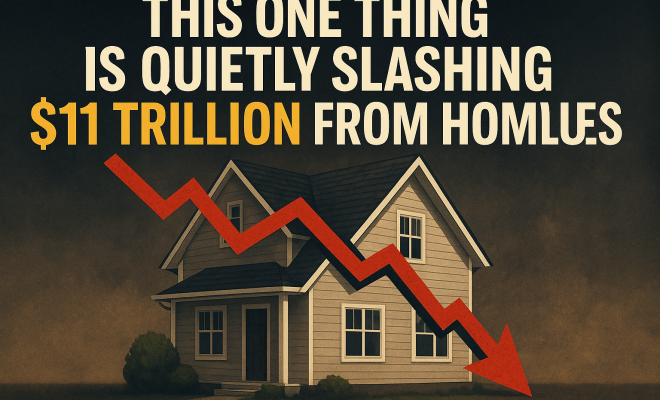
You might not see it on the daily news cycle, but a silent, relentless force is fundamentally reshaping the American housing market. It’s not interest rates, not inventory shortages, and not even the latest economic recession. We’re talking about climate risk, and it’s already begun to reprice homes across the country, affecting millions of homeowners and trillions in property value. The implications are staggering, and if you own a home, are looking to buy one, or work in real estate, you need to understand what’s unfolding.
A recent report from Realtor.com paints a stark picture: nearly one in four U.S. homes, representing an estimated $11.2 trillion in housing value, now faces severe or extreme climate risk. We’re not talking about distant, theoretical threats here. This is about real, tangible hazards like wind, flood, and wildfire, which are increasingly manifesting in ways that hit homeowners directly in their wallets. This isn’t just about environmental concern; it’s about the financial stability of communities and the very foundation of the American dream.
The Unseen Hand Repricing the Market
For decades, many homeowners, particularly those in seemingly idyllic coastal towns or fire-prone areas, have enjoyed relatively stable property values and insurance premiums. But that era is rapidly drawing to a close. The increasing frequency and intensity of extreme weather events are forcing a reckoning, and the housing market is starting to reflect this new reality. What does ‘repricing’ actually mean in this context? It means that properties once considered prime real estate are now being reassessed through a lens of vulnerability, leading to higher costs of ownership and, in some cases, a devaluation of the asset itself.
Think about it: when you buy a home, you’re not just buying bricks and mortar; you’re buying a location and the perceived security that comes with it. When that security is undermined by recurring floods, raging wildfires, or devastating hurricanes, the value proposition changes dramatically. Lenders, insurers, and ultimately, buyers, are becoming more acutely aware of these risks, and they’re adjusting their calculations accordingly. This isn’t a speculative trend; it’s a data-driven response to an undeniable shift in our environment. The climate risk housing market is no longer a niche concern; it’s a mainstream economic factor.
The Rising Tide of Monthly Homeowner Costs
The most immediate and painful impact of escalating climate risk is felt in homeowners’ monthly budgets. It’s not just a potential future disaster; it’s a present-day financial squeeze. We’re seeing a significant uptick in homeowners association (HOA) fees in communities that need to invest in resilience measures, like elevated infrastructure or improved drainage systems. These aren’t optional costs; they’re essential for protecting shared assets and maintaining livability.
But the biggest hit, by far, comes from soaring insurance premiums. Insurers, faced with record-breaking payouts from catastrophic weather events, are passing those costs directly onto consumers. In some regions, homeowners are seeing their premiums double or even triple in a single year, if they can even find coverage at all. This isn’t just an inconvenience; it can be a deal-breaker for many families. A higher monthly insurance bill means less disposable income, and for those on fixed incomes, it can threaten their ability to stay in their homes. This direct financial pressure is a crucial element in understanding the climate risk housing market.
Florida’s Insurance Quagmire: A Cautionary Tale
Nowhere is this crisis more starkly illustrated than in Florida, a state perpetually in the crosshairs of hurricanes. Florida has long been a bellwether for climate-related property challenges, and its recent attempts at reform serve as a cautionary tale. In an effort to stabilize a collapsing insurance market – where multiple major insurers have either pulled out or gone bankrupt – the state legislature enacted significant reforms. The intention, ostensibly, was to make the market more resilient and affordable. The reality, for many homeowners, has been quite different.
These reforms have reportedly put more risk squarely on the shoulders of homeowners. How? By making it harder to challenge denied claims and by limiting payouts. Imagine experiencing a devastating hurricane, your home is damaged, and then finding yourself in a bureaucratic and legal labyrinth just to get your rightful compensation. This isn’t just a financial burden; it’s an emotional one, adding insult to injury for people who’ve already lost so much. The controversy surrounding these reforms is intense, and rightly so, as they highlight the complex, often counterproductive, outcomes when policy tries to grapple with the realities of an accelerating climate crisis.
The Broader Economic Ripple Effect
The financial distress caused by rising climate risk extends far beyond individual homeowners. It creates a ripple effect that touches mortgage performance, local economies, and even national financial stability. When homeowners struggle to afford their insurance or face insurmountable repair costs, mortgage delinquencies and foreclosures can rise. This impacts lenders, who then become more cautious about issuing loans in high-risk areas, potentially creating a credit crunch for future buyers. (See: impact of climate change on home values.)
Think about the domino effect: fewer buyers mean less demand, which can depress property values. Lower property values mean less property tax revenue for local governments, impacting schools, infrastructure, and emergency services. It’s a vicious cycle where environmental vulnerability translates directly into economic fragility. This isn’t just about a few homes here and there; it’s about the systemic health of our financial ecosystem, which is deeply intertwined with the climate risk housing market.
Which Risks Are Driving This Repricing?
While the term ‘climate risk’ can feel broad, the Realtor.com report specifically highlights three primary drivers behind the current repricing trend: wind, flood, and wildfire. Each presents its own unique challenges and financial implications:
- Wind Risk: This is predominantly associated with hurricanes and tropical storms, impacting vast swaths of the Gulf Coast, the Southeast, and parts of the Atlantic seaboard. The damage from high winds can be catastrophic, tearing off roofs, collapsing walls, and leading to widespread debris. Rebuilding codes in these areas are constantly evolving, often requiring more expensive, resilient construction methods that add to initial building costs and ongoing maintenance.
- Flood Risk: This isn’t just a coastal problem. While coastal flooding from sea-level rise and storm surge is a major concern, inland flooding from heavy rainfall events is becoming increasingly common across the country. Changing weather patterns mean areas that rarely flooded before are now experiencing significant inundation. Flood insurance, often separate from standard homeowners insurance and notoriously expensive in high-risk zones, is becoming a non-negotiable cost for many, if it’s available at all.
- Wildfire Risk: Concentrated primarily in the Western U.S., particularly California, Oregon, and Colorado, wildfires are growing in intensity and destructiveness. Drought conditions, exacerbated by climate change, create perfect fuel for these blazes, and the expansion of residential areas into wildland-urban interfaces puts more homes directly in harm’s way. The cost of fire mitigation, defensible space, and specialized wildfire insurance is skyrocketing, and in some extreme cases, insurers are simply refusing to cover properties in certain fire zones.
Understanding these distinct risks is crucial because they dictate the types of mitigation strategies needed and the specific financial burdens homeowners will face. The convergence of these factors is what makes the climate risk housing market such a complex and urgent challenge.
The Homeowner’s Dilemma: Stay or Go?
For millions of Americans, the escalating costs and anxieties associated with climate risk present a profound dilemma: do you stay in your cherished home, hoping for the best and shouldering ever-increasing expenses, or do you cut your losses and move? This is not an easy choice, especially for those with deep roots in their communities or who have invested their life savings into their property.
The decision to move is often fraught with complications. Selling a home in a high-risk area can be challenging, as the pool of willing buyers shrinks and property values may be depressed. Furthermore, where do you go? Many areas perceived as ‘safe’ today could become vulnerable tomorrow as climate patterns continue to shift. This uncertainty creates a sense of instability that permeates the entire housing market, forcing individuals and families to make incredibly difficult, often financially painful, decisions about their future.
The Search for Solutions: Resilience and Adaptation
So, what can be done? The solutions are multifaceted and require a concerted effort from individuals, communities, and governments. At the individual level, homeowners in vulnerable areas are increasingly investing in resilience measures: elevating homes, installing hurricane-resistant windows, creating defensible spaces against wildfires, and improving drainage. These investments can be significant but may ultimately prove cheaper than repeated repairs or the inability to secure insurance.
At the community level, comprehensive urban planning that integrates climate risk assessments is paramount. This includes zoning regulations that discourage building in floodplains, investing in natural infrastructure like wetlands and mangrove forests, and developing robust emergency response plans. Governments also play a critical role in funding resilience projects, offering subsidies for flood insurance, and exploring innovative financial instruments to help homeowners adapt. The ongoing evolution of the climate risk housing market demands constant innovation in these areas.
Policy Interventions: A Double-Edged Sword
As we saw with Florida’s insurance reforms, policy interventions aimed at addressing climate risk can be a double-edged sword. While some policies, like stricter building codes or federally backed flood insurance programs, are essential for mitigating risk and protecting homeowners, others can inadvertently exacerbate problems. Policies that limit consumer protections or make it harder for individuals to recover from disasters can create a sense of abandonment and deepen financial distress.
The challenge lies in crafting policies that are both effective in managing systemic risk and equitable in protecting individual homeowners. This often requires a delicate balance between market forces and social safety nets. Policymakers must engage with a wide range of stakeholders—from insurance companies and real estate developers to environmental scientists and community leaders—to ensure that reforms are well-considered, forward-looking, and genuinely serve the interests of the public. Ignoring these complexities will only worsen the climate risk housing market challenges.
Looking Ahead: The Future of the Climate Risk Housing Market
The repricing of the climate risk housing market is not a temporary blip; it’s a fundamental recalibration. As climate change continues to unfold, these risks will only intensify, making it increasingly difficult for homeowners, insurers, and lenders to ignore. We can expect to see several trends emerge and accelerate:
- Increased Data Transparency: Homebuyers will demand more granular, easily accessible data on a property’s specific climate risks, much like they currently assess school districts or crime rates.
- Differential Valuations: Properties with robust resilience measures or in lower-risk areas will command a premium, while those in highly vulnerable zones may see their values stagnate or decline.
- Innovation in Finance: New financial products and insurance models will likely emerge to address the unique challenges of climate risk, potentially including government-backed reinsurance programs or community-based risk pools.
- Managed Retreat: In the most extreme cases, we may see communities grappling with the difficult concept of ‘managed retreat,’ where residents are incentivized or assisted in relocating from areas deemed uninsurable or too dangerous to inhabit.
This isn’t about fear-mongering; it’s about facing an undeniable reality. The decisions we make today, individually and collectively, will determine the resilience and affordability of the housing market for generations to come. Understanding the forces at play in the climate risk housing market is no longer optional; it’s essential for anyone with a stake in property. (See: climate risk and property values.)
Ultimately, the story of climate risk and the housing market is a powerful illustration of how global environmental changes translate into very personal financial impacts. The $11.2 trillion in at-risk housing value isn’t just a number; it represents homes, dreams, and the financial futures of millions of families. Acknowledging this reality is the first step toward building a more resilient and sustainable future for our communities and our homes.
The Role of Mortgage Lenders and Underwriting
Mortgage lenders, often seen as the gatekeepers of homeownership, are increasingly caught in the crosshairs of climate risk. Traditionally, their underwriting process has focused on a borrower’s creditworthiness and the property’s market value. Now, however, the long-term viability of the physical asset itself is becoming a critical factor. What good is a sound loan if the collateral is repeatedly damaged or becomes uninsurable?
We’re seeing a shift where lenders are starting to incorporate climate risk into their risk assessments. This might mean stricter lending criteria for homes in high-risk flood zones, or requiring proof of specific hazard insurance (beyond standard homeowners policies) before approving a loan. Some lenders are even exploring the use of advanced climate modeling to project future risks for properties over the typical 30-year mortgage term. This push for more sophisticated risk analysis directly impacts who gets a loan, at what rates, and for what properties, fundamentally altering access to the climate risk housing market in vulnerable areas. The implications for low-income borrowers or communities of color, who often have fewer options, are particularly concerning and demand careful consideration.
Beyond the Big Three: Other Emerging Climate Risks
While wind, flood, and wildfire are the most prominent risks currently repricing the market, it’s important to remember that climate change brings a spectrum of challenges. Other emerging risks are slowly but surely beginning to factor into property valuations and livability concerns:
- Extreme Heat: Record-breaking temperatures are becoming more frequent and intense, particularly in urban areas. This leads to higher energy costs for cooling, increased health risks, and can even impact infrastructure like roads and power grids. While not directly damaging homes in the same way a hurricane does, sustained extreme heat can make certain regions less desirable, affecting property demand over time.
- Drought and Water Scarcity: Especially in the Western U.S., prolonged droughts are leading to water restrictions, higher water bills, and concerns about long-term water availability. For homes dependent on well water, this can be an immediate and severe problem. A lack of reliable water supply can certainly dampen enthusiasm for a region, impacting the climate risk housing market indirectly.
- Geological Instability (Landslides, Sinkholes): While not always directly tied to climate change, increased rainfall or changes in groundwater levels can exacerbate existing geological vulnerabilities. Heavy rains after wildfires, for example, dramatically increase the risk of deadly mudslides. Sinkholes, common in states like Florida, can be influenced by changes in water tables. These events, though localized, can render a home completely uninhabitable.
These ‘secondary’ climate risks might not be making headlines daily for property damage, but they represent a slow burn that adds to the overall vulnerability profile of a region. Savvy buyers and investors are starting to look beyond just the immediate, obvious threats.
The Social Equity Dimension of Climate Risk
It’s impossible to discuss the climate risk housing market without acknowledging the profound social equity implications. Climate change doesn’t impact everyone equally. Historically marginalized communities, often located in areas more susceptible to environmental hazards, frequently bear the brunt of these changes.
Consider low-income neighborhoods built in floodplains or near industrial zones with existing pollution burdens. When a flood hits, these communities often have fewer resources to recover, less access to adequate insurance, and less political power to advocate for resilience infrastructure. The rising costs of insurance and the potential devaluation of properties in these areas can trap residents, making it difficult to sell and move to safer ground. This creates a cycle of disadvantage, where those least responsible for climate change are often the most vulnerable to its financial fallout in the housing market. Addressing climate risk effectively requires not just environmental solutions, but also a strong commitment to social justice. See also community resilience article.
Innovative Financing and Insurance Models
The traditional insurance and mortgage markets are struggling to adapt to the speed and scale of climate risk. This challenge is spurring innovation, with new models and financial products starting to emerge:
- Parametric Insurance: Unlike traditional insurance that pays out based on actual damages, parametric insurance pays out a pre-agreed amount if a specific trigger event occurs (e.g., hurricane winds exceeding a certain speed, or rainfall above a certain threshold). This can provide quicker payouts, crucial for immediate recovery, and reduces the need for lengthy claims assessments.
- Catastrophe Bonds: These are financial instruments that transfer specific catastrophe risks from insurers to investors. If a predefined catastrophe occurs, investors lose their principal, which is then used to pay claims. This helps insurers manage their exposure but can be costly.
- Community-Based Resilience Funds: Some communities are exploring pooled funds, often supported by local taxes or grants, to invest in shared infrastructure projects like seawalls, drainage improvements, or wildfire breaks. This collective approach can be more efficient than individual homeowners trying to go it alone.
- Green Mortgages: These loans offer favorable terms (like lower interest rates) for homes that meet certain energy efficiency or resilience standards. The idea is to incentivize climate-friendly housing and reward homeowners for reducing their long-term risk and operating costs.
While still nascent, these innovations highlight a growing recognition that the financial tools of yesterday aren’t sufficient for the climate realities of today. The climate risk housing market is pushing the financial sector to evolve rapidly. (See: climate change and health impacts.)
FAQ: Navigating the Climate Risk Housing Market
Q1: How can I find out the climate risk for a specific property I’m interested in buying?
A1: There are several excellent resources available. Websites like Flood Factor (First Street Foundation), Risk Factor, and some real estate listing sites are starting to integrate climate risk data directly into property profiles. You can often enter an address and get a detailed assessment of flood, fire, and even heat risk. Additionally, local government planning departments and FEMA flood maps can provide valuable information, though FEMA maps may not always reflect future risks accurately.
Q2: Will climate risk always make my home uninsurable or unsellable?
A2: Not necessarily. While risks are increasing, it doesn’t mean every home in a vulnerable area is doomed. The key is understanding the specific risks and what mitigation measures are in place or can be implemented. A well-maintained, elevated home in a flood zone might still be insurable and attractive to buyers. However, expect to pay higher premiums and potentially see slower appreciation compared to properties in lower-risk areas. The market is becoming more nuanced, valuing resilience.
Q3: What steps can I take as a homeowner to reduce my climate risk?
A3: This depends heavily on your specific location and the predominant risks. For flood risk, consider elevating utilities, installing flood vents, or raising your home. For wildfire risk, create defensible space around your home, use fire-resistant landscaping, and consider fire-resistant roofing materials. For wind risk, reinforcing your roof, installing hurricane-resistant windows, and securing exterior elements can help. Many local government agencies and non-profits offer guidance and sometimes even financial assistance for these improvements. Even small steps can make a difference in the climate risk housing market.
Q4: How do climate risks affect property taxes?
A4: This is a complex area. In the short term, if property values decline due to climate risk, property tax revenues for local governments might also decrease. However, local governments might also need to raise taxes to fund resilience projects like sea walls or improved drainage. It’s a balancing act. Some jurisdictions might even offer tax incentives for homeowners who invest in resilience measures, so it’s worth checking with your local tax assessor’s office.
Q5: Is it possible to get a “climate-friendly” mortgage or insurance?
A5: Yes, these products are emerging. Some lenders offer “green mortgages” with better terms for energy-efficient or resilient homes. On the insurance side, while comprehensive “climate-friendly” policies are still developing, some insurers offer discounts for specific mitigation measures (like hurricane clips or smart water leak detectors). As the market evolves, expect more financial products tailored to incentivize climate resilience in the climate risk housing market.
Q6: What role does government play in addressing climate risk in the housing market?
A6: Governments play a crucial, multi-faceted role. This includes funding scientific research on climate impacts, developing and enforcing building codes, managing federal flood insurance programs (like the NFIP), investing in large-scale infrastructure projects (e.g., coastal protection), and providing disaster relief. They also set zoning laws that can influence where new construction is permitted, ideally steering development away from the most hazardous areas. Effective governance is key to mitigating widespread financial damage.
Trending Now
Frequently Asked Questions
What is causing the decline in home values?
The decline in home values is primarily driven by climate risk. A recent report indicates that nearly one in four U.S. homes faces severe or extreme climate risks, such as flooding, wildfires, and high winds, leading to a significant decrease in property values and financial stability for homeowners.
How does climate risk affect the housing market?
Climate risk affects the housing market by reshaping property valuations. Homes in vulnerable areas are being reassessed, resulting in higher ownership costs and potential devaluation of previously sought-after real estate, as buyers become more cautious about environmental hazards.
What does 'repricing' mean in real estate?
'Repricing' in real estate refers to the reassessment of property values based on new risk factors, particularly climate vulnerabilities. This process results in higher costs for homeowners and can diminish the perceived value of homes in areas prone to extreme weather events.
How many homes are at risk from climate change?
Approximately one in four U.S. homes, amounting to an estimated $11.2 trillion in housing value, are at risk from severe or extreme climate threats, according to a recent report. This risk is impacting millions of homeowners across the country.
Why should homeowners be concerned about climate risk?
Homeowners should be concerned about climate risk because it directly impacts property values and insurance costs. As extreme weather events become more frequent, the financial stability of communities and the value of real estate investments are increasingly at stake.
Have you experienced this yourself? We'd love to hear your story in the comments.