This One Event Just Sent Brent Crude Oil Price Soaring Past $100 — Here’s Why You Should Care
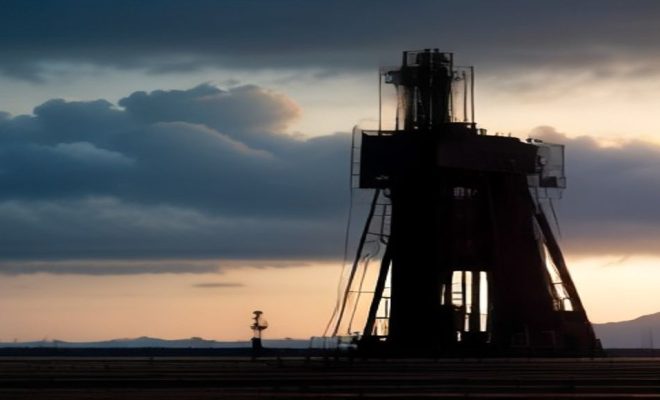
The global energy landscape is a complex, often volatile beast, and right now, it’s roaring. We’ve just witnessed a major milestone that has sent shivers down the spine of economists and consumers alike: Brent crude oil, the international benchmark, has surged past the psychologically significant $100 per barrel mark. This isn’t just another number; it’s a flashing red light, signaling potential economic turbulence and directly impacting your wallet, from the gas pump to the grocery store.
What’s driving this sudden, dramatic spike in the Brent crude oil price? The answer, unfortunately, is a familiar one: geopolitical tension. Specifically, an alarming escalation of hostilities between the United States and Iran is the primary culprit. When two major players in a region as strategically vital as the Middle East start trading blows, the ripple effects are immediate and far-reaching. This isn’t theoretical; it’s already translating into concrete, painful increases, like the record-breaking gasoline prices we’re seeing in the U.S. for September, averaging a staggering $4.15 per gallon. This isn’t just about energy; it’s about the broader health of the global economy and your financial well-being.
The Strait of Hormuz: A Geopolitical Bottleneck and Its Impact on Brent Crude Oil Price
To understand why the conflict between the U.S. and Iran has such an outsized effect on the Brent crude oil price, you need to understand the Strait of Hormuz. Imagine a narrow, maritime choke point, barely 21 miles wide at its narrowest, through which roughly one-fifth of the world’s total petroleum liquids and a quarter of its liquefied natural gas (LNG) pass daily. That’s the Strait of Hormuz, nestled between Oman and Iran. It’s not just a shipping lane; it’s arguably the most critical energy transit point on the planet.
When tensions flare in this region, particularly between a major global power like the U.S. and a significant regional player like Iran, the market immediately becomes skittish. Any perceived threat to the free flow of oil through this strait can trigger a panic. Shipping companies become hesitant, insurance premiums for vessels skyrocket, and the specter of supply disruptions looms large. This isn’t just about actual attacks; even the threat of them can significantly impact market sentiment and, consequently, the Brent crude oil price. Traders, ever sensitive to risk, price in this uncertainty, pushing futures contracts higher. It’s a classic supply-side shock, even if the supply hasn’t been physically cut off yet. The sheer volume of oil that transits this waterway means that any instability there has an almost immediate, disproportionate impact on global energy markets.
Iran’s Strategic Position and Its Leverage
Iran’s geographical position, directly adjacent to the Strait of Hormuz, gives it immense strategic leverage. While it’s a major oil producer itself, its true power in this context comes from its ability to disrupt — or threaten to disrupt — the flow of oil from other major Gulf producers like Saudi Arabia, Kuwait, Iraq, Qatar, and the UAE. These nations are vital suppliers to global markets, and almost all their seaborne exports must pass through the Strait. Historically, Iran has periodically threatened to close the Strait in response to sanctions or military pressure, a threat that global powers take very seriously, knowing the devastating economic consequences it would entail. This ongoing tension is a foundational element in understanding the volatility of the Brent crude oil price. It’s a delicate balance of power, and any perceived shift can send ripples across the globe.
The Direct Link: Geopolitical Flare-ups and Market Reactions
The recent surge past $100 for Brent crude oil isn’t an isolated incident; it’s a direct consequence of the escalating tit-for-tat actions between the U.S. and Iran. While the specifics of these attacks are often shrouded in the fog of war, the market reacts to the perception of increased risk. Whether it’s drone strikes, naval skirmishes, or cyberattacks targeting critical infrastructure, each escalation feeds into a narrative of instability. This narrative, in turn, directly influences commodities traders who operate on the principle of supply and demand, heavily weighted by future expectations.
Think of it this way: if a major oil-producing region becomes a conflict zone, the risk of oil production being interrupted, or its transportation routes being compromised, goes up dramatically. Energy analysts and investors aren’t just looking at current supply levels; they’re forecasting what might happen next week, next month, or next year. When the U.S. and Iran engage in a cycle of attacks, it signals to the market that the likelihood of a significant disruption to oil supply has increased. This fear premium is then baked into the Brent crude oil price, pushing it higher regardless of whether any actual barrels have been taken off the market yet. It’s a preemptive strike by the market itself, hedging against potential future shortages. This dynamic illustrates the profound sensitivity of energy markets to geopolitical developments.
Inflationary Pressures: Why High Oil Prices Hit Everyone
When the Brent crude oil price climbs significantly, it’s not just an abstract number on a trading screen; it’s a direct driver of inflation that impacts nearly every aspect of our lives. Oil is the lifeblood of the global economy. It powers our transportation systems – cars, trucks, ships, planes – which means the cost of moving goods from farm to factory, and then from factory to store, goes up. This increased cost of logistics and freight is inevitably passed on to consumers in the form of higher prices for pretty much everything. (See: Brent crude oil definition and significance.)
Consider the average family’s budget. Beyond the obvious hit at the gas pump, you’ll see grocery bills rise because food production relies heavily on fuel for farming machinery, transportation, and even packaging. Manufacturing costs increase because many industrial processes and raw materials (like plastics) are petroleum-based. Utility bills can also see upward pressure as power plants that use oil or natural gas (whose prices often correlate with oil) pass on their higher fuel costs. This pervasive impact means that high oil prices aren’t just an inconvenience; they erode purchasing power and can significantly dampen economic growth by forcing consumers and businesses to cut back on other spending. It’s a classic inflationary spiral, where the rising cost of one fundamental commodity propagates through the entire economic system.
The Consumer’s Plight: Gasoline Prices and Beyond
The most immediate and visible impact for the average person is, of course, gasoline prices. The recent surge has pushed U.S. gasoline prices to an all-time record for September, averaging $4.15 per gallon. For many households, particularly those with longer commutes or multiple vehicles, this represents a substantial and unwelcome increase in their monthly expenses. But the pain doesn’t stop there. This isn’t just about your daily commute; it’s about the underlying cost of living.
Businesses, faced with higher transportation costs, often have no choice but to raise prices on their products and services. This means that even if you don’t drive, you’ll feel the pinch through higher prices for food, clothing, and virtually every other consumer good. For businesses, especially those with tight margins, rising fuel costs can severely impact profitability, potentially leading to job cuts, reduced investment, or even business closures. The cumulative effect is a significant headwind for economic growth, making it harder for central banks to control inflation and maintain stability.
Political Dimensions: From Dismissal to Acknowledgment
The political response to rising energy prices is always fascinating, and often contradictory. Historically, high gasoline prices have been a potent political issue, capable of swaying public opinion and even election outcomes. For a long time, particularly during periods of strong economic growth, some political leaders have attempted to downplay consumer concerns about energy costs, perhaps hoping they would be seen as a minor inconvenience in the larger economic picture.
However, the current situation, with the Brent crude oil price hitting such a significant milestone and gasoline prices reaching record highs for the season, has clearly shifted the narrative. Even figures like former President Donald Trump, who previously might have dismissed such concerns, have recently acknowledged the importance of high energy prices. This shift in rhetoric underscores the undeniable economic reality: when the cost of a fundamental commodity like oil surges, its impact is too widespread and too visible to ignore. Politicians, regardless of their party affiliation, eventually have to confront the reality of how these costs affect their constituents, knowing that voter sentiment is heavily influenced by pocketbook issues.
The Balancing Act for Policymakers
For policymakers, managing the fallout from surging oil prices is a delicate balancing act. They face pressure to address consumer pain at the pump without resorting to measures that could further distort markets or exacerbate long-term energy security issues. Options range from drawing on strategic petroleum reserves (though these are finite) to encouraging domestic production, or even attempting diplomatic solutions to de-escalate geopolitical tensions. Each approach carries its own risks and benefits.
Beyond immediate relief, there’s the broader challenge of inflation. Central banks, tasked with maintaining price stability, find their job significantly harder when oil prices are skyrocketing. Raising interest rates, their primary tool to combat inflation, can also slow economic growth, creating a difficult trade-off. It’s a constant tightrope walk between managing immediate crises and steering the economy towards long-term stability, all while navigating the unpredictable currents of global energy markets and geopolitical events.
Equities Under Pressure: The Wider Market Repercussions
It’s not just your gas tank feeling the squeeze; the financial markets are also reacting to the surge in the Brent crude oil price. High energy costs act as a substantial headwind for equities. Why? Because they directly impact corporate profitability. Companies across various sectors, from transportation and manufacturing to retail and technology, face higher operational costs when fuel and energy prices rise. These increased expenses eat into profit margins, which in turn can lead to lower earnings per share, making stocks less attractive to investors. (See: impact of energy prices on health.)
Furthermore, the inflationary pressure created by expensive oil often prompts central banks to consider or enact tighter monetary policies, such as raising interest rates. Higher interest rates increase the cost of borrowing for companies, making it more expensive to expand, invest, or even service existing debt. This can lead to a slowdown in economic activity, which is generally bad news for corporate revenues and, consequently, for stock prices. Investors, anticipating these challenges, often become more cautious, leading to market volatility and potential pullbacks. It’s a domino effect where energy costs kick off a chain reaction that impacts the entire financial ecosystem.
Sectoral Impacts and Investment Shifts
While the overall market might suffer, the impact isn’t uniform. Some sectors might even benefit, at least in the short term. Energy companies, especially oil and gas producers, often see their revenues and profits surge when the Brent crude oil price is high. This can lead to a rotation of investment, where funds flow out of sectors hit hard by energy costs and into those that benefit. However, this is often a nuanced picture, as even energy companies can face increased costs in their own operations, particularly for exploration and production.
Conversely, sectors heavily reliant on transportation or manufacturing, or those with thin margins, are likely to face significant headwinds. Airlines, logistics companies, and certain segments of retail are particularly vulnerable. Investors must navigate these shifts carefully, understanding that a rising tide of oil prices doesn’t lift all boats equally. It creates winners and losers, necessitating a strategic re-evaluation of portfolios in response to the changing economic landscape.
The Global Growth Risk: A Looming Threat
Beyond inflation and equity market jitters, the escalating Brent crude oil price introduces significant growth risks for consumers and businesses globally. Economic growth is often fueled by affordable energy. When energy becomes expensive, it acts like a brake on the economy. Businesses, facing higher operating costs, may postpone investment plans, reduce hiring, or even scale back production. This caution can lead to slower job creation and reduced economic output.
For consumers, the erosion of purchasing power due to higher energy and goods prices means less discretionary income. If a significant portion of their budget is going towards gasoline and groceries, they have less to spend on other goods and services, from dining out to buying new electronics or taking vacations. This reduction in consumer spending, which is a major driver of most economies, can lead to a broader slowdown in economic activity. In essence, expensive oil makes everything more expensive and harder to achieve, creating a palpable risk of slower global economic expansion, or even recession in some cases, if the price spikes are sustained and severe.
Emerging Markets: Particularly Vulnerable
The impact of high oil prices isn’t felt equally around the world. Emerging market economies, particularly those that are net importers of oil, are often disproportionately affected. Many of these nations rely heavily on energy imports to fuel their industrial growth and provide basic services. A sharp increase in the Brent crude oil price can lead to larger trade deficits, currency depreciation, and increased external debt, making it harder for these countries to manage their economies.
Furthermore, many emerging economies have less robust social safety nets or fewer fiscal tools to cushion their populations from the blow of higher prices. This can lead to social unrest and political instability, compounding the economic challenges. While developed nations also feel the pinch, emerging markets often face a more acute and destabilizing crisis when global energy costs surge, highlighting the interconnectedness and unequal vulnerabilities within the global economic system.
Historical Context: Lessons from Past Oil Shocks
To truly appreciate the significance of Brent crude oil hitting $100, it’s helpful to look back at history. We’ve seen this movie before, and the plot usually involves economic pain. The 1970s, for example, were marked by two major oil shocks – in 1973 and 1979 – both of which triggered severe recessions, high inflation, and significant shifts in global power dynamics. These events demonstrated how profoundly dependent modern industrial economies are on stable and affordable energy supplies. (See: latest news on oil prices and geopolitics.)
More recently, spikes in oil prices in the early 2000s, leading up to the 2008 financial crisis, and again in the early 2010s, also had measurable impacts on global economic growth and inflation. While the world economy is perhaps more diversified now, and some nations have increased their domestic energy production, the fundamental principle remains: a sudden and sustained surge in the Brent crude oil price is a harbinger of economic difficulty. History teaches us that these energy shocks don’t just disappear; they force economies to adapt, often painfully, and reshape policy priorities for years to come. Ignoring these historical precedents would be a grave mistake for policymakers and investors alike.
The Path Forward: What Comes Next for the Brent Crude Oil Price?
Predicting the exact trajectory of the Brent crude oil price is notoriously difficult, as it’s influenced by a complex interplay of geopolitical events, economic fundamentals, and speculative trading. However, we can identify some key factors that will likely shape its path in the coming months. The most immediate and critical factor is the U.S.-Iran relationship. Any de-escalation of hostilities, perhaps through renewed diplomatic efforts or a reduction in direct military actions, could alleviate some of the market’s fear premium, potentially leading to a softening of prices.
Conversely, a further intensification of the conflict, particularly if it involves direct attacks on oil infrastructure or shipping lanes in the Strait of Hormuz, would almost certainly send prices even higher, possibly well beyond the current $100 mark. Beyond geopolitics, global demand will play a role. If major economies like China and Europe experience significant slowdowns, demand for oil could weaken, putting downward pressure on prices. However, if global economic growth proves resilient, or even accelerates, it could counteract some of the supply-side easing.
Finally, the actions of major oil producers, particularly OPEC+ (the Organization of the Petroleum Exporting Countries and its allies, including Russia), will be crucial. Their decisions on production levels – whether to increase supply to stabilize markets or maintain cuts to support prices – will have a direct bearing on the global supply-demand balance. All these factors create a dynamic and uncertain environment, making the Brent crude oil price a focal point of global economic attention for the foreseeable future.
The recent surge in Brent crude oil past $100 a barrel is far more than a fleeting market anomaly. It’s a stark reminder of the fragile interconnectedness of global economics and geopolitics. The escalating tensions between the U.S. and Iran, particularly concerning the vital Strait of Hormuz, have injected a significant dose of uncertainty into energy markets, creating a chain reaction that impacts everything from inflation rates and equity markets to the everyday cost of living for billions worldwide. This isn’t just a challenge for policymakers and central bankers; it’s a very real and present concern for every household and business grappling with higher costs and a less predictable economic horizon.
Trending Now
- the complete explanation
- Urgent: This Skincare Trend Is Exploiting Children — And It’s Spreading Fast
- Seattle Times sues Microsoft and OpenAI, alleging they trained their AI on its journalism
- Astonishing: Anthropic Axed $6 Billion Deal for Decart — Why?
- Sega cancelled its “risky” Super Game…
Frequently Asked Questions
Why did Brent crude oil prices soar past $100?
Brent crude oil prices surged past $100 primarily due to escalating geopolitical tensions between the United States and Iran. This conflict affects global oil supply and creates uncertainty in the market, prompting significant price increases.
How does the U.S.-Iran conflict impact oil prices?
The U.S.-Iran conflict impacts oil prices by creating instability in the Middle East, particularly around the Strait of Hormuz, a crucial oil transit route. Increased hostilities raise fears of supply disruptions, leading to higher prices for Brent crude oil.
What is the significance of the Strait of Hormuz in oil pricing?
The Strait of Hormuz is vital for global oil transportation, with about one-fifth of the world's petroleum passing through it. Any conflict in this area can lead to supply concerns, significantly affecting Brent crude oil prices.
How do rising oil prices affect consumers?
Rising oil prices directly affect consumers by increasing costs at the gas pump and for goods that rely on transportation. For instance, the average gasoline price in the U.S. reached $4.15 per gallon, impacting household budgets.
What are the broader economic implications of high oil prices?
High oil prices can lead to inflationary pressures on the economy, increasing costs for consumers and businesses alike. This can result in decreased spending power and potential economic turbulence as energy prices rise.
What's your take on this? Share your thoughts in the comments below — we read every one.