This One Event Is Quietly Upending Wildfire Insurance Across America
“`html
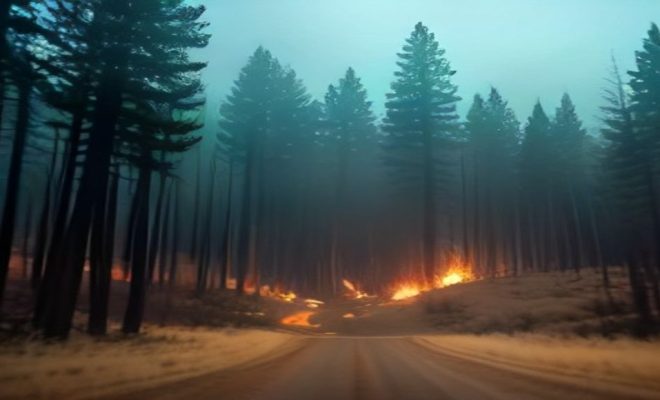
The sky over Spokane, Washington, recently glowed with an ominous, fiery orange, casting a stark light on a rapidly escalating crisis. A devastating wildfire ripped through the region, consuming hundreds of homes and leaving a trail of destruction that extends far beyond the physical landscape. This isn’t just a local tragedy; it’s another chilling chapter in a nationwide saga that sees climate-fueled disasters increasingly unsettling the property insurance market. For homeowners, it means more than just a higher bill; it means a fundamental rethinking of what it truly means to protect your most valuable asset.
The Spokane fire, while localized, sent ripples of concern through the insurance industry, amplifying fears that have been building for years. We’ve seen this play out in California, Florida, and parts of the Gulf Coast. Now, the Pacific Northwest is getting its painful lesson, and the implications for the broader U.S. property market, particularly the wildfire insurance impact, are profound. Insurers, grappling with unprecedented losses and an uncertain future, are making difficult choices: withdrawing coverage, drastically raising premiums, or simply refusing to write new policies in vulnerable areas. What does this mean for you, the homeowner, and how can you navigate this increasingly volatile terrain?
The Alarming Shift: From Rural Risk to Urban Threat
For decades, wildfires were largely perceived as a rural or wilderness-adjacent problem. Images of remote cabins engulfed in flames, or isolated communities battling the blaze, were common. But the Spokane fire painted a different, far more unsettling picture: urban destruction. Hundreds of homes, many within established neighborhoods, were lost. This shift is critical. When wildfires begin to routinely threaten and destroy properties in more densely populated areas, the actuarial models that insurers rely on break down. The sheer concentration of insured value in urban and suburban zones means that a single event can trigger losses that dwarf those from a scattered rural fire.
This evolving threat isn’t unique to Spokane. Across the West, the wildland-urban interface (WUI) – the zone where human development meets undeveloped wildland – is expanding rapidly. As more people build homes closer to forests and natural areas, they unwittingly place themselves, and their insurers, directly in harm’s way. The Spokane event serves as a stark reminder that even seemingly safe, developed areas are not immune. This broader exposure means that the wildfire insurance impact isn’t just for those living in remote areas anymore; it’s a concern for anyone owning property in a region susceptible to these increasingly frequent and intense blazes.
California’s Cautionary Tale: A State on the Brink
If you want a glimpse into the future of property insurance in high-risk areas, look no further than California. The Golden State has been a canary in the coal mine for years, battling a relentless barrage of wildfires that have shattered records for destruction and cost. Insurers like State Farm and Allstate have already announced significant pullbacks, either ceasing to write new policies or severely restricting coverage in fire-prone regions. This isn’t a small adjustment; it’s a fundamental retreat from a market deemed too risky.
The consequence? California’s state-backed ‘insurer of last resort,’ the FAIR Plan, is overwhelmed. Designed to provide basic fire coverage for properties that can’t secure it on the open market, the FAIR Plan was never intended to be the primary insurer for vast swathes of the state. Its reserves, meant to cover claims, are being rapidly depleted. After the devastating 2025 wildfire season, projections showed its reserves would be exhausted. This creates a terrifying scenario: if a major fire event happens and the FAIR Plan can’t pay out, thousands of homeowners could be left without recourse, facing financial ruin. This unsustainable model highlights the dire long-term wildfire insurance impact when the commercial market abandons a region.
The Mechanics of Retreat: Why Insurers Are Pulling Back
Understanding why insurers are making these difficult decisions requires a look at their core business model. Insurance isn’t about taking on risk; it’s about managing and pricing risk. When the frequency and severity of events like wildfires become unpredictable, and when the costs associated with those events skyrocket, the traditional actuarial models that underpin their pricing simply break down. They can’t accurately forecast future losses, making it impossible to set premiums that adequately cover potential payouts while still turning a profit.
Consider the compounding factors: the increasing cost of rebuilding materials and labor due to inflation and supply chain issues; the sheer scale of modern wildfires, which can burn for weeks or months; and the legal liabilities that often follow catastrophic events. When a single wildfire can cause billions of dollars in damage, as we’ve seen repeatedly in recent years, an insurer’s entire book of business can be threatened. From their perspective, pulling back isn’t a punitive measure; it’s a survival strategy. They are legally and financially obligated to ensure their solvency, and if a market becomes uninsurable at a reasonable price, they have little choice but to exit or drastically adjust their offerings. This is the harsh reality of the evolving wildfire insurance impact.
The Ripple Effect: Premium Hikes and Policy Cancellations
For homeowners who can still get coverage, the news isn’t much better. Premium hikes are becoming the norm, not the exception. In some high-risk areas, homeowners are seeing their annual premiums double, triple, or even quadruple in a single year. These aren’t minor adjustments; they are substantial financial burdens that can make homeownership untenable for many. Imagine budgeting for a certain mortgage payment, only to find your insurance costs have jumped by hundreds, or even thousands, of dollars per month.
Beyond the cost, there’s the specter of non-renewal. Insurers are increasingly reviewing policies and opting not to renew them, leaving homeowners scrambling to find new coverage. This can be a frantic, frustrating process, often ending with the homeowner having to accept significantly higher premiums or settle for a bare-bones policy from a state-backed plan. The emotional toll of this uncertainty, combined with the financial strain, is immense. It’s not just about protecting your house; it’s about protecting your financial stability and peace of mind. (See: impact of wildfires on insurance.)
Understanding Your Vulnerability: Mapping the Risk
So, how do you know if your property is at risk, and what can you do about it? Start by understanding your local environment. Are you in or near the wildland-urban interface? Does your community have a history of wildfires? Many states and local fire departments offer online resources, maps, and assessments that can help you understand your specific vulnerability. Tools like the Wildfire Risk to Communities website from the USDA Forest Service can provide valuable insights into your area’s specific risk factors.
It’s also crucial to understand the specific characteristics of your property. Is your home built with fire-resistant materials? Do you have defensible space around your home? Are there overgrown trees or shrubs close to the structure? Insurers are increasingly using sophisticated modeling and even satellite imagery to assess individual property risk. What might seem like minor details to you can significantly impact an insurer’s assessment of your wildfire insurance impact, and consequently, your premiums and eligibility.
Taking Action: Mitigating Risk and Building Resilience
The good news is that homeowners are not entirely powerless. There are concrete steps you can take to reduce your property’s vulnerability to wildfire, and these actions can sometimes make a difference in your insurance options. This is often referred to as ‘hardening’ your home and creating ‘defensible space.’
Hardening Your Home: Making it Fire-Resistant
- Roofing Materials: Replace old roofs with Class A fire-rated materials like asphalt composition shingles, metal, or tile.
- Vents: Install fine-mesh (1/8-inch) metal screens over all attic, foundation, and dryer vents to prevent embers from entering.
- Siding: Opt for fire-resistant siding materials such as fiber cement, stucco, or brick. Avoid vinyl siding, which can melt.
- Windows: Use multi-pane, tempered glass windows. Single-pane windows can shatter quickly from heat.
- Decks and Fences: Choose non-combustible materials for decks and fences, or ensure wooden elements are treated and maintained. Clear vegetation from under decks.
Creating Defensible Space: A Buffer Zone
- Zone 1 (0-5 feet from home): This is the immediate zone. Remove all combustible materials, including plants, firewood, and outdoor furniture. Keep this area clear of leaves and debris. Consider non-combustible landscaping like rock or gravel.
- Zone 2 (5-30 feet from home): This intermediate zone should feature well-spaced, irrigated plants with low flammability. Remove dead vegetation, prune tree branches up to 6-10 feet from the ground, and ensure trees are spaced adequately.
- Zone 3 (30-100 feet from home): This extended zone should reduce the intensity of a wildfire. Remove highly flammable vegetation, thin out dense areas of trees, and maintain adequate spacing.
Many communities and fire agencies offer programs and resources to help homeowners implement these measures. Some insurers are even beginning to offer discounts or more favorable terms for properties that demonstrate significant wildfire mitigation efforts. It’s a proactive approach that benefits both you and the broader community, potentially lessening the overall wildfire insurance impact for everyone.
The Political and Economic Ramifications
The property insurance crisis isn’t just a homeowner’s headache; it’s a political and economic hot potato. When insurers pull out or raise rates dramatically, it affects housing affordability, property values, and local tax bases. If homes become uninsurable, or prohibitively expensive to insure, it can depress real estate markets, making it harder for people to buy, sell, or even refinance their homes. This has a cascading effect on local economies, impacting everything from construction jobs to retail spending.
Governments are under immense pressure to find solutions. This could involve direct financial assistance to homeowners for mitigation, creating or expanding state-backed insurance programs, or even imposing regulations on insurers. However, these solutions often come with their own set of challenges, including funding issues, potential moral hazards, and the risk of distorting market forces. There’s no easy answer, and the debate is often highly charged, pitting the immediate needs of homeowners against the long-term solvency of the insurance industry and the broader economic stability of affected regions. The increasing wildfire insurance impact is forcing these tough conversations.
Looking Ahead: Is There a Sustainable Path Forward?
So, what does the future hold for wildfire insurance? It’s clear that the status quo is unsustainable. A multi-pronged approach will be essential, involving homeowners, communities, insurers, and government entities. Here are some key areas that will likely see increased focus:
Enhanced Data and Modeling
Insurers need more sophisticated, localized data to accurately assess and price risk. This means moving beyond broad regional classifications to granular, parcel-level analysis that accounts for specific mitigation efforts, topography, and vegetation. Advances in AI and satellite technology are already playing a role here, but continuous improvement is critical.
Community-Wide Mitigation
Individual home hardening is important, but true resilience comes from community-wide efforts. This includes proactive forest management, creating community defensible spaces, improving evacuation routes, and implementing robust early warning systems. Insurers may increasingly look at a community’s overall preparedness, not just individual homes, when making coverage decisions.
Incentivizing Resilience
Governments and insurers need to work together to create stronger incentives for homeowners and communities to invest in mitigation. This could include tax breaks, grants, low-interest loans for home hardening, or significant insurance premium reductions for certified fire-resistant properties and communities. (See: wildfire safety and health impacts.)
Rethinking Building Codes
Building codes in high-risk areas will likely need to be updated to mandate more fire-resistant construction materials and designs. While this can increase initial construction costs, it dramatically reduces the long-term risk and the wildfire insurance impact.
Innovative Insurance Products
We might see the emergence of new types of insurance products, perhaps parametric insurance that pays out based on specific triggers (like fire proximity) rather than actual damage, or policies that include funding for mitigation efforts as part of their coverage.
The Spokane wildfire is a stark reminder that the climate crisis isn’t an abstract concept; it’s a very real threat impacting our homes, our finances, and our sense of security. The property insurance market is a critical barometer of this change, and its instability signals that we are at a crossroads. Navigating this future will require adaptability, investment, and a collective commitment to building more resilient communities. For homeowners, staying informed, taking proactive steps to mitigate risk, and understanding your insurance options are no longer just good ideas – they are essential for protecting your most valuable asset.
The Role of Climate Change in Escalating Wildfire Risk
It’s impossible to discuss the wildfire insurance impact without acknowledging the elephant in the room: climate change. While local factors like land management and human activity certainly play a part, the scientific consensus is clear that a warming planet is creating conditions ripe for more frequent, intense, and destructive wildfires. Longer, hotter dry seasons, reduced snowpack, and increased instances of extreme heatwaves are all contributing to a landscape that’s more susceptible to ignition and rapid fire spread.
These aren’t just subtle shifts; we’re talking about fundamental changes to regional climates. For example, in many western states, the fire season now starts earlier and ends later, effectively extending the window of vulnerability. Drought conditions become more severe and prolonged, drying out vegetation that then acts as potent fuel. The interaction between these climate variables creates a feedback loop: hotter temperatures lead to drier fuels, which burn more intensely, releasing more carbon, which in turn exacerbates warming. This makes it incredibly difficult for insurers to model future risks based on historical data, as past trends are no longer reliable predictors of what’s to come.
Beyond Direct Damage: Understanding Indirect Losses
When we talk about wildfire insurance impact, we often focus on the obvious: the cost of rebuilding a home. But the true financial toll extends far beyond direct property damage. Consider the ripple effects: business interruption for local enterprises, temporary housing costs for displaced residents, and the long-term health impacts from smoke exposure. Even if your home isn’t directly touched by flames, you might experience significant losses. Smoke damage can render a home uninhabitable, requiring extensive cleaning and repairs, which your policy might cover, but still represents a massive disruption.
Then there’s the psychological impact. Many homeowners who survive a fire event experience trauma, anxiety, and depression. While insurance can cover tangible assets, it can’t fully compensate for the emotional toll of losing cherished possessions or the fear of future fires. These indirect costs, while harder to quantify in an insurance policy, contribute to the overall societal burden of wildfires and underscore the importance of comprehensive mitigation strategies that protect not just structures, but entire communities and their well-being.
Expert Perspectives: What Actuaries and Scientists Say
We’re not just seeing insurers react; the experts who study risk are sounding alarms. Actuaries, the mathematicians of the insurance world, are struggling to make sense of the new normal. Dr. Robert Muir-Wood, a leading catastrophe risk expert, has often highlighted how traditional models built on historical averages are increasingly inadequate. He points out that climate change introduces “non-stationarity” – the idea that the statistical properties of a system change over time – making past data an unreliable guide for future predictions.
Climate scientists, like those at the National Center for Atmospheric Research, provide the underlying data that explains *why* these changes are happening. They show us how rising global temperatures are directly linked to increased aridity and longer periods of high fire danger. It’s a collaboration of fields: climate science identifies the drivers, and actuarial science attempts to quantify the resulting financial risk. Both agree that without significant changes in land management, building practices, and global emissions, the wildfire insurance impact will only continue to worsen. (See: climate change and wildfire frequency.)
Navigating the Brokerage Landscape in High-Risk Zones
For homeowners in high-risk zones, finding an insurance policy isn’t just about calling your old agent anymore. It often requires working with specialized insurance brokers who have access to a broader, sometimes non-admitted, market. These brokers can help you find coverage from smaller, specialty insurers or surplus lines carriers that might be willing to take on higher risks, albeit at significantly higher premiums.
It’s a different world than the standard insurance market. Policies from surplus lines carriers often have fewer regulatory protections, and their financial stability might not be as transparent as larger, admitted carriers. This means you need to do your homework, ask lots of questions, and ensure you understand the terms and conditions thoroughly. A good broker will be invaluable in this process, helping you compare options, understand deductibles (which are often much higher for wildfire claims), and navigate the complexities of what might be the only coverage available to you.
FAQ: Your Wildfire Insurance Questions Answered
Q1: What exactly does “wildfire insurance” cover?
Most standard homeowners insurance policies (HO-3 or HO-5) include coverage for fire damage, which typically extends to wildfires. However, in high-risk areas, insurers might exclude wildfire coverage, require a separate endorsement, or impose a specific wildfire deductible. It’s crucial to check your policy declarations page and talk to your agent to understand your specific coverage limits and exclusions. Some policies might also cover additional living expenses if you’re evacuated or your home is uninhabitable.
Q2: My insurer dropped me. What are my options?
If your insurer non-renews your policy due to wildfire risk, your first step is to contact an independent insurance broker who specializes in high-risk properties. They often have access to a wider range of carriers, including surplus lines insurers. If you still can’t find coverage on the open market, you may need to turn to your state’s “insurer of last resort,” like California’s FAIR Plan. Be aware that these plans often offer more limited coverage and higher premiums, and might only provide basic fire insurance, requiring you to purchase separate policies for other perils like liability or theft.
Q3: Will making my home fire-resistant really lower my premiums?
It can, but it’s not guaranteed with every insurer. Some forward-thinking insurers are starting to offer discounts or more favorable terms for homeowners who implement significant wildfire mitigation measures, such as those recommended for hardening your home and creating defensible space. You’ll need to document your efforts and provide proof to your insurer. Even if you don’t get an immediate discount, these actions significantly reduce your risk of loss, which is the ultimate goal.
Q4: What’s the difference between a deductible and a wildfire deductible?
A standard deductible is the amount you pay out of pocket before your insurance coverage kicks in for most claims (e.g., $1,000 for a broken pipe). A wildfire deductible is a separate, often much higher, deductible specifically for wildfire claims. It might be a flat dollar amount (e.g., $5,000) or a percentage of your home’s insured value (e.g., 5% of $500,000, which is $25,000). These higher deductibles are a way for insurers to manage their risk in fire-prone areas. Always check your policy for any specific wildfire deductibles.
Q5: How can I find out my home’s specific wildfire risk?
Several resources can help:
- USDA Forest Service’s Wildfire Risk to Communities: An excellent online tool that provides parcel-level risk assessments.
- Local Fire Department or CAL FIRE (if in California): Many local agencies offer free home assessments or have online maps indicating risk zones.
- Your Insurance Agent: They often have access to risk assessment tools used by their carriers.
- Private Risk Assessment Services: Some companies specialize in detailed wildfire risk reports for individual properties.
Understanding your risk is the first step toward effective mitigation and smarter insurance decisions.
“`
Trending Now
Frequently Asked Questions
Why is wildfire insurance becoming more expensive in the U.S.?
Wildfire insurance costs are rising due to increasing climate-fueled disasters, leading insurers to face unprecedented losses. As wildfires threaten urban areas, insurers are withdrawing coverage or raising premiums to mitigate risk, impacting homeowners significantly.
How do wildfires affect property insurance coverage?
Wildfires are shifting from rural to urban areas, causing insurers to reassess risk models. This change leads to increased premiums, reduced coverage options, or outright policy cancellations in high-risk zones, affecting homeowners' ability to secure adequate insurance.
What areas in the U.S. are most at risk for wildfires?
Regions like California, Florida, and the Gulf Coast have historically faced wildfire risks, but recent events in places like Spokane, Washington, highlight that even urban areas in the Pacific Northwest are now vulnerable, prompting a broader insurance crisis.
What should homeowners do if they can't get wildfire insurance?
Homeowners unable to secure wildfire insurance should explore alternative options such as state-backed insurance programs, consider risk mitigation measures like defensible space around properties, and seek advice from insurance professionals to navigate this challenging landscape.
What impact do wildfires have on home values?
Wildfires can significantly decrease home values, especially in areas prone to such disasters. As insurance becomes harder to obtain and more expensive, potential buyers may be deterred, leading to a decline in property values in affected neighborhoods.
Have you experienced this yourself? We'd love to hear your story in the comments.