This Controversial AI Doctor Is Now Prescribing Acne Treatments in Utah – Here’s How It Works
“`html
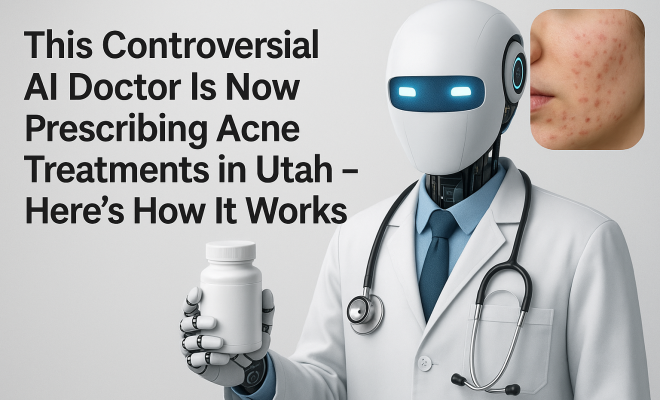
Imagine bypassing the dermatologist’s office, the waiting room, and the often-lengthy process of getting a prescription for your acne. What if, instead, a sophisticated AI could analyze your skin, ask you a few targeted questions, and then, without a human doctor ever laying eyes on you, issue a prescription? This isn’t science fiction anymore. It’s the reality unfolding in Utah, where a startup called Nolla Health has launched a pilot program that allows its AI to provide initial acne prescriptions to adults aged 18 and over.
This move is nothing short of groundbreaking, and, let’s be honest, it’s also incredibly controversial. Nolla Health is calling it the ‘first ever end-to-end AI doctor,’ meaning the artificial intelligence handles everything from diagnosis to treatment recommendation and prescription. The process involves a facial scan and a detailed questionnaire. While the idea of a fully autonomous AI doctor is exhilarating for some, promising unparalleled convenience and accessibility, it has naturally ignited a fierce debate about patient safety and the ethical integration of AI into our most sensitive personal decisions: our health. If you’re wondering how to use AI for acne treatment, this is a prime example, but it comes with a lot of questions.
Utah has become an unlikely epicenter for this experiment, drawing both praise for its innovation and sharp criticism for its perceived recklessness. The state’s Medical Licensing Board has already pushed back against similar AI prescription renewal experiments due to safety concerns. Yet, the Commerce Department’s Office of Artificial Intelligence Policy is forging ahead, with independent evaluators tasked with scrutinizing these AI tools. This whole situation is emotionally charged, directly impacting public trust in healthcare and forcing us to confront the evolving role of AI. Let’s dig into how Nolla Health’s system works, the implications, and what this means for you.
1. The Nolla Health AI: A ‘First-Ever End-to-End AI Doctor’
Nolla Health isn’t just another telehealth platform. Their claim to fame, and the source of much discussion, is their assertion of being the ‘first ever end-to-end AI doctor.’ What exactly does ‘end-to-end’ mean in this context? It signifies that the AI isn’t merely assisting a human physician or providing preliminary information. Instead, it’s designed to handle the entire diagnostic and prescriptive process for acne without direct human medical oversight for initial prescriptions. This is a radical departure from traditional medical practice, where even in telehealth, a licensed human doctor typically reviews and approves any prescriptions.
This bold approach suggests a complete trust in the AI’s capabilities to accurately assess dermatological conditions and recommend appropriate treatments. For those who have struggled with persistent acne, the promise of such a streamlined, accessible service is undeniably appealing. Think about the countless hours spent trying to get an appointment, the co-pays, the travel. If an AI can genuinely cut through all that red tape and deliver effective care, it could be revolutionary. However, the sheer autonomy of this system is precisely what makes medical professionals and regulators nervous. The stakes are incredibly high when an algorithm is making medical decisions that directly impact a patient’s health and well-being.
2. The Core Process: Facial Scan and Comprehensive Questionnaire
So, if you’re curious how to use AI for acne treatment via Nolla Health, what’s the actual user journey? It starts with two critical components: a detailed facial scan and a comprehensive questionnaire. The facial scan is designed to capture high-resolution images of the user’s skin, allowing the AI to visually analyze the type, severity, and distribution of acne lesions. This isn’t just about identifying pimples; it’s about discerning between different forms of acne, such as blackheads, whiteheads, papules, pustules, nodules, and cysts, which all require different treatment approaches.
Following the visual assessment, users are prompted to complete an in-depth questionnaire. This isn’t a quick ‘yes/no’ survey. It delves into crucial medical history, lifestyle factors, current medications, allergies, and the user’s specific concerns and goals regarding their acne. Think about questions concerning the duration of the acne, previous treatments attempted (and their efficacy or side effects), family history of skin conditions, hormonal fluctuations, diet, stress levels, and even sun exposure habits. The AI uses this combined data—visual and textual—to construct a holistic picture of the individual’s condition. The more data points the AI has, the more refined its diagnostic capability is supposed to be, allowing it to tailor a treatment plan that’s theoretically as personalized as one a human dermatologist might devise.
3. Eligibility and Geographic Scope: Who Can Use It?
Currently, Nolla Health’s pilot program for AI-driven initial acne prescriptions is specifically approved for residents of Utah who are 18 years of age or older. This age restriction is crucial, reflecting a cautious approach to integrating AI into pediatric care, where medical complexities and consent issues can be more pronounced. Limiting the program to adults simplifies some of the ethical and liability considerations, at least for now. The geographic limitation to Utah is also a significant factor.
Utah’s regulatory environment has proven to be uniquely receptive to this kind of innovation, despite the internal debates among its medical boards. This makes Utah a live laboratory for AI in healthcare, but it also means that individuals outside the state cannot yet access Nolla Health’s autonomous prescription service. If the pilot proves successful and safe, and if regulatory bodies in other states become more comfortable with this model, we might see expansion. For now, if you’re not in Utah and wondering how to use AI for acne treatment in this specific manner, you’ll have to wait.
4. The Regulatory Tightrope: Utah’s AI Policy vs. Medical Licensing Board
The story of Nolla Health in Utah isn’t just about technological advancement; it’s also a compelling narrative of regulatory friction and the push-pull between innovation and safety. On one side, you have Utah’s Commerce Department’s Office of Artificial Intelligence Policy, which seems eager to position the state as a leader in AI integration, particularly in healthcare. They view these pilot programs as essential for understanding AI’s potential and setting future standards. This office is overseeing the Nolla Health pilot, with independent evaluators tasked with ensuring the AI’s performance and adherence to medical standards. (See: AI in healthcare and ethics.)
On the other side stands the Utah Medical Licensing Board, a body traditionally charged with safeguarding patient safety and maintaining the integrity of medical practice. This board has previously demonstrated significant skepticism and even demanded a halt to a similar AI prescription renewal experiment due to concerns about patient safety. Their apprehension stems from the fundamental principle that medical diagnoses and prescriptions carry inherent risks, and the absence of a human physician in the loop introduces a novel layer of potential liability and ethical questions. This ongoing tension highlights the broader societal challenge of how to embrace technological progress without compromising established safety protocols in critical fields like medicine. It’s a tightrope walk, and the outcomes of these pilot programs will undoubtedly influence future policy nationwide.
5. Patient Safety and Ethical Implications: The Core Debate
This is where the rubber meets the road. The most significant and emotionally charged aspect of Nolla Health’s approach is the debate surrounding patient safety and the ethical implications of an AI issuing prescriptions without direct human oversight. Proponents argue that AI can reduce human error, provide consistent, evidence-based care, and dramatically increase access, especially for those in rural areas or who face socioeconomic barriers to traditional care. They might point to the vast datasets AI can process, potentially identifying subtle patterns that even experienced dermatologists might miss. For more context, see troubling signs for AI startups.
However, critics raise valid concerns. What happens if the facial scan misinterprets a lesion that’s not acne but something more serious, like skin cancer? What if the questionnaire misses a crucial piece of medical history that could lead to an adverse drug reaction? Human doctors possess intuition, the ability to ask follow-up questions based on non-verbal cues, and a deep understanding of complex patient contexts that current AI models struggle with. There’s also the question of accountability: if an AI makes a mistake, who is responsible? The company, the programmers, the doctor who designed the algorithm? This complex ethical landscape is why the Utah Medical Licensing Board has been so cautious. It’s not just about efficiency; it’s about trust, responsibility, and the fundamental nature of the doctor-patient relationship when the ‘doctor’ is a machine.
6. The Promise of Accessibility and Efficiency
Despite the very real concerns, it’s easy to see the immense promise in how to use AI for acne treatment, particularly when it comes to accessibility and efficiency. Acne is a pervasive skin condition affecting millions, often leading to significant emotional distress and impacting self-esteem. Yet, getting timely and effective dermatological care can be a challenge. Long wait times for appointments, the cost of consultations, and geographical barriers (especially for those living far from urban centers) often mean that many individuals suffer needlessly or resort to ineffective over-the-counter remedies.
An AI-driven platform like Nolla Health promises to democratize access to care. Imagine being able to get a professional assessment and prescription from the comfort of your home, at any time of day, without needing to take time off work or arrange childcare. This could be a game-changer for underserved populations, students, or anyone with a demanding schedule. The efficiency gains are also considerable: no paperwork, no waiting rooms, potentially faster diagnosis, and quicker access to treatment. If the AI can reliably deliver safe and effective care, it could significantly alleviate the burden on the healthcare system and improve the quality of life for countless individuals struggling with acne.
7. What This Means for the Future of Healthcare and AI Integration
The Nolla Health experiment in Utah is more than just a specific acne treatment program; it’s a bellwether for the future of healthcare and the broader integration of artificial intelligence into medical practice. This pilot program, if successful and deemed safe by independent evaluators, could set a precedent for how AI is regulated and deployed in other medical specialties. It forces us to reconsider the traditional models of care delivery and ponder where the human element is truly indispensable versus where AI can provide equivalent or even superior service.
The lessons learned from Nolla Health will undoubtedly inform policies around data privacy, algorithmic bias (ensuring the AI works effectively across diverse skin tones and conditions), and the legal frameworks for AI accountability. It will also spark further discussions on direct-to-consumer medical services and how health insurance models might adapt to cover AI-driven care. Ultimately, this isn’t just about how to use AI for acne treatment; it’s about the fundamental reshaping of patient-doctor relationships, the redefinition of medical expertise, and the creation of a new healthcare paradigm where humans and intelligent machines collaborate—or perhaps, in some cases, operate independently—to deliver care. The journey is just beginning, and its trajectory will be fascinating to watch.
8. The Technology Underpinning AI Acne Diagnosis
Let’s take a closer look at the actual technology making this possible. When we talk about how to use AI for acne treatment, we’re talking about sophisticated machine learning algorithms, specifically deep learning models, that are trained on massive datasets of dermatological images and patient health records. These models are designed to recognize patterns that correlate with different types and severities of acne.
Think of it like this: the AI is shown millions of pictures of skin, some with acne, some without, and some with other skin conditions. Each picture is meticulously labeled by expert dermatologists. Over time, the AI learns to identify the subtle visual cues – the size and color of lesions, the texture of the skin, the presence of scarring, and so on. This isn’t just simple image recognition; it’s about understanding context. For instance, a red bump on the forehead might be acne, but if it’s accompanied by other specific characteristics, it could be rosacea or even something else entirely. The questionnaire data then adds another layer of intelligence, helping the AI differentiate between conditions that might look similar but have different underlying causes or require different treatments. For example, hormonal acne often presents differently than fungal acne, and the questionnaire helps the AI narrow down these possibilities based on symptoms and patient history.
This multi-modal approach, combining visual analysis with structured data, is what gives these AI systems their diagnostic power. The goal is to mimic the diagnostic process of an experienced dermatologist, but with the added benefit of being able to instantly access and process a knowledge base far exceeding any single human’s memory.
9. Comparing AI Diagnosis to Traditional Dermatology
It’s natural to compare AI’s capabilities with those of a human dermatologist. When considering how to use AI for acne treatment, it’s helpful to understand the strengths and weaknesses of both approaches. A traditional dermatologist brings years of training, clinical experience, and the invaluable human touch. They can perform physical examinations, order lab tests, and engage in nuanced conversations to understand a patient’s emotional state and lifestyle, which are often significant factors in acne management. (See: AI applications in dermatology.)
However, human dermatologists also face limitations. There’s a shortage of dermatologists in many areas, leading to long wait times. Human diagnosis, while often excellent, can sometimes be subjective and prone to variability, depending on the individual doctor’s experience and current workload. AI, on the other hand, offers consistency. Once trained, its diagnostic criteria remain uniform. It doesn’t get tired, it doesn’t have a bad day, and it can process information incredibly quickly. This consistency could lead to more standardized and potentially faster care for common conditions like acne.
The key difference lies in complex cases or atypical presentations. A human doctor is better equipped to handle ambiguities, recognize rare conditions, or interpret non-standard symptoms. The concern with an autonomous AI is its potential inability to deviate from its training data, meaning it might struggle with conditions it hasn’t been explicitly taught to recognize, or it might miss subtle cues that fall outside its programmed parameters. This is why the independent evaluation in Utah is so critical – it’s testing the AI’s robustness in real-world scenarios, not just in controlled lab settings. For more context, see AI's impact on healthcare and legal rights.
10. Potential for Misdiagnosis and How Systems Mitigate It
The fear of misdiagnosis is a central point of contention when discussing how to use AI for acne treatment. Critics worry that an AI might mistake a serious skin condition, like basal cell carcinoma or melanoma, for a benign acne lesion, leading to delayed treatment for potentially life-threatening issues. This is a very real concern and one that developers are actively trying to address.
How do they mitigate this risk? Firstly, by training the AI on incredibly diverse and comprehensive datasets that include not just various types of acne but also a wide array of other skin conditions, including rarer ones and those that mimic acne. The AI learns to differentiate. Secondly, many AI diagnostic tools incorporate a “confidence score” or “uncertainty quantification.” If the AI isn’t highly confident in its diagnosis, it should flag the case for human review, effectively acting as a triage system rather than a fully autonomous decision-maker. Nolla Health’s “end-to-end” claim suggests a high level of confidence, but even within such a system, there are likely built-in safety nets for cases of high diagnostic uncertainty.
Furthermore, the detailed questionnaire acts as a secondary safeguard. If a user reports symptoms or history that strongly suggest something beyond typical acne (e.g., rapid growth of a lesion, unusual pain, bleeding), the AI could be programmed to refer them to a human doctor, regardless of the visual scan. The success of these systems hinges on robust validation, continuous monitoring, and transparent reporting of their accuracy and any errors during pilot phases.
11. The Role of Data Privacy and Security in AI Healthcare
Any discussion about how to use AI for acne treatment, especially when it involves facial scans and personal medical history, must include data privacy and security. Patients are sharing incredibly sensitive information, and the stakes are high if that data is compromised. Healthcare data is a prime target for cybercriminals, and a breach could have devastating consequences for individuals.
Companies like Nolla Health must adhere to strict regulations like HIPAA in the United States, which mandates safeguards for protected health information (PHI). This means implementing strong encryption for data in transit and at rest, secure storage protocols, strict access controls, and regular security audits. Patients need to be fully informed about how their data will be collected, stored, used, and potentially anonymized for further AI training or research. Transparency is key to building trust. Without a clear commitment to ironclad data security, the promise of AI-driven healthcare will be overshadowed by legitimate fears about privacy invasion and identity theft. The ethical framework extends beyond just diagnosis to the entire lifecycle of patient data within an AI system.
12. Future Expansion: Beyond Acne and Utah?
If Nolla Health’s pilot program for how to use AI for acne treatment proves successful and safe, what does that mean for its future and the broader adoption of AI in healthcare? It’s highly probable that the model could expand geographically, first to other states with receptive regulatory environments, and then potentially nationwide or even internationally. The initial focus on acne is strategic because it’s a common condition, often visually diagnosable, and generally has well-established treatment protocols, making it a relatively ‘safe’ entry point for autonomous AI.
Beyond acne, the logical next step would be to explore other common dermatological conditions that are primarily diagnosed visually, such as eczema, psoriasis, or fungal infections. Further down the line, as AI capabilities advance and regulatory frameworks mature, we might see autonomous AI systems tackling more complex conditions or even contributing to areas like radiology (interpreting X-rays or MRIs) or pathology (analyzing tissue samples). The success of this initial pilot isn’t just about Nolla Health; it’s about building a blueprint for how to responsibly and effectively integrate AI into the fabric of medical care, pushing the boundaries of what’s possible while maintaining patient safety as the paramount concern. (See: Artificial intelligence in healthcare.)
Frequently Asked Questions (FAQ) about AI for Acne Treatment
Q1: Can an AI truly diagnose acne as accurately as a human dermatologist?
A1: This is the central question currently being evaluated. AI systems are trained on vast datasets and can achieve high accuracy rates in recognizing common acne types. However, human dermatologists bring nuance, intuition, and the ability to detect subtle, atypical presentations or underlying conditions that current AI might miss. The goal isn’t necessarily to replace dermatologists, but to provide a highly accessible and efficient initial assessment. For straightforward cases, AI can be very accurate; for complex or unusual ones, human oversight remains crucial.
Q2: What kind of information does an AI need to diagnose my acne?
A2: Typically, an AI for acne diagnosis requires two main types of information: visual data and textual data. Visual data comes from high-resolution photographs or scans of your skin, allowing the AI to analyze the type, severity, and distribution of lesions. Textual data is gathered through a comprehensive questionnaire about your medical history, current medications, allergies, lifestyle factors (like diet and stress), previous treatments, and specific concerns. The more detailed and accurate this information, the better the AI can formulate a diagnosis.
Q3: Is AI-driven acne treatment covered by insurance?
A3: Coverage for AI-driven treatment is still very new and can vary widely. As pilot programs like Nolla Health are just emerging, most insurance providers haven’t established clear policies. It’s best to check directly with your insurance company. As AI healthcare becomes more established and regulated, we may see more widespread coverage, similar to how telehealth services are increasingly covered.
Q4: What are the biggest risks of using an AI for acne diagnosis and prescription?
A4: The primary risks involve misdiagnosis of a more serious skin condition as acne, leading to delayed treatment. There’s also the potential for an AI to miss crucial medical history from the questionnaire, resulting in an inappropriate prescription or adverse drug reaction. Data privacy and security are also significant concerns, as you’re sharing sensitive personal health information. Regulators and developers are working to build safeguards against these risks, such as requiring human review for uncertain diagnoses or implementing robust data protection.
Q5: How can I be sure the AI’s prescription is safe for me?
A5: The safety of an AI’s prescription relies heavily on the quality of its training data, the rigor of its algorithms, and the regulatory oversight it undergoes. In pilot programs like Nolla Health’s, independent evaluators scrutinize the AI’s performance. As a user, it’s important to provide complete and accurate information in the questionnaire. If you have any doubts or experience unexpected side effects, always consult a human medical professional immediately. Transparency from the AI provider about their validation process is also a good sign.
Q6: Does using AI mean I’ll never see a dermatologist again for my acne?
A6: Not necessarily. For mild to moderate, straightforward acne, an AI might provide an effective initial treatment path. However, for severe, persistent, or atypical acne, or if you have underlying health conditions, a human dermatologist’s expertise is still invaluable. AI systems are more likely to complement traditional care, handling routine cases efficiently and freeing up dermatologists to focus on more complex patient needs. Think of it as another tool in your healthcare arsenal, not a complete replacement.
Q7: What if the AI makes a mistake? Who is accountable?
A7: This is one of the most significant ethical and legal challenges with autonomous AI in healthcare. The question of accountability is complex and still being defined. Potential parties responsible could include the company that developed the AI, the medical professional who supervised its initial training, or even the regulatory body that approved its use. Legal frameworks are still catching up to the rapid advancements in AI, and outcomes from pilot programs like Nolla Health will play a crucial role in shaping future policies on AI accountability in medicine.
“`
Trending Now
Frequently Asked Questions
How does the AI doctor prescribe acne treatments?
The AI doctor from Nolla Health prescribes acne treatments by analyzing a facial scan and asking users a series of targeted questions. It evaluates the information to diagnose the condition and issue a prescription without the need for a human dermatologist.
Is it safe to use an AI for acne treatment?
The safety of using an AI for acne treatment is a topic of debate. While the technology offers convenience, concerns have been raised about patient safety and the ethical implications of relying on AI for medical decisions, prompting scrutiny from regulatory bodies.
What are the benefits of using an AI doctor for acne?
Using an AI doctor for acne treatment offers several benefits, including eliminating the need for in-person visits, reducing wait times, and providing quick access to prescriptions. It aims to enhance convenience and accessibility for adults seeking acne solutions.
What is Nolla Health's approach to acne treatment?
Nolla Health's approach involves a comprehensive process where the AI conducts a facial scan and collects information through a detailed questionnaire. This end-to-end AI system manages diagnosis, treatment recommendations, and prescriptions for acne.
Why is the AI doctor controversial in Utah?
The AI doctor is controversial in Utah due to concerns about patient safety and the ethical implications of using AI in healthcare. Critics argue that bypassing traditional dermatological processes may pose risks, leading to pushback from medical boards and ongoing discussions about AI's role in health.
Agree or disagree? Drop a comment and tell us what you think.