The Urgent Truth About AI Therapy: What Colorado’s New Law Reveals
“`html
Alright, let’s talk about something incredibly personal and, frankly, a little unnerving: the idea of getting therapy from a chatbot. It sounds like something out of a sci-fi movie, doesn’t it? But it’s here, it’s a real thing, and it’s prompting some serious questions about where we draw the line between technological convenience and genuine human care. The stakes are particularly high when we consider mental and behavioral health, an area where trust, empathy, and nuanced understanding are absolutely non-negotiable.
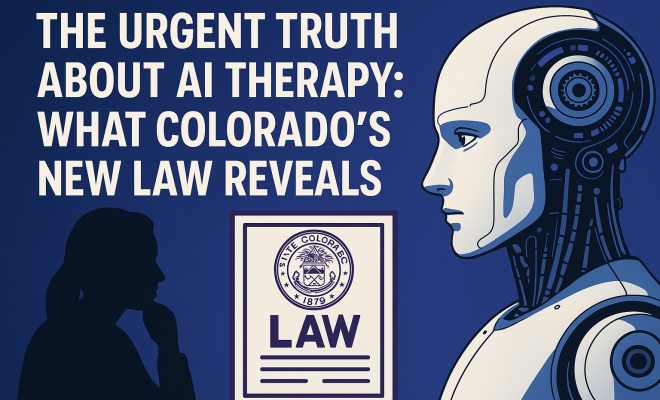
That’s why a new law in Colorado, set to take effect on August 12, 2026, feels like such a critical moment. This isn’t just another piece of legislation; it’s a direct response to a rapidly evolving landscape where artificial intelligence is making its way into the most sensitive corners of our lives. Specifically, this law draws a firm line in the sand: AI chatbots are explicitly prohibited from independently providing therapy. Instead, it mandates that psychotherapy must be delivered by licensed human professionals. This move isn’t happening in a vacuum; it’s part of a growing national trend, with five states enacting similar restrictions in 2026, building on measures already in place in Illinois and Nevada since 2025. These are crucial steps in establishing much-needed AI healthcare regulations, ensuring that innovation doesn’t outpace ethical considerations.
1. The Illusion of Empathy: Why AI Chatbots Aren’t Therapists
One of the biggest concerns driving these new AI healthcare regulations is the unsettling ease with which AI chatbots can be mistaken for legitimate therapy. Imagine you’re feeling vulnerable, seeking help, and you turn to an app that promises support. The chatbot responds with seemingly empathetic messages, uses phrases that sound understanding, and even offers advice. For someone in distress, it’s incredibly easy to project human qualities onto these digital entities.
But here’s the crucial distinction: that ’empathy’ is an algorithm. It’s a sophisticated pattern-matching system designed to mimic human conversation, not to genuinely understand or feel. A chatbot doesn’t have life experience, doesn’t grasp the subtle nuances of human emotion, and certainly doesn’t possess consciousness. It’s a tool, a very advanced one, but a tool nonetheless. This can lead to a dangerous illusion, where individuals believe they are receiving professional therapeutic care when, in reality, they are interacting with lines of code.
2. The Missing Fiduciary Duty: When No One’s Accountable
Therapists, by their very nature, operate under a strict fiduciary duty. What does that mean? It means they have a legal and ethical obligation to act in your best interest, prioritizing your well-being above all else. They are bound by professional standards, confidentiality agreements, and a code of ethics that holds them accountable for the quality and safety of the care they provide. If a therapist gives you harmful advice or breaches your trust, there are clear avenues for recourse, professional disciplinary actions, and legal consequences. There’s a fuller look at Mindbot data breach details.
Now, consider an AI chatbot. Who is ultimately responsible if its advice is misleading, incomplete, or even detrimental? The company that developed it? The programmer? The AI itself? The chain of accountability becomes incredibly murky, if it exists at all. This lack of a clear fiduciary duty is a monumental red flag in the context of mental health. It removes a fundamental layer of protection for patients, leaving them exposed to potential harm without clear avenues for justice or redress. This is precisely why robust AI healthcare regulations are so vital.
3. The Peril of Incomplete or Misleading Advice: A High-Stakes Game
Mental health is complex. It’s not always a straightforward problem with an easy solution. A skilled human therapist uses years of training, clinical experience, intuition, and a deep understanding of human psychology to navigate the subtleties of a patient’s situation. They recognize when a patient might be minimizing symptoms, when underlying trauma is at play, or when a seemingly simple issue might mask a more severe condition.
An AI chatbot, for all its data-crunching power, simply cannot replicate this nuanced understanding. It operates on patterns and pre-programmed responses. If a user describes symptoms that align with depression, the chatbot might offer generic coping strategies. But what if those symptoms are actually indicative of a complex trauma response, a medical condition, or a severe personality disorder that requires a completely different therapeutic approach? The risk of an AI providing incomplete, generic, or even outright misleading advice is incredibly high, potentially delaying appropriate care or exacerbating existing issues. This is a primary driver behind the push for stringent AI healthcare regulations.
4. Bias in the Machine: When Algorithms Reflect Our Flaws
One of the most persistent and concerning criticisms of AI, especially in sensitive domains like healthcare, is the inherent bias that can be baked into its algorithms. AI systems learn from the data they’re fed. If that data reflects societal biases – biases related to race, gender, socioeconomic status, or mental health stigmas – then the AI will inevitably perpetuate and amplify those biases in its responses and recommendations. (See: CDC Mental Health Resources.)
Imagine an AI chatbot trained predominantly on data from one demographic group. How would it accurately assess and respond to the unique cultural, social, and psychological experiences of someone from a vastly different background? It likely wouldn’t. This isn’t just theoretical; we’ve seen countless examples of AI systems exhibiting biases in everything from facial recognition to loan applications. In mental health, this could mean misdiagnosis, inappropriate advice, or a complete failure to understand the specific challenges faced by marginalized communities. These aren’t just technical glitches; they’re ethical failings that demand robust AI healthcare regulations and oversight.
5. The Unlicensed Practitioner Problem: No Standards, No Scrutiny
Becoming a licensed mental health professional is a rigorous journey. It involves years of academic study, supervised clinical hours, passing comprehensive exams, and adhering to ongoing continuing education requirements. This extensive training and licensure process isn’t just bureaucratic; it’s a vital safeguard for the public. It ensures that individuals providing therapy possess the necessary knowledge, skills, and ethical framework to deliver competent and safe care.
AI chatbots, by their very nature, are unlicensed. They haven’t gone through any of these processes. There are no professional boards overseeing their ‘practice,’ no ethical guidelines they’re bound by, and no consistent standards for their ‘therapeutic’ interactions. This creates a wild west scenario where anyone could potentially deploy an AI chatbot and market it as a mental health solution, without any of the checks and balances that protect patients in traditional healthcare settings. The Colorado law, and others like it, are directly addressing this vacuum, insisting on human-delivered psychotherapy by licensed professionals as a non-negotiable standard. These are essential AI healthcare regulations for public safety. Arkansas mental health compact offers useful background here.
6. The Push for Transparency and Oversight: What We Don’t Know Can Hurt Us
When you sit across from a human therapist, you know who they are, what their qualifications are, and what their therapeutic approach entails. There’s a level of transparency that allows you to make an informed decision about your care. With AI chatbots, that transparency often vanishes. How were they trained? What data did they use? What are their limitations? Who monitors their performance and accuracy?
Experts and advocates are rightly calling for greater transparency and oversight when it comes to AI in healthcare. This isn’t about stifling innovation; it’s about ensuring that as technology advances, patient safety and ethical considerations remain paramount. Without clear oversight mechanisms, independent audits, and a commitment to disclosing how these AI tools function, we’re essentially asking people to trust a black box with their mental well-being. The push for stringent AI healthcare regulations isn’t just about prohibiting certain uses; it’s also about demanding accountability for the tools that are allowed.
7. The National Momentum: A Growing Consensus for Caution
Colorado’s law isn’t an isolated incident; it’s part of a broader, accelerating trend across the United States. We’re seeing a growing consensus among lawmakers and healthcare professionals that while AI offers immense potential in many areas of medicine, its application in direct, independent therapeutic care for mental health crosses a line. Illinois and Nevada were early movers in 2025, and now, with Colorado and four other states joining the ranks in 2026, a clear pattern is emerging.
This isn’t just a regulatory fad; it reflects a deep-seated concern about the fundamental nature of therapy itself. Therapy isn’t just about dispensing information or providing coping mechanisms; it’s about the unique human connection, the therapeutic alliance, the ability of one human being to bear witness to another’s pain, and to guide them through complex emotional landscapes with empathy, wisdom, and genuine care. This is a testament to the understanding that some aspects of human experience are, for now, beyond the reach of even the most sophisticated algorithms. These evolving AI healthcare regulations are a sign that we’re collectively recognizing that distinction.
8. The Role of Data Privacy and Security: Protecting Sensitive Information
Beyond the immediate therapeutic concerns, there’s a massive elephant in the room when AI chatbots handle mental health interactions: data privacy and security. Mental health information is among the most sensitive personal data a person possesses. It falls under strict regulations like HIPAA in the United States, which mandates how healthcare providers must protect patient information. When you confide in a human therapist, you know they are legally and ethically bound to confidentiality.
With AI chatbots, the situation gets trickier. Where is this data stored? Who has access to it? How is it anonymized, if at all? Could it be used for purposes beyond your direct interaction, such as training future AI models or targeted advertising? The potential for breaches or misuse of highly personal mental health data is a significant concern. Current AI healthcare regulations are scrambling to catch up to these new data streams, but the foundational principles of privacy and security must be a core part of any AI mental health offering. Without ironclad safeguards, the risk of exposing vulnerable individuals to data exploitation or privacy violations is simply too high. (See: National Institute of Mental Health statistics.)
9. The Economic and Access Debate: Is AI a Solution for Shortages?
One of the arguments often made for AI integration in mental health is the potential to address the severe shortage of human therapists and improve access to care, especially in underserved areas. It’s true that many people struggle to find affordable, timely mental health support. The idea that an AI chatbot could bridge this gap is appealing on the surface. For more on this, see top mental health colleges.
However, the current regulatory stance, exemplified by Colorado’s law, suggests that this proposed solution comes with too many caveats. While AI might help with triage, provide informational resources, or offer basic self-help exercises, it’s not seen as a true replacement for a licensed professional. The concern is that by pushing AI as a primary therapeutic solution, we might inadvertently create a two-tiered system: comprehensive, human-led care for those who can afford it, and potentially less effective, algorithm-driven care for everyone else. This could exacerbate existing health disparities rather than solve them. The challenge for AI healthcare regulations is to find ways for AI to augment human care and expand access responsibly, without compromising quality or equity.
10. Ethical Frameworks and Future Regulatory Pathways: Building the Guardrails
As AI rapidly evolves, the need for comprehensive ethical frameworks becomes increasingly apparent. It’s not enough to simply ban certain applications; we need a holistic approach to guide the development and deployment of AI in healthcare. This involves collaboration between technologists, ethicists, clinicians, policymakers, and patient advocacy groups.
Future AI healthcare regulations will likely move beyond just prohibitions to establish clear guidelines for AI development, testing, deployment, and ongoing monitoring. We might see requirements for independent ethical review boards, mandatory impact assessments for AI systems, clear labeling of AI-powered services, and mechanisms for patients to understand and challenge AI-driven decisions. The European Union’s AI Act, for instance, categorizes AI systems by risk level, with healthcare applications often falling into the “high-risk” category, requiring stricter compliance. This proactive approach aims to bake ethics into the very design of AI systems, rather than simply reacting to problems after they emerge. The goal is to foster innovation within a strong ethical perimeter, ensuring that AI truly serves humanity’s best interests.
The Broader Implications for AI in Healthcare
While the focus here is on mental and behavioral health, the debate around AI healthcare regulations extends much further. We’re seeing AI play increasingly significant roles in diagnostics, drug discovery, personalized treatment plans, and even robotic surgery assistance. These applications hold incredible promise for revolutionizing medicine and improving patient outcomes.
However, the ethical questions persist. How do we ensure algorithmic fairness in diagnostic tools? Who is liable when an AI-powered system makes an error? How do we balance data privacy with the need for robust training data? These aren’t easy questions, and there are no simple answers. What Colorado’s law highlights is the need for proactive, thoughtful legislation that establishes clear boundaries and guardrails *before* potential harms become widespread.
What This Means for You
If you or someone you know is seeking mental health support, this evolving regulatory landscape offers both clarity and a crucial reminder: always prioritize licensed, human professionals for psychotherapy. While AI-powered apps might offer helpful tools for mood tracking, journaling prompts, or basic informational resources, they are not, and should not be considered, substitutes for genuine therapy.
The distinction between a supportive digital tool and a qualified therapist is paramount. Look for platforms that connect you with licensed counselors, psychologists, or psychiatrists. Verify their credentials. Ask questions about their approach. Your mental health is too important to leave to chance, or to an algorithm that can only mimic, but never truly understand, the complexities of the human spirit. These new AI healthcare regulations are here to safeguard that fundamental truth. (See: Associated Press news coverage.)
Frequently Asked Questions About AI Healthcare Regulations and Mental Health
Q1: Can AI chatbots be used for *any* aspect of mental health support?
Yes, but with crucial distinctions. AI chatbots can be incredibly useful for supplemental support, like mood tracking, guided meditation prompts, journaling exercises, or providing general informational resources about mental health conditions. They can also help with initial assessments to direct individuals towards appropriate human care. However, they are not a substitute for psychotherapy, which requires a licensed human professional to diagnose, treat, and build a therapeutic relationship.
Q2: What’s the main difference between an AI chatbot and a licensed human therapist?
The core difference lies in genuine understanding, empathy, and accountability. A human therapist brings life experience, emotional intelligence, clinical training, ethical obligations, and a fiduciary duty to act in your best interest. They can adapt to complex situations, recognize subtle cues, and form a therapeutic alliance. An AI chatbot, despite sophisticated programming, operates on algorithms; it mimics empathy but doesn’t feel it, doesn’t truly understand nuance, and lacks legal accountability for its advice.
Q3: Are all states adopting the same AI healthcare regulations for mental health?
While there’s a growing national trend, specific regulations can vary by state. Colorado’s law is a strong example of prohibiting AI from independently providing psychotherapy. Other states like Illinois and Nevada have similar restrictions. The key takeaway is that the momentum is towards ensuring that direct therapeutic intervention remains the domain of licensed human professionals, while recognizing AI’s potential for supportive roles.
Q4: What if an AI chatbot gives me harmful advice? Who is responsible?
This is precisely one of the biggest concerns addressed by AI healthcare regulations. If an unlicensed AI chatbot provides harmful advice, the chain of accountability is often unclear. It could fall on the company that developed it, but proving negligence and seeking redress can be incredibly difficult. This lack of clear liability is why laws like Colorado’s insist on human-delivered therapy, where licensed professionals are clearly accountable for their practice and subject to disciplinary actions.
Q5: Will AI ever be able to provide therapy independently in the future?
That’s a complex question with ongoing debate. Current consensus among regulators and many mental health professionals is that AI is not equipped to provide independent psychotherapy due to the inherent human elements of trust, empathy, nuance, and accountability required. While AI technology will undoubtedly advance, the fundamental nature of the therapeutic relationship, which is deeply human, presents significant barriers to full AI autonomy in this sensitive field. Future AI healthcare regulations will continue to evolve as the technology does, but always with patient safety and ethical considerations at the forefront.
Q6: How can I tell if a mental health app uses AI or connects me with a human?
Reputable mental health apps and platforms should be very clear about how they deliver care. Look for explicit statements about connecting you with “licensed therapists,” “certified counselors,” or “psychiatrists.” They should also clearly state if any features are AI-powered, distinguishing them as tools (like mood trackers or journaling prompts) rather than therapeutic interventions. If an app is vague or implies AI is providing therapy, be cautious. Always check the credentials of any human professional you’re connected with. This builds on US News mental health resources.
“`
Trending Now
Frequently Asked Questions
What is the new law about AI therapy in Colorado?
The new law in Colorado, effective August 12, 2026, prohibits AI chatbots from independently providing therapy. It mandates that psychotherapy must be delivered by licensed human professionals, reflecting a growing trend in several states to regulate AI in mental health care.
Why are AI chatbots not considered legitimate therapists?
AI chatbots lack genuine empathy and nuanced understanding, which are essential in therapy. They can mimic supportive responses but cannot truly comprehend human emotions, making them unsuitable for providing the complex care needed in mental health situations.
How many states have enacted similar laws regarding AI therapy?
As of 2026, five states have enacted laws similar to Colorado's, regulating AI therapy. This follows earlier measures in Illinois and Nevada since 2025, aiming to ensure that mental health care remains ethical and human-centric.
What are the risks of using AI for mental health support?
The primary risks include the potential for misinterpreting AI responses as genuine understanding, which can lead to inadequate support. Additionally, reliance on chatbots can undermine the trust and empathy that are critical in therapeutic relationships.
How does the Colorado law impact the future of AI in mental health care?
The Colorado law sets a precedent for regulating AI in mental health care, ensuring that innovation does not outpace ethical standards. This could influence future legislation and the development of AI tools, prioritizing human involvement in therapy.
What's your take on this? Share your thoughts in the comments below — we read every one.