55% of Investors Distrust AI with Money: The Trust Problem
We’re living through an AI revolution, aren’t we? From recommending your next movie to optimizing supply chains, artificial intelligence is reshaping industries at an incredible pace. But when it comes to something as fundamentally human and high-stakes as money – specifically, your mortgage or your investment portfolio – a significant trust deficit emerges. You might think AI would be a perfect fit for the cold, hard numbers of finance, offering unparalleled efficiency and unbiased analysis. Yet, as we’re seeing in the rapidly evolving world of AI in mortgage lending and broader financial advice, there’s a serious ‘trust problem’ brewing, and it’s far more complex than just a technological hurdle.
Imagine this: you’ve applied for a mortgage, a decision that could define your next few decades. Instead of a human underwriter, an algorithm crunches your data and delivers a verdict: denied. But when you ask why, the machine offers no clear explanation. This isn’t a hypothetical scenario; it’s a very real challenge facing the integration of AI into critical financial processes. The lack of transparency, often dubbed the ‘black box’ problem, isn’t just an inconvenience; it’s a foundational flaw that complicates audits, raises significant fair lending concerns, and, perhaps most importantly, erodes the very human trust needed for such monumental decisions. This isn’t just about technical glitches; it’s about the emotional resonance of fairness, accountability, and control when your financial future is on the line.
The Opaque Black Box: Why AI in Mortgage Lending Faces a Trust Gap
The promise of artificial intelligence in mortgage lending is undeniably alluring. Picture a system that can process thousands of applications in minutes, identify subtle risk patterns that humans might miss, and streamline the entire underwriting process. Lenders envision reduced costs, faster approvals, and a more objective assessment of creditworthiness. However, the reality often diverges from this utopian vision, particularly when an AI system renders a negative decision. When a loan is denied, applicants, regulators, and even the lenders themselves need to understand the ‘why.’ Was it a specific debt-to-income ratio? A particular credit score threshold? Or something far more complex and perhaps, inadvertently, discriminatory? See also transparency in AI.
This is where the ‘black box’ problem becomes acute. Many advanced AI models, especially those employing deep learning or neural networks, arrive at conclusions through intricate, multi-layered calculations that are incredibly difficult, if not impossible, for a human to fully trace and explain. They learn from vast datasets, identifying correlations that might escape human perception, but they don’t necessarily provide a clear, step-by-step rationale. For a mortgage application, this opacity is a critical flaw. How do you audit a system that can’t explain its reasoning? How do you ensure fair lending practices if you can’t verify that the AI isn’t inadvertently biased against certain demographics, even if its programmers had no such intention? The ethical implications are profound, sparking heated debates across social media and within industry circles about the fundamental role of human oversight.
Regulatory Hurdles: Fannie Mae and Freddie Mac Demand Accountability
The concerns around opaque AI aren’t just theoretical; they’re translating into concrete regulatory action. Major players in the mortgage industry, like Fannie Mae and Freddie Mac, aren’t sitting idly by. These government-sponsored enterprises (GSEs) are crucial to the liquidity and stability of the housing market, purchasing a significant portion of the mortgages originated in the United States. Their guidelines effectively set the standards for the entire industry. And now, they’re demanding rigorous accountability from lenders who choose to integrate AI into their underwriting processes.
What does this mean in practice? Lenders can no longer simply deploy an AI model and hope for the best. Fannie Mae and Freddie Mac are now requiring stringent governance frameworks. This isn’t just about having a model; it’s about having a documented process for how that model was developed, tested, and validated. Lenders must provide comprehensive documentation detailing the AI’s logic, its training data, and its performance metrics. Crucially, they must also furnish proof of fairness, demonstrating that the algorithms do not produce disparate impacts on protected classes. This new regulatory environment introduces a significant compliance burden, forcing AI developers and lenders to prioritize ‘explainable AI’ (XAI) and robust ethical guidelines from the very beginning of their development cycles. It’s a clear signal that the era of ‘plug-and-play’ AI in mortgage lending is over.
The Broader Financial Landscape: Investors’ Demand for Human Touch
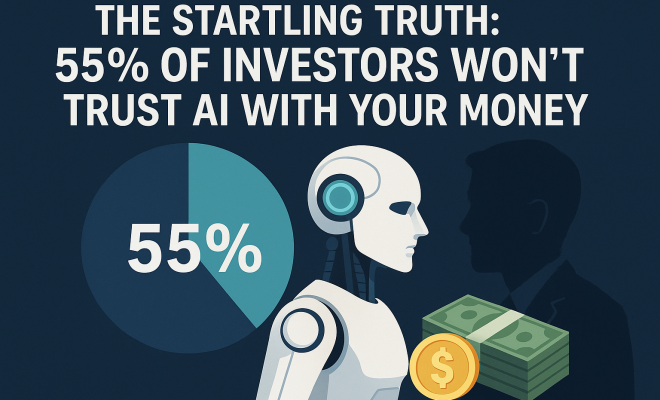
The trust gap isn’t confined to mortgage approvals. It’s a sentiment echoed across the broader financial services sector, particularly when it comes to personal wealth management and investment advice. Recent research paints a clear picture: a striking 55% of investors insist on human oversight for their final financial decisions. This isn’t to say they’re entirely closed off to AI; many are quite open to leveraging AI for preliminary research, data analysis, or identifying potential investment opportunities. They appreciate the speed and analytical power that AI can bring to the table in the initial stages of decision-making.
However, when it comes to pulling the trigger on a major investment, rebalancing a portfolio, or making a strategic financial move that could impact their family’s future, the human element becomes non-negotiable. Why this reluctance? It boils down to the high stakes involved with personal wealth, the desire for empathy, and the need for accountability. If an AI makes a bad call, who is responsible? A human advisor offers a crucial layer of accountability, a sounding board for complex scenarios, and the ability to understand nuanced personal circumstances that an algorithm might miss. This isn’t just about logic; it’s about the emotional weight of financial decisions, where human intuition and reassurance still hold immense value.
Fair Lending and Bias: The Ethical Minefield of Algorithms
One of the most potent and emotional aspects of the debate around AI in mortgage lending is the potential for algorithmic bias and its implications for fair lending. The Equal Credit Opportunity Act (ECOA) and the Fair Housing Act are cornerstones of consumer protection, prohibiting discrimination in lending based on race, color, religion, national origin, sex, marital status, age, or receipt of public assistance. While human underwriters can, unfortunately, harbor conscious or unconscious biases, the hope was that AI, being purely logical, would eliminate this problem. (See: AI and trust in finance.)
However, the reality is far more complex. AI systems learn from data, and if that historical data reflects past human biases or systemic inequalities, the AI can inadvertently learn and perpetuate those same biases. For example, if historical loan data shows that certain minority groups were disproportionately denied loans, an AI trained on that data might identify patterns that correlate with those groups, even if those correlations are proxies for protected characteristics rather than true risk factors. This can lead to a ‘disparate impact,’ where an algorithm, though seemingly neutral, systematically disadvantages certain groups. Identifying and mitigating these biases requires immense diligence, sophisticated auditing tools, and a deep understanding of both technology and social justice. It’s an ethical minefield that demands constant vigilance, rigorous testing, and an unwavering commitment to fairness.
The Role of Explainable AI (XAI) in Building Confidence
Given the challenges of opacity and bias, a significant area of research and development in the AI community is focused on Explainable AI, or XAI. The goal of XAI isn’t just to make predictions or decisions, but to also provide human-understandable explanations for those outcomes. Think of it as peeling back the layers of the black box, allowing stakeholders to see, at least in part, the reasoning process. For AI in mortgage lending, XAI is becoming less of a luxury and more of a necessity.
Imagine an AI system that, upon denying a mortgage, could provide specific, actionable reasons: ‘Your debt-to-income ratio exceeds our threshold of 43% due to your auto loan and credit card balances,’ or ‘Your credit utilization is high at 80%, which indicates increased risk.’ While this might not reveal every single computational step, it offers transparency that is crucial for compliance, appeals, and building trust. XAI techniques can range from simpler, inherently interpretable models like decision trees to more complex post-hoc explanations for deep learning models, such as feature importance scores or saliency maps. The widespread adoption of XAI is not just a technical endeavor; it’s a strategic imperative for any financial institution hoping to leverage AI ethically and effectively while navigating an increasingly scrutinizing regulatory landscape.
The Human Element: Beyond Just Oversight
When investors and mortgage applicants demand human oversight, it’s not just about having a person sign off on an AI’s decision. It’s about a deeper, more nuanced role for human expertise. Think of it as a collaboration, where AI handles the heavy lifting of data processing and pattern recognition, while humans provide the contextual understanding, empathy, and ethical judgment that machines currently lack. For example, a human mortgage officer can understand a unique personal circumstance – perhaps a recent job change with a significant pay raise that an AI might flag as instability, or a temporary financial hardship that has since been resolved.
In wealth management, a human advisor doesn’t just manage a portfolio; they build relationships, understand life goals, and provide emotional support during volatile market conditions. They can interpret a client’s risk tolerance in a way an algorithm might struggle with, understanding that ‘risk tolerance’ isn’t a static number but a dynamic concept influenced by life events. This isn’t about humans competing with AI; it’s about humans augmenting AI, ensuring that technology serves human needs rather than dictating them. The future likely involves a hybrid model where the efficiency of AI is tempered by the wisdom and compassion of human intelligence, creating a more robust and trustworthy financial ecosystem.
Monetization and Market Opportunity: The Demand for Ethical AI
The trust gap and the regulatory push for ethical AI aren’t just challenges; they represent significant market opportunities. As consumers become more aware of the complexities and potential pitfalls of algorithmic decision-making, there’s a growing demand for solutions that prioritize fairness, transparency, and human accountability. This is particularly true in high-stakes areas like personal finance and mortgage lending.
We’re seeing a rise in searches for ‘ethical AI financial advisors,’ ‘AI mortgage review,’ and ‘legal advice for loan discrimination.’ This indicates a clear consumer need for services that can either provide human-backed AI solutions or help individuals navigate the complexities when they suspect algorithmic bias. For fintech companies, this translates into a powerful incentive to develop AI systems that are not only efficient but also inherently explainable and auditable. Startups focusing on XAI tools, bias detection software, and compliance platforms specifically for financial services are well-positioned for growth. Similarly, legal tech firms offering services to challenge AI-driven loan denials or provide oversight consultation for lenders could find a burgeoning market. The companies that can genuinely build and demonstrate trust in their AI offerings will be the ones that capture significant market share in the coming years.
The Evolving Landscape of Data Privacy and Security with AI
Beyond bias and transparency, the integration of AI in mortgage lending introduces another critical dimension: data privacy and security. Mortgage applications are treasure troves of highly sensitive personal and financial information – everything from Social Security numbers and income statements to bank account details and credit histories. When this data is fed into AI systems, especially those that learn and adapt, the potential for privacy breaches and misuse becomes a serious concern.
Lenders leveraging AI must adhere to strict data protection regulations like GDPR, CCPA, and various state-specific laws. This means not just securing the data at rest and in transit, but also ensuring that the AI models themselves don’t inadvertently expose sensitive information or create new vectors for attack. The ‘training data’ used for AI models needs to be anonymized and scrubbed effectively, a task that’s easier said than done, especially with complex datasets. Furthermore, what happens if an AI system, through its learning process, deduces sensitive personal information that wasn’t explicitly provided? These are not trivial questions. Robust cybersecurity frameworks, secure data pipelines, and a commitment to privacy-by-design principles are absolutely essential for any institution deploying AI in the financial sector. The reputational and financial costs of a data breach stemming from an AI system could be catastrophic, further eroding the already fragile trust in algorithmic decision-making. (See: Understanding trust in technology.)
The Impact of AI on Mortgage Professionals: Reskilling and New Roles
It’s natural to wonder about the job market implications when we talk about AI automating complex processes like mortgage underwriting. Will AI replace human mortgage professionals entirely? Most experts believe the answer is a resounding ‘no,’ but it will certainly reshape their roles. Instead of displacement, we’re likely to see a shift towards augmentation and the creation of new, higher-value positions.
Mortgage loan officers, for instance, might spend less time on tedious data entry and more time building client relationships, understanding unique financial situations, and guiding applicants through the emotional aspects of homeownership. Underwriters could transition from manual data verification to overseeing AI systems, interpreting complex AI outputs, and focusing on edge cases or applications flagged for human review due to unusual circumstances or potential bias. There’s also a growing need for professionals who can develop, manage, and audit these AI systems—roles like AI ethics officers, data scientists specializing in fair lending, and AI compliance analysts. This means a significant emphasis on reskilling and upskilling the existing workforce, equipping them with the analytical and technological competencies needed to collaborate effectively with AI. The future of work in mortgage lending isn’t about humans vs. machines, but rather humans and machines working synergistically.
Global Perspectives: How Different Regions Approach AI in Lending
While we’ve focused heavily on the U.S. regulatory landscape with Fannie Mae and Freddie Mac, it’s worth noting that the challenges and opportunities of AI in mortgage lending are global. Different regions are approaching this integration with varying regulatory frameworks and cultural perspectives, creating a fascinating patchwork of innovation and caution.
In the European Union, for example, the proposed AI Act aims to categorize AI systems based on their risk level, with financial services applications like credit scoring falling into the “high-risk” category. This designation would mandate strict requirements for data quality, human oversight, transparency, robustness, and accuracy. Their focus is very much on fundamental rights and consumer protection, setting a potentially global benchmark for ethical AI. In contrast, some Asian markets, particularly in China, have seen rapid and widespread adoption of AI in lending, often driven by large tech companies with vast datasets and less stringent privacy regulations, leading to highly efficient but sometimes less transparent systems. Understanding these global differences is crucial for international lenders and fintech companies, as regulatory arbitrage or a failure to adapt to local ethical standards could lead to significant market access issues or consumer backlash. The global conversation around AI ethics is truly just beginning, and mortgage lending is a prime example of its real-world impact.
The Future of Trust: A Hybrid Human-AI Paradigm
Looking ahead, it’s clear that the integration of AI into finance, especially in critical areas like mortgage lending, will not be a wholesale replacement of human expertise. Instead, we are seeing the emergence of a sophisticated hybrid paradigm, one that seeks to leverage the strengths of both artificial and human intelligence. AI will continue to excel at tasks requiring massive data processing, pattern recognition, and rapid computation. It can flag anomalies, identify potential risks or opportunities, and automate repetitive processes, freeing up human professionals to focus on more complex, nuanced, and empathetic interactions.
The regulatory environment, driven by entities like Fannie Mae and Freddie Mac, will continue to push for greater transparency and accountability in AI models. This will accelerate the development and adoption of XAI techniques, making it easier for institutions to demonstrate fairness and compliance. Simultaneously, consumer demand for human oversight, particularly for final decisions concerning personal wealth, will ensure that human advisors and underwriters remain central to the financial ecosystem. This isn’t a battle between humans and machines; it’s an evolving partnership where technology empowers professionals to deliver better, fairer, and more trustworthy financial services. The challenge now is to refine this partnership, ensuring that the ‘trust problem’ becomes a ‘trust solved’ scenario, leading to a future where AI truly serves humanity in the most critical of financial moments.
Frequently Asked Questions About AI in Mortgage Lending
What is AI in mortgage lending?
AI in mortgage lending refers to the application of artificial intelligence technologies, such as machine learning and natural language processing, to various stages of the mortgage process. This can include automating loan applications, assessing creditworthiness, identifying fraud, streamlining underwriting, and even predicting market trends. The goal is often to increase efficiency, reduce costs, and improve the accuracy of lending decisions.
How does AI assess my creditworthiness for a mortgage?
Traditional credit assessment relies heavily on credit scores (like FICO) and a human underwriter’s review of financial documents. AI systems can go beyond this, analyzing vast amounts of data points from your financial history, spending patterns, alternative data sources (with consent), and even your application text. It identifies complex patterns and correlations that might indicate your likelihood of repayment, potentially offering a more nuanced risk assessment than traditional methods. However, this is also where the “black box” and bias concerns often arise. (See: The black box problem in AI.)
Can an AI system deny my mortgage application?
Yes, an AI system can be programmed to render a decision on your mortgage application, including a denial. This is a primary source of concern for many, as applicants need to understand the specific reasons for a denial to either appeal the decision or improve their financial standing. Regulatory bodies like Fannie Mae and Freddie Mac are increasingly requiring lenders to ensure that AI-driven denials can be clearly explained and are free from unlawful bias.
What is the ‘black box’ problem in AI mortgage lending?
The ‘black box’ problem refers to the difficulty, or sometimes impossibility, of understanding how complex AI models, particularly deep learning networks, arrive at their decisions. Unlike traditional rule-based systems, these AIs learn from data in ways that aren’t easily traceable step-by-step. For mortgage lending, this opacity makes it hard to audit decisions, ensure fair lending practices, or explain a denial to an applicant, which can erode trust and lead to regulatory challenges.
What is Explainable AI (XAI) and why is it important for mortgages?
Explainable AI (XAI) is a set of techniques and tools that aim to make AI models more transparent and understandable to humans. For mortgage lending, XAI is crucial because it allows lenders to explain why an AI made a particular decision (e.g., approved or denied a loan). This transparency helps satisfy regulatory requirements for fair lending, allows applicants to understand and potentially rectify issues, and builds overall trust in AI-driven financial processes. It helps turn the “black box” into a “glass box.”
How do regulators ensure AI in mortgage lending is fair and unbiased?
Regulators are increasingly requiring lenders to implement robust governance frameworks for their AI models. This includes documenting the AI’s development, testing, and validation processes. Crucially, lenders must demonstrate that their AI algorithms do not produce disparate impacts on protected classes, meaning they don’t unfairly disadvantage certain demographic groups. This involves rigorous bias detection testing and a commitment to mitigating any identified biases, often through the use of XAI tools and human oversight.
Will AI replace human mortgage loan officers and underwriters?
While AI will undoubtedly automate many routine and data-intensive tasks currently performed by humans, it’s unlikely to entirely replace human professionals in mortgage lending. Instead, the consensus is that AI will augment human capabilities. Loan officers might focus more on customer relationships and complex client needs, while underwriters could shift to overseeing AI systems, handling edge cases, and ensuring compliance. The future points to a hybrid model where AI handles efficiency, and humans provide empathy, context, and ethical judgment.
What are the data privacy concerns with AI in mortgage applications?
Mortgage applications involve highly sensitive personal and financial data. When AI systems process this data, privacy concerns escalate. Lenders must ensure strict adherence to data protection regulations (like GDPR or CCPA), robust cybersecurity measures, and proper anonymization of training data. There’s also the challenge of preventing AI from inadvertently inferring sensitive information or creating new vulnerabilities. A privacy-by-design approach is critical to safeguard consumer data.
Trending Now
Frequently Asked Questions
Why don't investors trust AI with their money?
Many investors express distrust towards AI in finance due to a lack of transparency and understanding of how algorithms make decisions. The 'black box' problem complicates accountability, leading to concerns about fairness and control over significant financial decisions like mortgages and investments.
What is the black box problem in AI?
The black box problem refers to the lack of transparency in AI systems, where the decision-making process is not clearly understood by users. In finance, this can lead to challenges in auditing and raises concerns about fairness, especially when critical decisions like loan approvals are made without clear explanations.
How is AI changing mortgage lending?
AI is transforming mortgage lending by enabling faster processing of applications, identifying risk patterns more efficiently, and streamlining underwriting. However, the integration of AI also brings challenges, particularly regarding trust and transparency in decision-making processes.
What are the risks of using AI in finance?
The main risks of using AI in finance include the potential for biased decision-making, lack of transparency, and the inability to hold algorithms accountable. These issues can lead to significant trust deficits among investors and consumers when it comes to critical financial decisions.
Can AI provide unbiased financial advice?
While AI has the potential to offer objective analysis based on data, the lack of transparency and risk of inherent biases in algorithms can undermine its reliability. Investors often seek the emotional reassurance and accountability that human advisors provide, which AI currently struggles to deliver.
What did we miss? Let us know in the comments and join the conversation. For more on this, see Simform's insights on trust.