America’s EV Charging Crisis: Why Infrastructure Fails Drivers
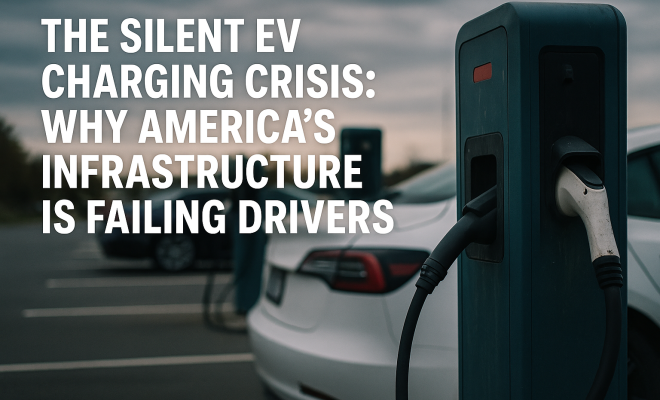
It’s an exciting time to be an electric vehicle owner, isn’t it? The promise of silent power, zero tailpipe emissions, and a cleaner future. You’ve made the leap, bought the car, and you’re ready to embrace the electric revolution. But then, you pull up to a public charging station, plug in, and… nothing. Or maybe it’s a blank screen, a broken connector, or a payment system that simply refuses to cooperate. Frustrating, right? You’re not alone. In fact, if you’re an EV driver in America, there’s about a one-in-five chance that your next public charging attempt will end in disappointment. That’s a staggering figure, and it points to a silent, yet significant, crisis brewing within our EV charging infrastructure.
This isn’t just about a lack of chargers, though that’s certainly part of the equation. This is about reliability, functionality, and the very foundation of trust that EV drivers need to feel confident on the road. When nearly 20% of public charging attempts are met with unusable stations, it doesn’t just inconvenience drivers; it actively undermines the entire transition to electric vehicles. It fuels range anxiety, sours the ownership experience, and, perhaps most critically, puts a significant brake on broader EV adoption. The dream of seamless electric travel feels a lot more like a gamble when you’re staring down a dead charger, miles from home. What’s truly concerning is that this isn’t just an anecdotal problem; it’s a systemic issue with roots that run deeper than many realize, exacerbated by some truly baffling decisions at the federal level regarding funding for EV charging infrastructure.
The Pervasive Problem of Unreliable Chargers
Let’s talk numbers for a moment, because they paint a stark picture. Recent data suggests that roughly 20% of public EV charging stations are effectively unusable at any given time. Think about that for a second. Imagine if one out of every five gas pumps at your local station was broken, displaying an error message, or simply wouldn’t take your payment. You’d be furious, wouldn’t you? You’d probably switch brands, or at the very least, start planning your fuel stops with extreme caution. For EV drivers, this is their daily reality. This isn’t just an occasional glitch; it’s a pervasive issue that undermines the very convenience electric vehicles are supposed to offer.
The problems manifest in various ways: broken physical connectors that won’t seat properly, blank or unresponsive screens that prevent initiation, and payment systems that fail to process transactions. Sometimes, it’s a software bug, other times it’s a hardware malfunction, and occasionally, it’s just sheer neglect. The consequence, regardless of the cause, is the same: a driver left stranded, or at the very least, significantly delayed, in their journey. This level of unreliability isn’t just an inconvenience; it’s a barrier. It’s the kind of experience that makes prospective EV buyers hesitate, and current owners second-guess their decision. If the fundamental act of ‘refueling’ your vehicle is a lottery, how can we expect widespread adoption?
This issue extends beyond the charger itself. It’s also about network reliability and customer support. Many charging networks are still maturing, and their ability to remotely monitor, diagnose, and repair issues is often lacking. A broken charger isn’t just broken; it’s often broken for an extended period, sometimes weeks or even months, before it’s brought back online. This slow response time compounds the problem, creating ‘dead zones’ where drivers consistently encounter non-functional equipment. The promise of a robust EV charging infrastructure hinges not just on the quantity of chargers, but critically, on their consistent uptime and reliability. Without that, the entire system falters.
Federal Funding Cuts: A Self-Inflicted Wound?
Perhaps the most baffling aspect of this unfolding crisis is the drastic reduction in federal funding for EV charging infrastructure. You’d think, given the push for electrification and the clear issues with existing infrastructure, that funding would be increasing, or at least holding steady. Instead, the National Electric Vehicle Infrastructure (NEVI) program, a cornerstone of federal efforts to build out a nationwide charging network, has seen its budget for fiscal year 2026 slashed to a mere $300 million. Let that sink in. Just $300 million for an entire country’s EV charging infrastructure expansion. This is a program that was initially designed to deploy $5 billion over five years, with yearly allocations designed to accelerate the build-out. A significant reduction like this effectively stalls expansion efforts at a critical juncture.
When the Bipartisan Infrastructure Law was passed, it promised a robust, interconnected network of EV chargers across America’s highways. The NEVI program was central to this vision, aiming to fund the deployment of DC fast chargers every 50 miles along designated alternative fuel corridors. The initial years saw significant allocations, but now, just as the program should be hitting its stride, the brakes are being applied hard. This isn’t just a minor cut; it’s a fundamental shift that will have long-lasting repercussions. States that have been planning their NEVI deployments, working with private partners, and laying the groundwork for expansion are now left scrambling, unsure of how to proceed with such diminished resources.
The rationale behind such a drastic reduction is unclear, but its impact is undeniable. It sends a confusing message to the automotive industry, to charging network operators, and most importantly, to potential EV buyers. How can we expect the market to mature and grow when the federal government is pulling back on its commitment to the foundational infrastructure? This funding cut doesn’t just slow down the deployment of new chargers; it also impacts the maintenance and upgrade cycles of existing ones, potentially exacerbating the reliability issues we’re already seeing. It feels like a self-inflicted wound at a moment when acceleration, not deceleration, is desperately needed. (See: EV charging infrastructure challenges.)
Range Anxiety Redux: The Return of a Familiar Foe
Remember range anxiety? It was one of the biggest psychological hurdles for early EV adopters. The fear of running out of charge in an unfamiliar place, with no reliable charging options in sight. For a while, as charging networks began to grow, that anxiety started to recede for many. But with the current state of unreliable infrastructure and reduced funding, range anxiety is making a strong comeback, and it’s perhaps even more insidious this time around. It’s no longer just about the *number* of chargers; it’s about the *certainty* that a charger will actually work when you need it.
Imagine planning a road trip, carefully mapping out your charging stops, only to arrive at your planned location and find two out of four chargers broken, and the remaining two in use. What do you do? Do you wait? Do you risk driving to the next town, hoping their chargers are functional? This kind of uncertainty is incredibly stressful and actively deters drivers from making longer journeys in their EVs. It makes spontaneous trips less appealing and turns what should be a convenient mode of transport into a logistical puzzle fraught with potential pitfalls. This isn’t just a minor inconvenience; it’s a fundamental erosion of confidence in the EV ecosystem.
For many, particularly those without reliable home charging options, public charging is their primary lifeline. When that lifeline is unreliable, the entire EV ownership experience becomes a source of stress rather than liberation. This renewed range anxiety isn’t just a psychological phenomenon; it has real economic consequences, potentially slowing down the adoption rate of EVs and making it harder for manufacturers to meet their ambitious electrification targets. If the public charging experience remains a gamble, a significant portion of the population will simply opt out, sticking with gasoline vehicles that offer a more predictable fueling experience.
Beyond the Charger: Systemic Failures and User Experience
It’s crucial to understand that the EV charging crisis isn’t solely about broken hardware. While faulty connectors and blank screens are certainly part of the problem, a significant portion of the frustration stems from broader systemic failures and a poor user experience. Think about the myriad of charging networks out there: Electrify America, ChargePoint, EVgo, Shell Recharge, Blink, and many more. Each often requires its own app, its own account, and sometimes even its own RFID card. This fragmentation creates a bewildering and inconvenient experience for drivers who just want to plug in and charge.
Even when a charger is physically operational, a driver might encounter issues with network authentication, payment processing, or simply understanding the pricing structure. Some networks charge by the minute, others by the kilowatt-hour, and some even have idle fees. This lack of standardization and transparency adds layers of complexity that are completely absent from the traditional gasoline fueling experience. We’ve become accustomed to a simple, universal process at the gas pump; the EV charging world, by contrast, often feels like a digital wild west.
Furthermore, the data reporting on charger status is often inaccurate or delayed. An app might show a charger as ‘available’ only for the driver to arrive and find it broken or occupied. This kind of misinformation exacerbates frustration and wastes precious time and battery power. A truly robust EV charging infrastructure needs not just functional hardware, but also seamless software, standardized payment methods, accurate real-time data, and responsive customer support. Until these systemic issues are addressed, even a perfectly functional charger can lead to a frustrating user experience.
The Economic Impact: Stalling EV Adoption and Investment
The unreliability of EV charging infrastructure, coupled with the dramatic reduction in federal funding, isn’t just a nuisance for current EV owners; it has significant economic ramifications. At its core, it slows down the rate of EV adoption. When the fundamental act of ‘fueling’ an electric vehicle is fraught with uncertainty, it becomes a major deterrent for potential buyers, especially those who don’t have the luxury of home charging. This directly impacts the sales targets of automakers who are investing billions into developing new EV models.
Consider the ripple effect: slower adoption means less demand for new EV manufacturing, potentially impacting job growth in the nascent electric vehicle industry. It also means slower progress towards national emissions reduction goals. Moreover, the uncertainty surrounding federal funding makes it incredibly difficult for private companies to plan and invest in new charging deployments. Why would a company sink millions into building out a network if the government’s commitment to supporting that infrastructure is wavering? This creates an unstable investment environment, further slowing the pace of necessary expansion. (See: Electric vehicle charging infrastructure.)
The economic impact extends to the service sector as well. Businesses that rely on EV charging, from hotels and restaurants that offer chargers as an amenity to fleets transitioning to electric, face operational challenges and potential revenue losses when chargers are unreliable. The promise of a green economy powered by EVs requires a robust, reliable, and accessible EV charging infrastructure. Without that bedrock, the entire economic transition slows, costing jobs, stifling innovation, and ultimately hindering our collective progress towards a sustainable future. This isn’t just about cars; it’s about the future of transportation and the economy that supports it.
Solutions on the Horizon? Innovation and Private Sector Role
Despite the current challenges, it’s not all doom and gloom. The market, driven by consumer demand and the imperative to electrify, is already spurring innovation and increased private sector involvement. Companies are recognizing the gap and stepping up to offer solutions. For instance, we’re seeing a push for more reliable and robust charging hardware, designed to withstand public use and the elements. Manufacturers are constantly refining their designs, improving cable management, and building more resilient payment systems.
Furthermore, there’s a growing emphasis on software improvements. Network operators are working to create more intuitive apps, provide real-time charger status updates with greater accuracy, and streamline the payment process. Initiatives like ‘Plug & Charge,’ which allows an EV to automatically authenticate and pay for charging simply by plugging in, are slowly gaining traction and promise a much smoother user experience. This kind of standardization and simplification is absolutely crucial for mainstream adoption.
Beyond the charging networks themselves, the private sector is also developing complementary services. Mobile charging vans, for example, can offer on-demand top-ups for stranded drivers, providing a crucial safety net. Apps that aggregate data from multiple networks and provide crowdsourced reliability ratings are also becoming indispensable tools for EV owners. While federal funding cuts are concerning, the entrepreneurial spirit and the clear market need are driving significant innovation, suggesting that while the path may be rocky, solutions are actively being developed and deployed by those closest to the problem.
The Indispensable Role of Home Charging
In the face of public charging unreliability, the importance of home charging cannot be overstated. For many EV owners, especially those with off-street parking, a Level 2 home charger is their primary fueling solution. It offers unparalleled convenience: simply plug in overnight and wake up to a ‘full tank’ every morning. This eliminates the vast majority of public charging headaches for daily commutes and local errands, significantly mitigating range anxiety.
Installing a dedicated 240-volt Level 2 charger at home allows for much faster charging than a standard 120-volt outlet, making it practical to fully replenish even a large EV battery overnight. While there’s an upfront cost for the charger and installation, many utilities offer rebates, and the long-term savings on fuel often make it a sound investment. For prospective EV buyers, having access to reliable home charging should almost be considered a prerequisite, at least in the current climate of public infrastructure uncertainty.
For those living in apartments or condos without dedicated charging, the situation is more complex, highlighting a critical area for future EV charging infrastructure development. However, for the majority of homeowners, home charging remains the most reliable, convenient, and cost-effective way to power an EV. It acts as a crucial buffer against the unpredictability of public networks and is, in many ways, the unsung hero enabling the electric transition for millions of drivers. Without it, the public charging crisis would be far more acute for a much larger segment of the EV driving population. (See: Reliability of public EV charging stations.)
Policy Adjustments and Future Directions
To truly overcome this EV charging crisis, policy adjustments are desperately needed. First and foremost, a reconsideration of the NEVI funding cuts is paramount. Reinstating robust federal investment is essential to provide the necessary capital for states and private partners to build out the foundational network. Beyond just funding, there needs to be a stronger emphasis on reliability metrics and uptime requirements for federally funded chargers. Simply deploying chargers isn’t enough; they must work consistently.
Furthermore, policymakers should push for greater standardization across charging networks. This includes common payment protocols, clear pricing structures, and improved interoperability. Imagine a world where you could use any charging station with a single account or payment method, much like you can use any gas pump. This level of simplicity would dramatically improve the user experience and reduce friction for EV drivers. Governments can incentivize this standardization through grants, regulations, or collaborative industry initiatives.
There’s also a need for more nuanced planning for EV charging infrastructure. This means moving beyond just highway corridors to focus on urban centers, multi-unit dwellings, and workplaces where many people park for extended periods. Encouraging utilities to invest in grid upgrades to support increased charging demand is another critical piece of the puzzle. The future of EV charging isn’t just about more plugs; it’s about smarter, more reliable, and more accessible infrastructure, supported by consistent policy and investment that reflects the national commitment to electrification.
The Road Ahead: A Call for Action
The challenges facing America’s EV charging infrastructure are significant, but they are not insurmountable. The current crisis, marked by widespread unreliability and perplexing funding cuts, serves as a stark reminder that the transition to electric vehicles is a complex undertaking, requiring sustained effort and strategic investment. It’s a call to action for policymakers to prioritize this critical infrastructure, for network operators to improve reliability and user experience, and for innovators to continue developing solutions that simplify and streamline the charging process.
For EV owners, the frustration is real, and their voices are essential in driving change. Their experiences highlight the urgent need for a more robust, reliable, and user-friendly charging ecosystem. As a nation, we’ve committed to an electric future, and that commitment must extend beyond just the vehicles themselves to the foundational infrastructure that powers them. Without a reliable EV charging infrastructure, the ambitious goals of electrification will remain just that: ambitions, rather than a tangible reality for millions of Americans on the road.
Trending Now
Frequently Asked Questions
Why are some electric vehicle charging stations unreliable?
Many electric vehicle charging stations suffer from issues like broken connectors, malfunctioning screens, or payment system errors. Recent data indicates that about 20% of public charging attempts result in unusable stations, highlighting a significant reliability problem within America's EV charging infrastructure.
What percentage of EV charging attempts are unsuccessful?
Approximately 20% of public EV charging attempts in America fail due to issues such as non-functional chargers or payment problems. This high percentage contributes to range anxiety and undermines the overall experience for electric vehicle owners.
How does unreliable charging infrastructure affect EV adoption?
Unreliable charging infrastructure fuels range anxiety and discourages potential electric vehicle buyers. When drivers face frequent issues with chargers, it can lead to frustration and mistrust, ultimately slowing the broader adoption of electric vehicles.
What are the main issues with public EV chargers?
Public EV chargers often face problems like broken connectors, blank screens, and dysfunctional payment systems. These issues not only inconvenience drivers but also create a lack of confidence in the charging infrastructure, impacting the overall EV ownership experience.
Is there a federal response to the EV charging crisis?
The article suggests that federal decisions regarding funding for EV charging infrastructure have been baffling and may have contributed to the current crisis. Addressing these systemic issues is crucial for improving the reliability and availability of public charging stations.
What did we miss? Let us know in the comments and join the conversation.