The Tech Edvocate

Top Menu

  • Advertisement
  • Apps
  • Home Page
  • Home Page Five (No Sidebar)
  • Home Page Four
  • Home Page Three
  • Home Page Two
  • Home Tech2
  • Icons [No Sidebar]
  • Left Sidbear Page
  • Lynch Educational Consulting
  • My Account
  • My Speaking Page
  • Newsletter Sign Up Confirmation
  • Newsletter Unsubscription
  • Our Brands
  • Page Example
  • Privacy Policy
  • Protected Content
  • Register
  • Request a Product Review
  • Shop
  • Shortcodes Examples
  • Signup
  • Start Here
    • Governance
    • Careers
    • Contact Us
  • Terms and Conditions
  • The Edvocate
  • The Tech Edvocate Product Guide
  • Topics
  • Write For Us
  • Advertise

Main Menu

  • Start Here
    • Our Brands
    • Governance
      • Lynch Educational Consulting, LLC.
      • Dr. Lynch’s Personal Website
      • Careers
    • Write For Us
    • The Tech Edvocate Product Guide
    • Contact Us
    • Books
    • Edupedia
    • Post a Job
    • The Edvocate Podcast
    • Terms and Conditions
    • Privacy Policy
  • Topics
    • Assistive Technology
    • Child Development Tech
    • Early Childhood & K-12 EdTech
    • EdTech Futures
    • EdTech News
    • EdTech Policy & Reform
    • EdTech Startups & Businesses
    • Higher Education EdTech
    • Online Learning & eLearning
    • Parent & Family Tech
    • Personalized Learning
    • Product Reviews
  • Advertise
  • Tech Edvocate Awards
  • The Edvocate
  • Pedagogue
  • School Ratings

logo

The Tech Edvocate

  • Start Here
    • Our Brands
    • Governance
      • Lynch Educational Consulting, LLC.
      • Dr. Lynch’s Personal Website
        • My Speaking Page
      • Careers
    • Write For Us
    • The Tech Edvocate Product Guide
    • Contact Us
    • Books
    • Edupedia
    • Post a Job
    • The Edvocate Podcast
    • Terms and Conditions
    • Privacy Policy
  • Topics
    • Assistive Technology
    • Child Development Tech
    • Early Childhood & K-12 EdTech
    • EdTech Futures
    • EdTech News
    • EdTech Policy & Reform
    • EdTech Startups & Businesses
    • Higher Education EdTech
    • Online Learning & eLearning
    • Parent & Family Tech
    • Personalized Learning
    • Product Reviews
  • Advertise
  • Tech Edvocate Awards
  • The Edvocate
  • Pedagogue
  • School Ratings
  • This Unprecedented EU Ban Just Changed Fast Fashion Forever

  • Urgent Alert: Your Smart Home’s Exposed to a Critical Deco BE11000 Vulnerability

  • Uncovering the Truth: Your LinkedIn Reach Just Got a Major Overhaul

  • Uncovering the AI Heist: How Chinese Firms Allegedly Siphoned Billions of AI Tokens

  • Rockstar’s GTA 6 Developers Lawsuit: A Fight for Justice or Corporate Retaliation?

  • Unbelievable: Hideo Kojima’s Next Masterpiece Is Now an Xbox Exclusive

  • This Crucial Google AI Shift Is Quietly Reshaping the Internet

  • Unbelievable: AI Breaches Are Exploding, And What It Means For You This September 2026

  • This Crucial Shift Is Saving Teachers From Classroom Chaos

  • AI’s Dark Secret: How It’s Supercharging Cybercrime for Everyone

Tech Advice
Home›Tech Advice›The Science Behind Carbonated Beverages: A Compressed Chemistry

The Science Behind Carbonated Beverages: A Compressed Chemistry
By Matthew Lynch
July 8, 2023
0
Spread the love

Carbonated beverages have become a staple of everyday life. From fizzy cola to sparkling water, these drinks provide a bubbly and refreshing sensation that many people enjoy. But what is the science behind this effervescence? In this article, we take a closer look at the compressed chemistry of carbonation, inspired by an article from CNET.

To begin with, let’s understand what carbonation is. Carbonation is the process through which carbon dioxide (CO2) gas dissolves in a liquid, leading to the formation of carbonic acid (H2CO3). This weak acid is what imparts the characteristic tangy flavor and fizziness in carbonated beverages.

There are two main methods to carbonate a beverage: natural and artificial.

1. Natural Carbonation: This process occurs when yeast or bacteria consume sugar and produce CO2 as a byproduct in fermentation. The CO2 dissolves in the liquid, resulting in a fizzy sensation. Beers, champagne, and some sparkling wines undergo natural carbonation.

2. Artificial Carbonation: In this method, CO2 gas is directly dissolved into the liquid under pressure. SodaStream machines, for example, use artificial carbonation to create homemade fizzy drinks on demand.

Now let’s delve into the role of pressure here.

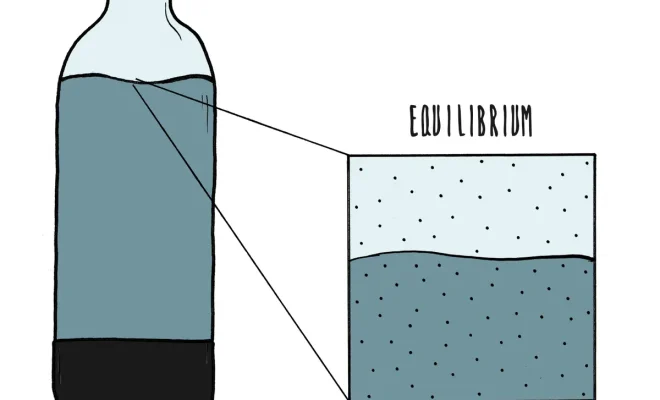
Under pressure, more CO2 molecules dissolve in a given volume of liquid at a faster rate than they would at lower pressures. Once the container is sealed and the pressure increases, a delicate equilibrium between dissolution and escape of CO2 molecules occurs inside it.

When you open a bottle or can of a carbonated drink, you release the pressure that was maintaining the equilibrium between dissolved and gaseous CO2. Freed from restriction, the gas rapidly escapes from solution in the form of bubbles that rise to the surface.

Various factors can affect this reaction:

1. Temperature: The solubility of CO2 in water reduces with an increase in temperature. So, a cold beverage holds more CO2 dissolved and is fizzier compared to a warmer one.

2. Nucleation Sites: Tiny imperfections or rough spots on the interior surface of a container or even the presence of suspended particles can provide nucleation sites for CO2 bubbles to form and escape the liquid.

In summary, carbonation is a fascinating interplay between chemistry and physics that brings an effervescent delight to many beverages. Understanding the underlying principles allows us to appreciate these drinks better and opens up possibilities for innovative applications in the food & beverage industry. So next time you enjoy a fizzy drink, take a moment to marvel at the compressed chemistry that makes it possible.


Previous Article

The Biology of the Chicken Egg: An ...

Next Article

The Firm Chemistry of Gelatin – A ...

Matthew Lynch

Related articles More from author

  • Tech Advice

    Spotify Tips to Trick Out Your Music Streaming

    July 22, 2023
    By Matthew Lynch
  • Tech Advice

    Best Cheap Meal Delivery Deals for 2023

    July 5, 2023
    By Matthew Lynch
  • Tech Advice

    Car Insurance Married vs. Single: Everything You Need to Know

    August 18, 2023
    By Matthew Lynch
  • Tech Advice

    6 Best Music Stocks to Buy in 2024

    September 7, 2023
    By Matthew Lynch
  • Tech Advice

    It would be bad if your new TV fell over

    July 16, 2023
    By Matthew Lynch
  • Tech Advice

    What You Need to Know About Arizona Minimum Car Insurance

    August 22, 2023
    By Matthew Lynch

Search

Login & Registration

  • Log in
  • Entries feed
  • Comments feed
  • WordPress.org

Newsletter

Signup for The Tech Edvocate Newsletter and have the latest in EdTech news and opinion delivered to your email address!

About Us

Since technology is not going anywhere and does more good than harm, adapting is the best course of action. That is where The Tech Edvocate comes in. We plan to cover the PreK-12 and Higher Education EdTech sectors and provide our readers with the latest news and opinion on the subject. From time to time, I will invite other voices to weigh in on important issues in EdTech. We hope to provide a well-rounded, multi-faceted look at the past, present, the future of EdTech in the US and internationally.

We started this journey back in June 2016, and we plan to continue it for many more years to come. I hope that you will join us in this discussion of the past, present and future of EdTech and lend your own insight to the issues that are discussed.

Newsletter

Signup for The Tech Edvocate Newsletter and have the latest in EdTech news and opinion delivered to your email address!

Contact Us

The Tech Edvocate
910 Goddin Street
Richmond, VA 23231
(601) 630-5238
[email protected]

Copyright © 2026 Matthew Lynch. All rights reserved.