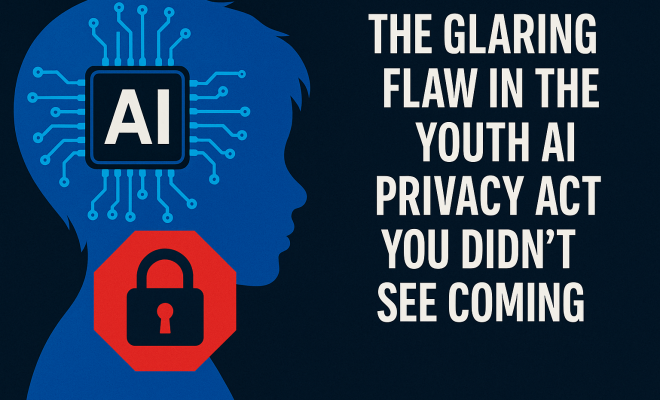
The Glaring Flaw in the Youth AI Privacy Act You Didn’t See Coming
When we talk about protecting kids online, everyone nods in agreement, right? It’s a no-brainer. That’s precisely why the Youth AI Privacy Act, currently making its way through the Senate Commerce Committee, sounds like exactly what we need. Introduced by Senator Ed Markey, this bill aims to throw a protective shield around minors interacting with AI chatbots, establishing federal privacy and safety guardrails. Its proponents laud it as a ‘people- and privacy-first approach’ to AI regulation, a necessary step in an increasingly AI-driven world where our kids are often the unwitting pioneers. But what if this well-intentioned legislation has a critical, perhaps even counterproductive, flaw? What if, in its earnest attempt to protect, it inadvertently forces children to reveal even more about themselves?
That’s the ‘privacy paradox’ many critics, including the Electronic Frontier Foundation (EFF), are pointing to. While the core idea of safeguarding young users from manipulative AI design, banning targeted advertising, and preventing their data from being used for AI model training without consent is laudable, the devil, as always, is in the details. Specifically, the mechanisms proposed to enforce these protections — primarily age verification requirements — could necessitate the collection of *more* personal data on young people. It’s a classic Catch-22: to prove you’re under 18 and therefore deserving of these enhanced protections, you might have to hand over information that, in other contexts, privacy advocates would fight tooth and nail to keep private. This isn’t just a technical quibble; it’s a fundamental tension that could undermine the very goals of the Youth AI Privacy Act, raising questions about whether we’re truly solving the problem or just shifting its complexity.
1. The Intent Behind the Youth AI Privacy Act: A Shield for Minors
Let’s start with the good intentions, because they are genuinely there. Senator Ed Markey’s Youth AI Privacy Act (YAPA) is designed to address a growing concern among parents, educators, and privacy advocates: the unregulated exposure of children to powerful artificial intelligence technologies. As AI chatbots become more sophisticated and ubiquitous, they present a new frontier of challenges that existing child online privacy laws, like the Children’s Online Privacy Protection Act (COPPA), simply weren’t built to handle. COPPA, enacted in 1998, primarily focuses on websites and online services, not the complex, adaptive, and often opaque world of generative AI.
The core philosophy of YAPA is to prevent the exploitation of minors through AI. This means tackling issues like AI models being trained on children’s personal data without explicit consent, the use of psychological manipulation in chatbot interactions to keep kids engaged, and the insidious creep of targeted advertising within AI environments. Imagine a chatbot designed to be incredibly empathetic, building a deep rapport with a child, only to then subtly push them towards certain products or reveal sensitive information that could be harvested. This is the dystopian scenario YAPA aims to head off, striving to create a safer digital playground for the next generation.
2. Key Protections Envisioned by YAPA: What It Aims to Achieve
The Youth AI Privacy Act lays out several critical protections for minors engaging with AI chatbots. First and foremost, it seeks to limit manipulative design. This is a crucial element, recognizing that AI can be crafted to exploit human psychology, and children, with their developing minds and often lesser understanding of commercial intent, are particularly vulnerable. Think about features that are intentionally addictive or designed to elicit specific emotional responses, all to maximize engagement or data collection. YAPA wants to put a stop to that.
Secondly, the bill proposes a ban on advertising to minors through AI. This is a significant step, moving beyond simply restricting *targeted* advertising to a blanket prohibition on *any* advertising within AI interfaces accessible to children. The rationale is clear: AI’s ability to personalize interactions could make advertising incredibly persuasive and difficult for a child to discern from genuine interaction. Finally, and perhaps most critically for long-term privacy, YAPA aims to protect minors’ personal data from being used for AI model training without appropriate safeguards and consent. This would prevent companies from hoovering up conversations, preferences, and personal details from children and feeding them into large language models, potentially embedding biases or exposing sensitive information in future AI outputs.
3. The ‘Privacy Paradox’ Explained: A Double-Edged Sword
Here’s where the plot thickens and the seemingly straightforward good intentions run into a thorny problem. The Electronic Frontier Foundation (EFF) and other privacy advocates have coined the term ‘privacy paradox’ to describe a critical flaw in the Youth AI Privacy Act. While the bill aims to enhance privacy, its proposed enforcement mechanisms could inadvertently lead to *more* data collection on young people. How? Through age verification requirements. To know if a user is a minor and thus subject to YAPA’s protections, AI services would need a reliable way to verify their age.
Think about it: if an AI service doesn’t collect data on its users’ ages, how does it know whether to apply the heightened protections of YAPA? It doesn’t. So, to comply with the law, companies would be compelled to implement robust age verification systems. This often means asking for more personal information than they might currently collect – perhaps government IDs, facial scans, or other biometric data. The very act of proving one’s age to gain privacy protection could necessitate a deeper dive into a child’s personal data, creating a centralized honeypot of sensitive information that could be vulnerable to breaches or misuse. It’s a classic example of security theater potentially undermining actual privacy.
4. Age Verification: A Slippery Slope to Surveillance?
The practicalities of age verification are complex and fraught with privacy implications, especially for children. What methods would companies employ? Simply asking ‘Are you over 18?’ is easily circumvented. More robust methods often involve third-party verification services, which themselves become repositories of sensitive data. Imagine a child having to upload a picture of their birth certificate, or even undergoing a facial scan, just to chat with an AI. This data would then be stored, processed, and potentially shared, creating new vectors for privacy breaches. (See: CDC Youth Risk Behavior Surveillance.)
Furthermore, these systems aren’t foolproof. They can be discriminatory, potentially excluding children from certain demographics who lack standard forms of identification. And what about the data collected during the verification process itself? Even if a child is verified as a minor, that verification data (the ID, the biometric scan, etc.) now exists somewhere. This shifts the privacy risk from the AI interaction itself to the age verification gatekeeper, potentially creating a system of pervasive surveillance where children’s identities are logged and tracked across various online services. It’s a trade-off many privacy advocates find unacceptable, arguing that we shouldn’t have to sacrifice one form of privacy to gain another.
5. The Challenge of Defining ‘Minor’ in the Digital Age: Legal and Ethical Quandaries
Another significant hurdle for the Youth AI Privacy Act is the inherently fuzzy definition of a ‘minor’ in the digital realm. While legally straightforward (typically under 18), applying this consistently across a myriad of online services and AI interactions is anything but. Children lie about their age, and adults sometimes impersonate children. How does an AI chatbot reliably differentiate without intrusive data collection?
The ethical implications are profound. Do we want to create a world where every online interaction for a young person starts with a mandatory identity check? This could stifle creativity, limit access to educational resources, and create a two-tiered internet experience where children are constantly under a microscope. Moreover, the technologies used for age verification are often developed by private companies, raising questions about accountability, transparency, and the potential for these systems to be repurposed for other forms of identity tracking or even government surveillance. It’s a far cry from the anonymous, exploratory nature of early internet use that fostered innovation and learning.
6. Beyond Age Verification: Alternative Approaches to Child AI Safety
If age verification is a problematic path, what are the alternatives for the Youth AI Privacy Act? Privacy advocates suggest focusing on a ‘privacy-by-design’ approach. Instead of trying to identify minors to apply special rules, perhaps all AI services, or at least those reasonably likely to be accessed by children, should default to the highest privacy and safety standards. This means no manipulative design, no targeted advertising, and no data collection for training purposes without explicit, informed consent for *all* users, or at least a strong presumption against it for unknown users.
Another approach could be to focus on content and interaction guidelines rather than identity. AI services could be legally mandated to implement safeguards that prevent harmful or exploitative content regardless of the user’s age. This shifts the burden from verifying identity to designing inherently safer systems. Furthermore, robust parental control tools, developed with privacy in mind and offering transparency to parents, could empower families without forcing intrusive data collection on children. The focus should be on creating a truly safe environment, not just one that *identifies* who needs protection.
7. Economic Impact and Innovation Concerns: A Heavy Hand for Startups?
Beyond the privacy paradox, the Youth AI Privacy Act could also have significant economic implications, particularly for smaller AI developers and startups. Implementing robust age verification systems and complying with stringent data handling requirements can be incredibly expensive and technically complex. Large tech companies with vast resources might absorb these costs, but for a burgeoning startup, it could be a prohibitive barrier to entry.
This raises concerns that YAPA, while well-intentioned, might inadvertently stifle innovation in the AI space, especially for tools that could genuinely benefit children in educational or creative ways. If every new AI application has to jump through extensive regulatory hoops just to ensure it’s not violating rules for minors, many promising projects might never see the light of day. The goal should be to foster responsible innovation, not to inadvertently create a regulatory environment that favors established giants and discourages new entrants. Striking this balance is incredibly difficult, but it’s a conversation that needs to happen.
8. Parental Responsibility vs. Government Mandate: Where Do We Draw the Line?
The debate around the Youth AI Privacy Act also touches on a deeper philosophical question: where does parental responsibility end and government mandate begin? Many parents understandably want the government to protect their children from the unknown dangers of AI. However, some argue that excessive regulation can disempower parents, creating a false sense of security while removing opportunities for families to teach digital literacy and critical thinking skills.
While the government certainly has a role in setting baseline safety standards, a truly effective approach to child online safety involves a multi-pronged strategy. This includes robust legislation, yes, but also emphasizes digital education for both children and parents, the development of ethical AI by companies, and open communication within families about online experiences. Relying solely on a top-down regulatory framework, especially one with potential pitfalls like the privacy paradox, might miss the mark by not empowering the very people it seeks to protect.
9. The Future of Child AI Privacy: A Path Forward for the Youth AI Privacy Act
So, what’s the path forward for the Youth AI Privacy Act? It’s clear that the intentions are noble and the need for child-specific AI protections is undeniable. However, the ‘privacy paradox’ highlighted by the EFF is a serious concern that cannot be ignored. Rather than pushing forward with age verification requirements that could lead to more data collection, lawmakers should seriously consider amendments that prioritize privacy-by-design principles. (See: New York Times coverage of AI privacy legislation.)
This means focusing on universal privacy defaults for AI services, particularly those likely to be accessed by children, rather than relying on a gatekeeping mechanism that demands more personal data. It means fostering innovation in privacy-enhancing technologies that can protect children without requiring them to prove their identity. And most importantly, it means having an open and honest dialogue about the trade-offs involved, ensuring that in our zeal to protect, we don’t inadvertently create new vulnerabilities for the very children we’re trying to safeguard. The Youth AI Privacy Act is a crucial piece of legislation, but it needs refinement to truly deliver on its promise of a safer, more private digital future for our kids. For more on this, see the AI privacy paradox.
10. Global Perspectives on Youth AI Privacy: Learning from Others
It’s helpful to look beyond our borders when considering how to best approach the Youth AI Privacy Act. Other countries and regions are grappling with similar challenges, and their approaches offer valuable lessons. For instance, the European Union’s General Data Protection Regulation (GDPR) includes specific provisions for children’s data, requiring parental consent for processing data of children under 16 (or lower, depending on national law). While not specifically an AI-focused law, its principles of data minimization and consent are foundational.
The UK’s Age Appropriate Design Code (AADC), often called the “Children’s Code,” is another excellent example. It places a legal obligation on online services likely to be accessed by children to consider their best interests. This code mandates 15 standards, including defaults for high privacy settings, transparent terms, and the prohibition of nudges that encourage children to provide personal data or weaken their privacy. Crucially, the AADC doesn’t rely solely on age verification. Instead, it pushes services to assume a child might be using their platform and design accordingly, or to implement “proportionate” age verification. This “design for all” or “assume child” approach minimizes the need for intrusive age checks for every single user, shifting the burden to the service provider to build a safer environment by default. We can learn from these models to design a Youth AI Privacy Act that’s effective without being overly invasive. This builds on understanding the EU AI Act.
11. The Role of AI Literacy and Education
Beyond legislation, a critical, often overlooked component in protecting youth online is education. The Youth AI Privacy Act sets essential guardrails, but it can’t be the only solution. Equipping children and parents with strong AI literacy skills is paramount. What does that mean? It means teaching kids how AI works at a basic level, how it collects data, how it can be persuasive, and how to identify when they’re interacting with an AI versus a human.
For parents, it means understanding the privacy settings on AI applications, knowing how to discuss AI use with their children, and recognizing the signs of potential manipulation or oversharing. Schools have a vital role here too, integrating AI ethics and digital citizenship into their curricula. If we empower young people to be critical thinkers and informed users, they become active participants in their own privacy protection, rather than just passive recipients of legislative safeguards. A holistic approach that combines robust laws like the Youth AI Privacy Act with strong educational initiatives is far more powerful than either one alone.
12. The Broader Implications for AI Ethics and Development
The debate around the Youth AI Privacy Act also shines a spotlight on broader ethical considerations for AI development. If we can’t even safely integrate AI into children’s lives without risking their privacy or well-being, what does that say about the ethical foundations of these technologies for adults? The principles being discussed for YAPA – transparency, data minimization, consent, and protection against manipulative design – are not just relevant for kids; they are foundational to building trustworthy AI for everyone.
This legislation could serve as a bellwether, pushing AI developers to adopt more ethical practices across the board. If companies are forced to think about “privacy by design” and “safety by default” for their youngest users, those principles are likely to trickle up into their general product development. It could encourage a shift from a ‘move fast and break things’ mentality to a more thoughtful, human-centered approach to AI innovation. The Youth AI Privacy Act, therefore, isn’t just about kids; it’s about shaping the future of ethical AI for society as a whole.
Frequently Asked Questions (FAQ) about the Youth AI Privacy Act
Q1: What is the main goal of the Youth AI Privacy Act (YAPA)?
The primary goal of the Youth AI Privacy Act is to protect minors (individuals under 18) who interact with AI chatbots. It aims to establish federal privacy and safety guardrails, preventing manipulative design, banning targeted advertising to children, and safeguarding their personal data from being used for AI model training without proper consent.
Q2: How does YAPA differ from existing laws like COPPA?
While the Children’s Online Privacy Protection Act (COPPA) addresses online privacy for children under 13 on websites and online services, the Youth AI Privacy Act specifically targets the newer challenges posed by artificial intelligence chatbots and generative AI for all minors under 18. COPPA wasn’t designed for the complex, adaptive nature of modern AI, which YAPA seeks to address.
Q3: What is the ‘privacy paradox’ associated with the Youth AI Privacy Act?
The ‘privacy paradox,’ as identified by groups like the EFF, refers to the unintended consequence of YAPA’s proposed age verification requirements. To ensure that minors receive enhanced protections, AI services would need to reliably verify a user’s age. This could lead to the collection of *more* sensitive personal data (like government IDs or biometric scans) on young people, potentially creating new privacy risks and centralizing sensitive information.
Q4: What are the concerns about age verification methods?
Concerns include the intrusiveness of current age verification methods (e.g., requiring IDs or facial scans), the creation of new data repositories that could be vulnerable to breaches, potential for discrimination against those without standard identification, and the risk of pervasive surveillance where children’s identities are tracked across various services. It raises questions about whether sacrificing one form of privacy to gain another is truly beneficial.
Q5: What are some alternative approaches to protecting youth AI privacy without relying heavily on age verification?
Privacy advocates suggest a “privacy-by-design” approach, where AI services default to the highest privacy and safety standards for all users, or at least for those whose age isn’t known. Other alternatives include focusing on content and interaction guidelines to prevent harmful experiences regardless of age, and developing robust, transparent parental control tools. The aim is to create inherently safer systems rather than solely identifying who needs protection.
Q6: Will YAPA stifle innovation for AI startups?
There’s concern that implementing stringent age verification and data handling requirements could be technically complex and expensive, especially for smaller AI developers and startups. This might create significant barriers to entry, potentially hindering innovation in beneficial AI tools for children and favoring larger tech companies with greater resources. Striking a balance between protection and fostering innovation is a key challenge.
Q7: How does the Youth AI Privacy Act relate to parental responsibility?
The act sparks a debate about the balance between government mandates and parental responsibility. While the government sets baseline safety standards, critics argue that excessive regulation could disempower parents or create a false sense of security. A comprehensive approach often involves legislation, digital literacy education for families, and open communication about online experiences to empower both children and parents.
Trending Now
Frequently Asked Questions
What is the Youth AI Privacy Act?
The Youth AI Privacy Act is a proposed legislation aimed at protecting minors who interact with AI chatbots. Introduced by Senator Ed Markey, it seeks to establish federal privacy and safety measures, preventing targeted advertising and unauthorized data usage while ensuring kids' online interactions are safer.
What are the main concerns about the Youth AI Privacy Act?
Critics highlight a significant flaw in the Youth AI Privacy Act, known as the 'privacy paradox.' While aiming to protect children, the age verification requirements could lead to increased data collection, forcing minors to reveal more personal information to access protections, potentially undermining the act's intentions.
How does the Youth AI Privacy Act protect children's privacy?
The Youth AI Privacy Act seeks to protect children's privacy by banning targeted advertising and preventing their data from being used for AI training without consent. Its goal is to create a safer online environment for minors interacting with AI technologies.
What is the 'privacy paradox' in the context of this legislation?
The 'privacy paradox' refers to the conflict where, to prove they are under 18 and qualify for protections, children may need to provide personal data that privacy advocates typically oppose sharing. This could lead to more data exposure rather than enhanced privacy.
Who introduced the Youth AI Privacy Act?
The Youth AI Privacy Act was introduced by Senator Ed Markey. He advocates for a people- and privacy-first approach to AI regulation, emphasizing the need for protective measures as children increasingly navigate AI-driven environments.
Have you experienced this yourself? We'd love to hear your story in the comments.