The Fragmentation of Comet C/2025 K1 (ATLAS): Unraveling the Mysteries of Celestial Disintegration
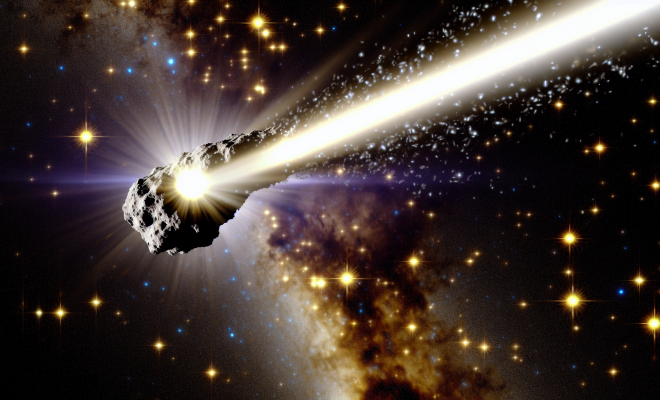
In the vast expanse of our solar system, comets are among the most fascinating celestial bodies, often providing insights into the early stages of our planetary system. They are composed of ice, dust, and rocky material, which makes them particularly susceptible to changes in temperature and gravitational forces. Recently, NASA’s Hubble Space Telescope captured remarkable images of a comet fragmenting—a phenomenon that has intrigued astronomers for centuries. This article delves into the specifics of Comet C/2025 K1 (ATLAS), a recent discovery that has opened new avenues for understanding comet behavior and the underlying causes of fragmentation.
Understanding Comet Fragmentation
Comet fragmentation refers to the breaking apart of a comet into smaller pieces, often due to the intense gravitational forces exerted by the Sun or the structural integrity of the comet being compromised by thermal stress as it approaches the Sun. This process can result in a comet splitting into several fragments, which can then become independent objects traveling through space.
Why Do Comets Fragment?
The fragmentation of comets can occur due to several factors:
- Thermal Stress: As a comet approaches the Sun, the increase in temperature causes the volatile materials within the ice to sublimate rapidly. This can create pressure within the comet, leading to structural failure.
- Gravitational Forces: The Sun’s gravitational pull can exert significant forces on a comet, particularly as it nears perihelion, or its closest approach to the Sun. These forces can contribute to the disintegration of the comet.
- Collisions: Comets can also fragment as a result of collisions with other celestial bodies, although this is less common.
- Outgassing: The release of gas from a comet can create jets that exert pressure on the nucleus, leading to fragmentation.
Understanding the mechanics behind these processes is essential for astronomers as they piece together the life cycles of comets and their potential impact on the solar system.
The Discovery of Comet C/2025 K1 (ATLAS)
Comet C/2025 K1 (ATLAS) was discovered on March 18, 2026, through a stroke of luck. Researchers from Auburn University had been granted observation time for another astronomical target, but due to technical difficulties, they pivoted to studying this comet. The serendipitous switch proved to be significant, as it led to the capture of images documenting the comet’s fragmentation.
Hubble’s Role in the Discovery
Utilizing the Space Telescope Imaging Spectrograph (STIS), the Hubble Space Telescope provided high-resolution images of Comet C/2025 K1 (ATLAS) over the course of three days—November 8, 9, and 10, 2025. These observations were pivotal, offering the first detailed insights into a comet disintegrating shortly after its closest approach to the Sun. Principal investigator Dennis Bodewits highlighted the importance of these observations, noting that they provided unprecedented data on the fragmentation process.
Implications of the Observations
The observations of Comet C/2025 K1 (ATLAS) have far-reaching implications for our understanding of comets and their behavior. By studying the fragmentation of this comet, astronomers can gain insights into:
- Comet Composition: The fragments of C/2025 K1 (ATLAS) may reveal information about the chemical makeup of the comet, which can be compared to other known comets.
- Evolution of Comets: Understanding how and why comets fragment can help scientists track their evolution and predict future behavior.
- Impact on Solar System Dynamics: Fragmented comets can become new sources of meteor showers or may pose a hazard to other celestial bodies, including Earth.
The findings from the Hubble observations were published in the journal Icarus on March 18, 2026, marking a significant contribution to the field of cometary science.
Future of Comet Studies
The study of comets like C/2025 K1 (ATLAS) is crucial for advancing our knowledge of the solar system. As technology improves, particularly in the realm of space telescopes and observation techniques, astronomers anticipate uncovering more about these enigmatic objects. Future missions may focus on:
- Sampling Comets: Missions like NASA’s OSIRIS-REx have demonstrated the feasibility of collecting samples from asteroids. Similar missions targeting comets could yield valuable data about their composition.
- Monitoring Fragmentation Events: Continuous monitoring of known comets will allow scientists to observe fragmentation events in real-time, enhancing their understanding of these processes.
- Studying Potential Hazards: With a better grasp of comet behavior, astronomers can more effectively assess the risks posed by comets that come close to Earth.
The excitement surrounding Comet C/2025 K1 (ATLAS) exemplifies the ongoing quest to understand these celestial wanderers. As we look to the future, the implications of comet studies are boundless, promising to shed light on not only the comets themselves but also the broader dynamics of our solar system.
Conclusion
Comet C/2025 K1 (ATLAS) serves as a reminder of the dynamic nature of our solar system. The recent observations of its fragmentation provide a unique opportunity for scientists to explore the complexities of comet behavior and the factors leading to their disintegration. As we continue to study these ancient travelers, we may uncover more about the origins of our solar system and the processes that govern it.
In a world increasingly reliant on technology and scientific advancement, the story of Comet C/2025 K1 (ATLAS) illustrates the serendipity of scientific discovery and the importance of adaptability in research. The future holds vast potential for uncovering the secrets of the cosmos, one comet at a time.