StarCraft’s Evolution: Vanilla to Brood War & Beyond (1998)
Introduction
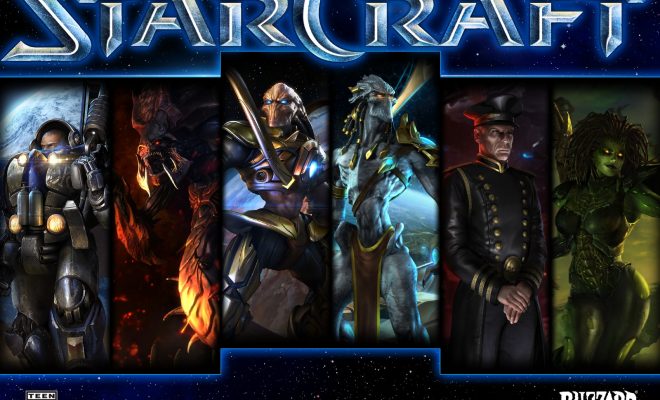
StarCraft’s journey from its initial release to its current state is a testament to the game’s enduring appeal and Blizzard Entertainment’s commitment to refining and expanding the StarCraft universe. This article traces the evolution of StarCraft, from its vanilla release through the game-changing Brood War expansion, and beyond to StarCraft: Remastered and its influence on StarCraft II.
Vanilla StarCraft: Laying the Foundation
StarCraft’s initial release in 1998 set the stage for what would become a revolutionary force in the real-time strategy (RTS) genre. The base game introduced:
- Three Distinct Races: The Terrans, Zerg, and Protoss, each with unique units, structures, and playstyles.
- Compelling Narrative: A rich storyline following the conflict between the three races in the Koprulu Sector.
- Multiplayer Focus: Battle.net integration for online play, which was relatively advanced for its time.
- Map Editor: Tools for players to create custom maps and scenarios, fostering a vibrant modding community.
While groundbreaking, vanilla StarCraft had its share of balance issues and exploits that would be addressed in subsequent patches and expansions.
Brood War: Perfecting the Formula
Released in November 1998, StarCraft: Brood War was more than just an expansion; it was a refinement and evolution of the core StarCraft experience. Key additions and changes included:
- New Units: Each race received new units that filled strategic gaps and opened up new playstyles:
- Terran: Medic, Valkyrie
- Zerg: Lurker, Devourer
- Protoss: Dark Templar, Corsair
- Extended Campaign: A new story campaign that continued the narrative, introducing iconic characters like Sarah Kerrigan as the Queen of Blades.
- Balance Adjustments: Significant tweaks to existing units and strategies, creating a more balanced competitive environment.
- New Tilesets and Maps: Fresh environments for both campaign and multiplayer play.
- Improved AI: Enhanced computer opponents for a more challenging single-player experience.
Brood War’s changes had a profound impact on competitive play, leading to more diverse strategies and a higher skill ceiling. The expansion is often cited as perfecting the StarCraft formula, cementing the game’s position as the premier competitive RTS.
Post-Brood War Development
Even after Brood War’s release, Blizzard continued to support StarCraft with patches and updates:
- Balance Patches: Periodic adjustments to maintain competitive balance, with the last official balance patch released in 2001.
- Anti-Cheat Measures: Improvements to Battle.net to combat hacking and cheating in online play.
- Community Support: Blizzard’s ongoing support for community tournaments and the professional gaming scene, particularly in South Korea.
StarCraft: Remastered – Modernizing a Classic
In 2017, nearly two decades after the original release, Blizzard launched StarCraft: Remastered. This version aimed to preserve the classic gameplay while updating the game for modern systems. Key features included:
- 4K UHD Graphics: Upgraded visuals that maintained the original aesthetic while providing sharper, clearer graphics.
- Improved Audio: Remastered sound and dialogue for a more immersive experience.
- Modern Battle.net Integration: Enhanced multiplayer features, including improved matchmaking and ladder systems.
- Cloud Saves: The ability to save and access replays and custom maps across devices.
- Widescreen Support: Adaptation of the game for modern display aspect ratios.
Importantly, StarCraft: Remastered maintained perfect compatibility with the original game, allowing players using either version to compete against each other.
Influence on StarCraft II
While not a direct evolution of the original game, StarCraft II (released in 2010) was heavily influenced by its predecessor:
- Expanded Lore: The story of StarCraft II built directly on the events of Brood War, continuing the narratives of key characters.
- Refined Mechanics: Many core gameplay elements were carried over and refined, maintaining the essence of StarCraft’s strategic depth.
- New Units and Abilities: While introducing new units and mechanics, StarCraft II drew inspiration from Brood War’s successful additions.
- Esports Focus: The competitive scene that grew around Brood War directly influenced the development of StarCraft II as an esports title.
The Legacy of Evolution
StarCraft’s evolution from its vanilla release through Brood War and beyond has had lasting impacts:
- Benchmark for Balance: The careful iterative balancing of StarCraft and Brood War set a new standard for competitive RTS games.
- Community Engagement: Blizzard’s ongoing support and the game’s moddability fostered one of the most dedicated gaming communities.
- Esports Pioneer: The game’s evolution paralleled and drove the growth of esports, particularly in South Korea.
- Timeless Design: The core design principles established in StarCraft and refined in Brood War have proven timeless, with the game remaining popular decades after release.
Conclusion
The evolution of StarCraft from its initial release through Brood War and into the modern era with Remastered showcases the game’s incredible design and the dedication of both its developers and community. Each stage of this evolution brought refinements and additions that enhanced the game without compromising its core appeal. The result is a title that has remained relevant and beloved for over two decades, influencing not just the RTS genre but the entire gaming industry. As StarCraft continues to be played and celebrated, its journey of evolution stands as a testament to the enduring power of thoughtful game design and community engagement.