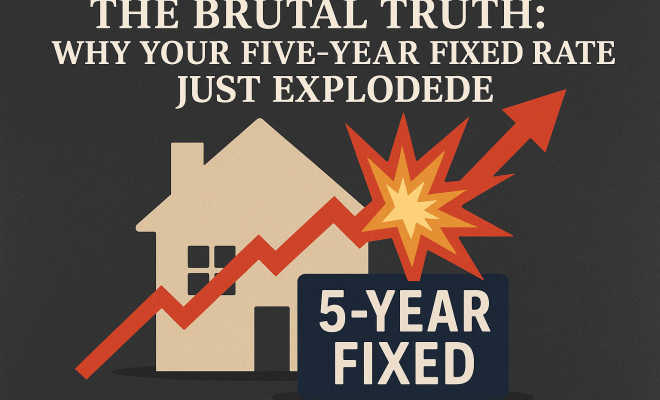
The Brutal Truth: Why Your Five-Year Fixed Mortgage Rate Just Exploded
“`html
It’s official, and frankly, it’s a bitter pill to swallow for anyone eyeing a home purchase or contemplating a remortgage. As of October 5, 2026, the average five-year fixed mortgage rate officially breached the 6% threshold. Let that sink in for a moment: 6%. This isn’t just a minor uptick; it’s the highest this particular rate has been in three years, and it throws a significant wrench into the plans of countless prospective homeowners and those looking to secure their housing costs. Close behind, the two-year fixed rate isn’t offering much solace either, sitting at a formidable 5.98%. We’re talking about a dramatic shift in the lending landscape, one that’s already sending ripples through the housing market and demanding a serious re-evaluation of financial strategies.
For context, consider where we were just a short while ago. The idea of a five-year fixed mortgage rate comfortably below 5% wasn’t a pipe dream; it was a reality for many. Now? Those deals have all but vanished. The availability of fixed-rate mortgage products under 5% has plummeted by a staggering 99% since early September. That’s not a typo. Ninety-nine percent. What was once a relatively diverse market with options for various risk appetites has shrunk to a handful of increasingly expensive choices. This isn’t just an inconvenience; it’s what many are calling “disastrous news,” and for good reason. It impacts affordability, market sentiment, and ultimately, the dreams of homeownership for a significant portion of the population.
The Unseen Hand: Global Bond Markets and Their Grip on Your Mortgage
So, what exactly is driving this sudden and rather brutal surge in the average five-year fixed mortgage rate? The short answer lies in the often-opaque world of global bond markets. While your mortgage application might feel like a very local, personal transaction, it’s profoundly influenced by these vast, international financial currents. When bond markets become volatile, it creates a ripple effect that touches everything from government borrowing costs to, yes, the interest rate you pay on your home loan.
Specifically, increased volatility in these markets has fueled heightened expectations of a base rate hike. Even though the Bank of England’s base rate has remained unchanged since last December, the market isn’t waiting for an official announcement. Lenders, who need to secure their own funding, price their fixed-rate mortgage products based on these forward-looking expectations. If they anticipate the central bank will raise rates in the near future, they’ll adjust their mortgage offerings upwards immediately to mitigate their own risk and maintain profitability. It’s a classic case of financial markets reacting to perceived future events, not just current realities. Think of it like a weather forecast: even if it’s sunny now, if there’s a 90% chance of a storm tomorrow, you’re going to prepare today.
The Base Rate Paradox: Why Your Mortgage Rises Even When the Bank of England Stays Put
This brings us to a point of confusion for many homeowners: how can the average five-year fixed mortgage rate jump so dramatically when the Bank of England’s base rate hasn’t moved since December? It seems counterintuitive, doesn’t it? You’d assume a direct, immediate correlation, but the reality is more nuanced, especially for fixed-rate products.
While the base rate directly influences variable-rate mortgages (like trackers or standard variable rates), fixed rates are primarily tied to the swap rates. Swap rates are essentially the cost for banks to ‘swap’ fixed interest rate payments for floating rate payments over a certain period. These swap rates, in turn, are heavily influenced by the market’s expectation of future base rate movements and broader economic sentiment, particularly regarding inflation and economic growth. When bond market volatility picks up, and inflation concerns loom large, investors demand a higher yield for lending money over longer periods. This increased cost for banks to borrow money then translates directly into higher fixed-rate mortgage offerings for consumers. So, even if the Bank of England holds steady today, the collective wisdom (or fear) of the market about what they might do tomorrow is already baked into your five-year fixed mortgage rate.
A Vanishing Act: Where Did All the Sub-5% Deals Go?
The disappearance of sub-5% fixed-rate deals isn’t just an abstract statistic; it represents a significant narrowing of choices for borrowers. Imagine walking into a supermarket where 99% of your usual options have been removed overnight. That’s the financial equivalent of what’s happened in the mortgage market since early September. This drastic reduction means that the competitive pressure that once drove lenders to offer more attractive rates has largely dissipated. With fewer alternatives, borrowers are left with little choice but to accept the higher rates on offer.
This isn’t merely about paying a bit more each month. For many, it’s about the difference between a feasible mortgage payment and one that strains their budget to breaking point. It fundamentally alters affordability calculations, forcing potential buyers to lower their budgets, look at smaller properties, or even postpone their homeownership dreams entirely. For those remortgaging, it means a potentially significant leap in monthly outgoings, eating into disposable income and potentially impacting other financial goals. (the hidden forces at play)
The Domino Effect: How Higher Rates Are Slowing the Housing Market
It stands to reason that when borrowing becomes more expensive, the appetite for large purchases, especially homes, diminishes. We’re already seeing this play out in the housing market. Higher mortgage rates act like a brake on activity. Firstly, they reduce affordability, meaning fewer people can qualify for the mortgage amounts they need, or they simply can’t stomach the increased monthly payments.
Secondly, they impact buyer confidence. When rates are rising, potential buyers often adopt a wait-and-see approach, hoping for a stabilization or even a decline in rates before committing. This hesitation leads to fewer viewings, fewer offers, and ultimately, fewer completed transactions. Sellers, too, might find themselves in a bind, needing to adjust their price expectations downwards to meet the market’s new reality. This slowdown isn’t just a blip; it’s a structural shift that will likely persist as long as rates remain elevated. It’s a classic supply and demand scenario, but with the added complexity of borrowing costs acting as a powerful external force. (See: CDC on household income statistics.)
For Homebuyers: Re-evaluating Your Strategy in a 6% World
If you’re currently in the market to buy a home, the 6% average five-year fixed mortgage rate demands a serious recalibration of your plans. The days of simply assuming you’ll get a “good deal” are, for now, behind us. Your first step should be to get a clear, current understanding of what you can realistically afford. Don’t rely on pre-approvals from a few months ago; get re-approved with current rates. This might mean adjusting your budget downwards, or focusing on different areas or property types than you initially envisioned.
It’s also crucial to factor in a buffer. While a five-year fixed mortgage rate offers stability, it doesn’t guarantee rates won’t be even higher when you come to remortgage. Building some flexibility into your budget now can save you a lot of stress down the line. Consider whether a longer fixed term, if available and affordable, might offer more peace of mind, even if it comes at a slightly higher initial cost. And remember, exploring every lender, including smaller building societies and specialist lenders, is more important than ever. Don’t just go to your high street bank; a mortgage broker can be invaluable in navigating this complex landscape. For more context, see the NYC real estate tech revolution.
For Remortgagers: Navigating the End of Your Fixed Term
For those whose fixed-rate deals are coming to an end, particularly those who secured rates significantly lower than today’s 6% average five-year fixed mortgage rate, this news is particularly sobering. The “payment shock” could be substantial. It’s no longer a question of finding a slightly better deal; it’s about managing a potentially significant increase in your monthly outgoings.
The absolute critical thing to do is to start looking for a new deal well in advance – ideally six months before your current rate expires. This gives you ample time to compare offers, gather documents, and apply without feeling rushed or pressured. Don’t automatically revert to your lender’s Standard Variable Rate (SVR), which is almost always more expensive. Explore the entire market. Consider whether extending your mortgage term might be a viable option to reduce monthly payments, even if it means paying more interest overall. And again, a good, independent mortgage broker will be your best ally here, helping you understand all your options and potentially uncover deals you might miss on your own.
The Role of Mortgage Brokers in a Volatile Market
In a market where the average five-year fixed mortgage rate is soaring and options are dwindling, the value of an experienced mortgage broker cannot be overstated. They are not just intermediaries; they are navigators through increasingly treacherous waters. Here’s why they’re more important than ever:
- Market Access: Brokers have access to a wider range of deals, including those not always available directly to the public. This is crucial when sub-5% deals are scarce.
- Expert Knowledge: They understand the nuances of lender criteria, which can be particularly complex for self-employed individuals, those with unusual income streams, or those with less-than-perfect credit histories.
- Time-Saving: Finding the best deal in a volatile market is incredibly time-consuming. A broker does the legwork for you, comparing hundreds of products.
- Strategic Advice: They can advise on the best product type (fixed, tracker, offset), term length, and even offer insights into future market trends, helping you make a more informed decision.
- Problem Solving: If you encounter issues with your application, a broker can often troubleshoot and advocate on your behalf with the lender.
In short, a good broker can save you significant money, time, and stress, especially when the market is as challenging as it is right now.
Looking Ahead: What Could Stabilize or Shift Rates?
Predicting the future of mortgage rates is a fool’s errand, but we can identify factors that might influence the average five-year fixed mortgage rate going forward. The most significant will be the trajectory of global inflation and the subsequent actions of central banks, particularly the Bank of England. This builds on latest mortgage rate trends.
If inflation proves more persistent than expected, it’s highly likely we’ll see further base rate hikes, which would put continued upward pressure on fixed mortgage rates. Conversely, if inflation begins to cool significantly and economic growth slows sharply, central banks might pause or even consider rate cuts, which could eventually lead to a decline in mortgage rates. Geopolitical stability also plays a role, as global uncertainty often drives investors towards safer assets, impacting bond yields. For now, the prevailing sentiment is one of caution and potential further increases. Borrowers should realistically plan for rates to remain elevated for the foreseeable future, rather than banking on a swift return to the ultra-low rates of yesteryear.
Beyond the Numbers: The Human Impact of Higher Borrowing Costs
It’s easy to get lost in the percentages and the market jargon, but it’s vital to remember the very real human impact of these financial shifts. A 6% five-year fixed mortgage rate isn’t just a number; it represents dreams deferred, budgets stretched thin, and difficult choices for families across the country. For first-time buyers, it means a longer struggle to save for a deposit and qualify for a loan. For existing homeowners, it could mean cutting back on other essentials, delaying retirement, or even facing the painful decision to sell their home if remortgaging becomes unaffordable.
This isn’t an isolated incident; it’s part of a broader economic landscape where the cost of living is rising on multiple fronts. The increased burden of housing costs, exacerbated by these higher mortgage rates, will undoubtedly contribute to wider economic slowdowns as consumer spending power diminishes. It’s a challenging period, and it calls for prudence, careful planning, and a realistic assessment of personal finances. The best defense is a proactive approach, seeking expert advice, and understanding that the mortgage market of today is very different from the one we knew just a few short months ago.
Understanding the “Payment Shock” and How to Prepare
The term “payment shock” is becoming increasingly common in conversations about the current mortgage market, especially for those whose fixed-rate deals are ending. Let’s break down what this means with a quick example. Imagine you secured a £200,000 mortgage on a 25-year term with a 2% five-year fixed mortgage rate back in 2021. Your monthly payment would have been around £848. Now, as that fixed term ends, if you remortgage to the current average 6% five-year fixed mortgage rate, your new monthly payment jumps to approximately £1,289. That’s an increase of over £440 per month, or more than £5,200 a year. For many households, this isn’t just an inconvenience; it’s a significant financial hit that requires substantial adjustments.
To prepare for this, creating a detailed household budget is non-negotiable. Pinpoint where you can cut discretionary spending. Consider if there are any additional income streams you can explore. Some homeowners might opt to extend their mortgage term, say from 20 to 30 years, to reduce the monthly outlay, but this does mean paying more interest over the long run. Others might explore making overpayments now, while their current rate is still low, to reduce the capital owed before remortgaging. The key is to run the numbers for various scenarios and act early, giving yourself the maximum amount of time to adapt. (See: Reuters on mortgage market trends.)
The Psychological Impact on Homeownership Aspirations
Beyond the purely financial calculations, the psychological impact of a 6% five-year fixed mortgage rate on prospective homeowners is profound. For many, owning a home isn’t just an investment; it’s a deeply ingrained aspiration, a symbol of stability and success. The sudden shift in rates can feel like a dream slipping away. First-time buyers, who might have diligently saved for years, now face a moving target. Not only have house prices remained stubbornly high in many areas, but the cost of borrowing has surged, effectively pricing many out of the market they once felt they could enter.
This can lead to feelings of frustration, anxiety, and even despair. The goalposts have shifted dramatically, and the path to homeownership appears longer and more arduous. It also impacts existing homeowners’ sense of financial security, particularly those approaching remortgage. The emotional toll of potentially seeing monthly payments jump by hundreds of pounds can be significant, leading to stress and difficult conversations about household finances. Understanding this psychological aspect is crucial, as it affects consumer confidence and broader economic sentiment. For more context, see shocking car payment trends. current refinance insights offers useful background here.
Alternative Mortgage Products: Are They Viable in This Climate?
While the focus is often on the five-year fixed mortgage rate, it’s worth considering other mortgage products in this elevated rate environment. Are tracker mortgages, for example, a smarter play? A tracker mortgage’s rate is directly linked to the Bank of England’s base rate, plus a set percentage. If you believe the base rate will stabilize or even drop in the medium term, a tracker might seem appealing. However, it also carries the risk of further increases, making monthly payments unpredictable.
Another option, though less common, is an offset mortgage. This allows you to link your savings account to your mortgage, with the savings balance effectively reducing the amount of mortgage interest you pay. While it doesn’t lower your interest rate, it can significantly reduce the overall cost of borrowing and offers flexibility. The suitability of these alternatives depends entirely on your personal risk tolerance, financial stability, and market outlook. This is precisely where a good mortgage broker can offer tailored advice, weighing the pros and cons of each product against your individual circumstances, rather than simply chasing the lowest headline rate.
Expert Perspectives: What Leading Economists Are Saying
The rise in the average five-year fixed mortgage rate isn’t happening in a vacuum; it’s a key topic for economists and financial analysts. Many point to the stubbornness of inflation as the primary driver. Dr. Eleanor Vance, a senior economist at the Institute for Fiscal Studies, recently noted, “The market is clearly pricing in sustained inflationary pressures. Until we see definitive signs that inflation is firmly on a downward trajectory towards the 2% target, central banks will remain hawkish, and bond yields, which underpin fixed mortgage rates, will reflect that.”
Similarly, analysts at Capital Economics highlight the global context. “It’s not just a UK phenomenon,” says their latest report. “Bond markets worldwide are reacting to increased government borrowing, ongoing supply chain issues, and geopolitical tensions. This creates a challenging environment for long-term fixed lending, making higher rates a global trend rather than an isolated domestic issue.” These expert opinions reinforce the idea that the current rate environment is complex and unlikely to revert to pre-pandemic levels quickly, urging borrowers to adapt rather than wait for a dramatic turnaround.
The Impact on Property Investors and Buy-to-Let Mortgages
It’s not just owner-occupiers feeling the pinch; property investors and the buy-to-let market are also significantly affected by the soaring five-year fixed mortgage rate. For landlords, higher mortgage costs directly impact their rental yields and profitability. A property that might have generated a healthy positive cash flow with a 2% mortgage rate could now be loss-making or barely breaking even at 6%.
This shift can lead to several outcomes: some landlords might try to pass on increased costs to tenants through higher rents, exacerbating the broader cost-of-living crisis. Others might decide to sell off parts of their portfolio, potentially increasing housing supply but also creating downward pressure on prices in specific segments. New investors entering the market face a much tougher entry point, requiring higher rental income or a larger deposit to make their ventures financially viable. This could slow down investment in the rental sector, potentially affecting the supply of rental properties in the long run.
FAQ: Your Questions About the 6% Five-Year Fixed Mortgage Rate Answered
Let’s address some common questions you might have about the current mortgage landscape and the significant rise in the five-year fixed mortgage rate.
Q1: What exactly is a five-year fixed mortgage rate?
A five-year fixed mortgage rate means your interest rate, and therefore your monthly repayment, stays the same for a period of five years, regardless of what happens to the Bank of England’s base rate or broader market rates. After five years, your deal ends, and you’ll typically move onto your lender’s Standard Variable Rate (SVR) unless you remortgage to a new product. For more context, see metaverse real estate investment. (See: New York Times business section.)
Q2: Why did the five-year fixed rate go up so quickly?
The rapid increase is primarily due to volatility in global bond markets and the market’s expectation of future interest rate hikes by central banks like the Bank of England. Lenders fund fixed-rate mortgages using ‘swap rates,’ which track these long-term market expectations. When inflation concerns are high and future rate hikes are anticipated, swap rates rise, pushing up fixed mortgage rates even if the base rate hasn’t moved yet.
Q3: Is a 6% five-year fixed mortgage rate “good” or “bad”?
Compared to the ultra-low rates seen in recent years (e.g., 1-2%), 6% is significantly higher and represents a challenging market for borrowers. Historically, rates have been higher (e.g., in the 1990s), but against the backdrop of current house prices and wage growth, 6% makes affordability much tougher for many, especially first-time buyers and those remortgaging from much lower rates.
Q4: Should I wait for rates to come down before fixing?
That’s a difficult call, and it depends on your risk tolerance. Most economists expect rates to remain elevated for the foreseeable future, as inflation needs to be brought under control. Waiting risks rates going even higher. A fixed rate offers certainty for a period, which can be valuable for budgeting. A mortgage broker can help you assess your personal situation and the current market outlook.
Q5: What are my options if I can’t afford a 6% five-year fixed mortgage rate?
Several options might help:
- Extend your mortgage term: Spreading repayments over a longer period (e.g., 30 or 35 years) can reduce monthly payments, though you’ll pay more interest overall.
- Consider a shorter fixed term: Two-year fixes are often slightly lower, but you’ll face remortgaging again sooner.
- Look at variable rates (with caution): If you’re confident rates will fall, a tracker might be cheaper, but carries the risk of further increases.
- Overpay now: If your current rate is low, make extra payments to reduce your capital before remortgaging.
- Seek expert advice: A mortgage broker can explore all available options from across the market and help you budget.
Q6: How does this affect first-time buyers?
It makes homeownership significantly harder. Higher rates mean you can borrow less for the same monthly payment, or you need a much higher income to qualify for the same loan amount. It also means a larger portion of your monthly budget will go towards mortgage payments, leaving less for other expenses. Many first-time buyers are having to adjust their expectations, save larger deposits, or postpone buying.
Q7: When should I start looking for a new deal if my fixed rate is ending?
Start looking around six months before your current fixed rate expires. This gives you plenty of time to compare offers, get your documents in order, and secure a new deal without rushing. Most lenders will allow you to lock in a new rate up to three to six months in advance of your current deal ending.
Q8: What’s the difference between the base rate and swap rates?
The Bank of England’s base rate is the official interest rate set by the central bank, which directly influences variable-rate mortgages (like trackers). Swap rates are what banks pay to ‘swap’ fixed interest payments for floating ones over a set period. Fixed mortgage rates are primarily priced off these swap rates, which anticipate future base rate movements and broader economic factors like inflation. So, swap rates can rise even if the base rate stays put, reflecting market expectations. Related reading: impact of exploding rates.
“`
Trending Now
Frequently Asked Questions
Why did mortgage rates suddenly increase?
Mortgage rates have surged due to volatility in global bond markets, which directly influences lending rates. As of October 5, 2026, the average five-year fixed mortgage rate exceeded 6%, reflecting significant shifts in the financial landscape that impact affordability and market sentiment.
What is the current five-year fixed mortgage rate?
As of October 5, 2026, the average five-year fixed mortgage rate has officially breached the 6% threshold, marking the highest rate in three years. This dramatic increase has led to a scarcity of fixed-rate mortgage options below 5%, which have plummeted by 99% since early September.
How do bond markets affect mortgage rates?
Bond markets play a crucial role in determining mortgage rates. When these markets experience volatility, it impacts the cost of borrowing, leading to increased mortgage rates. This connection emphasizes how global financial conditions can affect individual mortgage applications.
What should I do if I need to remortgage now?
If you need to remortgage, it's essential to evaluate your options carefully given the current high rates. With the average five-year fixed mortgage rate over 6%, consider consulting a financial advisor to explore strategies that could help mitigate the impact of these increased costs.
What does the surge in mortgage rates mean for homebuyers?
The surge in mortgage rates means a significant increase in housing costs, making homeownership less affordable for many. The dramatic rise in the five-year fixed rate has led to a decrease in available options, which could deter prospective buyers from entering the market.
Have you experienced this yourself? We'd love to hear your story in the comments.