The Tech Edvocate

Top Menu

  • Advertisement
  • Apps
  • Home Page
  • Home Page Five (No Sidebar)
  • Home Page Four
  • Home Page Three
  • Home Page Two
  • Home Tech2
  • Icons [No Sidebar]
  • Left Sidbear Page
  • Lynch Educational Consulting
  • My Account
  • My Speaking Page
  • Newsletter Sign Up Confirmation
  • Newsletter Unsubscription
  • Our Brands
  • Page Example
  • Privacy Policy
  • Protected Content
  • Register
  • Request a Product Review
  • Shop
  • Shortcodes Examples
  • Signup
  • Start Here
    • Governance
    • Careers
    • Contact Us
  • Terms and Conditions
  • The Edvocate
  • The Tech Edvocate Product Guide
  • Topics
  • Write For Us
  • Advertise

Main Menu

  • Start Here
    • Our Brands
    • Governance
      • Lynch Educational Consulting, LLC.
      • Dr. Lynch’s Personal Website
      • Careers
    • Write For Us
    • The Tech Edvocate Product Guide
    • Contact Us
    • Books
    • Edupedia
    • Post a Job
    • The Edvocate Podcast
    • Terms and Conditions
    • Privacy Policy
  • Topics
    • Assistive Technology
    • Child Development Tech
    • Early Childhood & K-12 EdTech
    • EdTech Futures
    • EdTech News
    • EdTech Policy & Reform
    • EdTech Startups & Businesses
    • Higher Education EdTech
    • Online Learning & eLearning
    • Parent & Family Tech
    • Personalized Learning
    • Product Reviews
  • Advertise
  • Tech Edvocate Awards
  • The Edvocate
  • Pedagogue
  • School Ratings

logo

The Tech Edvocate

  • Start Here
    • Our Brands
    • Governance
      • Lynch Educational Consulting, LLC.
      • Dr. Lynch’s Personal Website
        • My Speaking Page
      • Careers
    • Write For Us
    • The Tech Edvocate Product Guide
    • Contact Us
    • Books
    • Edupedia
    • Post a Job
    • The Edvocate Podcast
    • Terms and Conditions
    • Privacy Policy
  • Topics
    • Assistive Technology
    • Child Development Tech
    • Early Childhood & K-12 EdTech
    • EdTech Futures
    • EdTech News
    • EdTech Policy & Reform
    • EdTech Startups & Businesses
    • Higher Education EdTech
    • Online Learning & eLearning
    • Parent & Family Tech
    • Personalized Learning
    • Product Reviews
  • Advertise
  • Tech Edvocate Awards
  • The Edvocate
  • Pedagogue
  • School Ratings
  • JisuLife Ultra2 Portable Fan: A Powerful Multi-Function Cooling Solution

  • A Visitors Guide to Viña del Mar, Chile

  • A Visitors Guide to Århus, Denmark

  • A Visitors Guide to Bakersfield (CA), United States

  • A Visitors Guide to Aurora (CO), United States

  • A Visitor’s Guide to Toledo (OH), United States

  • A Visitors Guide to Cincinnati (OH), United States

  • The MagicEagle Cam 5: Revolutionizing Wildlife Monitoring with Smart 4G Technology

  • A Visitors Guide to Pittsburgh (PA), United States

  • A Visitors Guide to Colorado Springs (CO), United States

Digital & Mobile Technology
Home›Digital & Mobile Technology›The Best BSD-Based Operating Systems of All Time

The Best BSD-Based Operating Systems of All Time
By Matthew Lynch
June 23, 2023
0
Spread the love

BSD, or Berkeley Software Distribution, is a family of Unix-based operating systems that has been in existence since the 1970s. BSD is known for being extremely reliable and stable, making it a popular choice for those who need high performance and security. Over the years, there have been many different BSD-based operating systems released, each with their own unique features and strengths. In this article, we will be looking at the best BSD-based operating systems of all time.

FreeBSD

FreeBSD is one of the oldest and most popular BSD-based operating systems. It was first released in 1993 and has since become known for its stability, reliability, and security. FreeBSD is incredibly versatile and can be used for everything from desktop computing to large-scale servers and high-performance computing. The operating system is open-source and has a large community of developers working on it, which means there are constantly new features and updates being released.

One of the key features of FreeBSD is its ZFS file system, which offers advanced support for storage management, data integrity, and performance. The operating system also includes the Ports collection, which is a system for installing and managing software packages. This makes it easy to install and update software on FreeBSD without the need for third-party package managers.

NetBSD

NetBSD is another popular BSD-based operating system that was first released in 1993. Unlike FreeBSD, NetBSD is designed to be as portable as possible, which means it can run on a wide range of platforms, from large servers to embedded systems and even some gaming consoles.

NetBSD is known for its focus on performance and efficiency. The operating system is designed to be lean and fast, which makes it a popular choice for use on older hardware or in low-power environments. NetBSD also has a large library of software packages available, which makes it easy to install and use a wide range of applications.

OpenBSD

OpenBSD is a security-focused BSD-based operating system that was first released in 1996. The operating system is designed with security in mind and includes a number of robust security features, such as privilege separation, secure random number generation, and a strong focus on secure coding practices.

OpenBSD is also known for its commitment to open-source software. The operating system ships with a large number of open-source software packages, making it easy to get up and running with a wide range of applications. Additionally, the OpenBSD project has a strong focus on code quality, which means that the operating system is exceptionally well-documented and easy to use.

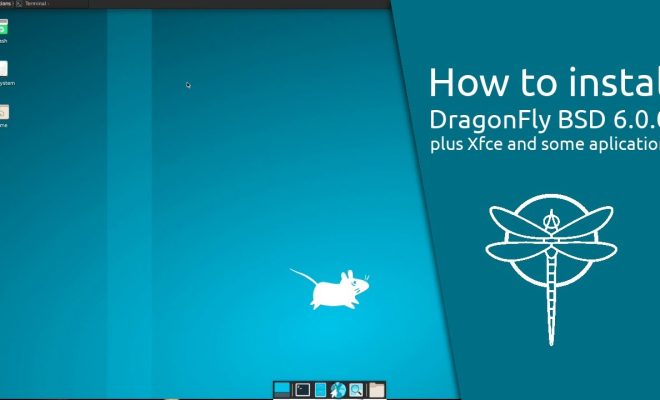
DragonFly BSD

DragonFly BSD is a relatively new BSD-based operating system that was first released in 2003. The operating system was designed with a focus on scalability and performance, and includes a number of features that make it suitable for use in large-scale environments.

One of the key features of DragonFly BSD is its Hammer file system, which provides advanced support for storage management, versioning, and backup. The operating system also includes a number of performance optimizations, such as a per-CPU kernel locking model, which allows it to handle high levels of concurrency and load.

Conclusion

In conclusion, there are many different BSD-based operating systems available, each with their own unique features and strengths. FreeBSD is known for its stability and versatility, while NetBSD focuses on performance and portability. OpenBSD is a security-focused operating system that is designed to be as secure as possible, while DragonFly BSD is designed for use in large-scale environments. Regardless of which BSD-based operating system you choose, you can be assured that you are getting an operating system that is both reliable and secure, making it a popular choice for a wide range of use cases.


Previous Article

How to Change Your PS5 Covers

Next Article

Android Phone Buttons Don’t Work? 5 Fixes ...

Matthew Lynch

Related articles More from author

  • Digital & Mobile Technology

    How to Use Chromecast: A Guide for Beginners

    June 22, 2023
    By Matthew Lynch
  • Digital & Mobile Technology

    What Do the Android Status Bar Symbols Mean?

    August 5, 2023
    By Matthew Lynch
  • Digital & Mobile Technology

    The Best Coloring Book Apps for Adults on Android

    June 12, 2023
    By Matthew Lynch
  • Digital & Mobile Technology

    PowerPoint Tips for Preparing a Professional Presentation

    June 13, 2023
    By Matthew Lynch
  • Digital & Mobile Technology

    How to Download Songs on Spotify

    June 12, 2023
    By Matthew Lynch
  • Digital & Mobile Technology

    The Best Free Windows 10 Repair Tools to Fix Any Problem

    August 5, 2023
    By Matthew Lynch

Search

Login & Registration

  • Register
  • Log in
  • Entries feed
  • Comments feed
  • WordPress.org

Newsletter

Signup for The Tech Edvocate Newsletter and have the latest in EdTech news and opinion delivered to your email address!

About Us

Since technology is not going anywhere and does more good than harm, adapting is the best course of action. That is where The Tech Edvocate comes in. We plan to cover the PreK-12 and Higher Education EdTech sectors and provide our readers with the latest news and opinion on the subject. From time to time, I will invite other voices to weigh in on important issues in EdTech. We hope to provide a well-rounded, multi-faceted look at the past, present, the future of EdTech in the US and internationally.

We started this journey back in June 2016, and we plan to continue it for many more years to come. I hope that you will join us in this discussion of the past, present and future of EdTech and lend your own insight to the issues that are discussed.

Newsletter

Signup for The Tech Edvocate Newsletter and have the latest in EdTech news and opinion delivered to your email address!

Contact Us

The Tech Edvocate
910 Goddin Street
Richmond, VA 23231
(601) 630-5238
[email protected]

Copyright © 2025 Matthew Lynch. All rights reserved.