Tensions Rise as Ship Traffic Stops in the Strait of Hormuz Following Trump’s Blockade Announcement
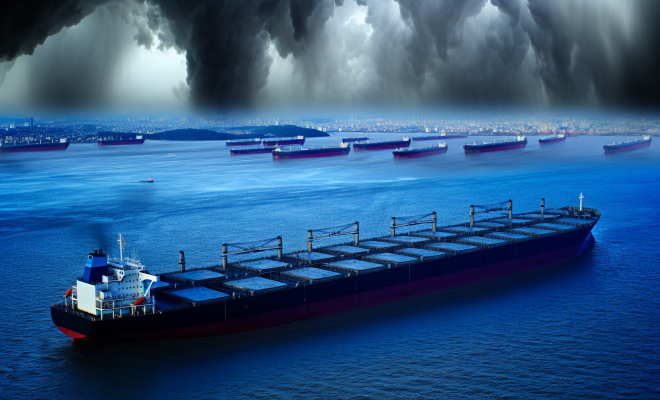
The geopolitical landscape of the Middle East has shifted dramatically following a recent announcement by U.S. President Donald Trump, who declared a blockade of the strategically vital Strait of Hormuz. This decision has led to an immediate halt in ship traffic through one of the world’s busiest maritime corridors, according to reports from Lloyd’s List Intelligence.
Understanding the Blockade
On April 13, 2026, President Trump confirmed the blockade aimed specifically at vessels entering or departing from Iranian ports. The U.S. Central Command clarified that while the blockade is focused on Iranian shipping, it will not impede non-Iranian vessels, thereby attempting to minimize broader disruptions in maritime trade.
Economic Implications of the Blockade
The announcement has sent shockwaves through global oil markets. Following the news, benchmark U.S. crude prices surged nearly 7%, reaching $103.28 per barrel, while Brent crude prices jumped 6.5% to $101.40 per barrel. Analysts are concerned that the blockade could lead to increased volatility in oil prices, which are already sensitive to geopolitical tensions.
Impact on Global Oil Supply
The Strait of Hormuz is a critical chokepoint for global oil transportation, with approximately 20% of the world’s oil supply passing through it. Any disruption in this area can have far-reaching consequences, not only for oil prices but also for the global economy. Countries heavily reliant on oil imports from the Gulf region may find themselves facing significant challenges in securing energy supplies.
Reactions from Key Players
International reactions to Trump’s blockade announcement have varied. Some countries express concern over the potential for escalating tensions in the region, while others support the U.S. stance against Iran, viewing it as a necessary measure to maintain stability and security.
- Iran: Iranian officials have condemned the blockade as an act of aggression, warning of retaliatory measures should their shipping routes be threatened.
- European Union: The EU has called for diplomatic solutions, urging all parties to de-escalate tensions and avoid military confrontations.
- Saudi Arabia: As a key ally of the United States, Saudi Arabia has welcomed the blockade, viewing it as part of a broader strategy to counter Iranian influence in the region.
Historical Context
The Strait of Hormuz has been a focal point of international maritime disputes for decades. Previous confrontations between the U.S. and Iran, particularly over shipping security, have raised alarms about potential military confrontations. The current blockade follows a history of sanctions imposed by the U.S. on Iran, particularly after the U.S. withdrew from the Iran nuclear deal in 2018.
Military Presence and Preparedness
In response to the heightened tensions, the U.S. has increased its military presence in the region. The U.S. Central Command has deployed additional naval assets to ensure the security of maritime traffic and protect commercial interests. This military buildup reflects a strategic approach aimed at deterring Iranian aggression while reassuring allies in the region.
Potential for Escalation
Experts are warning that the blockade could lead to an escalation of hostilities between the U.S. and Iran. Analysts suggest that Iran may retaliate by targeting U.S. assets or allied shipping in the region. Such actions could spiral into wider conflict, drawing in other nations and disrupting global trade further.
Global Economic Concerns
The implications of the blockade extend beyond just oil prices. A sustained disruption in the Strait of Hormuz could trigger economic repercussions worldwide, affecting everything from shipping costs to inflation rates. Economists are closely monitoring the situation, as prolonged instability could hinder recovery efforts in economies still grappling with the impacts of the COVID-19 pandemic.
Conclusion
As the situation continues to develop, the world watches closely. The Strait of Hormuz remains a critical artery for global commerce, and any prolonged disruption could have lasting implications for international relations and economic stability. The coming days and weeks will be pivotal in determining whether the blockade will lead to a diplomatic resolution or further escalation in hostilities.
In this uncertain climate, the need for dialogue and peaceful negotiation remains paramount. The global community must prioritize de-escalation to avert a crisis that could have devastating consequences for millions around the world.