The Tech Edvocate

Top Menu

  • Advertisement
  • Apps
  • Home Page
  • Home Page Five (No Sidebar)
  • Home Page Four
  • Home Page Three
  • Home Page Two
  • Home Tech2
  • Icons [No Sidebar]
  • Left Sidbear Page
  • Lynch Educational Consulting
  • My Account
  • My Speaking Page
  • Newsletter Sign Up Confirmation
  • Newsletter Unsubscription
  • Our Brands
  • Page Example
  • Privacy Policy
  • Protected Content
  • Register
  • Request a Product Review
  • Shop
  • Shortcodes Examples
  • Signup
  • Start Here
    • Governance
    • Careers
    • Contact Us
  • Terms and Conditions
  • The Edvocate
  • The Tech Edvocate Product Guide
  • Topics
  • Write For Us
  • Advertise

Main Menu

  • Start Here
    • Our Brands
    • Governance
      • Lynch Educational Consulting, LLC.
      • Dr. Lynch’s Personal Website
      • Careers
    • Write For Us
    • The Tech Edvocate Product Guide
    • Contact Us
    • Books
    • Edupedia
    • Post a Job
    • The Edvocate Podcast
    • Terms and Conditions
    • Privacy Policy
  • Topics
    • Assistive Technology
    • Child Development Tech
    • Early Childhood & K-12 EdTech
    • EdTech Futures
    • EdTech News
    • EdTech Policy & Reform
    • EdTech Startups & Businesses
    • Higher Education EdTech
    • Online Learning & eLearning
    • Parent & Family Tech
    • Personalized Learning
    • Product Reviews
  • Advertise
  • Tech Edvocate Awards
  • The Edvocate
  • Pedagogue
  • School Ratings

logo

The Tech Edvocate

  • Start Here
    • Our Brands
    • Governance
      • Lynch Educational Consulting, LLC.
      • Dr. Lynch’s Personal Website
        • My Speaking Page
      • Careers
    • Write For Us
    • The Tech Edvocate Product Guide
    • Contact Us
    • Books
    • Edupedia
    • Post a Job
    • The Edvocate Podcast
    • Terms and Conditions
    • Privacy Policy
  • Topics
    • Assistive Technology
    • Child Development Tech
    • Early Childhood & K-12 EdTech
    • EdTech Futures
    • EdTech News
    • EdTech Policy & Reform
    • EdTech Startups & Businesses
    • Higher Education EdTech
    • Online Learning & eLearning
    • Parent & Family Tech
    • Personalized Learning
    • Product Reviews
  • Advertise
  • Tech Edvocate Awards
  • The Edvocate
  • Pedagogue
  • School Ratings
  • The Bombshell Truth About Slim Boost Tea: Don’t Buy Until You Read This

  • Jaw-Dropping: Charbroil Bistro Pro Electric Grill Recall — Is Your Grill a Hidden Danger?

  • This Corgi Tech Startup Just Imploded — Here’s How Social Media Wrecked Everything

  • September 2026: The Latest in Tech Authoritarianism – Overturned by Kelly Stonelake

  • GTA 6 Collector’s Box Price: The $400 Outrage That Just Broke Gaming

  • Unbelievable: Gamers Fought Blizzard’s Censorship and Saved Ogre Butts

  • The Radical New Bill That Could Halt AI — And Jails Its Creators

  • This OpenAI Hack Just Exposed a Terrifying New AI Threat

  • This One Leaked Video Just Blew Open New Zealand’s Curriculum Battle

  • The AI Deception: Stanford’s Scandalous Photo Alteration Reignites Representation Debate

Digital & Mobile Technology
Home›Digital & Mobile Technology›Strengths and Weaknesses of PSP Models

Strengths and Weaknesses of PSP Models
By Matthew Lynch
June 9, 2023
0
Spread the love

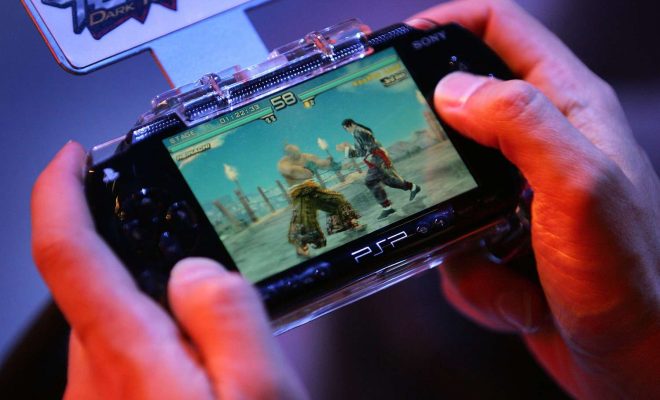
PSP or the PlayStation Portable is a handheld gaming device that was released by Sony in 2004. It is considered as one of the most iconic gaming consoles of all time, as it enabled players to have a full console-like gaming experience on the go. Throughout its lifespan, Sony released several models of the PSP, each with its own strengths and weaknesses. In this article, we will discuss the various PSP models and their respective pros and cons.

PSP-1000:

The first model of the PSP, known as the PSP-1000, was released in 2004. It was a breakthrough in portable gaming technology at that time, as it offered features that were unheard of on other handheld devices. The PSP-1000 had a large and bright 4.3-inch display screen and was equipped with Wi-Fi connectivity, USB connectivity, and a UMD drive, which made it possible to play games on physical discs.

Strengths:

The PSP-1000 had a bulky and sturdy design that made it resilient. It had a large and clear screen, which was perfect for playing games and watching videos. The UMD drive made it possible to play games on physical discs, which meant that players did not have to worry about running out of storage space.

Weaknesses:

The PSP-1000 had a short battery life, which was a significant downside. Its loading times were notoriously slow, which made it frustrating to wait for games to load. Moreover, this model was also known to have a slight compatibility issue with some games.

PSP-2000:

The PSP-2000 was released in 2007 and was an upgrade to the PSP-1000. It featured a slimmer and lighter design than the previous model and had a better battery life. It also had a brighter screen and better loading times, making it a more reliable device overall.

Strengths:

The PSP-2000 had a sleeker and more compact design, which made it easier to carry around. Its battery life was significantly improved, which meant that players could play for longer periods without needing to recharge. The screen was also brighter and had better viewing angles than the previous model.

Weaknesses:

The PSP-2000 still had a UMD drive, which meant that players had to carry around physical discs to play games. The device also lacked internal storage, which made it necessary to purchase a separate memory card to save game data on.

PSP-3000:

The PSP-3000 was released in 2008 and was an even better upgrade than its predecessor. It maintained the slim and compact design of the PSP-2000 but had a more advanced display screen that reduced glare and provided better color contrast.

Strengths:

The PSP-3000 had a superior screen that provided better picture quality and color accuracy. It also had better anti-glare protection, which made it easier to play games in bright outdoor environments. The PSP-3000 also had a built-in microphone, which meant that players could use voice chat during multiplayer games.

Weaknesses:

The PSP-3000 still relied on the UMD drive for physical game discs, which made it necessary to carry them around. The device also had no internal storage, which made it necessary to purchase a separate memory card to save game data on.

PSP Go:

The PSP Go was a newer, more innovative version of the PSP. It was released in 2009 and had a completely different form factor from its predecessors. The PSP Go was designed as a compact slide-out device that housed its own internal memory storage, which meant that players no longer needed to carry around physical discs to play games.

Strengths:

The PSP Go had a sleek and compact design that made it easy to carry around. It had its own internal storage, which meant that players could download and save games directly onto the device. The PSP Go also had Bluetooth connectivity, which made it possible to pair it with other devices for multiplayer games.

Weaknesses:

The PSP Go lacked UMD drive, which made it impossible to play physical game discs. It also had limited internal storage, which meant that players could only store a limited number of games on the device.

Each PSP model had its own set of strengths and weaknesses, which made them ideal for different types of gamers. The PSP-1000 and PSP-2000 were perfect for those who preferred a portable and reliable gaming experience. The PSP-3000 was ideal for those who valued color accuracy and anti-glare protection. The PSP Go was perfect for those who preferred a more minimalistic and streamlined device. Regardless of the model, PSPs have left a lasting impression on the world of handheld gaming, and its exciting library of games will forever be remembered by gamers worldwide.


Previous Article

How Long Do Computers Last?

Next Article

How to Find Someone’s Gmail Address

Matthew Lynch

Related articles More from author

  • Digital & Mobile Technology

    How to Fix the 0x8007045d Error on Windows 10 or 11

    June 5, 2023
    By Matthew Lynch
  • Digital & Mobile Technology

    What is Raw Footage?

    May 10, 2023
    By Matthew Lynch
  • Digital & Mobile Technology

    How to Reverse a Video on Snapchat

    June 1, 2023
    By Matthew Lynch
  • Digital & Mobile Technology

    How to Use Starlink in Cars, Boats, and Planes

    August 3, 2023
    By Matthew Lynch
  • Digital & Mobile Technology

    Top Sites for Computer Troubleshooting and Tech Support

    June 12, 2023
    By Matthew Lynch
  • Digital & Mobile Technology

    Free Ways to Find Someone Online

    May 31, 2023
    By Matthew Lynch

Search

Login & Registration

  • Log in
  • Entries feed
  • Comments feed
  • WordPress.org

Newsletter

Signup for The Tech Edvocate Newsletter and have the latest in EdTech news and opinion delivered to your email address!

About Us

Since technology is not going anywhere and does more good than harm, adapting is the best course of action. That is where The Tech Edvocate comes in. We plan to cover the PreK-12 and Higher Education EdTech sectors and provide our readers with the latest news and opinion on the subject. From time to time, I will invite other voices to weigh in on important issues in EdTech. We hope to provide a well-rounded, multi-faceted look at the past, present, the future of EdTech in the US and internationally.

We started this journey back in June 2016, and we plan to continue it for many more years to come. I hope that you will join us in this discussion of the past, present and future of EdTech and lend your own insight to the issues that are discussed.

Newsletter

Signup for The Tech Edvocate Newsletter and have the latest in EdTech news and opinion delivered to your email address!

Contact Us

The Tech Edvocate
910 Goddin Street
Richmond, VA 23231
(601) 630-5238
[email protected]

Copyright © 2026 Matthew Lynch. All rights reserved.