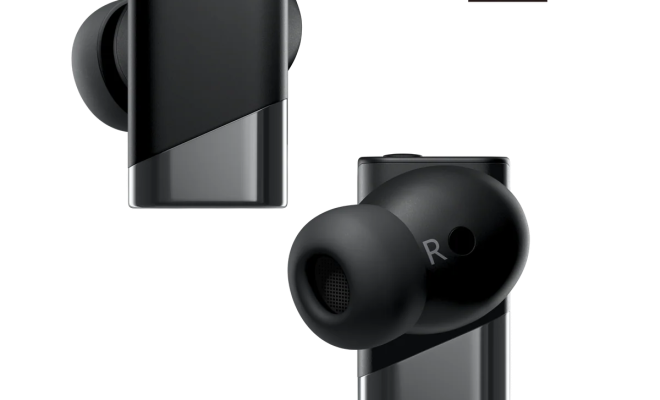
In a wireless earbud market dominated by household names like Apple, Sony, and Bose, Status Audio has quietly been building something different. The Status Audio Pro X represents the company’s most ambitious effort yet—a triple-driver flagship that challenges the acoustic compromises inherent in most wireless earbuds. After extensive testing, it’s clear that Status Audio has created something genuinely special here, delivering audiophile-grade sound quality in a package that costs significantly less than the competition.
What Makes the Pro X Different?
The fundamental problem with most wireless earbuds is simple: they use a single dynamic driver to reproduce the entire frequency spectrum. This jack-of-all-trades approach inevitably leads to compromises. Bass lacks depth, treble loses detail, and midrange clarity suffers. The Pro X takes a radically different approach by employing three separate speakers—a 12mm dynamic driver for bass and two Knowles balanced armature drivers for mids and highs.
This hybrid triple-driver configuration is typically reserved for high-end wired in-ear monitors costing upwards of $500. Status Audio has managed to miniaturize this technology into a truly wireless package, complete with active noise cancellation, and price it at $249. That’s the same cost as standard AirPods Pro, yet the engineering inside is vastly more sophisticated.
The results are immediately apparent. Where single-driver earbuds sound compressed and congested, the Pro X delivers spacious, detailed audio with genuine instrument separation. You can hear individual elements in complex mixes that simply disappear on conventional wireless earbuds. It’s the difference between listening to music and experiencing it.
Sound Quality: The Star of the Show
Let’s be direct: the Pro X offers the best sound quality I’ve experienced in wireless earbuds at any price point. The triple-driver system creates a soundstage that feels impossibly wide for in-ear monitors. Listening to orchestral recordings, you can pinpoint instrument locations with remarkable precision. Jazz recordings reveal subtle brush work and room ambience that gets lost on lesser earbuds.
The bass response deserves special mention. That 12mm dynamic driver produces deep, textured low-end that never bleeds into the midrange. Electronic music hits with satisfying impact, while acoustic bass maintains natural tone and definition. This isn’t the bloated, one-note bass you get from consumer-focused earbuds—it’s controlled, articulate, and musical.
The dual Knowles balanced armatures handle everything above the bass frequencies with exceptional clarity. Vocals sit forward in the mix with natural presence and detail. High-frequency extension is excellent, delivering crisp cymbal crashes and delicate string harmonics without harshness or sibilance. The tonal balance leans slightly warm, which makes the Pro X forgiving with poorly recorded material while still revealing everything in high-quality recordings.
Status Audio also includes LDAC codec support, enabling 24-bit/96kHz audio transmission at bitrates up to 990kbps. This is three times the bandwidth of standard Bluetooth codecs, and the difference is audible when streaming high-resolution audio from services like Tidal or Qobuz. The Pro X has even earned High-Res Wireless Audio certification from the Japan Audio Society—a rare achievement for wireless earbuds.
Design and Comfort: Smaller, Smarter, Better
Status Audio has significantly refined the physical design with the Pro X. These earbuds are noticeably more compact than their predecessor, the Between 3ANC, while maintaining the same acoustic architecture. The result is a sleeker profile that sits more comfortably in your ears for extended listening sessions.
The Pro X is available in two finishes: Black Alloy and Moonbeam. Both feature a sophisticated matte finish that feels premium without being flashy. The charging case is compact enough to slip into a pocket, with a satisfying magnetic closure and LED indicators showing battery status.
Fit is crucial for both comfort and sound quality, and Status Audio includes multiple ear tip sizes to ensure proper seal. I found the medium tips provided excellent isolation and comfort for multi-hour listening sessions. The IP55 rating means these earbuds can handle sweat, rain, and dust without issue—perfect for commutes, workouts, or outdoor use.
Physical controls combine touch surfaces with actual buttons, giving you tactile feedback that’s more reliable than touch-only interfaces. You can control playback, adjust volume, toggle noise cancellation, and activate voice assistants without fumbling or accidentally triggering commands.
Active Noise Cancellation and Transparency Mode
The Pro X features hybrid active noise cancellation using six beamforming microphones—three per earbud. Status Audio claims up to 52dB of noise reduction, and real-world performance backs this up. The ANC effectively neutralizes airplane cabin noise, subway rumble, and office HVAC systems. It’s not quite as aggressive as Sony’s WF-1000XM5, but it’s remarkably close at half the price.
What impressed me more was the Transparency Mode. Many earbuds make ambient sound feel artificial or tinny when piping it through the microphones. The Pro X maintains natural tonality, making it easy to have conversations or stay aware of your surroundings without removing the earbuds. This is genuinely useful for quick interactions or navigating busy streets.
You can toggle between ANC, Transparency, and off modes using the physical controls or the Status Hub app. The transitions are smooth and don’t produce the jarring clicks or pops that plague some competitors.
Call Quality: Voiceloom AI Makes the Difference
Wireless earbuds have traditionally struggled with call quality, especially in noisy environments. Status Audio addresses this with Voiceloom AI—a neural network-based speech enhancement system that separates your voice from background noise in real-time.
The difference is dramatic. I tested calls from coffee shops, busy streets, and even next to a running vacuum cleaner. In every scenario, the person on the other end reported clear, intelligible audio with minimal background interference. The six-microphone array captures your voice from multiple angles, and the AI processing does an impressive job of isolating speech while suppressing everything else.
There’s also a sidetone feature that feeds your own voice back through the earbuds during calls. This prevents the “talking underwater” sensation that makes people unconsciously raise their voice when wearing earbuds with strong passive isolation.
Battery Life and Connectivity
Battery life is solid if not exceptional. You get 8 hours per charge with ANC enabled, or up to 10 hours with it disabled. The charging case provides an additional 24 hours, bringing total playback time to 32 hours. That’s enough for a week of commuting or a long international flight.
Using LDAC codec does reduce battery life somewhat, as the higher bitrate requires more processing power. If you’re prioritizing longevity over ultimate sound quality, sticking with AAC or SBC codecs will extend playback time.
The Pro X supports multipoint connectivity, allowing simultaneous connection to two devices. This is incredibly convenient for switching between your phone and laptop without manual re-pairing. Android users get Fast Pair support, while Windows users benefit from Microsoft Swift Pair. The earbuds also support Bluetooth LE Audio and the LC3 codec, future-proofing them for next-generation Bluetooth features.
Wireless charging is supported via Qi-compatible charging pads, though USB-C charging is faster if you’re in a hurry.
The Status Hub App
The companion Status Hub app (available for iOS and Android) unlocks additional functionality. The interface is clean and intuitive, providing quick access to listening modes, battery status, and sound customization.
The standout feature is the 8-band parametric EQ, which gives you granular control over the frequency response. You can create custom sound profiles for different genres or listening preferences, and the changes are applied in real-time. Status Audio also includes several preset EQs if you prefer not to tweak settings manually.
You can remap the earbud controls to prioritize functions you use most frequently. There’s also a “Find My Earbuds” feature that shows the last known GPS location and can trigger a sound alert if they’re nearby.
Value Proposition: Redefining the Premium Tier
At $249, the Status Audio Pro X costs the same as Apple AirPods Pro (2nd generation) and significantly less than Sony WF-1000XM5 ($299) or Bose QuietComfort Ultra Earbuds ($299). Yet the Pro X delivers superior sound quality thanks to its triple-driver architecture and high-resolution codec support.
This isn’t to say the Pro X is perfect for everyone. If you’re deeply embedded in the Apple ecosystem, AirPods Pro offers tighter integration with iOS devices. If noise cancellation is your absolute priority, Sony’s flagship might edge ahead. But if sound quality is your primary concern—and it should be for earbuds—the Pro X represents exceptional value.
Status Audio also offers a 30-day performance guarantee with free return shipping, plus a one-year warranty. This risk-free trial period lets you test the Pro X in your own environment with your own music before committing.
The Verdict
The Status Audio Pro X proves that you don’t need to compromise acoustic performance in wireless earbuds. By implementing a true triple-driver system with high-resolution codec support, Status Audio has created earbuds that satisfy both audiophile sensibilities and everyday convenience needs.
The sound quality alone justifies the price, but you also get effective noise cancellation, excellent call quality, comprehensive app customization, and all the modern features expected from premium wireless earbuds. The fact that Status Audio delivers this at $249 makes the Pro X one of the most compelling values in personal audio.
If you’ve been disappointed by the sound quality of mainstream wireless earbuds, or if you’re simply curious what properly engineered multi-driver earbuds can achieve, the Pro X deserves serious consideration. Status Audio may not have the brand recognition of the industry giants, but they’ve built something that competes—and often exceeds—what those companies offer at similar or higher prices.
Rating: 9.5/10
Pros:
Exceptional sound quality from triple-driver system