The Tech Edvocate

Top Menu

  • Advertisement
  • Apps
  • Home Page
  • Home Page Five (No Sidebar)
  • Home Page Four
  • Home Page Three
  • Home Page Two
  • Home Tech2
  • Icons [No Sidebar]
  • Left Sidbear Page
  • Lynch Educational Consulting
  • My Account
  • My Speaking Page
  • Newsletter Sign Up Confirmation
  • Newsletter Unsubscription
  • Our Brands
  • Page Example
  • Privacy Policy
  • Protected Content
  • Register
  • Request a Product Review
  • Shop
  • Shortcodes Examples
  • Signup
  • Start Here
    • Governance
    • Careers
    • Contact Us
  • Terms and Conditions
  • The Edvocate
  • The Tech Edvocate Product Guide
  • Topics
  • Write For Us
  • Advertise

Main Menu

  • Start Here
    • Our Brands
    • Governance
      • Lynch Educational Consulting, LLC.
      • Dr. Lynch’s Personal Website
      • Careers
    • Write For Us
    • The Tech Edvocate Product Guide
    • Contact Us
    • Books
    • Edupedia
    • Post a Job
    • The Edvocate Podcast
    • Terms and Conditions
    • Privacy Policy
  • Topics
    • Assistive Technology
    • Child Development Tech
    • Early Childhood & K-12 EdTech
    • EdTech Futures
    • EdTech News
    • EdTech Policy & Reform
    • EdTech Startups & Businesses
    • Higher Education EdTech
    • Online Learning & eLearning
    • Parent & Family Tech
    • Personalized Learning
    • Product Reviews
  • Advertise
  • Tech Edvocate Awards
  • The Edvocate
  • Pedagogue
  • School Ratings

logo

The Tech Edvocate

  • Start Here
    • Our Brands
    • Governance
      • Lynch Educational Consulting, LLC.
      • Dr. Lynch’s Personal Website
        • My Speaking Page
      • Careers
    • Write For Us
    • The Tech Edvocate Product Guide
    • Contact Us
    • Books
    • Edupedia
    • Post a Job
    • The Edvocate Podcast
    • Terms and Conditions
    • Privacy Policy
  • Topics
    • Assistive Technology
    • Child Development Tech
    • Early Childhood & K-12 EdTech
    • EdTech Futures
    • EdTech News
    • EdTech Policy & Reform
    • EdTech Startups & Businesses
    • Higher Education EdTech
    • Online Learning & eLearning
    • Parent & Family Tech
    • Personalized Learning
    • Product Reviews
  • Advertise
  • Tech Edvocate Awards
  • The Edvocate
  • Pedagogue
  • School Ratings
  • Ramp’s Staggering $60 Billion Valuation: 8 Reasons Why Investors Are Piling In

  • Uncovering the Cost: Why This AI Startup’s Collapse Is a Troubling Sign for Tech

  • The Silent Crisis: Why Your Next Console Will Cost a Fortune

  • Advisers urged to steer clear of ‘hyperscale’ AI models

  • The Quiet Crisis: Is AI in Education Creating an ‘Illusion of Learning’?

  • 84% of Ransomware Attacks Use AI: This Is How Your Own Systems Are Turning Against You

  • The Staggering Truth About Healthcare Cyberattacks: 76.6 Million Records Exposed in 2026

  • This Crucial Deadline For Rogue AI Is Much Closer Than You Think

  • This RNA Breakthrough Could Rewrite Alzheimer’s Treatment

  • This One Thing Is Silently Crushing US Consumer Inflation — And Your Wallet

Tech Advice
Home›Tech Advice›Statement Balance vs. Current Balance: What’s the Difference?

Statement Balance vs. Current Balance: What’s the Difference?
By Matthew Lynch
July 11, 2023
0
Spread the love

When managing credit card finances, it is essential to understand the different types of balances on your statement. Two key terms you will come across are “Statement Balance” and “Current Balance.” These two balances play a significant role in how you manage your credit card, but they often confuse individuals using credit cards for the first time. In this article, we will discuss the differences between statement balance and current balance and their implications in managing your card payments.

Statement Balance

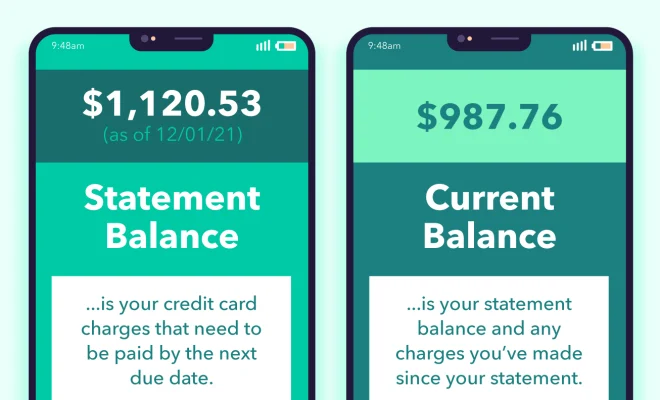
The statement balance is the total amount of outstanding charges made on a credit card during a particular billing cycle. It includes all purchases, fees, interest charges, and other transactions that have been posted to your account during that period. The statement balance is usually reported monthly by your credit card issuer through a physical statement or an electronic one available online.

To avoid interest charges and maintain a good credit score, it is crucial to pay off the entire statement balance before the due date each month. If the full amount isn’t paid off by the due date, you will be charged interest on any remaining balance.

Current Balance

The current balance represents the total amount you owe on your credit card at any given time. It includes all outstanding charges – including those from the previous billing cycle – plus any new transactions you have made since then. The current balance also considers any payments or credits made towards your account since the last statement was issued.

Since this balance is continually updated to include new transactions and payments, it may appear higher or lower than your statement balance.

Differences Between Statement and Current Balances

1. Reporting Time: Statement balances are reported monthly at the end of each billing cycle while current balances change daily as payments and new transactions are posted.

2. Interest Charges: Statement balances reflect any interest charges incurred during that billing cycle, whereas current balances only show unpaid interest from remaining amounts owed.

3. Payment Obligation: Paying off the statement balance by the due date will prevent you from incurring additional interest charges. However, paying off the current balance may not prevent interest charges if new transactions continue to be made on the credit card.

Understanding the difference between statements and current balances can help you manage your credit card payments effectively. Make it a habit to pay off the entire statement balance each month to avoid any interest charges and maintain a good credit score. If you wish to have a more accurate picture of your finances, keep track of your current balance to ensure you are not spending beyond your means.


Previous Article

Soft Pull vs. Hard Pull Credit Inquiry: ...

Next Article

Store Cards vs. Traditional Credit Cards: What’s ...

Matthew Lynch

Related articles More from author

  • Tech Advice

    Apple iPhone 6S Plus Review: Bigger is (mostly) better

    July 11, 2023
    By Matthew Lynch
  • Tech Advice

    2024 Mercedes-AMG GLE53 Tested: More Beef with Little Trade-off

    August 11, 2023
    By Matthew Lynch
  • Tech Advice

    2024 Subaru Crosstrek Wilderness Wants to Explore

    August 11, 2023
    By Matthew Lynch
  • Tech Advice

    What Does It Mean to Bump a Post?

    April 15, 2023
    By Matthew Lynch
  • Tech Advice

    What Is a Real Estate Consultant?

    September 6, 2023
    By Matthew Lynch
  • Tech Advice

    QLED vs. OLED: What’s the Difference and Which TV Is Better?

    July 16, 2023
    By Matthew Lynch

Search

Login & Registration

  • Log in
  • Entries feed
  • Comments feed
  • WordPress.org

Newsletter

Signup for The Tech Edvocate Newsletter and have the latest in EdTech news and opinion delivered to your email address!

About Us

Since technology is not going anywhere and does more good than harm, adapting is the best course of action. That is where The Tech Edvocate comes in. We plan to cover the PreK-12 and Higher Education EdTech sectors and provide our readers with the latest news and opinion on the subject. From time to time, I will invite other voices to weigh in on important issues in EdTech. We hope to provide a well-rounded, multi-faceted look at the past, present, the future of EdTech in the US and internationally.

We started this journey back in June 2016, and we plan to continue it for many more years to come. I hope that you will join us in this discussion of the past, present and future of EdTech and lend your own insight to the issues that are discussed.

Newsletter

Signup for The Tech Edvocate Newsletter and have the latest in EdTech news and opinion delivered to your email address!

Contact Us

The Tech Edvocate
910 Goddin Street
Richmond, VA 23231
(601) 630-5238
[email protected]

Copyright © 2026 Matthew Lynch. All rights reserved.