The Tech Edvocate

Top Menu

  • Advertisement
  • Apps
  • Home Page
  • Home Page Five (No Sidebar)
  • Home Page Four
  • Home Page Three
  • Home Page Two
  • Home Tech2
  • Icons [No Sidebar]
  • Left Sidbear Page
  • Lynch Educational Consulting
  • My Account
  • My Speaking Page
  • Newsletter Sign Up Confirmation
  • Newsletter Unsubscription
  • Our Brands
  • Page Example
  • Privacy Policy
  • Protected Content
  • Register
  • Request a Product Review
  • Shop
  • Shortcodes Examples
  • Signup
  • Start Here
    • Governance
    • Careers
    • Contact Us
  • Terms and Conditions
  • The Edvocate
  • The Tech Edvocate Product Guide
  • Topics
  • Write For Us
  • Advertise

Main Menu

  • Start Here
    • Our Brands
    • Governance
      • Lynch Educational Consulting, LLC.
      • Dr. Lynch’s Personal Website
      • Careers
    • Write For Us
    • The Tech Edvocate Product Guide
    • Contact Us
    • Books
    • Edupedia
    • Post a Job
    • The Edvocate Podcast
    • Terms and Conditions
    • Privacy Policy
  • Topics
    • Assistive Technology
    • Child Development Tech
    • Early Childhood & K-12 EdTech
    • EdTech Futures
    • EdTech News
    • EdTech Policy & Reform
    • EdTech Startups & Businesses
    • Higher Education EdTech
    • Online Learning & eLearning
    • Parent & Family Tech
    • Personalized Learning
    • Product Reviews
  • Advertise
  • Tech Edvocate Awards
  • The Edvocate
  • Pedagogue
  • School Ratings

logo

The Tech Edvocate

  • Start Here
    • Our Brands
    • Governance
      • Lynch Educational Consulting, LLC.
      • Dr. Lynch’s Personal Website
        • My Speaking Page
      • Careers
    • Write For Us
    • The Tech Edvocate Product Guide
    • Contact Us
    • Books
    • Edupedia
    • Post a Job
    • The Edvocate Podcast
    • Terms and Conditions
    • Privacy Policy
  • Topics
    • Assistive Technology
    • Child Development Tech
    • Early Childhood & K-12 EdTech
    • EdTech Futures
    • EdTech News
    • EdTech Policy & Reform
    • EdTech Startups & Businesses
    • Higher Education EdTech
    • Online Learning & eLearning
    • Parent & Family Tech
    • Personalized Learning
    • Product Reviews
  • Advertise
  • Tech Edvocate Awards
  • The Edvocate
  • Pedagogue
  • School Ratings
  • Where Casino Entertainment Meets Comfort, Pace, and Atmosphere

  • Toxic Pills: This Supplement Scandal Puts Millions at Risk

  • Urgent Dog Supplement Recall: This Stealthy Threat Could Be Hiding in Your Pantry!

  • Staggering: Climate Tech Fundraising Collapses — Is AI to Blame?

  • Global AI stocks tumble as industry’s biggest names sound alarm – The Straits Times

  • Sony’s Controversial Move: Why the Last of Us Part II Multiplayer Mod Got Axed

  • Trump’s Wild AI Claims: Is There a ‘Sick Conspiracy’ Against Tech?

  • This One Thing Is Turning Classrooms Into Culture War Battlegrounds

  • Your AI Detector Is Useless: Why Universities Are Scrapping ‘Catch & Ban’ for This

  • Terrifying: AI Is About to Break Cybersecurity – And No One Is Ready

EdTech FuturesHigher Education EdTech
Home›EdTech Futures›Robotics, the Next Big Thing in Higher Education?

Robotics, the Next Big Thing in Higher Education?
By Matthew Lynch
March 23, 2017
0
Spread the love

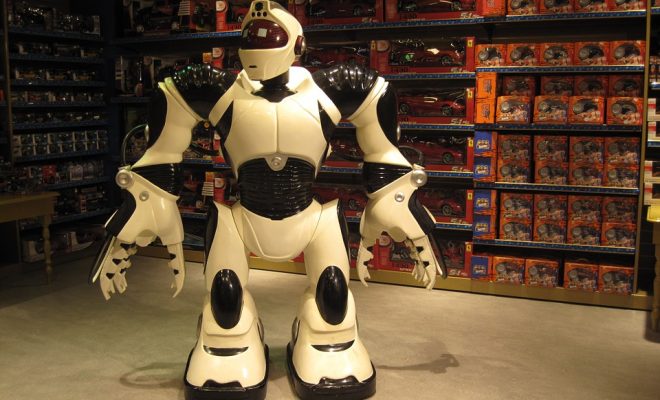
Without a doubt, robotics is the next big thing in education. Like it or not, robots and robotics are the future. The sooner we accept robotics in schools and educate our children about robotics, the more prepared they will be for that future. At the moment, robotics is a reality at universities around the world, but imagine the possibilities if children entered those college programs already equipped with some robotic knowledge.

In this article, we have listed some interesting stories from universities to prove that there is already quite an interest in robotics after high school.

Geoffrey Louie, a former Ph.D. student in the Mechanical and Industrial Engineering Department at Toronto’s University of Toronto, said that he fell in love with robots watching cartoons as a child, and adds that the Star Wars character C3PO was a big part of his life. He is currently developing Tangy, a nursing robot that can provide social and cognitive stimulations to long-term care residents through group based recreational activities. His current goal is to create a robot that can help people both physically and socially. Control and sensing technologies are his areas of expertise, and he uses them to design intelligent and useful systems.

Goldie Nejat, Mechanical Engineering Associate Professor and Director of IRM (Institute for Robotics & Mechatronics) at the University of Toronto, says that innovation and research in robotics have become very popular with students at colleges and universities. IRM includes a various range of disciplines such as industrial, mechanical, and biomedical engineering. Main specialization areas include food processing, healthcare, information, and communications technology (ICT), aerospace, and information.

The university has stellar relations with commercial and industrial enterprises, such as Google, MDA, General Motors, and research facilities and major hospitals.

Nejat says that there are currently 360 students studying industrial and mechanical engineering, but when she was a student, that number was only 50.

At the University of Waterloo, mechanical engineering is one of the most popular programs. Dr. William W. Melek, University Director of Mechatronics Engineering, credits the university as the first to start a mechatronics program (a combination of software and mechanical and electrical engineering) in 2003. The program was created to build and design robots and robotic systems. To date, 300 students, most of whom were international students, have graduated from this program.

Waterloo is opening a new facility called Robohub that will be used for advanced and specialized research of magnetic levitation, humanoid robotics, autonomous ground, and unmanned aerial. The facility is slated to open in either late 2017 or early 2018.

Meanwhile, at the Centennial College of Toronto, the industrial robotics program has been developed to meet new-age industries demands, according to Tito Khandaker, program coordinator, and professor at SETAS (School of Engineering Technology and Applied Science).

Khandaker says that graduates learn a lot of theory, math, and physics, and the school also offers practical engineering—an innovative approach compared to other colleges.

The automotive sector has the biggest job market for robotics graduates, along with other sectors such as pharmaceutical companies.

Centennial is well known for its industrial pneumatics and hydraulics expertise (essential components in the process of automation). Mr. Khandaker says that Centennial is one of  26 colleges designated by Fluid Power Educational Foundation (FPEF) in the region.

Many people would argue that there are consequences of turning to robotics. But children should always be curious, explore, and think on their own. We need to move past our beliefs and let children’s interest in robotics guide them throughout their education, from kindergarten to college.


TagsEdtechedtechchatelearningSTEAMSTEM
Previous Article

25 Ways that EdTech Benefits Teachers and ...

Next Article

Technology and Graduation Rate: A Direct Correlation

Matthew Lynch

Related articles More from author

  • Best of the Best ListsEarly Childhood & K-12 EdTech

    7 Must-Have Problem Based Learning Apps, Tools and Resources

    October 13, 2017
    By Matthew Lynch
  • Special Report

    At what age should we put babies on a digital media diet?

    November 14, 2016
    By Matthew Lynch
  • Early Childhood & K-12 EdTechHigher Education EdTech

    3 EdTech Trends that are Redefining the K-12 Landscape

    July 10, 2017
    By Matthew Lynch
  • Speaking

    We Help Education Related Companies Promote Themselves

    June 21, 2016
    By Matthew Lynch
  • Speaking

    Need PR Services or Marketing Services for Your School or Company?

    June 29, 2016
    By Matthew Lynch
  • EdTech NewsHigher Education EdTech

    Education technology is spreading fast, but there’s no recipe for success

    July 1, 2016
    By Matthew Lynch

Search

Login & Registration

  • Log in
  • Entries feed
  • Comments feed
  • WordPress.org

Newsletter

Signup for The Tech Edvocate Newsletter and have the latest in EdTech news and opinion delivered to your email address!

About Us

Since technology is not going anywhere and does more good than harm, adapting is the best course of action. That is where The Tech Edvocate comes in. We plan to cover the PreK-12 and Higher Education EdTech sectors and provide our readers with the latest news and opinion on the subject. From time to time, I will invite other voices to weigh in on important issues in EdTech. We hope to provide a well-rounded, multi-faceted look at the past, present, the future of EdTech in the US and internationally.

We started this journey back in June 2016, and we plan to continue it for many more years to come. I hope that you will join us in this discussion of the past, present and future of EdTech and lend your own insight to the issues that are discussed.

Newsletter

Signup for The Tech Edvocate Newsletter and have the latest in EdTech news and opinion delivered to your email address!

Contact Us

The Tech Edvocate
910 Goddin Street
Richmond, VA 23231
(601) 630-5238
[email protected]

Copyright © 2026 Matthew Lynch. All rights reserved.