The Tech Edvocate

Top Menu

  • Advertisement
  • Apps
  • Home Page
  • Home Page Five (No Sidebar)
  • Home Page Four
  • Home Page Three
  • Home Page Two
  • Home Tech2
  • Icons [No Sidebar]
  • Left Sidbear Page
  • Lynch Educational Consulting
  • My Account
  • My Speaking Page
  • Newsletter Sign Up Confirmation
  • Newsletter Unsubscription
  • Our Brands
  • Page Example
  • Privacy Policy
  • Protected Content
  • Register
  • Request a Product Review
  • Shop
  • Shortcodes Examples
  • Signup
  • Start Here
    • Governance
    • Careers
    • Contact Us
  • Terms and Conditions
  • The Edvocate
  • The Tech Edvocate Product Guide
  • Topics
  • Write For Us
  • Advertise

Main Menu

  • Start Here
    • Our Brands
    • Governance
      • Lynch Educational Consulting, LLC.
      • Dr. Lynch’s Personal Website
      • Careers
    • Write For Us
    • The Tech Edvocate Product Guide
    • Contact Us
    • Books
    • Edupedia
    • Post a Job
    • The Edvocate Podcast
    • Terms and Conditions
    • Privacy Policy
  • Topics
    • Assistive Technology
    • Child Development Tech
    • Early Childhood & K-12 EdTech
    • EdTech Futures
    • EdTech News
    • EdTech Policy & Reform
    • EdTech Startups & Businesses
    • Higher Education EdTech
    • Online Learning & eLearning
    • Parent & Family Tech
    • Personalized Learning
    • Product Reviews
  • Advertise
  • Tech Edvocate Awards
  • The Edvocate
  • Pedagogue
  • School Ratings

logo

The Tech Edvocate

  • Start Here
    • Our Brands
    • Governance
      • Lynch Educational Consulting, LLC.
      • Dr. Lynch’s Personal Website
        • My Speaking Page
      • Careers
    • Write For Us
    • The Tech Edvocate Product Guide
    • Contact Us
    • Books
    • Edupedia
    • Post a Job
    • The Edvocate Podcast
    • Terms and Conditions
    • Privacy Policy
  • Topics
    • Assistive Technology
    • Child Development Tech
    • Early Childhood & K-12 EdTech
    • EdTech Futures
    • EdTech News
    • EdTech Policy & Reform
    • EdTech Startups & Businesses
    • Higher Education EdTech
    • Online Learning & eLearning
    • Parent & Family Tech
    • Personalized Learning
    • Product Reviews
  • Advertise
  • Tech Edvocate Awards
  • The Edvocate
  • Pedagogue
  • School Ratings
  • RayNeo iO Smart Glasses: A Comprehensive Review

  • Glo Skin Beauty: The Aesthetician-Backed Brand Taking 25% Off for October Prime Day

  • The Shocking Truth: ESG Training Programs Are Quietly Reshaping Your Career Path

  • Why Millions of People Are Switching to These Green Energy Certifications Right Now

  • The green skills gap in 2026: How to address this growing problem

  • The Shocking Truth: Your Degree Won’t Land You the Best IT Jobs in 2026

  • The Brutal Truth About Degrees: Why Micro-Credentials Are Quietly Dominating Careers by 2026

  • Why 96% of Employers Now Prefer Skills Over Degrees: The Micro-Credential Revolution

  • This Crucial Mistake With AI Is Stunting Student Minds: Here’s How to Fix It

  • The AI ‘Cognitive Surrender’ Crisis: 7 Tools Every Educator Needs NOW

Tech Advice
Home›Tech Advice›Overdraft Fees vs. Non Sufficient Funds Fees: What’s the Difference?

Overdraft Fees vs. Non Sufficient Funds Fees: What’s the Difference?
By Matthew Lynch
July 10, 2023
0
Spread the love

Introduction:

Understanding the intricacies of banking fees is crucial to effectively managing your finances. Two somewhat similar fees that often cause confusion for bank customers are overdraft fees and non sufficient funds (NSF) fees. While these terms may be used interchangeably at times, there are distinct differences between them. In this article, we’ll explore the differences between overdraft fees and NSF fees to help you navigate these potentially costly charges.

What is an Overdraft Fee?

An overdraft fee occurs when your bank covers a transaction that exceeds the available balance in your checking account. Banks may offer overdraft coverage as a service and charge you a fee when they do so. The fee varies depending on the institution, but typically ranges from $25 to $35 per occurrence. Overdraft fees may apply to checks, bill payments, or electronic transactions (e.g., debit card purchases or ATM withdrawals).

Some banks provide different levels of overdraft coverage, ranging from automatic enrollment to opt-in coverage or no coverage at all. Those who have overdraft protection linked to a savings account or credit card may still incur transfer fees if an insufficient balance prompts a transfer of funds.

What is a Nonsufficient Funds Fee?

A nonsufficient funds fee, or NSF fee, is charged when your account lacks sufficient funds to cover a transaction and the bank declines it due to insufficient balance. This frequently happens with checks or Automated Clearing House (ACH) transfers where the payee tries to withdraw the funds from your account, but there’s not enough money available. When this occurs, both the payer (you) and payee (the recipient of your payment) might be charged fees.

Similar to overdraft fees, NSF fees vary from one financial institution to another but generally fall within the $25-$35 range per occurrence. Payees receiving bounced checks can also charge their own fees, which may compound the financial blow.

Key Differences Between Overdraft and NSF Fees:

1. Bank action: The primary difference between overdraft fees and NSF fees revolves around bank action. An overdraft fee occurs when the bank covers the shortfall and processes the transaction, while an NSF fee is charged when the bank declines to cover a payment due to insufficient funds.

2. Occurrence: Overdraft fees can apply to a wide range of transactions including checks, electronic transactions, bill payments, ATM withdrawals, or debit card purchases. In contrast, NSF fees predominantly relate to bounced checks and ACH transfers.

3. Fee assessment: When faced with an overdraft fee, only the account holder is charged by the bank. However, with NSF fees, both parties might face charges from their respective financial institutions.

How to Avoid Overdraft and NSF Fees:

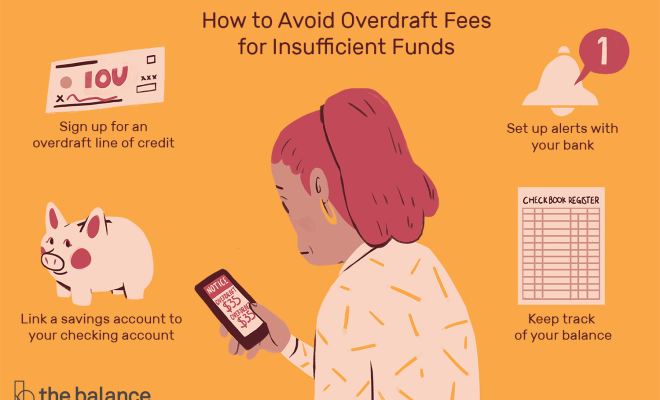
To avoid these costly fees, consider adopting the following strategies:

1. Monitor your account balances regularly with online banking or mobile apps.

2. Set up balance alerts to receive a notification when your account balance dips below a certain threshold.

3. Opt-out of overdraft protection if you feel it encourages unintentional overspending.

4. Link a savings account or credit card as backup funding sources and be aware of any transfer fees tied to those options.

5. Create an emergency fund as a financial buffer against unexpected expenses.

Conclusion:

Being familiar with the differences between overdraft and non-sufficient funds fees can save you money in the long run. By taking preventive measures to avoid these fees and adopting responsible financial habits, you can maintain better control over your personal finances and keep more of your hard-earned money in your pocket.

Previous Article

How to Get Your Overdraft Fees Refunded

Next Article

The 10 Biggest Banks in the US: ...

Matthew Lynch

Related articles More from author

  • Tech Advice

    Radiant Youthful Skin is the Perfect Christmas Gift

    November 20, 2025
    By Matthew Lynch
  • Tech Advice

    6 Ways Fix YouTube Music Not Working on Apple CarPlay

    February 19, 2024
    By Matthew Lynch
  • Tech Advice

    Your iPhone has a hidden document scanner. This is how to use it

    July 15, 2023
    By Matthew Lynch
  • Tech Advice

    Nest WiFi Pro vs. Eero Pro 6E: A Battle of the Wi-Fi 6E Mesh Routers

    July 8, 2023
    By Matthew Lynch
  • Tech Advice

    Windows 11 Finally Has a Quick Way to Switch Your Default Browser. Here’s How

    July 24, 2023
    By Matthew Lynch
  • Tech Advice

    Best Solar-Powered Home Security Cameras for Sustainable Surveillance

    July 9, 2023
    By Matthew Lynch

Search

Login & Registration

  • Log in
  • Entries feed
  • Comments feed
  • WordPress.org

Newsletter

Signup for The Tech Edvocate Newsletter and have the latest in EdTech news and opinion delivered to your email address!

About Us

Since technology is not going anywhere and does more good than harm, adapting is the best course of action. That is where The Tech Edvocate comes in. We plan to cover the PreK-12 and Higher Education EdTech sectors and provide our readers with the latest news and opinion on the subject. From time to time, I will invite other voices to weigh in on important issues in EdTech. We hope to provide a well-rounded, multi-faceted look at the past, present, the future of EdTech in the US and internationally.

We started this journey back in June 2016, and we plan to continue it for many more years to come. I hope that you will join us in this discussion of the past, present and future of EdTech and lend your own insight to the issues that are discussed.

Newsletter

Signup for The Tech Edvocate Newsletter and have the latest in EdTech news and opinion delivered to your email address!

Contact Us

The Tech Edvocate
910 Goddin Street
Richmond, VA 23231
(601) 630-5238
[email protected]

Copyright © 2026 Matthew Lynch. All rights reserved.