Navigating the Future: Law Firm Strategies for Mergers, Work Flexibility, and AI Integration in 2026
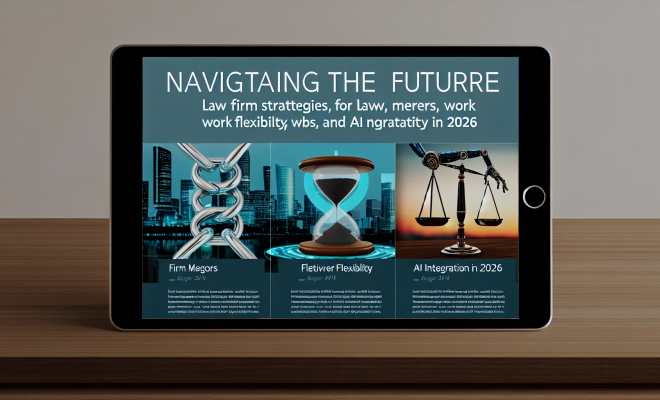
The legal landscape is rapidly evolving, and managing partners of law firms are at the forefront of navigating these changes as they look ahead to 2026. With a focus on law firm mergers, the rise of hybrid work models, and the integration of artificial intelligence (AI), firms are adapting to a new reality marked by economic pressures and regulatory changes.
Adapting to Hybrid Work Models
The COVID-19 pandemic has permanently altered the way legal professionals operate, leading to an increased interest in hybrid work arrangements. Many firms are now balancing in-office and remote work to offer flexibility while maintaining productivity. Managing partners are keenly aware that to attract and retain top talent, they must provide options that cater to employees’ desires for work-life balance.
According to recent surveys, nearly 75% of legal professionals prefer some form of hybrid work model. This shift has prompted law firms to reassess their office spaces and technology infrastructure to support collaboration and communication among remote and in-house teams.
The Impact of Mergers on the Industry
As law firms navigate these changing dynamics, mergers have become a strategic option for many. The pressure of rising operational costs, coupled with the need for enhanced technological capabilities, has led smaller firms to consider merging with larger entities. These larger firms, equipped with robust infrastructures, are better positioned to absorb the increased costs associated with compliance and technology upgrades.
Moreover, recent regulatory changes have made it challenging for smaller firms, particularly those focused on real estate. The U.S. Treasury’s Financial Crimes Enforcement Network (FinCEN) rule, effective March 1, 2026, mandates extensive reporting for all-cash residential property transfers to entities or trusts. This rule requires firms to manage 111 fields of reporting, a burden that many smaller firms find difficult to bear.
- Increased compliance requirements
- Need for technological upgrades
- Pressure to maintain profitability
As a result, many smaller real estate firms are exiting the market, leaving larger firms to dominate. The ability to handle complex anti-money-laundering compliance effectively places these larger firms at a significant advantage.
Leveraging AI to Enhance Legal Services
Another area of focus for law firms in 2026 is the integration of artificial intelligence. AI technologies are revolutionizing the legal industry by streamlining processes, enhancing research capabilities, and improving client interactions. Managing partners are exploring various applications of AI, from document review to predictive analytics, which can significantly reduce time spent on routine tasks.
Firms that successfully implement AI tools can expect to see not only improved efficiency but also enhanced client satisfaction. AI-driven insights allow firms to provide more accurate forecasting and tailored legal solutions, positioning them as leaders in an increasingly competitive market.
Addressing Legal Challenges: Discrimination and Bias
As law firms adapt to these operational changes, they must also confront pressing legal challenges. Recent verdicts, such as a significant gender bias case against a State Police trooper, underscore the ongoing issues of discrimination within the workplace. Settlements in discrimination claims have also highlighted the necessity for firms to implement robust diversity and inclusion initiatives.
Legal professionals emphasize the importance of addressing these issues proactively. By fostering an inclusive environment, law firms can not only mitigate the risk of litigation but also enhance their reputations and attract a diverse range of clients.
Looking Ahead: Strategic Planning for Law Firms
As the legal industry continues to evolve, managing partners are advised to engage in strategic planning that addresses both immediate concerns and long-term goals. Key areas of focus include:
- Succession Planning: Ensuring a smooth transition of leadership and maintaining client relationships.
- Technology Investments: Allocating resources towards upgrading technology to support hybrid work and AI integration.
- Compliance Management: Developing comprehensive strategies to navigate complex regulatory landscapes.
By prioritizing these elements, law firms can position themselves for sustained growth and success in a continuously changing environment.
Conclusion
The legal profession is undergoing significant transformations as firms adapt to hybrid work models, explore merger opportunities, and embrace AI technology. As managing partners focus on the challenges and opportunities that lie ahead, a proactive approach to strategic planning will be essential for navigating the complexities of the legal landscape in 2026 and beyond.