The Tech Edvocate

Top Menu

  • Advertisement
  • Apps
  • Home Page
  • Home Page Five (No Sidebar)
  • Home Page Four
  • Home Page Three
  • Home Page Two
  • Home Tech2
  • Icons [No Sidebar]
  • Left Sidbear Page
  • Lynch Educational Consulting
  • My Account
  • My Speaking Page
  • Newsletter Sign Up Confirmation
  • Newsletter Unsubscription
  • Our Brands
  • Page Example
  • Privacy Policy
  • Protected Content
  • Register
  • Request a Product Review
  • Shop
  • Shortcodes Examples
  • Signup
  • Start Here
    • Governance
    • Careers
    • Contact Us
  • Terms and Conditions
  • The Edvocate
  • The Tech Edvocate Product Guide
  • Topics
  • Write For Us
  • Advertise

Main Menu

  • Start Here
    • Our Brands
    • Governance
      • Lynch Educational Consulting, LLC.
      • Dr. Lynch’s Personal Website
      • Careers
    • Write For Us
    • The Tech Edvocate Product Guide
    • Contact Us
    • Books
    • Edupedia
    • Post a Job
    • The Edvocate Podcast
    • Terms and Conditions
    • Privacy Policy
  • Topics
    • Assistive Technology
    • Child Development Tech
    • Early Childhood & K-12 EdTech
    • EdTech Futures
    • EdTech News
    • EdTech Policy & Reform
    • EdTech Startups & Businesses
    • Higher Education EdTech
    • Online Learning & eLearning
    • Parent & Family Tech
    • Personalized Learning
    • Product Reviews
  • Advertise
  • Tech Edvocate Awards
  • The Edvocate
  • Pedagogue
  • School Ratings

logo

The Tech Edvocate

  • Start Here
    • Our Brands
    • Governance
      • Lynch Educational Consulting, LLC.
      • Dr. Lynch’s Personal Website
        • My Speaking Page
      • Careers
    • Write For Us
    • The Tech Edvocate Product Guide
    • Contact Us
    • Books
    • Edupedia
    • Post a Job
    • The Edvocate Podcast
    • Terms and Conditions
    • Privacy Policy
  • Topics
    • Assistive Technology
    • Child Development Tech
    • Early Childhood & K-12 EdTech
    • EdTech Futures
    • EdTech News
    • EdTech Policy & Reform
    • EdTech Startups & Businesses
    • Higher Education EdTech
    • Online Learning & eLearning
    • Parent & Family Tech
    • Personalized Learning
    • Product Reviews
  • Advertise
  • Tech Edvocate Awards
  • The Edvocate
  • Pedagogue
  • School Ratings
  • US Battery as a Service Market Shifts Toward Fleet-Based Energy

  • The Startling Truth: Why Americans Distrust AI with Their Health

  • This Crucial Deadline for Banks Is Closer Than You Think

  • Baffling: CrowdStrike’s $500 Million AI Bet Reshapes Cybersecurity

  • This Crucial Autonomous Driving Rule Could Cost You Everything

  • Baffling: Microsoft AI CEO Demands Halt to Conscious AI Development

  • O seară în ritmul tău: atmosfera divertismentului de cazinou pe internet

  • Outrageous: AppLovin Hit With Lawsuit Over AI Claims — What Investors Need to Know

  • 9 Critical Ways AI Investment Fraud Is Quietly Draining Your Bank Account

  • Is the AI Bubble Bursting? OpenAI’s Funding Woes Revealed

Tech News
Home›Tech News›Wes Moore’s Maryland Redistricting Plan Fails in 2026

Wes Moore’s Maryland Redistricting Plan Fails in 2026
By Matthew Lynch
April 14, 2026
0
Spread the love

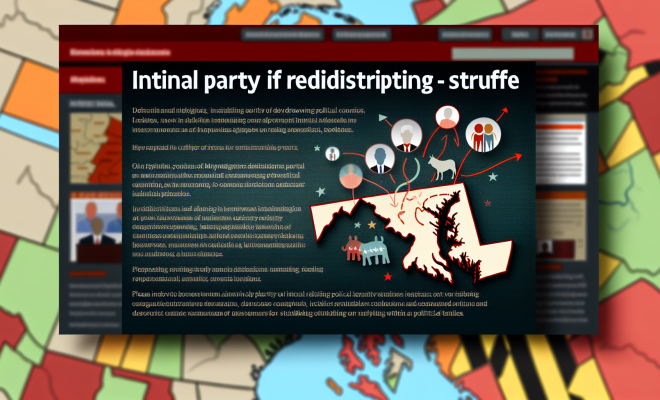
In a significant setback for Maryland Governor Wes Moore, his ambitious proposal to redraw the state’s congressional map has been stalled, ultimately failing to gain traction in the legislature. The plan, which aimed to enhance Democratic representation and counteract former President Donald Trump’s redistricting efforts, met its demise in committee as the 2026 legislative session came to a close on April 13.

The Proposal and Its Objectives

Governor Moore’s redistricting initiative was designed to target the state’s lone Republican congressional seat, currently held by Rep. Andy Harris. The goal was to create a more favorable landscape for Democrats, potentially allowing them to seize this seat in the upcoming elections. This plan was part of a broader strategy to fortify Democratic interests within a political climate increasingly polarized by Trump-era policies.

Internal Divisions Within the Democratic Party

Despite the clear objectives, Moore’s proposal faced substantial hurdles within his own party. Internal disagreements among Democratic lawmakers surfaced, revealing significant divisions regarding the approach to redistricting. Many legislators cited concerns about the potential backlash from judicial bodies, fearing that an aggressive redistricting strategy could lead to legal challenges that might jeopardize not only the proposed map but also the party’s standing in the state.

Concerns Over Judicial Repercussions

The fear of judicial intervention was not unfounded. In recent years, courts have increasingly scrutinized redistricting efforts, particularly those perceived as gerrymandering. Critics of Moore’s plan worried that an aggressive redraw could provoke legal disputes that would ultimately hurt the Democrats’ long-term interests. As a result, rather than unifying around the proposal, many party members opted for a more cautious approach, leading to its eventual rejection.

The Legislative Landscape

The failure of the redistricting push illustrates the complexities of Maryland’s political landscape. While the state has leaned Democratic in recent election cycles, the presence of a Republican congressman remains a significant factor. Harris’s seat is viewed by many Democrats as vulnerable, but the inability to consolidate support around Moore’s plan highlights ongoing challenges within the party.

Moreover, the legislative session’s conclusion without a new map indicates that Democrats will face an uphill battle in the upcoming midterms. With the Republican National Committee gearing up to defend its incumbent, the absence of a restructured district could hinder the Democrats’ chances of making significant inroads.

The Bigger Picture: Redistricting in the U.S.

Moore’s failed attempt at redistricting is part of a larger narrative playing out across the United States. Redistricting, a process that occurs every ten years following the census, often becomes a battleground for political parties seeking to gain an advantage. The fallout from the 2020 census has resulted in fierce competition among states as they redraw lines to maximize electoral gains.

  • Gerrymandering Concerns: The practice of manipulating district boundaries to favor one party over another has drawn increasing scrutiny from both lawmakers and the public.
  • Judicial Oversight: Courts are becoming more involved in redistricting cases, leading to a series of landmark rulings that have reshaped the way states approach map drawing.
  • Partisan Tensions: As seen in Maryland, internal party divisions can significantly impact the success of redistricting efforts, complicating what is often already a contentious process.

The Road Ahead for Maryland Democrats

Looking forward, Maryland Democrats must reconcile their internal differences and develop a cohesive strategy that balances ambition with prudence. The failure of Moore’s redistricting plan may serve as a wake-up call for party leaders, emphasizing the need for unity as they approach the midterms.

Additionally, with the political landscape rapidly evolving, the Democratic Party in Maryland must also consider alternative strategies to strengthen their position without relying solely on redistricting. Grassroots mobilization, voter outreach, and addressing key issues that resonate with constituents may prove crucial in their efforts to reclaim a competitive edge.

Conclusion

Governor Wes Moore’s attempt to reshape Maryland’s congressional map has come to an abrupt halt, revealing the intricate dynamics at play within the Democratic Party. As the 2026 midterms loom, the need for strategic coherence and unity has never been more pressing. The lessons learned from this redistricting setback will undoubtedly influence future political maneuvers in Maryland and beyond.

Previous Article

Swalwell’s Exit Reshapes California Governor Race 2026

Next Article

Spain Pivots to China: Strengthening Ties Amidst ...

Matthew Lynch

Related articles More from author

  • Tech News

    InDesign vs Canva for print design

    July 28, 2026
    By Matthew Lynch
  • Tech News

    Vidyard vs HubSpot video comparison

    August 24, 2026
    By Matthew Lynch
  • Tech News

    Spencer Jones Blasts Two Homers in Standout Triple-A Game (2026)

    April 29, 2026
    By Matthew Lynch
  • Tech News

    Best Colored Pencils for Art Class

    July 8, 2026
    By Matthew Lynch
  • Tech News

    Anthropic’s $1.5 Billion AI Fine: A Wake-Up Call for Big Tech

    July 26, 2026
    By Matthew Lynch
  • Tech News

    How to unsubscribe from emails in Gmail

    July 15, 2026
    By Matthew Lynch

Search

Login & Registration

  • Log in
  • Entries feed
  • Comments feed
  • WordPress.org

Newsletter

Signup for The Tech Edvocate Newsletter and have the latest in EdTech news and opinion delivered to your email address!

About Us

Since technology is not going anywhere and does more good than harm, adapting is the best course of action. That is where The Tech Edvocate comes in. We plan to cover the PreK-12 and Higher Education EdTech sectors and provide our readers with the latest news and opinion on the subject. From time to time, I will invite other voices to weigh in on important issues in EdTech. We hope to provide a well-rounded, multi-faceted look at the past, present, the future of EdTech in the US and internationally.

We started this journey back in June 2016, and we plan to continue it for many more years to come. I hope that you will join us in this discussion of the past, present and future of EdTech and lend your own insight to the issues that are discussed.

Newsletter

Signup for The Tech Edvocate Newsletter and have the latest in EdTech news and opinion delivered to your email address!

Contact Us

The Tech Edvocate
910 Goddin Street
Richmond, VA 23231
(601) 630-5238
[email protected]

Copyright © 2026 Matthew Lynch. All rights reserved.