China Aims for 2030 Moon Landing Amidst NASA’s Artemis II Success
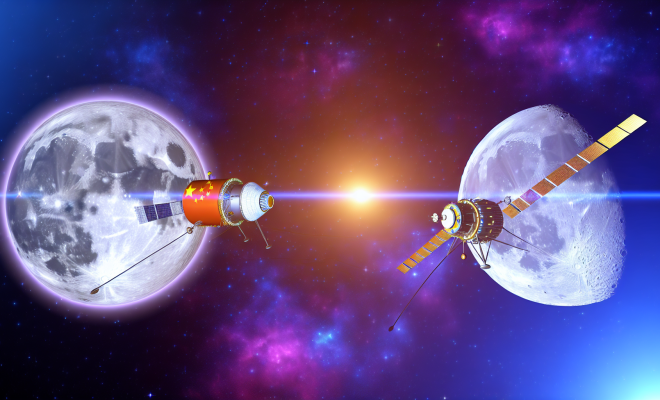
The recent success of NASA’s Artemis II mission has not only marked a significant milestone in space exploration but has also intensified the geopolitical rivalry between the United States and China concerning lunar exploration. As NASA celebrates its astronauts’ record-breaking journey, with four crew members flying past the moon’s far side and venturing deeper into space than any humans have before, China is ramping up efforts to achieve its own ambitious goal: landing astronauts on the moon by 2030.
A Historic Milestone for NASA
NASA’s Artemis II mission was a pivotal moment, representing the first crewed mission to explore the moon in over half a century. The mission serves as a prelude to future lunar landings and aims to establish a sustainable human presence on the moon, paving the way for eventual missions to Mars. During their journey, the Artemis II astronauts traveled approximately 57,000 kilometers beyond the moon, surpassing previous human spaceflight records, and marking a monumental step in NASA’s Artemis program.
China’s Lunar Ambitions: A 2030 Crewed Landing
In response to NASA’s accomplishments, China is accelerating its own lunar ambitions. The Chinese space agency has outlined a comprehensive strategy to facilitate a crewed moon landing by 2030, which includes the development of a new crewed lunar lander and the Long March-10 rocket, designed to transport astronauts to the moon’s surface. The Mengzhou spacecraft, an integral part of China’s lunar architecture, is being developed to support these missions and enhance its capabilities in human spaceflight.
The Long March-10 Rocket
The Long March-10 rocket is a key component of China’s lunar landing strategy. This powerful launch vehicle is designed to carry substantial payloads and will be essential for transporting the Mengzhou spacecraft and Lanyue lunar lander to the moon. The Long March-10 is expected to showcase advanced technologies and engineering, positioning China as a formidable competitor in the race for lunar exploration.
The Mengzhou Spacecraft
As part of its crewed lunar mission, China is developing the Mengzhou spacecraft, which will serve as the transportation vehicle for astronauts to and from the moon. The spacecraft is designed to enhance crew safety and performance, and it features cutting-edge technology aimed at ensuring successful lunar missions. The Mengzhou spacecraft, along with the Lanyue lunar lander, forms the backbone of China’s lunar architecture.
Geopolitical Implications of Lunar Exploration
The ongoing competition between the U.S. and China for lunar dominance has significant geopolitical implications. As both nations push their lunar agendas, the prospect of a new space race emerges, reflecting broader tensions in international relations. China’s rapid advancements in space technology and its commitment to a crewed lunar landing by 2030 have drawn attention from U.S. officials, who are keenly aware of the strategic importance of securing a foothold on the moon.
Monitoring Developments
The U.S. is closely monitoring China’s progress in lunar exploration, particularly as the nation aims to meet or potentially expedite its ambitious timeline. The success of NASA’s Artemis II is seen not just as a technical achievement but also as a strategic maneuver in this escalating competition. As both countries invest heavily in their lunar programs, the world watches to see how this rivalry will unfold and its implications for global space exploration.
International Collaboration vs. Competition
While the U.S. and China are currently in competition, there is also a growing discourse around international collaboration in space exploration. Many experts believe that pooling resources and expertise could lead to more significant advancements in scientific research and technology. The International Space Station (ISS) has been a prime example of successful collaboration, and as nations consider future missions to the moon and beyond, the potential for cooperative efforts remains a topic of discussion.
Future of Lunar Exploration
The future of lunar exploration is poised to be transformative, with both NASA and China leading the charge. The Artemis program is set to return humans to the moon by 2025, while China aims for its crewed landing in 2030. As these timelines converge, the outcomes of these missions could redefine humanity’s relationship with space and each other.
Conclusion
The successful Artemis II mission has reignited interest in lunar exploration and set the stage for a new era of space competition. As the United States and China strive for lunar dominance, the stakes are higher than ever. Both nations are making significant investments in their respective lunar programs, and the next few years will be crucial in determining who will claim the next chapter in humanity’s journey to the moon. With the eyes of the world watching, the race is on, and the implications of these missions will resonate far beyond the lunar surface.