Is AI in Education Silencing Student Minds? A Troubling New Report
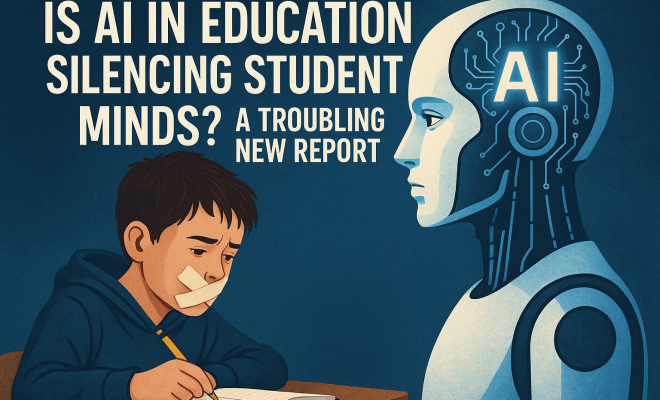
You’ve probably heard the buzz about artificial intelligence in education. It’s everywhere, touted as the next big thing, promising personalized learning, instant feedback, and a revolution in how we teach and learn. But what if the very tools meant to empower students are, in fact, undermining their most fundamental skills? A recent report from September 17, 2026, throws a fascinating and frankly troubling wrench into the works, revealing a significant unease among students themselves. A whopping 67% of students believe that heavy AI use is actually dulling their critical thinking abilities. That’s not just a statistic; it’s a gut feeling from the very people AI is designed to serve, and it raises some serious questions about the direction of AI in education.
This isn’t some niche concern. We’re talking about a widespread sentiment emerging at a time when AI adoption in classrooms is skyrocketing. It’s a growing part of a much broader, often heated, debate in 2026 about the ethical implications and equitable access of these powerful new technologies. Conferences like OEB 2026 have become vital forums for these discussions, with educators, technologists, and policymakers grappling with how to integrate AI without inadvertently creating more problems than it solves. The promise of AI in education is immense, offering tantalizing possibilities for tailoring learning experiences to individual needs and providing on-demand tutoring that can bridge knowledge gaps. Yet, the student perspective highlighted in this report is a stark reminder that innovation, left unchecked, can have unintended consequences, particularly when it comes to the core cognitive development we expect from our educational systems.
1. The Critical Thinking Crisis: Students Sense a Decline
Let’s face it, critical thinking is the holy grail of modern education. It’s what we aim to cultivate, the skill that allows students to analyze information, form reasoned judgments, and solve complex problems. So, when nearly seven out of ten students express concern that AI is eroding this very capacity, we have to sit up and pay attention. This isn’t just about getting answers faster; it’s about the process of getting there, the mental heavy lifting that builds intellectual muscle. If AI is doing too much of that lifting for them, are students truly learning how to think independently?
Think about it from a student’s perspective. Faced with a challenging assignment, it’s incredibly tempting to use an AI tool to brainstorm, outline, or even generate entire sections of text. While this can certainly boost efficiency, the report suggests students are feeling the downside: a creeping reliance that bypasses the deeper cognitive processes involved in wrestling with ideas, structuring arguments, and synthesizing information from scratch. The immediate gratification of an AI-generated response might save time, but it short-circuits the valuable struggle that leads to genuine understanding and the development of robust critical thinking skills. This isn’t just about academic integrity; it’s about the fundamental purpose of education itself.
2. The Rapid Onslaught of AI Adoption: A Double-Edged Sword
It’s no secret that AI tools have permeated educational settings at an astonishing rate. From AI-powered learning platforms that adapt to student progress to intelligent tutoring systems that offer personalized support, the integration has been swift and widespread. Educators, understandably, are drawn to the potential for greater efficiency, differentiated instruction, and data-driven insights that these technologies promise. We’re living in an era where educational institutions are actively exploring and implementing AI solutions across various disciplines, hoping to leverage its power to enhance learning outcomes and prepare students for a future increasingly shaped by artificial intelligence.
However, this rapid adoption isn’t without its shadows. The sheer speed at which AI is being integrated means that careful consideration of its long-term impact on student cognition might be lagging. Are we moving too fast, prioritizing technological advancement over pedagogical wisdom? While AI offers incredible potential for customization and accessibility, the uncritical deployment of these tools without a clear understanding of their cognitive effects could be a serious misstep. The students themselves, as highlighted in the report, are experiencing this tension firsthand, feeling the immediate benefits of AI assistance but also sensing a subtle yet significant cost to their own intellectual development. It’s a classic case of innovation outrunning introspection, and it demands our immediate attention.
3. Ethical Quandaries and Equitable Access: The Broader Debate of 2026
The conversation around AI in education isn’t limited to critical thinking; it’s deeply entwined with broader ethical considerations and concerns about equitable access. The OEB 2026 conference, a prominent gathering for educational technology, has been a key venue for these discussions, underscoring the complexity of integrating AI responsibly. We’re talking about fundamental questions: Who benefits most from AI? Does it widen or narrow existing educational disparities? How do we ensure fairness when algorithms are making decisions that impact student learning and assessment?
One of the most pressing concerns revolves around the digital divide. While AI promises personalized learning, it often requires robust internet access, up-to-date devices, and a certain level of digital literacy. Students in under-resourced schools or communities might be left behind, exacerbating existing inequalities rather than bridging them. If AI becomes an indispensable part of learning, then unequal access to these tools translates directly into unequal educational opportunities. Moreover, the ethical landscape of AI is fraught with issues of bias inherent in algorithms, the potential for surveillance, and the question of who owns student data. These aren’t minor footnotes; they’re foundational challenges that educational leaders must confront head-on to ensure AI serves all students justly. (See: CDC Youth Risk Behavior Survey.)
4. Personalized Learning vs. Independent Thought: A Delicate Balance
One of the most celebrated promises of AI in education is its ability to offer truly personalized learning experiences. Imagine a system that adapts to each student’s pace, identifies their specific learning gaps, and provides tailored resources and exercises. It sounds idyllic, doesn’t it? And in many ways, it can be incredibly effective. For students struggling with a particular concept, an AI tutor can provide patient, immediate feedback and endless practice opportunities, something a human teacher, with a class of thirty, simply can’t offer.
However, this very personalization, if not carefully managed, can inadvertently reduce opportunities for independent thought. If AI is constantly guiding, correcting, and providing the ‘next step,’ when do students get to struggle, to experiment, to make mistakes and learn from them without immediate intervention? The process of grappling with a difficult problem, even failing initially, is crucial for developing resilience, problem-solving strategies, and genuine intellectual curiosity. The report’s findings suggest that students might be sensing this trade-off: the comfort of personalized guidance comes at the potential cost of developing the grit and self-reliance that truly independent thinking demands. Striking the right balance here is perhaps the biggest challenge for educators integrating AI.
5. Academic Integrity in the AI Era: A Shifting Landscape
AI’s capabilities have thrown a massive curveball into the long-standing debate about academic integrity. With tools capable of generating essays, code, or even complex problem solutions, the lines between legitimate assistance and outright plagiarism have become incredibly blurry. This isn’t just about students copying and pasting; it’s about the subtle ways AI can complete tasks that previously required a student’s original thought and effort. Educational institutions are scrambling to adapt, revising honor codes, and exploring new assessment methods that can distinguish between AI-assisted work and genuine student output.
The core issue isn’t just about detection; it’s about redefining what ‘original work’ means in an AI-saturated environment. Is it acceptable for AI to help with brainstorming, outlining, or even drafting, as long as the student takes ownership of the final product? Or does any significant AI contribution undermine the very purpose of the assignment? These are not easy questions, and there’s no universal consensus yet. The report implicitly touches on this by highlighting student concerns about their own thinking skills – if AI is doing the heavy lifting, are they truly demonstrating their own understanding? This challenge forces educators to reconsider not just how they catch academic dishonesty, but how they design assignments to foster authentic learning in an age where AI can do so much.
6. Privacy and Bias: The Hidden Costs of AI
Beyond academic integrity and critical thinking, two other major ethical concerns loom large when discussing AI in education: privacy and bias. These aren’t abstract concepts; they have tangible, real-world impacts on students and the quality of their education. Let’s start with privacy. AI systems, particularly those designed for personalization, often collect vast amounts of student data – learning patterns, performance metrics, even emotional responses. While this data can be incredibly useful for tailoring instruction, it raises serious questions about who owns this information, how it’s stored, who has access to it, and how it’s protected from misuse or breaches. Students and their families have a right to know how their data is being used, and institutions have a profound responsibility to safeguard it. The potential for profiling or commercial exploitation of this sensitive information is a significant ethical minefield.
Then there’s the issue of bias. AI algorithms are only as unbiased as the data they’re trained on. If that data reflects existing societal biases – whether related to race, gender, socioeconomic status, or disability – then the AI system will perpetuate and even amplify those biases. This could manifest in various ways: an AI tutor might inadvertently provide less effective support to certain demographic groups, an AI assessment tool might unfairly grade students from particular backgrounds, or an AI recommendation system might limit a student’s exposure to diverse perspectives. Ensuring transparency, fairness, and accountability in AI algorithms is paramount to prevent these tools from entrenching inequalities and providing a less-than-quality education for certain students. This isn’t just a technical challenge; it’s a social justice imperative.
7. The Teacher’s Role in the AI Classroom: Guiding, Not Replacing
With AI taking on more tasks, it’s natural to wonder about the evolving role of the human teacher. Will AI replace educators? The resounding answer from experts and educators alike is a firm no. Instead, AI is poised to redefine the teacher’s role, shifting it from a primary dispenser of information to a facilitator, a mentor, and a guide in a more complex learning environment. Teachers will need to become adept at curating AI tools, understanding their strengths and limitations, and integrating them strategically into their pedagogy to enhance, rather than diminish, student learning.
This means a greater emphasis on teaching students *how* to use AI effectively and ethically, rather than simply banning it. Teachers will be crucial in designing assignments that require critical thinking even with AI assistance, perhaps by asking students to critique AI-generated content, use AI to explore complex data, or engage in collaborative problem-solving that AI can’t replicate. Their role in fostering creativity, emotional intelligence, and interpersonal skills – areas where AI still falls short – will become even more central. Ultimately, the human touch, the ability to inspire, to understand individual student struggles, and to cultivate a supportive learning community, remains irreplaceable. AI in education, when implemented thoughtfully, should free teachers from administrative burdens, allowing them more time for these uniquely human aspects of instruction. (See: Associated Press Education News.)
8. The Path Forward: Transparency, Fairness, and Accountability
Given the concerns raised by students and experts alike, how do we move forward with AI in education responsibly? The consensus emerging from discussions like those at OEB 2026 is clear: the path lies in prioritizing transparency, fairness, and accountability in the design and deployment of AI algorithms. This isn’t just about making sure the technology works; it’s about ensuring it serves the fundamental goals of education without undermining student development or exacerbating societal inequalities.
Transparency means being open about how AI tools work, what data they collect, and how they make decisions. Students, parents, and educators need to understand the ‘black box’ of AI to trust its utility and identify potential biases. Fairness requires proactive efforts to design algorithms that are equitable across diverse student populations, actively mitigating bias rather than passively perpetuating it. This involves diverse training data, rigorous testing, and continuous auditing. Finally, accountability means establishing clear mechanisms for oversight and redress when AI systems fail or cause harm. Who is responsible when an AI assessment is biased, or when student data is compromised? These frameworks are essential to build trust and ensure that AI in education truly contributes to a quality education for all, rather than becoming another source of anxiety for students concerned about their own intellectual growth.
9. Real-World Examples: AI in Action (and its Challenges)
It’s easy to talk in hypotheticals, but what does AI in education actually look like on the ground? We’re seeing diverse applications, each with its own set of successes and stumbling blocks. Take adaptive learning platforms, for instance. Companies like Knewton or DreamBox Learning use AI to adjust lesson plans and difficulties in real-time based on a student’s performance. For a student struggling with algebra, the system might provide extra practice problems and simpler explanations until mastery is achieved. This can be incredibly effective for individualized pacing, helping students who might otherwise fall behind or get bored. However, critics point out that if the AI’s logic isn’t transparent, students might not understand *why* they’re receiving certain assignments, potentially hindering their metacognitive skills – that is, their ability to think about their own thinking.
Then there are AI-powered writing assistants, like Grammarly’s AI features or tools integrated into learning management systems. These can catch grammatical errors, suggest stylistic improvements, and even help students structure arguments. For English language learners or students with learning disabilities, this can be a godsend, providing immediate feedback that a teacher might not have time to give to every student on every draft. Yet, the concern here, as the report highlights, is whether students become overly reliant on these tools to “fix” their writing, rather than internalizing the rules and developing their own editing capabilities. If the AI becomes a crutch, the fundamental skill of clear, concise writing might suffer.
Another area is AI for administrative tasks, like automated grading of multiple-choice tests or even some essay prompts. This frees up teacher time, allowing them to focus more on complex tasks that require human judgment, like providing nuanced feedback on creative writing or leading discussions. The challenge, of course, is ensuring the AI’s grading algorithms are fair and robust, especially for subjective assignments. If an AI grades an essay, are we sure it understands the subtleties of argument, tone, and originality as well as a human educator? The potential for algorithmic bias to impact grades is a very real concern.
10. The Psychological Impact: Beyond Cognition
While the report focuses heavily on critical thinking, the psychological impact of AI on students extends beyond just cognitive skills. Consider the potential for increased anxiety or pressure. If an AI system is constantly tracking every move, every correct or incorrect answer, some students might feel an overwhelming sense of surveillance, leading to performance anxiety. There’s also the risk of students feeling dehumanized if too much of their learning experience is mediated by algorithms, lacking the empathy and personal connection that a human teacher provides. Learning isn’t just about absorbing information; it’s also about emotional development, social interaction, and finding a sense of belonging.
Conversely, for some students, particularly those who are introverted or struggle with social interaction, an AI tutor might feel less intimidating than asking a teacher or peer for help. It can provide a safe space to make mistakes without judgment. The key is balance. We need to design AI integration in education that supports student well-being, fosters a sense of agency, and enhances the human elements of learning, rather than diminishing them. Understanding these subtle psychological effects is just as important as measuring academic outcomes when we evaluate the true impact of AI in education.
Frequently Asked Questions about AI in Education
Q1: Is AI in education just a passing fad?
A1: Given the rapid advancements in AI technology and its increasing integration across various sectors, it’s highly unlikely that AI in education is a passing fad. It’s transforming into a fundamental component of educational infrastructure, with ongoing research and development continually expanding its capabilities. The discussion has shifted from “if” AI will be used to “how” it can be used effectively and ethically. (See: New York Times Education Section.)
Q2: How can educators prepare for an AI-integrated classroom?
A2: Educators need to embrace continuous learning. This includes understanding the basics of how AI works, exploring different AI tools relevant to their subjects, and critically evaluating their pedagogical benefits and potential drawbacks. Professional development programs focused on AI literacy, ethical considerations, and designing AI-enhanced assignments will be crucial. The goal isn’t to become AI experts, but to be informed facilitators.
Q3: What are the biggest benefits of AI in education?
A3: The biggest benefits include personalized learning paths tailored to individual student needs, instant and adaptive feedback, automation of administrative tasks (freeing up teacher time), improved accessibility for students with diverse learning needs, and data-driven insights to help educators understand student progress more deeply. It can make education more efficient and responsive.
Q4: What are the main ethical concerns regarding AI in education?
A4: Key ethical concerns revolve around data privacy (how student data is collected, stored, and used), algorithmic bias (AI systems perpetuating existing societal inequalities), equitable access (the digital divide widening gaps between students), academic integrity (how to ensure original work), and the potential impact on critical thinking and other essential human skills.
Q5: Will AI replace human teachers?
A5: The overwhelming consensus among experts is no, AI will not replace human teachers. Instead, AI is expected to augment and redefine the teacher’s role. AI can handle routine, data-intensive tasks, allowing teachers to focus on higher-level activities like fostering creativity, emotional intelligence, critical thinking, mentorship, and building strong student relationships – areas where human interaction is irreplaceable.
Q6: How can students use AI tools responsibly?
A6: Responsible AI use for students involves understanding what AI can and cannot do, using it as a tool for assistance (like brainstorming or drafting) rather than a substitute for original thought, critically evaluating AI-generated content, citing AI contributions appropriately, and adhering to academic integrity policies. It’s about leveraging AI to enhance learning, not to bypass it.
Trending Now
Frequently Asked Questions
How is AI affecting critical thinking in students?
A recent report indicates that 67% of students feel that heavy AI use is dulling their critical thinking abilities. This raises concerns about whether the tools designed to empower students are actually undermining essential cognitive skills, highlighting the need for careful integration of AI in educational settings.
What are the concerns about AI in education?
Concerns about AI in education include its potential to inhibit critical thinking and cognitive development among students. The rapid adoption of AI technologies raises ethical questions and highlights the necessity for equitable access, emphasizing the importance of balancing innovation with the preservation of fundamental educational skills.
Are students in favor of AI in education?
While AI is often praised for its potential in personalized learning, a significant number of students express unease. In fact, 67% believe that AI use in education is negatively impacting their critical thinking skills, suggesting a disconnect between the technology's promises and student experiences.
What is the role of conferences like OEB 2026 in AI education discussions?
Conferences like OEB 2026 serve as crucial platforms for educators, technologists, and policymakers to engage in discussions about the ethical implications and equitable use of AI in education. These forums aim to address concerns and explore strategies for integrating AI while safeguarding student development.
What are the potential benefits of AI in education?
AI in education offers numerous benefits, such as personalized learning experiences and on-demand tutoring that can help bridge knowledge gaps. However, the challenge lies in ensuring that these innovations do not compromise critical cognitive skills essential for student success.
Agree or disagree? Drop a comment and tell us what you think.