The Tech Edvocate

Top Menu

  • Advertisement
  • Apps
  • Home Page
  • Home Page Five (No Sidebar)
  • Home Page Four
  • Home Page Three
  • Home Page Two
  • Home Tech2
  • Icons [No Sidebar]
  • Left Sidbear Page
  • Lynch Educational Consulting
  • My Account
  • My Speaking Page
  • Newsletter Sign Up Confirmation
  • Newsletter Unsubscription
  • Our Brands
  • Page Example
  • Privacy Policy
  • Protected Content
  • Register
  • Request a Product Review
  • Shop
  • Shortcodes Examples
  • Signup
  • Start Here
    • Governance
    • Careers
    • Contact Us
  • Terms and Conditions
  • The Edvocate
  • The Tech Edvocate Product Guide
  • Topics
  • Write For Us
  • Advertise

Main Menu

  • Start Here
    • Our Brands
    • Governance
      • Lynch Educational Consulting, LLC.
      • Dr. Lynch’s Personal Website
      • Careers
    • Write For Us
    • The Tech Edvocate Product Guide
    • Contact Us
    • Books
    • Edupedia
    • Post a Job
    • The Edvocate Podcast
    • Terms and Conditions
    • Privacy Policy
  • Topics
    • Assistive Technology
    • Child Development Tech
    • Early Childhood & K-12 EdTech
    • EdTech Futures
    • EdTech News
    • EdTech Policy & Reform
    • EdTech Startups & Businesses
    • Higher Education EdTech
    • Online Learning & eLearning
    • Parent & Family Tech
    • Personalized Learning
    • Product Reviews
  • Advertise
  • Tech Edvocate Awards
  • The Edvocate
  • Pedagogue
  • School Ratings

logo

The Tech Edvocate

  • Start Here
    • Our Brands
    • Governance
      • Lynch Educational Consulting, LLC.
      • Dr. Lynch’s Personal Website
        • My Speaking Page
      • Careers
    • Write For Us
    • The Tech Edvocate Product Guide
    • Contact Us
    • Books
    • Edupedia
    • Post a Job
    • The Edvocate Podcast
    • Terms and Conditions
    • Privacy Policy
  • Topics
    • Assistive Technology
    • Child Development Tech
    • Early Childhood & K-12 EdTech
    • EdTech Futures
    • EdTech News
    • EdTech Policy & Reform
    • EdTech Startups & Businesses
    • Higher Education EdTech
    • Online Learning & eLearning
    • Parent & Family Tech
    • Personalized Learning
    • Product Reviews
  • Advertise
  • Tech Edvocate Awards
  • The Edvocate
  • Pedagogue
  • School Ratings
  • A Visitor’s Guide to Fresno (CA), United States

  • A Visitors Guide to New Orleans (LA), United States

  • A Visitors Guide to Sacramento (CA), United States

  • A Visitors Guide to Lyon, France

  • JisuLife Ultra2 Portable Fan: A Powerful Multi-Function Cooling Solution

  • A Visitors Guide to Viña del Mar, Chile

  • A Visitors Guide to Århus, Denmark

  • A Visitors Guide to Bakersfield (CA), United States

  • A Visitors Guide to Aurora (CO), United States

  • A Visitor’s Guide to Toledo (OH), United States

Education
Home›Education›Implementing and Monitoring IEPs in the Classroom

Implementing and Monitoring IEPs in the Classroom
By Matthew Lynch
December 25, 2024
0
Spread the love

Introduction

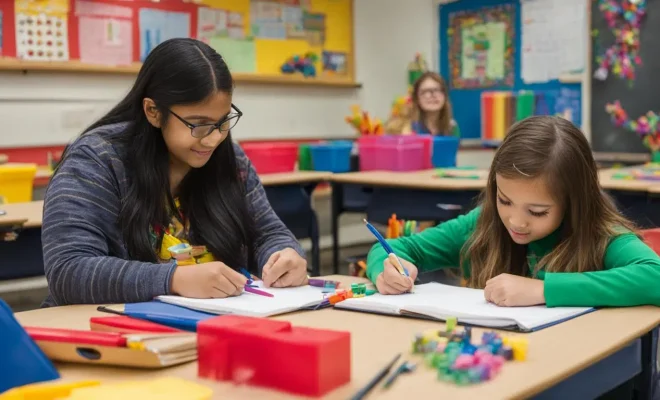
Once an Individualized Education Program (IEP) is developed, the crucial next step is its implementation in the classroom. This article explores how educators put IEPs into practice, the challenges they may face, and strategies for effectively monitoring student progress.

Translating IEP Goals into Classroom Practice

Implementing an IEP requires educators to translate written goals into daily classroom activities:

  1. Break Down Goals: Divide annual goals into smaller, manageable objectives.
  2. Integrate Goals into Lesson Plans: Incorporate IEP objectives into regular classroom activities.
  3. Use Appropriate Instructional Strategies: Employ teaching methods that align with the student’s learning style and needs.
  4. Implement Accommodations: Ensure all specified accommodations are consistently provided.
  5. Collaborate with Support Staff: Work closely with special education teachers, paraprofessionals, and related service providers.

Adapting the Learning Environment

Creating an inclusive classroom environment is crucial for successful IEP implementation:

  1. Physical Adaptations: Modify seating arrangements, lighting, or noise levels as needed.
  2. Visual Supports: Use visual schedules, cues, or aids to support learning and behavior.
  3. Assistive Technology: Incorporate any specified assistive devices or software.
  4. Flexible Grouping: Use various grouping strategies to support individual needs while promoting inclusion.

Strategies for Effective Implementation

Educators can employ several strategies to ensure effective IEP implementation:

  1. Consistent Routine: Establish and maintain predictable classroom routines.
  2. Clear Expectations: Communicate expectations clearly and consistently.
  3. Positive Reinforcement: Use praise and rewards to encourage desired behaviors and achievements.
  4. Differentiated Instruction: Tailor teaching methods to individual student needs.
  5. Peer Support: Utilize peer tutoring or buddy systems when appropriate.

Monitoring Progress

Regular progress monitoring is essential to ensure the IEP is effective:

  1. Data Collection: Regularly collect data on student performance related to IEP goals.
  2. Formal Assessments: Conduct periodic formal assessments as specified in the IEP.
  3. Informal Observations: Make ongoing informal observations of student progress.
  4. Student Self-Monitoring: When appropriate, involve students in tracking their own progress.
  5. Regular Team Meetings: Hold frequent meetings with the special education team to discuss progress.

Addressing Challenges

Implementing IEPs can present various challenges:

  1. Time Management: Balancing the needs of individual students with those of the whole class.
  2. Resource Constraints: Working within limitations of available resources and support.
  3. Behavioral Issues: Managing behaviors that may interfere with learning.
  4. Maintaining Inclusion: Ensuring students with IEPs are fully included in classroom activities.

Strategies for Overcoming Challenges

  1. Efficient Planning: Use effective time management and planning strategies.
  2. Creative Resource Utilization: Find innovative ways to use available resources.
  3. Professional Development: Seek ongoing training in special education strategies.
  4. Collaboration: Work closely with colleagues, specialists, and parents.

Communication with Parents

Maintaining open communication with parents is crucial:

  1. Regular Updates: Provide frequent updates on student progress.
  2. Involve Parents: Encourage parental involvement in reinforcing skills at home.
  3. Address Concerns Promptly: Respond to parental concerns in a timely manner.
  4. Celebrate Successes: Share student achievements and milestones with parents.

Conclusion

Implementing and monitoring Individualized Education Programs in the classroom is a complex but rewarding process. It requires dedication, creativity, and collaboration among educators, support staff, and parents. By effectively translating IEP goals into classroom practice, creating an inclusive learning environment, and consistently monitoring progress, educators can help students with special needs achieve their full potential. Remember, the IEP is a living document, and its successful implementation relies on ongoing assessment, flexibility, and a commitment to meeting each student’s unique needs.

 

Previous Article

The Role of Parents in the IEP ...

Next Article

Biden Administration’s Tech Legacy

Matthew Lynch

Related articles More from author

  • Education

    Product Review of Everspring

    October 26, 2025
    By Matthew Lynch
  • Education

    Product Review of Class Composer

    October 26, 2025
    By Matthew Lynch
  • Education

    Product Review of EVERFI

    October 26, 2025
    By Matthew Lynch
  • Education

    Product Review of Newsela

    October 26, 2025
    By Matthew Lynch
  • EducationEducation News

    Best of the Best Personalized Education Apps 2026

    October 23, 2025
    By Matthew Lynch
  • Education

    Top 5 Emerging Cybersecurity Technologies

    December 25, 2024
    By Matthew Lynch

Search

Login & Registration

  • Register
  • Log in
  • Entries feed
  • Comments feed
  • WordPress.org

Newsletter

Signup for The Tech Edvocate Newsletter and have the latest in EdTech news and opinion delivered to your email address!

About Us

Since technology is not going anywhere and does more good than harm, adapting is the best course of action. That is where The Tech Edvocate comes in. We plan to cover the PreK-12 and Higher Education EdTech sectors and provide our readers with the latest news and opinion on the subject. From time to time, I will invite other voices to weigh in on important issues in EdTech. We hope to provide a well-rounded, multi-faceted look at the past, present, the future of EdTech in the US and internationally.

We started this journey back in June 2016, and we plan to continue it for many more years to come. I hope that you will join us in this discussion of the past, present and future of EdTech and lend your own insight to the issues that are discussed.

Newsletter

Signup for The Tech Edvocate Newsletter and have the latest in EdTech news and opinion delivered to your email address!

Contact Us

The Tech Edvocate
910 Goddin Street
Richmond, VA 23231
(601) 630-5238
[email protected]

Copyright © 2025 Matthew Lynch. All rights reserved.