The Tech Edvocate

Top Menu

  • Advertisement
  • Apps
  • Home Page
  • Home Page Five (No Sidebar)
  • Home Page Four
  • Home Page Three
  • Home Page Two
  • Home Tech2
  • Icons [No Sidebar]
  • Left Sidbear Page
  • Lynch Educational Consulting
  • My Account
  • My Speaking Page
  • Newsletter Sign Up Confirmation
  • Newsletter Unsubscription
  • Our Brands
  • Page Example
  • Privacy Policy
  • Protected Content
  • Register
  • Request a Product Review
  • Shop
  • Shortcodes Examples
  • Signup
  • Start Here
    • Governance
    • Careers
    • Contact Us
  • Terms and Conditions
  • The Edvocate
  • The Tech Edvocate Product Guide
  • Topics
  • Write For Us
  • Advertise

Main Menu

  • Start Here
    • Our Brands
    • Governance
      • Lynch Educational Consulting, LLC.
      • Dr. Lynch’s Personal Website
      • Careers
    • Write For Us
    • The Tech Edvocate Product Guide
    • Contact Us
    • Books
    • Edupedia
    • Post a Job
    • The Edvocate Podcast
    • Terms and Conditions
    • Privacy Policy
  • Topics
    • Assistive Technology
    • Child Development Tech
    • Early Childhood & K-12 EdTech
    • EdTech Futures
    • EdTech News
    • EdTech Policy & Reform
    • EdTech Startups & Businesses
    • Higher Education EdTech
    • Online Learning & eLearning
    • Parent & Family Tech
    • Personalized Learning
    • Product Reviews
  • Advertise
  • Tech Edvocate Awards
  • The Edvocate
  • Pedagogue
  • School Ratings

logo

The Tech Edvocate

  • Start Here
    • Our Brands
    • Governance
      • Lynch Educational Consulting, LLC.
      • Dr. Lynch’s Personal Website
        • My Speaking Page
      • Careers
    • Write For Us
    • The Tech Edvocate Product Guide
    • Contact Us
    • Books
    • Edupedia
    • Post a Job
    • The Edvocate Podcast
    • Terms and Conditions
    • Privacy Policy
  • Topics
    • Assistive Technology
    • Child Development Tech
    • Early Childhood & K-12 EdTech
    • EdTech Futures
    • EdTech News
    • EdTech Policy & Reform
    • EdTech Startups & Businesses
    • Higher Education EdTech
    • Online Learning & eLearning
    • Parent & Family Tech
    • Personalized Learning
    • Product Reviews
  • Advertise
  • Tech Edvocate Awards
  • The Edvocate
  • Pedagogue
  • School Ratings
  • The Astonishing Truth About Student Loan Refinance Rates: What You Need to Know Now

  • Devastating: AI Agents Just Found a Zero-Day in Medical Software in 11 Minutes

  • The AI Education Revolution: 10 Urgent Questions Universities Must Answer Now

  • Explosive Zero-Day Vulnerability: 15 Million Websites Under Siege – Is Yours Next?

  • The Ultimate Kuru Footwear Trio: A Comfort Revolution for Every Adventure

  • Why Your Mortgage Could Be Denied by Biased AI – And What the Fed Is Doing About It

  • Unprecedented: Lawsuit Demands Total AI Shutdown Amid Rising Global Panic

  • The Astonishing Truth: Microcredentials Now Trump MBAs for Data Science Jobs

  • The Astonishing Twist: AI Cuts Your Job, Then Helps You Sue Your Boss

  • The Staggering Truth About Palo Alto’s $4.5 Billion AI Bet

Assistive Technology
Home›Assistive Technology›How to Split an Object Into Multiple Parts in Cura

How to Split an Object Into Multiple Parts in Cura
By Matthew Lynch
June 22, 2023
0
Spread the love

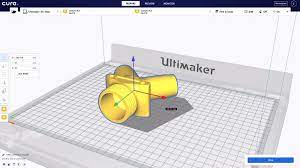
Cura is a popular open-source 3D printing software that is used by many enthusiasts and professionals alike. One of the many features it offers to its users is the ability to split an object into multiple parts, which can be very useful when it comes to printing complex designs.

In this article, we will be discussing how to split an object into multiple parts in Cura.

Step 1: Open your Design

The first step is to open your design in Cura. If you do not have a design yet, you can create one or download one from a free online 3D model repository, such as Thingiverse or MyMiniFactory.

Step 2: Select the Object

Once you have your design loaded into Cura, select the object you want to split into multiple parts. You can do this by clicking on the object in the preview window.

Step 3: Click on “Split Object Into Parts”

Next, click on the “Split Object Into Parts” button located in the left-hand panel. This will bring up a new panel with various options for splitting the object.

Step 4: Choose Your Splitting Method

Cura offers four different methods for splitting objects: by model groups, by mesh, by object type, and by mesh type. You will need to choose the method that best suits your design.

By Model Groups: This method will split the object into parts based on the different groups within the model. This is useful for designs that have different components, such as a figurine with separate arms and legs.

By Mesh: This method will split the object into parts based on the different meshes within the model. This is useful for designs that have multiple components that are not grouped together.

By Object Type: This method will split the object into parts based on the different object types within the model, such as meshes or curves.

By Mesh Type: This method will split the object into parts based on the different mesh types within the model, such as solid or hollow meshes.

Step 5: Adjust the Splitting Parameters

Depending on the splitting method you choose, you may need to adjust the splitting parameters to achieve the desired result. For example, if you choose the “By Model Groups” method, you may need to adjust the group size so that the object is split into the correct number of parts.

Step 6: Save Your Sliced Files

Once you have split the object into the desired number of parts, you can save your sliced files. Click on “Prepare to Print” in the top right-hand corner and then save your files to your computer.

In conclusion, splitting an object into multiple parts in Cura can be a very useful feature when it comes to printing complex designs. By following the steps outlined in this article, you should now be able to split your objects into multiple parts with ease. Happy printing!


Previous Article

Coursera vs. Udemy vs. LinkedIn Learning: Which ...

Next Article

Places You Can Find the Serial Number ...

Matthew Lynch

Related articles More from author

  • Assistive Technology

    How to Use ROUND Functions in Excel

    June 23, 2023
    By Matthew Lynch
  • Assistive Technology

    Watch the SAG Awards Live Stream

    June 12, 2023
    By Matthew Lynch
  • Assistive Technology

    How to Sign Out of Netflix on All Your Devices

    June 6, 2023
    By Matthew Lynch
  • Assistive Technology

    How to Get Free eBooks

    June 12, 2023
    By Matthew Lynch
  • Assistive Technology

    How to Use Custom Brushes in Paint.NET

    June 14, 2023
    By Matthew Lynch
  • Assistive Technology

    How to Wirelessly Charge Other Devices Using Your Pixel Phone

    June 10, 2023
    By Matthew Lynch

Search

Login & Registration

  • Log in
  • Entries feed
  • Comments feed
  • WordPress.org

Newsletter

Signup for The Tech Edvocate Newsletter and have the latest in EdTech news and opinion delivered to your email address!

About Us

Since technology is not going anywhere and does more good than harm, adapting is the best course of action. That is where The Tech Edvocate comes in. We plan to cover the PreK-12 and Higher Education EdTech sectors and provide our readers with the latest news and opinion on the subject. From time to time, I will invite other voices to weigh in on important issues in EdTech. We hope to provide a well-rounded, multi-faceted look at the past, present, the future of EdTech in the US and internationally.

We started this journey back in June 2016, and we plan to continue it for many more years to come. I hope that you will join us in this discussion of the past, present and future of EdTech and lend your own insight to the issues that are discussed.

Newsletter

Signup for The Tech Edvocate Newsletter and have the latest in EdTech news and opinion delivered to your email address!

Contact Us

The Tech Edvocate
910 Goddin Street
Richmond, VA 23231
(601) 630-5238
[email protected]

Copyright © 2026 Matthew Lynch. All rights reserved.