The Tech Edvocate

Top Menu

  • Advertisement
  • Apps
  • Home Page
  • Home Page Five (No Sidebar)
  • Home Page Four
  • Home Page Three
  • Home Page Two
  • Home Tech2
  • Icons [No Sidebar]
  • Left Sidbear Page
  • Lynch Educational Consulting
  • My Account
  • My Speaking Page
  • Newsletter Sign Up Confirmation
  • Newsletter Unsubscription
  • Our Brands
  • Page Example
  • Privacy Policy
  • Protected Content
  • Register
  • Request a Product Review
  • Shop
  • Shortcodes Examples
  • Signup
  • Start Here
    • Governance
    • Careers
    • Contact Us
  • Terms and Conditions
  • The Edvocate
  • The Tech Edvocate Product Guide
  • Topics
  • Write For Us
  • Advertise

Main Menu

  • Start Here
    • Our Brands
    • Governance
      • Lynch Educational Consulting, LLC.
      • Dr. Lynch’s Personal Website
      • Careers
    • Write For Us
    • The Tech Edvocate Product Guide
    • Contact Us
    • Books
    • Edupedia
    • Post a Job
    • The Edvocate Podcast
    • Terms and Conditions
    • Privacy Policy
  • Topics
    • Assistive Technology
    • Child Development Tech
    • Early Childhood & K-12 EdTech
    • EdTech Futures
    • EdTech News
    • EdTech Policy & Reform
    • EdTech Startups & Businesses
    • Higher Education EdTech
    • Online Learning & eLearning
    • Parent & Family Tech
    • Personalized Learning
    • Product Reviews
  • Advertise
  • Tech Edvocate Awards
  • The Edvocate
  • Pedagogue
  • School Ratings

logo

The Tech Edvocate

  • Start Here
    • Our Brands
    • Governance
      • Lynch Educational Consulting, LLC.
      • Dr. Lynch’s Personal Website
        • My Speaking Page
      • Careers
    • Write For Us
    • The Tech Edvocate Product Guide
    • Contact Us
    • Books
    • Edupedia
    • Post a Job
    • The Edvocate Podcast
    • Terms and Conditions
    • Privacy Policy
  • Topics
    • Assistive Technology
    • Child Development Tech
    • Early Childhood & K-12 EdTech
    • EdTech Futures
    • EdTech News
    • EdTech Policy & Reform
    • EdTech Startups & Businesses
    • Higher Education EdTech
    • Online Learning & eLearning
    • Parent & Family Tech
    • Personalized Learning
    • Product Reviews
  • Advertise
  • Tech Edvocate Awards
  • The Edvocate
  • Pedagogue
  • School Ratings
  • Your Essential Guide to Navigating Consumer Tech News in 2023

  • Unveiling the Future: Must-Have Gadgets and Innovations Transforming Consumer Tech

  • Revolutionizing Everyday Life: The Must-Have Consumer Tech Innovations of 2026

  • Top Android Phones of 2026: Unveiling the Must-Have Smartphones for Every User

  • Fashion Nova 2026: A Comprehensive Review and Competitor Comparison

  • China and the US Engage in Crucial Economic Talks in Paris

  • Gold Prices in Turmoil: Will They Hold Above $5,200 Amid Geopolitical Tensions?

  • Bank of Japan Set to Maintain Interest Rates Amid Rising Global Uncertainty

  • Oil Prices Surge Amidst Geopolitical Tensions: A Closer Look at March 2026 Trends

  • Bitcoin’s Resilience: How BTC Holds Steady at $70,982 Amid Market Turbulence

How To
Home›How To›How to Make Grape Jelly

How to Make Grape Jelly
By Matthew Lynch
October 11, 2023
0
Spread the love

Grape jelly is a favorite condiment for many, reminiscent of childhood lunches and sweet treats. Making your own grape jelly can be a fun and rewarding process that allows you to enjoy the fruits of your labor in a delicious way. This step-by-step guide will show you how to make homemade grape jelly from fresh grapes.

Ingredients:

– 4 pounds of fresh grapes (preferably Concords)

– 7 cups of granulated sugar

– 1/2 teaspoon butter or margarine (optional)

– 1 pouch (3 ounces) liquid pectin

Equipment:

– Large pot

– Jelly jars with lids and bands

– Ladle

– Fine mesh strainer or cheesecloth

– Bowl or container

– Canning funnel

Instructions:

1. Prepare the grapes: Rinse your grapes thoroughly under running water, then carefully remove the stems. Place the cleaned grapes in a large pot.

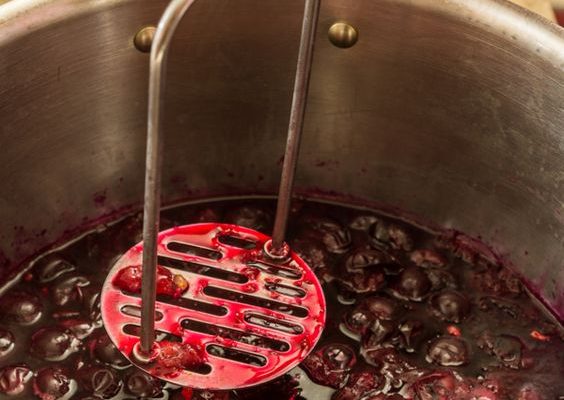
2. Crush the grapes: Use a potato masher or similar utensil to crush the grapes in the pot. This will release the juice and promote better flavor extraction during cooking.

3. Cook the grapes: Bring the crushed grapes to a simmer over medium heat, stirring occasionally to prevent them from sticking to the bottom of the pot. Cook for about 15 minutes, until the grapes are completely soft and have released their juices.

4. Strain the juice: Place a fine mesh strainer or cheesecloth-lined colander over a large bowl or container. Pour the cooked grapes into the strainer, allowing the juice to drain through. Use a spatula or spoon to gently press on the pulp, extracting as much juice as possible. Discard the remaining solids.

5. Measure out the juice: Return five cups of collected grape juice back into your pot (reserve any extra juice for later use).

6. Add sugar and butter: Stir in the seven cups of sugar and the optional 1/2 teaspoon of butter or margarine. If using, the butter will help reduce any foam that forms during cooking.

7. Boil the juice: Bring the grape juice mixture to a rapid boil over high heat, stirring constantly. Once boiling, quickly add the liquid pectin and return to a full boil. Boil for exactly one minute, stirring continuously.

8. Remove from heat: After boiling for one minute, remove the pot from heat and skim off any foam that has formed on the surface.

9. Fill jars: Using a ladle and canning funnel, carefully pour the hot grape jelly into prepared jars, leaving 1/4-inch headspace at the top of each jar. Wipe any spills or drips from the rim of your jars with a clean damp cloth before sealing them with lids and bands.

10. Cool and store: Allow your freshly made grape jelly to cool undisturbed for several hours or until completely set. Store your jars in a cool, dark place, ideally between 50-70°F (10-21°C). Enjoy your homemade grape jelly within one year for optimal taste and quality.

Homemade grape jelly is not only delicious, but it’s also a great way to preserve the flavors of fresh grapes for months to come. Happy canning!

Previous Article

How to Use a Paper Clip in ...

Next Article

8 DIY Activities to Teach Kids About ...

Matthew Lynch

Related articles More from author

  • How To

    4 Ways to Get Rid of Redness on the Face

    October 7, 2023
    By Matthew Lynch
  • How To

    How to Treat a Guy: 13 Steps

    January 7, 2024
    By Matthew Lynch
  • How To

    How to Paint Spindles

    December 23, 2023
    By Matthew Lynch
  • How To

    3 Ways to Make a Soft Boiled Egg

    October 20, 2023
    By Matthew Lynch
  • How To

    6 Ways to Soften Hard Brown Sugar

    November 15, 2023
    By Matthew Lynch
  • How To

    3 Ways to Get a Free Song from iTunes

    February 16, 2024
    By Matthew Lynch

Search

Login & Registration

  • Register
  • Log in
  • Entries feed
  • Comments feed
  • WordPress.org

Newsletter

Signup for The Tech Edvocate Newsletter and have the latest in EdTech news and opinion delivered to your email address!

About Us

Since technology is not going anywhere and does more good than harm, adapting is the best course of action. That is where The Tech Edvocate comes in. We plan to cover the PreK-12 and Higher Education EdTech sectors and provide our readers with the latest news and opinion on the subject. From time to time, I will invite other voices to weigh in on important issues in EdTech. We hope to provide a well-rounded, multi-faceted look at the past, present, the future of EdTech in the US and internationally.

We started this journey back in June 2016, and we plan to continue it for many more years to come. I hope that you will join us in this discussion of the past, present and future of EdTech and lend your own insight to the issues that are discussed.

Newsletter

Signup for The Tech Edvocate Newsletter and have the latest in EdTech news and opinion delivered to your email address!

Contact Us

The Tech Edvocate
910 Goddin Street
Richmond, VA 23231
(601) 630-5238
[email protected]

Copyright © 2025 Matthew Lynch. All rights reserved.