How to enable touch up appearance Zoom Mac
“`html
Let’s face it, video calls are a permanent fixture in our lives now, aren’t they? And while we’ve all gotten pretty good at navigating the basics of Zoom, there’s a whole world of hidden features and settings that can genuinely elevate your experience. Especially if you’re a Mac user, you’ve got some powerful tools at your fingertips that can make you look, sound, and feel more polished, even when you’re just rolling out of bed. We’re going to dive deep into these, starting with one of the most popular and often-overlooked settings: how to enable Touch Up Appearance Zoom Mac, and then explore seven other game-changing features.
Think about it: how many times have you hopped on a call, caught a glimpse of yourself, and wished you’d had an extra five minutes to, well, touch up your appearance? Zoom’s ‘Touch Up My Appearance’ feature is designed precisely for these moments. It’s not magic, but it’s a remarkably effective digital filter that smooths out your skin, evens out your tone, and generally makes you look a bit more refreshed. For Mac users, enabling this is a breeze, and it can make a significant difference in your on-screen confidence. But that’s just the beginning. Your Mac and Zoom combine for a powerful toolkit, and understanding how to leverage these features can truly transform your virtual presence, whether it’s for a critical work meeting, a family catch-up, or even a virtual social event.
1. Touch Up My Appearance: Your Instant Digital Glow-Up
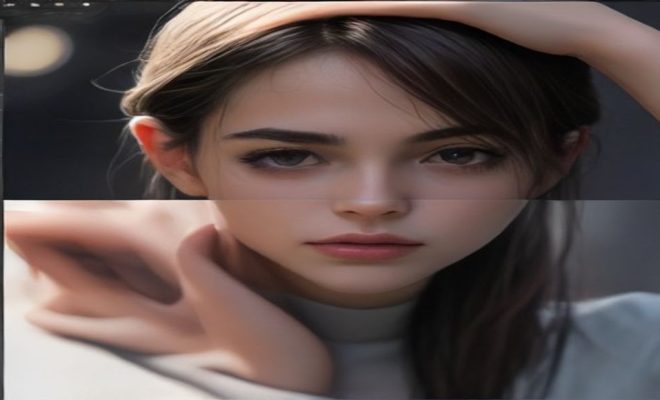
This is the big one, the feature everyone wants to know about, and for good reason. The ‘Touch Up My Appearance’ filter in Zoom is essentially a subtle beauty filter that applies a softening effect to your video feed. It works by slightly blurring and smoothing out your skin, minimizing the appearance of blemishes, fine lines, and uneven skin tones. It’s not about making you look like a different person; it’s about making you look like the best version of yourself, even on those mornings when you feel anything but. For Mac users, accessing and adjusting this setting is incredibly straightforward.
To enable Touch Up Appearance Zoom Mac, first, open your Zoom desktop client. Don’t join a meeting just yet; you’ll want to adjust this in your general settings. Click on your profile picture in the top right corner, then select ‘Settings’ from the dropdown menu. In the settings window, navigate to the ‘Video’ tab. Here, you’ll see a preview of your camera feed. Below this preview, you’ll find a checkbox labeled ‘Touch up my appearance’. Simply click this box to activate the feature. What’s even better is that there’s a slider next to it. This slider allows you to control the intensity of the effect. Dragging it to the left makes the effect more subtle, while dragging it to the right increases its smoothing power. Experiment with it to find the level that feels most natural and effective for you. I usually find a setting somewhere in the middle is perfect – enough to make a difference without looking artificial.
2. Adjust for Low Light: Banish the Shadows
Ever found yourself in a dimly lit room, only to see your face shrouded in shadows on a Zoom call? It’s a common problem, and it can make you look less engaged or even a bit mysterious, not in a good way. Fortunately, Zoom has a built-in ‘Adjust for low light’ feature that can dramatically improve your visibility, especially when your lighting isn’t ideal. This setting works by intelligently brightening your video feed, bringing your face out of the gloom and making you more clearly visible to others on the call.
To activate this, you’ll stay in the same ‘Video’ settings tab where you found ‘Touch Up My Appearance’. Just below that option, you’ll see ‘Adjust for low light’. Check this box. You’ll then have two options: ‘Auto’ or ‘Manual’. ‘Auto’ is usually a great starting point; Zoom will try to intelligently detect the lighting conditions and adjust accordingly. However, if you find it’s not quite right, switch to ‘Manual’. When in ‘Manual’ mode, a slider will appear, allowing you to fine-tune the brightness yourself. This gives you precise control to make sure you’re well-lit without overexposing your image. This feature, combined with how you enable Touch Up Appearance Zoom Mac, can make you look incredibly professional, even if your actual setup is far from it.
3. Suppress Background Noise: Sound Like a Pro
Visuals are important, but audio is arguably even more crucial for effective communication. Nothing’s more distracting than a constant hum from an air conditioner, the clatter of dishes, or the incessant barking of a neighbor’s dog during a critical presentation. Zoom’s ‘Suppress Background Noise’ feature is a lifesaver in these scenarios. It uses intelligent algorithms to detect and filter out common background sounds, ensuring your voice comes through clear and crisp. See also using Airplane Mode on Mac.
To access this, head to your Zoom ‘Settings’ and then click on the ‘Audio’ tab. Here, you’ll find the ‘Suppress Background Noise’ option with several intensity levels: ‘Auto’, ‘Low’, ‘Medium’, and ‘High’. ‘Auto’ is a good default, as Zoom will dynamically adjust based on the detected noise. However, if you know you’re in a particularly noisy environment, bumping it up to ‘Medium’ or ‘High’ can make a world of difference. Be aware that ‘High’ suppression can sometimes slightly alter the quality of your voice if there’s no background noise to suppress, so it’s best reserved for truly challenging environments. Test it out before a call if you’re unsure. Getting your audio right, alongside perfecting your visual with tools like how to enable Touch Up Appearance Zoom Mac, shows a real commitment to clear communication.
4. Virtual Backgrounds & Filters: The Fun (and Functional) Side
While ‘Touch Up My Appearance’ is about enhancing you, virtual backgrounds are about enhancing your environment – or completely changing it. Whether you want to hide a messy room, project a professional image with a branded background, or just have some fun with a tropical beach, virtual backgrounds are incredibly versatile. And Zoom also offers fun video filters, much like those on social media apps, allowing you to add cat ears, glasses, or even turn yourself into a cartoon character for more lighthearted calls. (See: how to assess your appearance.)
To explore these, go back to ‘Settings’ and click on ‘Backgrounds & Filters’. For virtual backgrounds, you’ll see a selection of pre-loaded images, and you can also upload your own by clicking the ‘+’ icon. For the best results, especially on a Mac without a dedicated green screen, ensure you have good, even lighting behind you. Zoom is quite good at isolating you from your background, but optimal lighting makes it even better. Below the virtual backgrounds, you’ll find ‘Video Filters’. Click this tab to browse various effects. These can be a fantastic way to break the ice or add a bit of personality to informal meetings. Just remember, while it’s fun to put on a pirate hat, a serious business meeting might call for a more subdued approach, perhaps just relying on how you enable Touch Up Appearance Zoom Mac for a polished look.
5. Enable HD Video: Clarity is King
You’ve taken the time to enable Touch Up Appearance Zoom Mac, you’ve adjusted for low light, but is your video still looking a bit grainy or pixelated? It might be because you’re not streaming in high definition. While HD video consumes more bandwidth, if your internet connection can handle it, the difference in clarity and sharpness is significant. A crisp, clear image makes you appear more professional and engaged, and it’s simply easier for others to see your expressions and nuances.
To turn on HD video, return to the ‘Video’ tab in your Zoom settings. Look for the ‘HD’ checkbox and make sure it’s selected. Keep in mind that Zoom often prioritizes connection stability over resolution, so if your internet connection struggles, it might automatically downgrade your video quality even if HD is enabled. However, for most modern Mac setups with decent broadband, enabling HD should provide a noticeable improvement. It’s a subtle change, but one that contributes to a much more professional overall presentation, especially when paired with the smoothing effect from how you enable Touch Up Appearance Zoom Mac.
6. Original Sound: For Musicians and Podcasters
Most of the time, Zoom’s audio processing is a blessing, filtering out noise and optimizing voices for communication. But what if you’re a musician performing, or a podcaster wanting to capture high-quality audio without any interference from Zoom’s algorithms? In these specific cases, Zoom’s default audio enhancements can actually be detrimental. That’s where the ‘Original Sound’ feature comes in. It bypasses Zoom’s normal audio processing, allowing the raw, unfiltered audio from your microphone to be transmitted.
This feature isn’t directly in the main settings. You first need to enable it as an option. Go to ‘Settings’ -> ‘Audio’. At the very bottom of the ‘Microphone’ section, you’ll see a checkbox that says ‘Show in-meeting option to Enable Original Sound’. Check this box. Now, when you’re in a meeting, you’ll see a button in the top left corner of your meeting window that says ‘Turn on Original Sound’. Click this when you need to transmit high-fidelity audio. Remember to turn it off when you’re done, as normal speech benefits from Zoom’s standard processing. This is a niche but incredibly powerful tool for specific use cases, ensuring that your sound matches the visual polish you achieve when you enable Touch Up Appearance Zoom Mac.
7. Keyboard Shortcuts: Master Your Meetings
Efficiency is key, especially when you’re trying to manage a meeting, present, and interact with participants all at once. Relying solely on your mouse can be slow and interrupt the flow. Zoom offers a comprehensive set of keyboard shortcuts that can significantly speed up your interactions, allowing you to perform common actions like muting your mic, starting/stopping video, or raising your hand without fumbling through menus. For Mac users, these shortcuts are intuitive and can become second nature quickly.
To view and even customize these, go to ‘Settings’ and then ‘Keyboard Shortcuts’. You’ll see a list of actions and their corresponding key combinations. For instance, `Command+Shift+A` (or `Cmd+Shift+A`) will mute/unmute your audio, and `Command+Shift+V` will start/stop your video. You can even click on a shortcut and change it to something more convenient for your workflow, as long as it doesn’t conflict with system-level Mac shortcuts. Learning just a handful of these can make you look incredibly polished and in control during calls, allowing you to focus on the content rather than the mechanics. It’s all part of presenting a seamless professional image, just like when you choose to enable Touch Up Appearance Zoom Mac.
8. Customizing Your Profile: The First Impression
Before anyone even sees your video feed or hears your voice, they often see your name and profile picture. This is your first impression, and it’s a crucial one. A professional, clear profile picture can convey credibility and approachability, while a well-chosen display name ensures you’re easily identifiable. Too often, people overlook this simple step, leaving a generic initial or an outdated photo. Your Zoom profile is more than just a placeholder; it’s part of your personal brand in the virtual space.
To update your profile, click your profile picture in the top right of the Zoom client and select ‘My Profile’. This will open your Zoom web portal in your default browser. From there, you can easily upload a new profile picture. Choose a headshot that’s clear, well-lit, and professional. Avoid blurry selfies or pictures with distracting backgrounds. You can also edit your display name here. Make sure it’s your full name, or the name you prefer to be called professionally. Additionally, this is where you can set your personal meeting ID, which can be useful for recurring meetings. Taking the time to craft a strong profile complements all the other efforts you put into your video calls, from ensuring your audio is clear to knowing how to enable Touch Up Appearance Zoom Mac for a polished look. It’s about presenting a complete package.
9. Mac’s Built-in Camera Features: Beyond Zoom
While Zoom offers fantastic internal features, your Mac itself has some powerful native camera capabilities that can elevate your video presence even before Zoom gets involved. For instance, on newer macOS versions, particularly with Apple Silicon Macs, there’s a feature called ‘Portrait Mode’ or ‘Center Stage’ (on iPads and Studio Display) that can significantly enhance your video. Portrait Mode blurs your background, much like a virtual background, but with a more natural, hardware-accelerated effect, making you stand out. Center Stage, on compatible devices, keeps you automatically framed in the center of the shot, even if you move around a bit. These are system-level features that work with Zoom. (See: Zoom appearance tips from The New York Times.)
To check for these, during an active Zoom call, look for the ‘Video Effects’ icon in the menu bar at the top right of your screen (it looks like a green camera with a person inside). Clicking this reveals options for ‘Portrait’ mode, ‘Studio Light’ (which simulates better lighting), and ‘Mic Modes’ for advanced audio. Experimenting with these Mac-specific enhancements can provide an even higher level of polish and professionalism, working in tandem with settings like how to enable Touch Up Appearance Zoom Mac.
10. Optimizing Your Physical Setup: The Unsung Hero
No amount of digital filtering or software optimization can completely fix a poor physical setup. Even with the best Zoom settings, including how to enable Touch Up Appearance Zoom Mac, your hardware and environment play a huge role. Let’s break down a few key considerations:
- Lighting: The most impactful change you can make. Natural light from a window in front of you is ideal. If that’s not possible, use a soft, diffused light source (like a ring light or a lamp with a diffuser) positioned directly in front of your face. Avoid overhead lights that create harsh shadows, or backlighting that makes you appear as a silhouette.
- Camera Angle: Position your Mac so its camera is at eye level or slightly above. This avoids unflattering up-the-nose shots and creates a more engaging, direct gaze. Stacking books under your laptop can help achieve this.
- Background: Even if you use virtual backgrounds, a clean, uncluttered physical background is always best. A plain wall, a bookshelf, or a tidy corner can project professionalism. Avoid busy patterns or anything distracting.
- Microphone: While Zoom’s noise suppression is good, an external microphone (even an inexpensive lavalier mic or a good headset) will almost always sound better than your Mac’s built-in mic. This significantly improves audio clarity and reduces ambient noise.
Investing a little time in your physical setup amplifies the benefits of all the software tweaks we’ve discussed, creating a truly superior virtual presence.
11. Understanding Bandwidth and Performance: Why Lag Happens
You’ve meticulously set up your video, perfected your audio, and even taken the time to enable Touch Up Appearance Zoom Mac, but sometimes, things still go wrong. Lag, freezing, or choppy audio and video are often due to bandwidth limitations. Zoom’s performance is heavily reliant on a stable and fast internet connection. HD video and complex virtual backgrounds consume significant bandwidth, and if your connection can’t keep up, Zoom will automatically degrade quality to maintain the call.
- Check your speed: Run an internet speed test before important calls. Zoom recommends at least 1.2 Mbps for HD video.
- Minimize other usage: If others on your network are streaming, gaming, or downloading large files, it will impact your Zoom call. Ask them to pause during your meeting.
- Wired vs. Wireless: An Ethernet connection (wired) is almost always more stable and faster than Wi-Fi. If possible, plug your Mac directly into your router.
- Close unnecessary apps: Other applications running on your Mac can consume CPU and memory, impacting Zoom’s performance. Close anything you don’t need during a call.
Understanding these factors can help you troubleshoot issues and ensure a smoother experience, allowing all your careful optimizations to shine through.
Expert Perspectives: The Psychology of Virtual Presence
Beyond the technical settings, there’s a powerful psychological component to how you present yourself on Zoom. Experts in virtual communication emphasize that your on-screen persona has a direct impact on how you’re perceived, and even on your own confidence. Dr. Pamela Rutledge, a media psychologist, often speaks about the “Zoom fatigue” phenomenon, noting that the constant self-monitoring can be exhausting. Features like enable Touch Up Appearance Zoom Mac can subtly alleviate some of that stress by boosting your self-perception, allowing you to focus more on the conversation.
Additionally, visual cues are amplified in video calls. Maintaining eye contact (by looking at your camera, not just the screen), using appropriate gestures, and having a clear, well-lit image all contribute to what communication coaches call “presence.” When your video is crisp, your audio clear, and your appearance polished (even digitally), you project authority, engagement, and professionalism. It reduces cognitive load for your audience, allowing them to absorb your message without distraction. Think of these settings not just as technical tweaks, but as tools for effective non-verbal communication in the digital age.
Frequently Asked Questions About Zoom on Mac
Q1: Is ‘Touch Up My Appearance’ a permanent setting once I enable it?
Yes, once you enable Touch Up Appearance Zoom Mac and adjust the slider in your settings, Zoom will remember your preference for future meetings until you manually change it. You don’t need to re-enable it every time.
Q2: Does ‘Touch Up My Appearance’ work on all Mac models?
Generally, yes. ‘Touch Up My Appearance’ is a software-based filter within the Zoom client, so it should work on any Mac capable of running the latest version of the Zoom application. It doesn’t require specific hardware acceleration. (See: importance of physical appearance and health.)
Q3: Why does my video look blurry even with HD enabled and ‘Touch Up My Appearance’ off?
Several factors can cause blurriness. First, check your internet connection speed. If it’s unstable or slow, Zoom might automatically reduce video quality. Second, ensure your Mac’s camera lens is clean – a simple smudge can cause blur. Third, check your lighting; insufficient light can make the camera struggle, resulting in a grainier, less sharp image. Also, some older Mac cameras might simply have lower native resolution.
Q4: Can I use virtual backgrounds without a green screen on my Mac?
Yes, you absolutely can! Modern Macs, especially those with Apple Silicon, are quite good at isolating you from your background using software algorithms. For the best results without a green screen, ensure you have consistent, even lighting and a relatively plain, non-busy background behind you. Avoid sitting in front of a window or highly patterned wallpaper.
Q5: What’s the best way to reduce echo during a Zoom call on my Mac?
Echo is usually caused by a participant’s microphone picking up audio from their own speakers. The best way to prevent this is to wear headphones or earbuds. If that’s not possible, ensure your speaker volume isn’t too high, and try moving your microphone further away from your speakers. Zoom’s ‘Suppress Background Noise’ feature (set to ‘Auto’ or ‘Medium’) can also help mitigate minor echo issues.
Q6: Will using ‘Original Sound’ impact the ‘Suppress Background Noise’ feature?
Yes, when you ‘Turn on Original Sound’, it bypasses all of Zoom’s normal audio processing, including noise suppression. This means if you’re a musician, your instrument’s full dynamic range will be captured, but any ambient noise in your room will also be transmitted unfiltered. Remember to toggle ‘Original Sound’ off when you’re done with your high-fidelity audio segment.
Q7: I’m having trouble with my camera or microphone not being detected by Zoom. What should I do?
First, check your Mac’s System Settings (or System Preferences for older macOS versions) under ‘Privacy & Security’ -> ‘Camera’ and ‘Microphone’. Make sure Zoom has permission to access both. Restarting the Zoom application or even your entire Mac can often resolve temporary detection issues. Also, ensure no other applications are currently using your camera or microphone, as only one app can typically access them at a time.
Mastering these eight Zoom features on your Mac can truly transform your video conferencing experience. From the instant polish you get when you enable Touch Up Appearance Zoom Mac, to ensuring crystal-clear audio and efficient navigation with keyboard shortcuts, each setting plays a role in presenting a more professional, confident, and engaging version of yourself. Don’t just settle for the default; take a few minutes to explore these powerful tools. Your colleagues, clients, and even your family will notice the difference, and you’ll feel much more comfortable and in control during every virtual interaction.
“`
Trending Now
Frequently Asked Questions
How do I enable Touch Up Appearance on Zoom for Mac?
To enable Touch Up Appearance on Zoom for Mac, open the Zoom application and go to 'Settings.' Click on 'Video' and look for the 'Touch Up My Appearance' checkbox. Simply check this box, and the feature will be activated, giving your video feed a subtle smoothing effect.
What does the Touch Up My Appearance feature do in Zoom?
The Touch Up My Appearance feature in Zoom applies a softening effect to your video feed. It smooths out skin imperfections, minimizes blemishes, and evens out skin tone, helping you look more refreshed and polished during video calls. For more on this, see removing duplicate entries in Numbers.
Can I use Touch Up My Appearance on other devices?
Yes, the Touch Up My Appearance feature is available on Zoom for both Mac and Windows computers. However, it may not be available on mobile devices. Make sure your Zoom app is updated to access this feature.
Is the Touch Up My Appearance feature available for free Zoom accounts?
Yes, the Touch Up My Appearance feature is available to all Zoom users, including those with free accounts. You can easily access it through the video settings in the Zoom application.
Does Touch Up My Appearance affect video quality?
The Touch Up My Appearance feature may slightly affect video quality due to its smoothing effect; however, it is designed to be subtle enough not to compromise the overall clarity of your video feed.
Agree or disagree? Drop a comment and tell us what you think.