The Tech Edvocate

Top Menu

  • Advertisement
  • Apps
  • Home Page
  • Home Page Five (No Sidebar)
  • Home Page Four
  • Home Page Three
  • Home Page Two
  • Home Tech2
  • Icons [No Sidebar]
  • Left Sidbear Page
  • Lynch Educational Consulting
  • My Account
  • My Speaking Page
  • Newsletter Sign Up Confirmation
  • Newsletter Unsubscription
  • Our Brands
  • Page Example
  • Privacy Policy
  • Protected Content
  • Register
  • Request a Product Review
  • Shop
  • Shortcodes Examples
  • Signup
  • Start Here
    • Governance
    • Careers
    • Contact Us
  • Terms and Conditions
  • The Edvocate
  • The Tech Edvocate Product Guide
  • Topics
  • Write For Us
  • Advertise

Main Menu

  • Start Here
    • Our Brands
    • Governance
      • Lynch Educational Consulting, LLC.
      • Dr. Lynch’s Personal Website
      • Careers
    • Write For Us
    • The Tech Edvocate Product Guide
    • Contact Us
    • Books
    • Edupedia
    • Post a Job
    • The Edvocate Podcast
    • Terms and Conditions
    • Privacy Policy
  • Topics
    • Assistive Technology
    • Child Development Tech
    • Early Childhood & K-12 EdTech
    • EdTech Futures
    • EdTech News
    • EdTech Policy & Reform
    • EdTech Startups & Businesses
    • Higher Education EdTech
    • Online Learning & eLearning
    • Parent & Family Tech
    • Personalized Learning
    • Product Reviews
  • Advertise
  • Tech Edvocate Awards
  • The Edvocate
  • Pedagogue
  • School Ratings

logo

The Tech Edvocate

  • Start Here
    • Our Brands
    • Governance
      • Lynch Educational Consulting, LLC.
      • Dr. Lynch’s Personal Website
        • My Speaking Page
      • Careers
    • Write For Us
    • The Tech Edvocate Product Guide
    • Contact Us
    • Books
    • Edupedia
    • Post a Job
    • The Edvocate Podcast
    • Terms and Conditions
    • Privacy Policy
  • Topics
    • Assistive Technology
    • Child Development Tech
    • Early Childhood & K-12 EdTech
    • EdTech Futures
    • EdTech News
    • EdTech Policy & Reform
    • EdTech Startups & Businesses
    • Higher Education EdTech
    • Online Learning & eLearning
    • Parent & Family Tech
    • Personalized Learning
    • Product Reviews
  • Advertise
  • Tech Edvocate Awards
  • The Edvocate
  • Pedagogue
  • School Ratings
  • A Visitor’s Guide to Fresno (CA), United States

  • A Visitors Guide to New Orleans (LA), United States

  • A Visitors Guide to Sacramento (CA), United States

  • A Visitors Guide to Lyon, France

  • JisuLife Ultra2 Portable Fan: A Powerful Multi-Function Cooling Solution

  • A Visitors Guide to Viña del Mar, Chile

  • A Visitors Guide to Århus, Denmark

  • A Visitors Guide to Bakersfield (CA), United States

  • A Visitors Guide to Aurora (CO), United States

  • A Visitor’s Guide to Toledo (OH), United States

Tech Advice
Home›Tech Advice›How to Easily Root an Android Device

How to Easily Root an Android Device
By Matthew Lynch
July 17, 2023
0
Spread the love

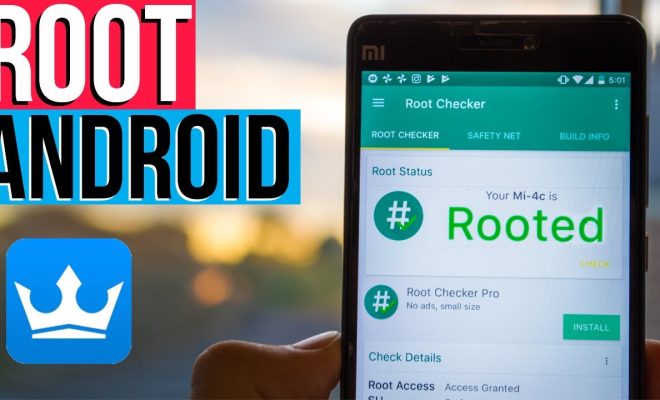
Rooting your Android device can unlock a world of possibilities, giving you full control and access to the inner workings of your smartphone or tablet. With root access, you can customize your device’s appearance, remove bloatware, install custom ROMs, and even boost performance. If you’re interested in rooting your Android device but are unsure where to start, this article will guide you through an easy method.

Step 1: Understand the Risks and Benefits

Before proceeding with rooting:

• Benefits: Rooting allows for customization options beyond what is typically available on stock Android. You gain administrative privileges (superuser access) that enable advanced customization and system-level modifications.

• Risks: Rooting voids your device warranty. Additionally, improper execution during the process can lead to software instability or even brick your device if not done correctly.

It’s important to weigh these risks against the benefits before deciding whether rooting is right for you.

Step 2: Backup Your Data

Rooting involves making changes deep within your device’s system files—so it’s crucial to backup all important data beforehand. This includes photos, videos, documents, contacts, and any other data that matters to you.

You can use various methods for backup:

• Sync data with cloud services like Google Drive or Dropbox.

• Use third-party backup apps available on the Google Play Store.

• Transfer files manually onto a computer or external storage.

Step 3: Enable Developer Options

To proceed with rooting:

1 . Go into Settings on your Android device.

2 . Scroll down until you find About Phone, System, or similar (location may vary depending on manufacturer).

3 . Look for an option labeled Build Number—tap it repeatedly until a message appears stating “You are now a developer” (usually after seven taps).

4 . Now go back one step in the Settings menu, and you should see a new option labeled Developer Options or similar.

Step 4: Unlock Bootloader (if required)

Some Android devices require unlocking the bootloader before rooting. Check if your device falls into this category and follow these general steps:

1 . Within Developer Options, look for an option called OEM Unlocking, Unlock Bootloader, or something similar.

2 . Enable this option—keep in mind that unlocking the bootloader may erase all data on your device.

3 . Consult official documentation provided by your device manufacturer or reputable online guides to obtain specific instructions on unlocking the bootloader for your particular device model.

Step 5: Install Custom Recovery

To proceed with rooting, you’ll need to install custom recovery software like TWRP (Team Win Recovery Project):

1 . Research and find a reliable source to download TWRP specifically built for your exact Android device model. The XDA Developers forum is a reputable source for finding custom recoveries.

2 . Once downloaded, follow detailed installation instructions provided by trusted sources. These usually involve using tools like ADB (Android Debug Bridge) and Fastboot via a computer connected to your Android device.

Step 6: Root Your Device

With custom recovery installed, it’s time to root:

1. Download the appropriate root package for your specific Android device model from trustworthy sources such as XDA Developers.

2. Transfer the root package onto your Android device’s internal storage or SD card.

3. Reboot into recovery mode:

• Power off your Android.

• Press certain key combinations simultaneously (e.g., Volume Up + Power Button) depending on manufacturer-specific instructions until you enter recovery mode.

4. In custom recovery mode:

• Create a full backup of existing system files if available within the options.

• Look for an option called “Install,” “Flash,” or similar—select it.

• Navigate to the root package file you downloaded earlier and select it to flash/ install.

5. Once the installation is complete, reboot your device.

Conclusion

Rooting an Android device can be a rewarding experience for advanced users who desire more control and customization options. However, it’s important to understand the risks involved and take necessary precautions such as backing up data.

Remember that rooting may void your warranty, so proceed at your own risk. Stay informed by following reputable sources like XDA Developers forums or official manufacturer documentation specific to your device model.
With full root access, you’ll have endless possibilities for personalizing and optimizing your Android device according to your preferences. Enjoy exploring the exciting world of rooted Android!

Previous Article

Mint Mobile, Google Fi, Xfinity Mobile, Visible: ...

Next Article

Best Wireless Earbuds Under $50

Matthew Lynch

Related articles More from author

  • Tech Advice

    Auto Loan: Bank vs Dealer – A Comprehensive Guide

    August 17, 2023
    By Matthew Lynch
  • Tech Advice

    The 2024 Ford Mustang GT Is The Fast, Agile V8 Coupe You’ve Always Wanted – The Autopian

    August 11, 2023
    By Matthew Lynch
  • Tech Advice

    Best Car Insurance in North Carolina

    October 20, 2023
    By Matthew Lynch
  • Tech Advice

    A Visual Guide to Your Daily Servings of Vegetables and Fruits

    July 7, 2023
    By Matthew Lynch
  • Tech Advice

    The Best 55-Inch TVs Perfect To Fill Smaller Rooms

    August 8, 2023
    By Matthew Lynch
  • Tech Advice

    Overwatch 2 Battle Pass: What You Need to Know About Hero Unlocks

    July 17, 2023
    By Matthew Lynch

Search

Login & Registration

  • Register
  • Log in
  • Entries feed
  • Comments feed
  • WordPress.org

Newsletter

Signup for The Tech Edvocate Newsletter and have the latest in EdTech news and opinion delivered to your email address!

About Us

Since technology is not going anywhere and does more good than harm, adapting is the best course of action. That is where The Tech Edvocate comes in. We plan to cover the PreK-12 and Higher Education EdTech sectors and provide our readers with the latest news and opinion on the subject. From time to time, I will invite other voices to weigh in on important issues in EdTech. We hope to provide a well-rounded, multi-faceted look at the past, present, the future of EdTech in the US and internationally.

We started this journey back in June 2016, and we plan to continue it for many more years to come. I hope that you will join us in this discussion of the past, present and future of EdTech and lend your own insight to the issues that are discussed.

Newsletter

Signup for The Tech Edvocate Newsletter and have the latest in EdTech news and opinion delivered to your email address!

Contact Us

The Tech Edvocate
910 Goddin Street
Richmond, VA 23231
(601) 630-5238
[email protected]

Copyright © 2025 Matthew Lynch. All rights reserved.