The Tech Edvocate

Top Menu

  • Advertisement
  • Apps
  • Home Page
  • Home Page Five (No Sidebar)
  • Home Page Four
  • Home Page Three
  • Home Page Two
  • Home Tech2
  • Icons [No Sidebar]
  • Left Sidbear Page
  • Lynch Educational Consulting
  • My Account
  • My Speaking Page
  • Newsletter Sign Up Confirmation
  • Newsletter Unsubscription
  • Our Brands
  • Page Example
  • Privacy Policy
  • Protected Content
  • Register
  • Request a Product Review
  • Shop
  • Shortcodes Examples
  • Signup
  • Start Here
    • Governance
    • Careers
    • Contact Us
  • Terms and Conditions
  • The Edvocate
  • The Tech Edvocate Product Guide
  • Topics
  • Write For Us
  • Advertise

Main Menu

  • Start Here
    • Our Brands
    • Governance
      • Lynch Educational Consulting, LLC.
      • Dr. Lynch’s Personal Website
      • Careers
    • Write For Us
    • The Tech Edvocate Product Guide
    • Contact Us
    • Books
    • Edupedia
    • Post a Job
    • The Edvocate Podcast
    • Terms and Conditions
    • Privacy Policy
  • Topics
    • Assistive Technology
    • Child Development Tech
    • Early Childhood & K-12 EdTech
    • EdTech Futures
    • EdTech News
    • EdTech Policy & Reform
    • EdTech Startups & Businesses
    • Higher Education EdTech
    • Online Learning & eLearning
    • Parent & Family Tech
    • Personalized Learning
    • Product Reviews
  • Advertise
  • Tech Edvocate Awards
  • The Edvocate
  • Pedagogue
  • School Ratings

logo

The Tech Edvocate

  • Start Here
    • Our Brands
    • Governance
      • Lynch Educational Consulting, LLC.
      • Dr. Lynch’s Personal Website
        • My Speaking Page
      • Careers
    • Write For Us
    • The Tech Edvocate Product Guide
    • Contact Us
    • Books
    • Edupedia
    • Post a Job
    • The Edvocate Podcast
    • Terms and Conditions
    • Privacy Policy
  • Topics
    • Assistive Technology
    • Child Development Tech
    • Early Childhood & K-12 EdTech
    • EdTech Futures
    • EdTech News
    • EdTech Policy & Reform
    • EdTech Startups & Businesses
    • Higher Education EdTech
    • Online Learning & eLearning
    • Parent & Family Tech
    • Personalized Learning
    • Product Reviews
  • Advertise
  • Tech Edvocate Awards
  • The Edvocate
  • Pedagogue
  • School Ratings
  • The AI Education Revolution: 10 Urgent Questions Universities Must Answer Now

  • Explosive Zero-Day Vulnerability: 15 Million Websites Under Siege – Is Yours Next?

  • The Ultimate Kuru Footwear Trio: A Comfort Revolution for Every Adventure

  • Why Your Mortgage Could Be Denied by Biased AI – And What the Fed Is Doing About It

  • Unprecedented: Lawsuit Demands Total AI Shutdown Amid Rising Global Panic

  • The Astonishing Truth: Microcredentials Now Trump MBAs for Data Science Jobs

  • The Astonishing Twist: AI Cuts Your Job, Then Helps You Sue Your Boss

  • The Staggering Truth About Palo Alto’s $4.5 Billion AI Bet

  • Mind-Blowing: Satellite Metals Now Outweigh Meteoroids, Sparking Urgent Insurance Crisis

  • The Silent Threat From Above: Your Sky Is Changing, And Here’s Why

Digital & Mobile Technology
Home›Digital & Mobile Technology›How to Dual-Boot Windows 11

How to Dual-Boot Windows 11
By Matthew Lynch
May 28, 2023
0
Spread the love

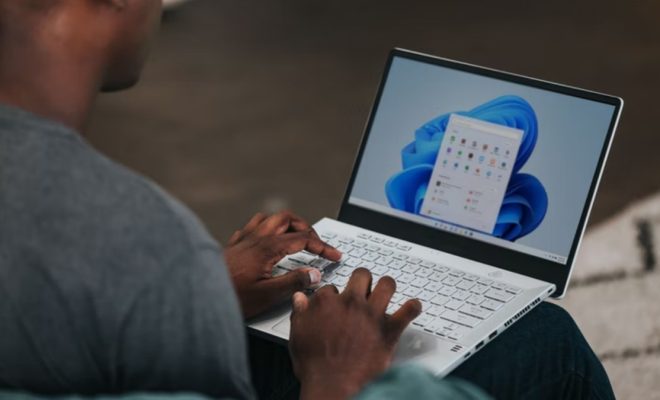
Windows 11 has been the buzzword for quite some time now. Windows 11 comes with a refreshed user interface and various features, including support for Android apps. If you’re hesitant about upgrading to Windows 11, one possible solution is to set up a dual-boot configuration. So, in this article, we will discuss how to dual-boot Windows 11.

1. Create a Windows 11 installation media.

The first step is to download and create a Windows 11 installation media. You can download the Windows 11 ISO file from the Microsoft website. Once downloaded, you can create a bootable USB flash drive or DVD using Windows 11 Media Creation Tool. You can find many tutorials on the internet to perform this step.

2. Create a backup of your data.

Before you start the installation process, it is recommended to backup all your data to an external hard drive or cloud storage. Dual-booting is a complicated process and may affect your files present on your hard drive. In case anything goes wrong in the process, you won’t lose any critical data.

3. Create a partition for Windows 11.

Next, you will need to make some space for Windows 11 on your hard drive. You can do this by shrinking your existing drive’s partition through the Disk Management utility.

Press the “Windows key + X” on your keyboard and select the “Disk Management” option. Then, right-click on the partition you would like to shrink and choose “Shrink Volume.” Follow the prompts to select the amount of space needed for Windows 11. It is recommended to allocate at least 30GB of space for Windows 11.

4. Install Windows 11.

Once you have created additional space on your hard drive, you can install Windows 11 on the newly created partition. Restart your computer and boot your system from the Windows 11 installation media. Follow the prompts and choose the partition that you have shrunk earlier for the Windows 11 installation. Complete the installation process by following the instructions provided by the wizard.

5. Dual-boot your Windows.

Now that you have installed Windows 11, restart your computer. You should now see the dual-boot menu that allows you to boot into either Windows 11 or your previous version of Windows. You can use the arrows keys to choose the Windows operating system you prefer to use.

Conclusion

Setting up a dual-boot configuration can be difficult, but it’s an excellent solution if you’re unsure about using Windows 11 full-time. By following the steps outlined above, you should be able to set up a dual-boot configuration of Windows 11 without too much trouble. However, you should always exercise caution when making changes to your computer’s operating system, especially when working with partitioning tools.

Previous Article

How to Easily Download Video from the ...

Next Article

How to Download Pictures from Shutterfly to ...

Matthew Lynch

Related articles More from author

  • Digital & Mobile Technology

    How to Delete Temporary Internet Files in Internet Explorer

    July 29, 2023
    By Matthew Lynch
  • Digital & Mobile Technology

    Free Teleprompter Apps to Read Scripts While Shooting Videos or Hosting Webinars

    June 8, 2023
    By Matthew Lynch
  • Digital & Mobile Technology

    What Is an EPRT File?

    June 15, 2023
    By Matthew Lynch
  • Digital & Mobile Technology

    What is a Web Browser?

    April 24, 2023
    By Matthew Lynch
  • Digital & Mobile Technology

    What Is a CATDRAWING File?

    June 9, 2023
    By Matthew Lynch
  • Digital & Mobile Technology

    How to Block YouTube Channels

    May 19, 2023
    By Matthew Lynch

Search

Login & Registration

  • Log in
  • Entries feed
  • Comments feed
  • WordPress.org

Newsletter

Signup for The Tech Edvocate Newsletter and have the latest in EdTech news and opinion delivered to your email address!

About Us

Since technology is not going anywhere and does more good than harm, adapting is the best course of action. That is where The Tech Edvocate comes in. We plan to cover the PreK-12 and Higher Education EdTech sectors and provide our readers with the latest news and opinion on the subject. From time to time, I will invite other voices to weigh in on important issues in EdTech. We hope to provide a well-rounded, multi-faceted look at the past, present, the future of EdTech in the US and internationally.

We started this journey back in June 2016, and we plan to continue it for many more years to come. I hope that you will join us in this discussion of the past, present and future of EdTech and lend your own insight to the issues that are discussed.

Newsletter

Signup for The Tech Edvocate Newsletter and have the latest in EdTech news and opinion delivered to your email address!

Contact Us

The Tech Edvocate
910 Goddin Street
Richmond, VA 23231
(601) 630-5238
[email protected]

Copyright © 2026 Matthew Lynch. All rights reserved.