Real People, Personalized AI: New Prompting Trends for Marketers
“`html
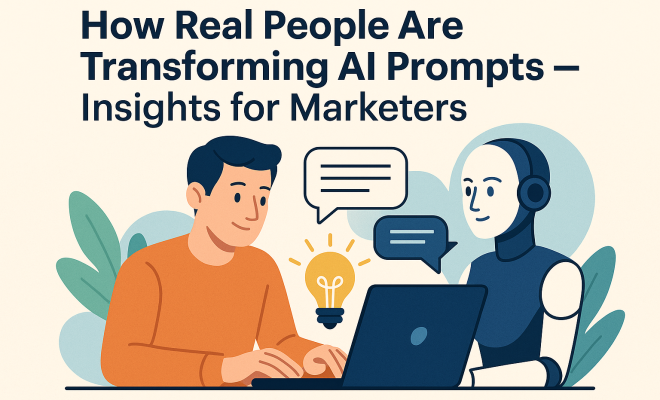
The interaction between humans and artificial intelligence (AI) is evolving at a breakneck pace. With the advent of sophisticated AI models like ChatGPT, users are not just seeking answers but increasingly tailoring their prompts to include personal contexts. This trend is reshaping how we think about AI prompting techniques and invites a deeper analysis of its implications for marketers, privacy, and the future of search.
Understanding AI Prompting Techniques
AI prompting techniques refer to the strategies users employ to communicate effectively with AI systems. These prompts can significantly influence the quality and relevance of the responses generated. For instance, adding personal context to a query can allow the AI to offer more tailored results. In recent developments, approximately one-third of AI prompts now include vital personal information such as budget, location, profession, age, and health concerns. This shift points to a growing trend where users are not merely using AI for generic inquiries but are instead seeking highly personalized answers.
The Shift Towards Personalization in AI Prompts
The transformation in how individuals interact with AI has profound implications. As noted, the majority of prompts now incorporate specific details that help the AI model understand the user’s unique context. This not only yields more relevant responses but also showcases a shift in user behavior. Instead of using traditional search-engine-style queries that might be broad or vague, users are becoming more strategic, recognizing that AI can provide tailored recommendations.
For example, someone looking for healthcare options for a specific age group might input a prompt like “What are the best health plans for a 50-year-old looking for coverage in New York?” This question is rich with context, allowing the AI to deliver results that would be far more relevant than a generic search for health plans.
Statistics That Tell a Story
The statistics surrounding AI prompting techniques reveal a shifting landscape. With average prompts in the ChatGPT search mode ranging from just 4.2 to 8.7 words, it’s clear that users still favor a concise approach, reminiscent of traditional Google searches. However, this briefness comes with an expectation for depth and personalization in results. The desire for AI to understand context is evident as retrieval rates on tracked prompts have surged, with many demonstrating over 90% successful retrieval.
This data is striking. It underscores how rapidly AI has seeped into daily behavior, with users increasingly leaning towards AI for information retrieval. The implications for businesses are substantial; they must adapt to these new user expectations or risk losing engagement.
Privacy Concerns Amid Personalized AI
With the increase in personalized AI prompts comes a crucial concern: privacy. Users are sharing sensitive personal details, which raises questions about data security and how this information is used. The balance between leveraging AI for personalized experiences and maintaining privacy is delicate. As users increasingly disclose details such as health concerns and financial situations, businesses must ensure they are transparent about data handling practices.
Moreover, the implications of these privacy concerns extend to marketers. As they seek to leverage personalized data to optimize their strategies, they must navigate the ethical landscape surrounding consumer information. Failure to do so could lead to a backlash from users, eroding trust in brands that utilize AI technologies.
The Rise of GEO in Marketing
As AI prompting techniques evolve, so too does the landscape of search engine optimization (SEO). The emergence of geo-targeted optimization, or GEO, is a case in point. Businesses are realizing that traditional SEO tactics may no longer be sufficient in a world where users demand hyper-personalized search results based on their specific contexts.
For example, a pizza shop in Chicago might find that its marketing strategies need to pivot. Instead of relying solely on generic keywords related to pizza, the shop might start creating content that speaks directly to the needs of local customers. This could include tailored promotions or unique menu items that cater to specific neighborhood demographics.
How Marketers Can Adapt
For marketers, adapting to the shifting AI landscape requires a proactive approach. Here are several strategies that can help businesses stay ahead: (See: AI prompting and personalization trends.)
- Invest in AI Training: Encourage teams to understand how AI works and how to utilize AI prompting techniques effectively. Knowledge will empower them to craft better content that meets user expectations.
- Focus on Personalization: Develop marketing strategies that prioritize personalization. Use data to create targeted campaigns that speak directly to your audience’s needs and challenges.
- Embrace Local SEO: Optimize web content for local search queries. This will help businesses appear prominently in search results when users seek specific services in their geographical area.
- Transparency in Data Use: Be clear about how user data is collected, stored, and utilized. Building trust with your audience is crucial in a world where privacy concerns are paramount.
The Future of AI and Search Behavior
As AI technologies continue to advance, the way we prompt these systems is likely to change further. We’re already seeing signs of this evolution in the increasing sophistication of AI models. Future iterations may leverage more contextual understanding, making it essential for users to adapt their prompting techniques continually.
Moreover, as AI becomes more integrated into daily life, the line between traditional search and AI-driven search will blur. Users might expect AI to not only provide answers but also to predict their needs based on previous interactions. This level of personalization will require a cultural shift in how we view information retrieval.
Case Studies of Successful AI Prompting Techniques
Real-world examples illustrate how businesses are leveraging AI prompting techniques to enhance engagement and improve customer experience. For instance, a health tech company might use AI to tailor medication reminders based on a user’s age and health conditions. By prompting the AI with specific user data, the company can ensure timely and relevant reminders.
In the travel industry, companies are beginning to use AI to personalize vacation planning. By integrating user preferences such as budget, destination, and travel companions into AI prompts, travel agencies can create bespoke itineraries that resonate with individual travelers. These targeted approaches not only improve customer satisfaction but also foster brand loyalty.
Challenges Ahead for AI and Marketing
Despite the clear advantages presented by AI prompting techniques, challenges abound. One significant issue lies in the algorithmic biases that can arise when AI models are trained on data that lacks diversity. If not addressed, these biases can lead to skewed results that reinforce stereotypes or overlook essential user needs.
Additionally, as the use of AI grows, the risk of misinformation becomes more pronounced. Users may accept AI-generated responses without question, leading to the potential spread of inaccuracies. Marketers need to be vigilant, ensuring their content is grounded in factual, reliable information to maintain credibility.
The Final Word on AI Prompts and Business Strategy
The way real people prompt AI is reshaping the landscape of search engines and marketing strategies. As personal context becomes integral to the prompting process, businesses must adapt their approaches to meet user expectations. The intersection of privacy, personalization, and marketing strategies will define how brands engage with customers moving forward. Ignoring these trends could leave companies lagging behind in an increasingly AI-driven marketplace.
Ultimately, as we embrace these AI prompting techniques, it’s essential to remain mindful of the implications for privacy and data ethics. The future is bright for AI, but it requires a careful balancing act between innovation and responsibility.
Advanced AI Prompting Techniques: Going Beyond Basics
While many users are still acclimating to the basic skills of prompt crafting, advanced techniques are emerging that can significantly improve the quality of AI interactions. These methods include the use of multi-part prompts, contextual framing, and iterative querying.
Multi-part prompts involve breaking down complex requests into several smaller questions. By doing this, users can guide the AI step-by-step toward a desired outcome. For example, instead of asking, “What are the best strategies for online marketing?”, a user might first ask, “What are the key components of an online marketing strategy?” followed by “How can I apply these strategies specifically to social media?” This method helps ensure that the AI doesn’t overlook critical aspects of a multifaceted question.
Contextual framing is another effective technique. This involves providing the AI with relevant background information that shapes the parameters of the response. For instance, a user could frame a question by saying, “As a small business owner looking to expand online, what budget-friendly digital marketing tools should I consider?” This context gives the AI a clearer understanding of the user’s intent and constraints, resulting in more tailored recommendations.
The Role of Natural Language Processing (NLP) in AI Prompting
Natural Language Processing (NLP) is a pivotal technology behind AI prompting techniques, enabling AI systems to understand and generate human language effectively. The more advanced the NLP capabilities of an AI, the better it can interpret nuanced user inputs and deliver contextually appropriate responses.
Recent advancements in NLP have led to the development of models that can analyze sentiment, recognize intent, and even detect sarcasm. This capability allows for more sophisticated interactions, as AI can respond not just based on keywords, but on the underlying message of the prompt. For example, if a user expresses frustration in their prompt, a well-tuned AI could identify this sentiment and respond with empathy rather than a generic answer. (See: AI and health communication insights.)
Future AI models will likely incorporate even more advanced NLP techniques, allowing for deeper, more meaningful conversations with users. Understanding subtleties in language will enhance the relevance and accuracy of responses, making AI tools even more indispensable for users in various fields.
Comparing Traditional Search Engines vs. AI-Powered Search
One of the most significant shifts in user behavior has been the transition from traditional search engines to AI-powered search tools. Traditional search engines operate mainly on keyword matching and indexing, offering results that are often determined by algorithms ranking relevance based on popularity and SEO practices.
In contrast, AI-powered search engines leverage user context, conversation history, and even emotional tone to provide a more personalized search experience. Traditional search might return a list of links based on the inputted keywords, whereas AI can offer synthesized answers to specific queries. For example, a traditional search for “best pizza in Chicago” might generate a list of pizzerias, but an AI could provide a personalized recommendation based on dietary preferences and past reviews.
This shift highlights a greater need for businesses to understand AI prompting techniques. As consumers grow accustomed to this level of service, expectations will rise, and companies that fail to adapt will find themselves at a disadvantage.
Frequently Asked Questions About AI Prompting Techniques
What are AI prompting techniques?
AI prompting techniques are strategies that users employ to communicate effectively with AI systems. They involve crafting prompts that guide the AI in generating specific, relevant responses based on user needs or context.
Why is personalization important in AI prompts?
Personalization allows AI to provide more tailored responses that meet the specific needs of the user. When users incorporate personal details into their prompts, the AI can deliver results that are significantly more relevant and useful.
How can businesses benefit from understanding AI prompting techniques?
By understanding AI prompting techniques, businesses can craft better content and marketing strategies that resonate with their audience. This can lead to improved customer engagement, satisfaction, and ultimately, conversion rates.
What role does data privacy play in AI prompting?
Data privacy is critical as users share sensitive personal information in prompts. Businesses must be transparent about how they handle user data to build trust and comply with regulations, ensuring that privacy concerns do not hinder user engagement.
What are some best practices for creating effective AI prompts?
Effective AI prompts should be clear, concise, and provide enough context. Users should consider breaking complex queries into multiple parts, using specific language, and integrating relevant details to guide the AI in generating accurate responses. Additionally, experimenting with different styles of prompts can help users discover what works best for their needs.
How will AI prompting evolve in the future?
The evolution of AI prompting is likely to include more sophisticated techniques, deeper contextual understanding, and improved natural language processing capabilities. As technology advances, users will expect AI to not only respond accurately but also intuitively predict their needs, leading to an even more seamless interaction.
Exploring AI Prompting Techniques in Different Industries
AI prompting techniques are not limited to a single domain; they have found applications across various industries. From healthcare to finance, retail to education, AI is transforming how organizations interact with their customers and streamline operations. (See: Research on AI interaction techniques.)
In the healthcare sector, AI can assist doctors in diagnosing conditions by analyzing patient data and presenting relevant information during consultations. For instance, a doctor might input, “What are the latest treatment options for diabetes in patients over 60?” This prompt allows the AI to sift through recent studies and provide up-to-date recommendations tailored to that specific demographic.
In finance, firms are using AI to predict market trends and provide personalized investment advice. A user might ask, “What stocks should I invest in given my risk tolerance and investment horizon?” The AI can analyze the user’s past investment performance, current market conditions, and risk profiles to deliver customized recommendations.
Retailers are also leveraging AI to enhance customer experiences. Chatbots equipped with advanced prompting techniques can handle inquiries about product availability, shipping times, and return policies. By asking specific questions, customers can receive immediate, accurate answers, improving their shopping experience and increasing conversion rates.
The Importance of Continuous Learning in AI Prompting Techniques
For users to maximize the potential of AI prompting techniques, continuous learning is essential. As AI systems evolve, so should the methods users employ to interact with them. Adopting a mindset of experimentation can lead to better outcomes.
One effective way to approach this is by participating in online communities centered around AI and machine learning. Users can share their experiences, learn from others, and discover new prompting techniques. Additionally, attending workshops or webinars can provide valuable insights into the latest advancements and best practices in AI prompting.
Organizations also play a critical role by providing training sessions for employees to familiarize them with AI tools and prompting techniques. This investment not only enhances productivity but also fosters an environment of innovation where employees feel empowered to explore new ways of using AI.
Conclusion: Embracing the Future of AI Prompting
The future of AI prompting techniques holds exciting possibilities. As users become more adept at crafting effective prompts, the interaction between humans and AI will only deepen. This evolution presents unique opportunities and challenges for businesses looking to leverage AI for customer engagement and operational efficiency.
By understanding the nuances of AI prompting techniques and their implications across different industries, businesses can position themselves to thrive in an increasingly automated world. As we navigate this new landscape, prioritizing ethical considerations, data privacy, and continuous learning will be key to harnessing the full potential of AI technologies.
“`
Trending Now
Frequently Asked Questions
How are people using AI prompts differently?
People are increasingly personalizing their AI prompts by including specific context such as budget, location, profession, age, and health concerns. This shift allows AI systems to deliver more tailored and relevant responses, moving away from generic inquiries to more strategic and context-rich questions.
What are AI prompting techniques?
AI prompting techniques are strategies users employ to effectively communicate with AI systems. These techniques can significantly influence the relevance and quality of the AI's responses, with users now incorporating personal details to enhance the interaction and obtain more customized results.
Why is personalization important in AI interactions?
Personalization in AI interactions is crucial because it allows users to receive responses that are specifically tailored to their unique situations. By providing detailed context, users can ensure that the AI generates more relevant and useful recommendations, improving the overall user experience.
What implications does personalizing AI prompts have for marketers?
The trend of personalizing AI prompts has significant implications for marketers, as it indicates a shift in consumer behavior. Marketers must adapt their strategies to understand the specific needs and contexts of their audiences, leveraging tailored AI responses to enhance engagement and conversion rates.
How can I improve my AI prompt effectiveness?
To improve the effectiveness of your AI prompts, include specific details relevant to your query, such as personal context or specific requirements. This approach helps the AI understand your needs better and provides more accurate and helpful responses.
What’s your take on this? Share your thoughts in the comments below — we read every one.