The Tech Edvocate

Top Menu

  • Advertisement
  • Apps
  • Home Page
  • Home Page Five (No Sidebar)
  • Home Page Four
  • Home Page Three
  • Home Page Two
  • Home Tech2
  • Icons [No Sidebar]
  • Left Sidbear Page
  • Lynch Educational Consulting
  • My Account
  • My Speaking Page
  • Newsletter Sign Up Confirmation
  • Newsletter Unsubscription
  • Our Brands
  • Page Example
  • Privacy Policy
  • Protected Content
  • Register
  • Request a Product Review
  • Shop
  • Shortcodes Examples
  • Signup
  • Start Here
    • Governance
    • Careers
    • Contact Us
  • Terms and Conditions
  • The Edvocate
  • The Tech Edvocate Product Guide
  • Topics
  • Write For Us
  • Advertise

Main Menu

  • Start Here
    • Our Brands
    • Governance
      • Lynch Educational Consulting, LLC.
      • Dr. Lynch’s Personal Website
      • Careers
    • Write For Us
    • The Tech Edvocate Product Guide
    • Contact Us
    • Books
    • Edupedia
    • Post a Job
    • The Edvocate Podcast
    • Terms and Conditions
    • Privacy Policy
  • Topics
    • Assistive Technology
    • Child Development Tech
    • Early Childhood & K-12 EdTech
    • EdTech Futures
    • EdTech News
    • EdTech Policy & Reform
    • EdTech Startups & Businesses
    • Higher Education EdTech
    • Online Learning & eLearning
    • Parent & Family Tech
    • Personalized Learning
    • Product Reviews
  • Advertise
  • Tech Edvocate Awards
  • The Edvocate
  • Pedagogue
  • School Ratings

logo

The Tech Edvocate

  • Start Here
    • Our Brands
    • Governance
      • Lynch Educational Consulting, LLC.
      • Dr. Lynch’s Personal Website
        • My Speaking Page
      • Careers
    • Write For Us
    • The Tech Edvocate Product Guide
    • Contact Us
    • Books
    • Edupedia
    • Post a Job
    • The Edvocate Podcast
    • Terms and Conditions
    • Privacy Policy
  • Topics
    • Assistive Technology
    • Child Development Tech
    • Early Childhood & K-12 EdTech
    • EdTech Futures
    • EdTech News
    • EdTech Policy & Reform
    • EdTech Startups & Businesses
    • Higher Education EdTech
    • Online Learning & eLearning
    • Parent & Family Tech
    • Personalized Learning
    • Product Reviews
  • Advertise
  • Tech Edvocate Awards
  • The Edvocate
  • Pedagogue
  • School Ratings
  • Viaim Opennote Review: The AI Note-Taker That Disappears Into Your Daily Routine

  • A Visitors Guide to Long Beach (CA), United States

  • A Visitor’s Guide to Fresno (CA), United States

  • A Visitors Guide to New Orleans (LA), United States

  • A Visitors Guide to Sacramento (CA), United States

  • A Visitors Guide to Lyon, France

  • JisuLife Ultra2 Portable Fan: A Powerful Multi-Function Cooling Solution

  • A Visitors Guide to Viña del Mar, Chile

  • A Visitors Guide to Århus, Denmark

  • A Visitors Guide to Bakersfield (CA), United States

Digital & Mobile Technology
Home›Digital & Mobile Technology›How Alexa Works: The Science Behind Amazon’s Digital Assistant

How Alexa Works: The Science Behind Amazon’s Digital Assistant
By Matthew Lynch
June 15, 2023
0
Spread the love

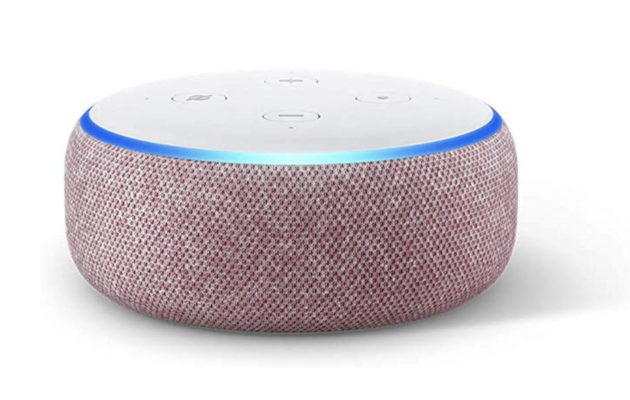
Alexa, Amazon’s popular digital assistant, has become a household name in the world of technology. Alexa is an intelligent personal assistant that is capable of various tasks such as playing music, setting alarms, providing weather forecasts, ordering food, and even controlling home appliances. Alexa devices, including the Amazon Echo and Echo Dot, have taken the world by storm, and it’s all thanks to the science behind how it works.

The technology behind Alexa is based on artificial intelligence (AI). AI is the branch of computer science that is mainly concerned with developing computers or machines that can imitate human’s cognitive abilities like visual perception, reasoning, and decision-making. Alexa uses a combination of natural language processing (NLP) and machine learning (ML) algorithms to understand and respond to users’ requests.

Natural language processing is the ability of a computer to understand human language. Human language is vast, complex, and can contain multiple meanings, which makes it difficult for computers to interpret correctly. However, Alexa’s NLP algorithms can understand human language by breaking down phrases into smaller components and analyzing them for meaning. This process enables Alexa to recognize a user’s intent and respond accordingly. For example, if a user queries “What time is it?”, Alexa will use NLP to understand the meaning of the request and respond with the current time.

Machine learning is a subset of AI that enables computers to learn and adapt automatically without being explicitly programmed. Alexa devices use machine learning to analyze and learn from user interactions. With each conversation, Alexa can adapt and improve its responses based on the past interactions it has had with the user. Through machine learning, Alexa can predict what a user wants based on a variety of factors, including previous requests, context, and preferences. For example, if a user regularly asks Alexa to play jazz music at a certain time of day, Alexa will learn this preference and suggest playing jazz at that time in the future.

To better understand how Alexa works, you should view it as a series of interconnected systems. Each system has a unique role in enabling Alexa to understand and respond to user’s requests. For example, there is a speech recognition system that listens to the user’s requests and translates them into a format that Alexa can understand. There are also systems that analyze the user’s request, identify the intent, and determine the best way to respond based on the context.


Previous Article

How to Change Your PSN Name

Next Article

How to Style React Components Using CSS ...

Matthew Lynch

Related articles More from author

  • Digital & Mobile Technology

    Tired of Tinder? The Best Free Alternative Dating Apps

    June 7, 2023
    By Matthew Lynch
  • Digital & Mobile Technology

    How to Remove Blank Rows in Excel the Easy Way

    August 3, 2023
    By Matthew Lynch
  • Digital & Mobile Technology

    Is Straight Talk Down … Or Is It Just You?

    June 8, 2023
    By Matthew Lynch
  • Digital & Mobile Technology

    Filter One Sender’s Mail to a Certain Folder in Outlook

    June 9, 2023
    By Matthew Lynch
  • Digital & Mobile Technology

    How to Use Focus Mode on Android to Bring Distracting Apps Under Control

    August 3, 2023
    By Matthew Lynch
  • Digital & Mobile Technology

    MAC Address vs. IP Address: What Is the Difference?

    June 11, 2023
    By Matthew Lynch

Search

Login & Registration

  • Register
  • Log in
  • Entries feed
  • Comments feed
  • WordPress.org

Newsletter

Signup for The Tech Edvocate Newsletter and have the latest in EdTech news and opinion delivered to your email address!

About Us

Since technology is not going anywhere and does more good than harm, adapting is the best course of action. That is where The Tech Edvocate comes in. We plan to cover the PreK-12 and Higher Education EdTech sectors and provide our readers with the latest news and opinion on the subject. From time to time, I will invite other voices to weigh in on important issues in EdTech. We hope to provide a well-rounded, multi-faceted look at the past, present, the future of EdTech in the US and internationally.

We started this journey back in June 2016, and we plan to continue it for many more years to come. I hope that you will join us in this discussion of the past, present and future of EdTech and lend your own insight to the issues that are discussed.

Newsletter

Signup for The Tech Edvocate Newsletter and have the latest in EdTech news and opinion delivered to your email address!

Contact Us

The Tech Edvocate
910 Goddin Street
Richmond, VA 23231
(601) 630-5238
[email protected]

Copyright © 2025 Matthew Lynch. All rights reserved.