The Tech Edvocate

Top Menu

  • Advertisement
  • Apps
  • Home Page
  • Home Page Five (No Sidebar)
  • Home Page Four
  • Home Page Three
  • Home Page Two
  • Home Tech2
  • Icons [No Sidebar]
  • Left Sidbear Page
  • Lynch Educational Consulting
  • My Account
  • My Speaking Page
  • Newsletter Sign Up Confirmation
  • Newsletter Unsubscription
  • Our Brands
  • Page Example
  • Privacy Policy
  • Protected Content
  • Register
  • Request a Product Review
  • Shop
  • Shortcodes Examples
  • Signup
  • Start Here
    • Governance
    • Careers
    • Contact Us
  • Terms and Conditions
  • The Edvocate
  • The Tech Edvocate Product Guide
  • Topics
  • Write For Us
  • Advertise

Main Menu

  • Start Here
    • Our Brands
    • Governance
      • Lynch Educational Consulting, LLC.
      • Dr. Lynch’s Personal Website
      • Careers
    • Write For Us
    • The Tech Edvocate Product Guide
    • Contact Us
    • Books
    • Edupedia
    • Post a Job
    • The Edvocate Podcast
    • Terms and Conditions
    • Privacy Policy
  • Topics
    • Assistive Technology
    • Child Development Tech
    • Early Childhood & K-12 EdTech
    • EdTech Futures
    • EdTech News
    • EdTech Policy & Reform
    • EdTech Startups & Businesses
    • Higher Education EdTech
    • Online Learning & eLearning
    • Parent & Family Tech
    • Personalized Learning
    • Product Reviews
  • Advertise
  • Tech Edvocate Awards
  • The Edvocate
  • Pedagogue
  • School Ratings

logo

The Tech Edvocate

  • Start Here
    • Our Brands
    • Governance
      • Lynch Educational Consulting, LLC.
      • Dr. Lynch’s Personal Website
        • My Speaking Page
      • Careers
    • Write For Us
    • The Tech Edvocate Product Guide
    • Contact Us
    • Books
    • Edupedia
    • Post a Job
    • The Edvocate Podcast
    • Terms and Conditions
    • Privacy Policy
  • Topics
    • Assistive Technology
    • Child Development Tech
    • Early Childhood & K-12 EdTech
    • EdTech Futures
    • EdTech News
    • EdTech Policy & Reform
    • EdTech Startups & Businesses
    • Higher Education EdTech
    • Online Learning & eLearning
    • Parent & Family Tech
    • Personalized Learning
    • Product Reviews
  • Advertise
  • Tech Edvocate Awards
  • The Edvocate
  • Pedagogue
  • School Ratings
  • A Visitors Guide to Long Beach (CA), United States

  • A Visitor’s Guide to Fresno (CA), United States

  • A Visitors Guide to New Orleans (LA), United States

  • A Visitors Guide to Sacramento (CA), United States

  • A Visitors Guide to Lyon, France

  • JisuLife Ultra2 Portable Fan: A Powerful Multi-Function Cooling Solution

  • A Visitors Guide to Viña del Mar, Chile

  • A Visitors Guide to Århus, Denmark

  • A Visitors Guide to Bakersfield (CA), United States

  • A Visitors Guide to Aurora (CO), United States

Tech Advice
Home›Tech Advice›Home Generator Buying Guide

Home Generator Buying Guide
By Matthew Lynch
July 8, 2023
0
Spread the love

Introduction

A home generator is essential to keep you and your family comfortable and safe during a power outage. Choosing the right one that meets your needs can be overwhelming with countless options available. This buying guide will help you navigate through the different factors to consider when purchasing a home generator, ensuring you make the best choice for your home’s requirements.

Types of Home Generators

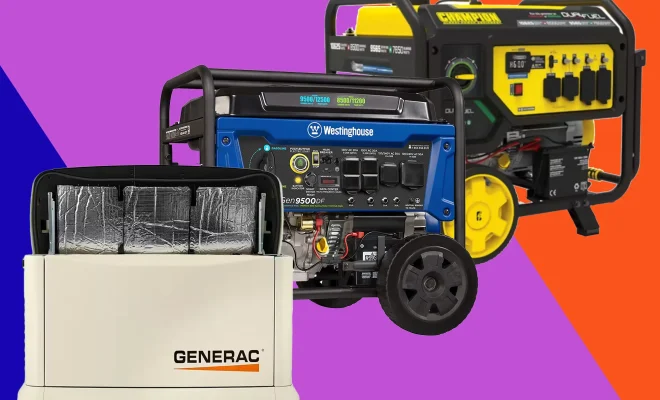
There are two main types of home generators: portable generators and standby generators.

1. Portable Generators: These are small and lightweight, making them easy to transport and store. They typically use gasoline or propane as fuel, and can be used for temporary backup power during short duration power outages.

2. Standby Generators: These are permanently installed appliances that automatically turn on when there’s a loss of electricity supply. They run on natural gas or propane, providing continuous backup power until the utility power is restored.

Power Output

Generators produce electrical output measured in watts (W) or kilowatts (kW). It’s vital to determine the adequate power required for your home before making a purchase. Calculate the sum of the wattage requirements of all essential appliances (e.g., refrigerator, lights, heating/cooling systems) that need to operate during an outage. Based on this calculation, choose a generator with sufficient output capacity.

Fuel Options

Generators commonly run on gasoline, propane, diesel, or natural gas, each having its own advantages and disadvantages.

1. Gasoline – It’s readily available and relatively inexpensive but has a short shelf life and requires proper storage.

2. Propane – It has a longer shelf life compared to gasoline but may become scarce during emergencies.

3. Diesel – It offers high fuel efficiency and long shelf life but comes at a higher cost and requires proper storage.

4. Natural Gas – It’s clean-burning and has an unlimited supply through pipelines, but is less portable and has lower power output.
Runtime

Consider how long you’ll need the generator to run during a power outage. Portable generators usually have shorter runtimes between 7 – 10 hours, whereas standby generators offer more extended periods, often lasting for days if supplied with fuel.

Transfer Switch

A transfer switch allows you to connect the generator safely to your home’s electrical panel, switching the power source from utility to your generator during an outage. Standby generators typically come with an automatic transfer switch, while portable generators may require a manual transfer switch installation.

Noise Level

Generators can be noisy, so ensure your chosen generator’s noise level is within reasonable limits for your neighborhood. Most models operate at 60-75 decibels (dB), comparable to standard conversation levels.

Maintenance and Warranty

Regular maintenance prolongs a generator’s lifespan and ensures reliable performance. Consider purchasing a model with low maintenance requirements or easy accessibility to components that require periodic servicing. Additionally, look for warranties that provide adequate coverage for parts and labor.

Conclusion

In conclusion, several factors should influence your home generator purchase decision. Carefully assess your power needs, fuel options, runtime requirements, transfer switches, noise levels, and maintenance schedules before making a final decision. Investing time in researching these aspects will help you choose the right home generator for your specific needs and provide peace of mind during unexpected power outages.


Previous Article

Here’s How to Pick the Right Size ...

Next Article

What Houston Residents Need to Know About ...

Matthew Lynch

Related articles More from author

  • Tech Advice

    How the 2023 Mazda CX-90 Compares with the CX-9

    August 19, 2023
    By Matthew Lynch
  • Tech Advice

    Steam Deck Docking Stations: Valve vs. Jsaux

    July 16, 2023
    By Matthew Lynch
  • Tech Advice

    Best Printer for 2023

    July 13, 2023
    By Matthew Lynch
  • Tech Advice

    Back to basics: The Yamaha R-S201 stereo receiver

    July 16, 2023
    By Matthew Lynch
  • Tech Advice

    Samsung Galaxy S24 Ultra vs. Apple iPhone 15 Pro Max, Google Pixel 8 Pro, OnePlus 12: High-End Flagships Compared

    May 30, 2024
    By Matthew Lynch
  • Tech Advice

    Microsoft Security Essentials Free Antivirus Software

    June 4, 2023
    By Matthew Lynch

Search

Login & Registration

  • Register
  • Log in
  • Entries feed
  • Comments feed
  • WordPress.org

Newsletter

Signup for The Tech Edvocate Newsletter and have the latest in EdTech news and opinion delivered to your email address!

About Us

Since technology is not going anywhere and does more good than harm, adapting is the best course of action. That is where The Tech Edvocate comes in. We plan to cover the PreK-12 and Higher Education EdTech sectors and provide our readers with the latest news and opinion on the subject. From time to time, I will invite other voices to weigh in on important issues in EdTech. We hope to provide a well-rounded, multi-faceted look at the past, present, the future of EdTech in the US and internationally.

We started this journey back in June 2016, and we plan to continue it for many more years to come. I hope that you will join us in this discussion of the past, present and future of EdTech and lend your own insight to the issues that are discussed.

Newsletter

Signup for The Tech Edvocate Newsletter and have the latest in EdTech news and opinion delivered to your email address!

Contact Us

The Tech Edvocate
910 Goddin Street
Richmond, VA 23231
(601) 630-5238
[email protected]

Copyright © 2025 Matthew Lynch. All rights reserved.