The Tech Edvocate

Top Menu

  • Advertisement
  • Apps
  • Home Page
  • Home Page Five (No Sidebar)
  • Home Page Four
  • Home Page Three
  • Home Page Two
  • Home Tech2
  • Icons [No Sidebar]
  • Left Sidbear Page
  • Lynch Educational Consulting
  • My Account
  • My Speaking Page
  • Newsletter Sign Up Confirmation
  • Newsletter Unsubscription
  • Our Brands
  • Page Example
  • Privacy Policy
  • Protected Content
  • Register
  • Request a Product Review
  • Shop
  • Shortcodes Examples
  • Signup
  • Start Here
    • Governance
    • Careers
    • Contact Us
  • Terms and Conditions
  • The Edvocate
  • The Tech Edvocate Product Guide
  • Topics
  • Write For Us
  • Advertise

Main Menu

  • Start Here
    • Our Brands
    • Governance
      • Lynch Educational Consulting, LLC.
      • Dr. Lynch’s Personal Website
      • Careers
    • Write For Us
    • The Tech Edvocate Product Guide
    • Contact Us
    • Books
    • Edupedia
    • Post a Job
    • The Edvocate Podcast
    • Terms and Conditions
    • Privacy Policy
  • Topics
    • Assistive Technology
    • Child Development Tech
    • Early Childhood & K-12 EdTech
    • EdTech Futures
    • EdTech News
    • EdTech Policy & Reform
    • EdTech Startups & Businesses
    • Higher Education EdTech
    • Online Learning & eLearning
    • Parent & Family Tech
    • Personalized Learning
    • Product Reviews
  • Advertise
  • Tech Edvocate Awards
  • The Edvocate
  • Pedagogue
  • School Ratings

logo

The Tech Edvocate

  • Start Here
    • Our Brands
    • Governance
      • Lynch Educational Consulting, LLC.
      • Dr. Lynch’s Personal Website
        • My Speaking Page
      • Careers
    • Write For Us
    • The Tech Edvocate Product Guide
    • Contact Us
    • Books
    • Edupedia
    • Post a Job
    • The Edvocate Podcast
    • Terms and Conditions
    • Privacy Policy
  • Topics
    • Assistive Technology
    • Child Development Tech
    • Early Childhood & K-12 EdTech
    • EdTech Futures
    • EdTech News
    • EdTech Policy & Reform
    • EdTech Startups & Businesses
    • Higher Education EdTech
    • Online Learning & eLearning
    • Parent & Family Tech
    • Personalized Learning
    • Product Reviews
  • Advertise
  • Tech Edvocate Awards
  • The Edvocate
  • Pedagogue
  • School Ratings
  • The Bombshell Truth About Slim Boost Tea: Don’t Buy Until You Read This

  • Jaw-Dropping: Charbroil Bistro Pro Electric Grill Recall — Is Your Grill a Hidden Danger?

  • This Corgi Tech Startup Just Imploded — Here’s How Social Media Wrecked Everything

  • September 2026: The Latest in Tech Authoritarianism – Overturned by Kelly Stonelake

  • GTA 6 Collector’s Box Price: The $400 Outrage That Just Broke Gaming

  • Unbelievable: Gamers Fought Blizzard’s Censorship and Saved Ogre Butts

  • The Radical New Bill That Could Halt AI — And Jails Its Creators

  • This OpenAI Hack Just Exposed a Terrifying New AI Threat

  • This One Leaked Video Just Blew Open New Zealand’s Curriculum Battle

  • The AI Deception: Stanford’s Scandalous Photo Alteration Reignites Representation Debate

Tech Advice
Home›Tech Advice›HDMI vs. DisplayPort vs. DVI vs. VGA: Which connection to choose?

HDMI vs. DisplayPort vs. DVI vs. VGA: Which connection to choose?
By Matthew Lynch
July 16, 2023
0
Spread the love

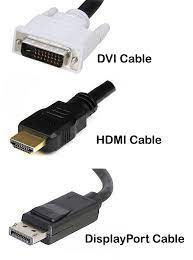
In today’s digital world, choosing the right connection for your devices has become an essential aspect of maximizing performance and quality. The four most popular types of connections are HDMI, DisplayPort, DVI, and VGA. In this article, we’ll explore the differences between these connections and help you determine which one is best for your needs.

1. HDMI (High-Definition Multimedia Interface)

HDMI is currently the most widely used connection in consumer electronics. It supports both video and audio transmission in a single cable, making it a popular choice for connecting gaming consoles, Blu-ray players, streaming devices, and more to TVs or monitors. HDMI supports resolutions up to 4K and even 8K with HDMI 2.1.

Pros:

– One cable for audio and video

– Supports high resolutions

– Widely used across various products

– Capable of carrying Ethernet data

Cons:

– Limited cable length (typically up to 5 meters)

– Older versions don’t support newer features such as HDR

2. DisplayPort

DisplayPort is primarily used in professional settings that require high-quality displays, such as design studios or gaming setups. It also has the advantage of carrying both audio and video signals and can support up to 8K resolutions at 60Hz refresh rate.

Pros:

– Supports high resolutions with high refresh rates

– Compatible with multiple monitors using just one cable (daisy-chaining)

– Adaptive sync support (FreeSync and G-Sync) for smoother gameplay

Cons:

– Not as widely adopted in consumer electronics

– Cables can be expensive

3. DVI (Digital Visual Interface)

DVI was initially designed to take over VGA as a digital standard in computer displays but quickly became overshadowed by HDMI due to its limited capabilities. DVI can transmit both digital and analog video (limited to video only) and has a maximum resolution of 1920×1200.

Pros:

– Better quality than VGA

– Works with older devices that don’t have HDMI or DisplayPort

Cons:

– Doesn’t support audio transmission

– Limited resolutions compared to HDMI or DisplayPort

4. VGA (Video Graphics Array)

VGA is the oldest and most limited connection option in this list. It has an analog signal and is commonly used with older computers and monitors. VGA’s maximum resolution is 1920×1200, but the quality degrades over cables longer than 3 meters.

Pros:

– Compatibility with older devices

Cons:

– Degradation of the signal

– Analog connection, lower quality compared to digital options

– No audio support

– Obsolete in most modern devices

Conclusion:

The right connection depends on your requirements and considerations for the different connector types. If you have a new device with high-resolution capabilities, HDMI or DisplayPort are your best options. For home entertainment with high-quality video and audio through a single cable, HDMI is the go-to choice. On the other hand, if you require higher resolutions with multiple monitors in a professional setting, DisplayPort would be more suitable.
DVI should only be used if your devices don’t support HDMI or DisplayPort. Finally, VGA should be avoided unless you’re working with older equipment without any better options available.

Previous Article

Can’t sign out of iCloud on your ...

Next Article

Best Wi-Fi Wireless Speaker of 2023

Matthew Lynch

Related articles More from author

  • Tech Advice

    Samsung Q60B TV Review: Slim, Stylish and Surprisingly Bright

    July 16, 2023
    By Matthew Lynch
  • Tech Advice

    Walmart vs. Best Buy vs. Target vs. Costco: What’s the best store for buying a TV?

    July 17, 2023
    By Matthew Lynch
  • Tech Advice

    Should You Buy or Rent Your Router? The Wrong Decision Cost Me Nearly $1K

    January 31, 2024
    By Matthew Lynch
  • Tech Advice

    2024 Chevrolet Camaro 1LT 2dr Coupe : Trim Details, Reviews, Prices, Specs, and Incentives

    August 21, 2023
    By Matthew Lynch
  • Tech Advice

    HP Pavilion Elite HPE-190t Review

    July 12, 2023
    By Matthew Lynch
  • Tech Advice

    Galaxy Note 10 Plus vs. Note 9: How to pick between Samsung’s older Note devices

    July 17, 2023
    By Matthew Lynch

Search

Login & Registration

  • Log in
  • Entries feed
  • Comments feed
  • WordPress.org

Newsletter

Signup for The Tech Edvocate Newsletter and have the latest in EdTech news and opinion delivered to your email address!

About Us

Since technology is not going anywhere and does more good than harm, adapting is the best course of action. That is where The Tech Edvocate comes in. We plan to cover the PreK-12 and Higher Education EdTech sectors and provide our readers with the latest news and opinion on the subject. From time to time, I will invite other voices to weigh in on important issues in EdTech. We hope to provide a well-rounded, multi-faceted look at the past, present, the future of EdTech in the US and internationally.

We started this journey back in June 2016, and we plan to continue it for many more years to come. I hope that you will join us in this discussion of the past, present and future of EdTech and lend your own insight to the issues that are discussed.

Newsletter

Signup for The Tech Edvocate Newsletter and have the latest in EdTech news and opinion delivered to your email address!

Contact Us

The Tech Edvocate
910 Goddin Street
Richmond, VA 23231
(601) 630-5238
[email protected]

Copyright © 2026 Matthew Lynch. All rights reserved.