The Tech Edvocate

Top Menu

  • Advertisement
  • Apps
  • Home Page
  • Home Page Five (No Sidebar)
  • Home Page Four
  • Home Page Three
  • Home Page Two
  • Home Tech2
  • Icons [No Sidebar]
  • Left Sidbear Page
  • Lynch Educational Consulting
  • My Account
  • My Speaking Page
  • Newsletter Sign Up Confirmation
  • Newsletter Unsubscription
  • Our Brands
  • Page Example
  • Privacy Policy
  • Protected Content
  • Register
  • Request a Product Review
  • Shop
  • Shortcodes Examples
  • Signup
  • Start Here
    • Governance
    • Careers
    • Contact Us
  • Terms and Conditions
  • The Edvocate
  • The Tech Edvocate Product Guide
  • Topics
  • Write For Us
  • Advertise

Main Menu

  • Start Here
    • Our Brands
    • Governance
      • Lynch Educational Consulting, LLC.
      • Dr. Lynch’s Personal Website
      • Careers
    • Write For Us
    • The Tech Edvocate Product Guide
    • Contact Us
    • Books
    • Edupedia
    • Post a Job
    • The Edvocate Podcast
    • Terms and Conditions
    • Privacy Policy
  • Topics
    • Assistive Technology
    • Child Development Tech
    • Early Childhood & K-12 EdTech
    • EdTech Futures
    • EdTech News
    • EdTech Policy & Reform
    • EdTech Startups & Businesses
    • Higher Education EdTech
    • Online Learning & eLearning
    • Parent & Family Tech
    • Personalized Learning
    • Product Reviews
  • Advertise
  • Tech Edvocate Awards
  • The Edvocate
  • Pedagogue
  • School Ratings

logo

The Tech Edvocate

  • Start Here
    • Our Brands
    • Governance
      • Lynch Educational Consulting, LLC.
      • Dr. Lynch’s Personal Website
        • My Speaking Page
      • Careers
    • Write For Us
    • The Tech Edvocate Product Guide
    • Contact Us
    • Books
    • Edupedia
    • Post a Job
    • The Edvocate Podcast
    • Terms and Conditions
    • Privacy Policy
  • Topics
    • Assistive Technology
    • Child Development Tech
    • Early Childhood & K-12 EdTech
    • EdTech Futures
    • EdTech News
    • EdTech Policy & Reform
    • EdTech Startups & Businesses
    • Higher Education EdTech
    • Online Learning & eLearning
    • Parent & Family Tech
    • Personalized Learning
    • Product Reviews
  • Advertise
  • Tech Edvocate Awards
  • The Edvocate
  • Pedagogue
  • School Ratings
  • This Unprecedented EU Ban Just Changed Fast Fashion Forever

  • Urgent Alert: Your Smart Home’s Exposed to a Critical Deco BE11000 Vulnerability

  • Uncovering the Truth: Your LinkedIn Reach Just Got a Major Overhaul

  • Uncovering the AI Heist: How Chinese Firms Allegedly Siphoned Billions of AI Tokens

  • Rockstar’s GTA 6 Developers Lawsuit: A Fight for Justice or Corporate Retaliation?

  • Unbelievable: Hideo Kojima’s Next Masterpiece Is Now an Xbox Exclusive

  • This Crucial Google AI Shift Is Quietly Reshaping the Internet

  • Unbelievable: AI Breaches Are Exploding, And What It Means For You This September 2026

  • This Crucial Shift Is Saving Teachers From Classroom Chaos

  • AI’s Dark Secret: How It’s Supercharging Cybercrime for Everyone

Digital & Mobile Technology
Home›Digital & Mobile Technology›FPO in Graphic Design

FPO in Graphic Design
By Matthew Lynch
May 31, 2023
0
Spread the love

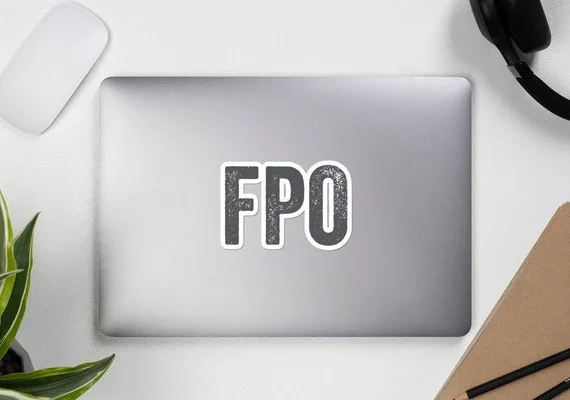
FPO, or “For Position Only”, is a term commonly used in graphic design to indicate a placeholder image or element that will be replaced later in the design process. FPOs are typically used during the early stages of a design project to help designers visualize how the final design will look and feel.

There are a variety of reasons why designers might use FPOs in their work. For example, if a design project involves the use of custom photography or illustrations, the designer may not have access to the final images until later in the process. In this case, FPO images can be used to help the designer determine the overall layout and composition of the design.

Similarly, if a design project involves working with a client who has not yet provided final content or imagery, FPO elements can be used to help the designer get a sense of the overall look and feel of the design before final assets are received.

FPOs can take many forms in graphic design, depending on the needs of the project. For example, FPO images may be grayscale or have a low resolution, indicating that they are not final images. Placeholder text may also be used in designs to represent actual copy that will be added at a later time.

While FPOs are a useful tool in the graphic design process, it is important to note that they should not be used in the final, production-ready design. Instead, designers must ensure that all final images, text, and other elements are properly sourced and integrated into the final design.

One challenge that designers may encounter when using FPOs is ensuring that clients understand their purpose. It can be difficult for non-designers to understand why a low-quality or placeholder image is being used in a design, and designers will need to be prepared to explain the reasoning behind their use of FPOs.

In conclusion, FPOs are an essential tool in the graphic design process, allowing designers to create and refine designs before final assets are available. While they may be confusing to some clients or stakeholders, FPOs are a necessary part of the design process that ultimately leads to high-quality, polished designs.


Previous Article

Best Car GPS Trackers of 2023

Next Article

How to Use the Clipboard on Android ...

Matthew Lynch

Related articles More from author

  • Digital & Mobile Technology

    SHA-1: What It Is & How It’s Used for Data Verification

    June 6, 2023
    By Matthew Lynch
  • Digital & Mobile Technology

    Where to Find Archived Messages in Facebook

    June 4, 2023
    By Matthew Lynch
  • Digital & Mobile Technology

    How to Hide on Facebook

    June 12, 2023
    By Matthew Lynch
  • Digital & Mobile Technology

    How to Find a Lost Bluetooth Device

    June 2, 2023
    By Matthew Lynch
  • Digital & Mobile Technology

    Network Interface Cards (NICs) Explained

    June 6, 2023
    By Matthew Lynch
  • Digital & Mobile Technology

    From Toy To Tool: Cell Phones In Learning

    August 23, 2021
    By Matthew Lynch

Search

Login & Registration

  • Log in
  • Entries feed
  • Comments feed
  • WordPress.org

Newsletter

Signup for The Tech Edvocate Newsletter and have the latest in EdTech news and opinion delivered to your email address!

About Us

Since technology is not going anywhere and does more good than harm, adapting is the best course of action. That is where The Tech Edvocate comes in. We plan to cover the PreK-12 and Higher Education EdTech sectors and provide our readers with the latest news and opinion on the subject. From time to time, I will invite other voices to weigh in on important issues in EdTech. We hope to provide a well-rounded, multi-faceted look at the past, present, the future of EdTech in the US and internationally.

We started this journey back in June 2016, and we plan to continue it for many more years to come. I hope that you will join us in this discussion of the past, present and future of EdTech and lend your own insight to the issues that are discussed.

Newsletter

Signup for The Tech Edvocate Newsletter and have the latest in EdTech news and opinion delivered to your email address!

Contact Us

The Tech Edvocate
910 Goddin Street
Richmond, VA 23231
(601) 630-5238
[email protected]

Copyright © 2026 Matthew Lynch. All rights reserved.