Final Fantasy VII – A Cast That Defined a Generation
Revolutionizing Character Depth in JRPGs
Square’s “Final Fantasy VII” is often hailed as one of the greatest video games of all time, and a significant part of its enduring legacy is its unforgettable cast of characters. Released in 1997, the game pushed the boundaries of storytelling in JRPGs, presenting a group of characters that were complex, flawed, and deeply human despite the game’s fantastical setting.
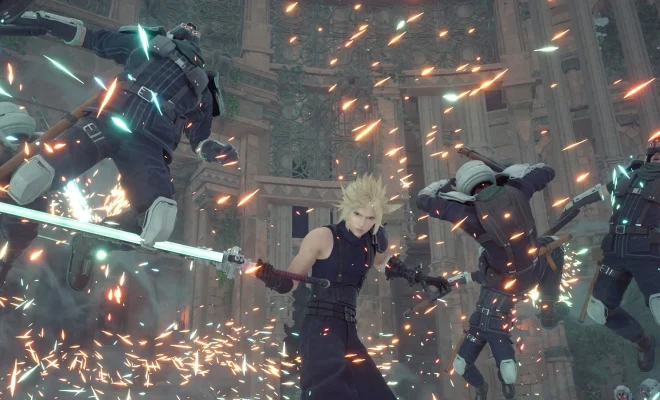
At the forefront of this ensemble is Cloud Strife, the spiky-haired ex-SOLDIER turned mercenary. Cloud’s journey from a seemingly cold, disinterested hero to a vulnerable man grappling with his identity and past traumas forms the emotional core of the narrative. His character development throughout the game is a masterclass in storytelling, revealing layers of depth that were unprecedented for a video game protagonist at the time.
Aerith Gainsborough, the flower girl from the slums, brings a sense of warmth and spirituality to the group. Her optimism and connection to the planet make her a beacon of hope in the often-dark world of Midgar. The events surrounding Aerith have become one of the most iconic moments in gaming history, showcasing the game’s ability to create genuine emotional investment in its characters.
Tifa Lockhart, Cloud’s childhood friend, serves as an emotional anchor for both the protagonist and the player. Her strength, both physical and emotional, coupled with her own insecurities and unspoken feelings for Cloud, make her a remarkably well-rounded character. Tifa’s presence often grounds the more fantastical elements of the story, providing a relatable perspective on the unfolding events.
The supporting cast is equally memorable. Barret Wallace, the gruff leader of AVALANCHE, initially appears as a stereotype but reveals hidden depths as a caring father and passionate environmentalist. Red XIII, a wise beast grappling with his long lifespan and the legacy of his father, brings a unique non-human perspective to the group.
Even the more comical characters like Cait Sith and Yuffie Kisaragi serve important roles in the narrative. Cait Sith’s true identity raises questions about loyalty and redemption, while Yuffie’s journey from selfish thief to true companion reflects the game’s themes of growth and unity.
The antagonists of Final Fantasy VII are just as crucial to its success. Sephiroth stands as one of the most iconic villains in gaming history. His fall from legendary hero to megalomaniacal threat is a tragic arc that mirrors and contrasts with Cloud’s own journey. The Shinra Electric Power Company, with characters like President Shinra and the Turks, presents a more grounded, corporate form of villainy that was ahead of its time in addressing themes of environmental destruction and corporate greed.
What makes Final Fantasy VII’s cast truly special is how each character’s personal story ties into the larger themes of the game. Identity, environmentalism, corporate exploitation, and the nature of heroism are all explored through the lens of these diverse characters. Their individual arcs contribute to a greater whole, creating a narrative tapestry that’s rich and complex.
The game’s use of flashbacks and unreliable narration adds another layer of depth to its characters. As players uncover the truth about Cloud’s past and his connection to Sephiroth, they’re forced to reevaluate their understanding of these characters, adding a psychological depth rarely seen in games of that era.
Despite the technical limitations of the time, Square managed to infuse each character with distinct personalities through a combination of expressive dialogue, unique battle cries, and memorable limit breaks. The now-iconic character designs by Tetsuya Nomura have stood the test of time, becoming instantly recognizable even to those who haven’t played the game.
Final Fantasy VII’s cast has had a lasting impact on the gaming industry, inspiring countless other games and spawning spin-offs, movies, and a high-profile remake. The depth and complexity of these characters set a new standard for storytelling in video games, proving that the medium could deliver narratives and characters as rich and compelling as any found in literature or film.
In conclusion, the cast of Final Fantasy VII represents a watershed moment in video game character development. By creating a group of deeply flawed, relatable characters and placing them in a story that challenged players emotionally and intellectually, Square crafted an experience that continues to resonate with players more than two decades later. The game’s ensemble remains a benchmark against which modern RPG casts are often measured, cementing its place as one of the best video game casts of all time.