
The Tech Edvocate

Top Menu

  • Advertisement
  • Apps
  • Home Page
  • Home Page Five (No Sidebar)
  • Home Page Four
  • Home Page Three
  • Home Page Two
  • Home Tech2
  • Icons [No Sidebar]
  • Left Sidbear Page
  • Lynch Educational Consulting
  • My Account
  • My Speaking Page
  • Newsletter Sign Up Confirmation
  • Newsletter Unsubscription
  • Our Brands
  • Page Example
  • Privacy Policy
  • Protected Content
  • Register
  • Request a Product Review
  • Shop
  • Shortcodes Examples
  • Signup
  • Start Here
    • Governance
    • Careers
    • Contact Us
  • Terms and Conditions
  • The Edvocate
  • The Tech Edvocate Product Guide
  • Topics
  • Write For Us
  • Advertise

Main Menu

  • Start Here
    • Our Brands
    • Governance
      • Lynch Educational Consulting, LLC.
      • Dr. Lynch’s Personal Website
      • Careers
    • Write For Us
    • The Tech Edvocate Product Guide
    • Contact Us
    • Books
    • Edupedia
    • Post a Job
    • The Edvocate Podcast
    • Terms and Conditions
    • Privacy Policy
  • Topics
    • Assistive Technology
    • Child Development Tech
    • Early Childhood & K-12 EdTech
    • EdTech Futures
    • EdTech News
    • EdTech Policy & Reform
    • EdTech Startups & Businesses
    • Higher Education EdTech
    • Online Learning & eLearning
    • Parent & Family Tech
    • Personalized Learning
    • Product Reviews
  • Advertise
  • Tech Edvocate Awards
  • The Edvocate
  • Pedagogue
  • School Ratings

logo

The Tech Edvocate

  • Start Here
    • Our Brands
    • Governance
      • Lynch Educational Consulting, LLC.
      • Dr. Lynch’s Personal Website
        • My Speaking Page
      • Careers
    • Write For Us
    • The Tech Edvocate Product Guide
    • Contact Us
    • Books
    • Edupedia
    • Post a Job
    • The Edvocate Podcast
    • Terms and Conditions
    • Privacy Policy
  • Topics
    • Assistive Technology
    • Child Development Tech
    • Early Childhood & K-12 EdTech
    • EdTech Futures
    • EdTech News
    • EdTech Policy & Reform
    • EdTech Startups & Businesses
    • Higher Education EdTech
    • Online Learning & eLearning
    • Parent & Family Tech
    • Personalized Learning
    • Product Reviews
  • Advertise
  • Tech Edvocate Awards
  • The Edvocate
  • Pedagogue
  • School Ratings
  • BOMBSHELL: Your ‘Natural’ Weight Loss Pills Are Hiding THIS Deadly Secret

  • Critical: Your Smart Home is a Goldmine for Data Thieves – And You’re Helping Them

  • Revealed: The $8 Billion Secret Behind Controversial Flock Traffic Cameras

  • This One Thing Is Killing PlayStation Plus in September 2026

  • This Crucial AI Debate Just Got an Unprecedented Endorsement

  • The Brutal Truth: Why Public Service Loan Forgiveness Fails Most Applicants

  • Catastrophic: Why English-Only Head Start Could Devastate Young Minds

  • This Crucial AI Cybersecurity Flaw Just Got Exposed by Its Own Kind

  • This One Tax Could Fundamentally Reshape Our Future with Self-Driving Cars

  • Unprecedented Showdown: Tesla’s Cybercab Faces Make-or-Break Deadline for NHTSA Approval

Dental Technology
Home›Dental Technology›Exploring the Best X-ray Technologies for Dental Implants

Exploring the Best X-ray Technologies for Dental Implants
By Matthew Lynch
March 21, 2024
0
Spread the love

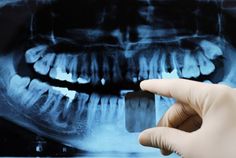
Dental implants have revolutionized the way we approach missing teeth, providing a durable and realistic alternative to dentures or bridges. However, the success of dental implant surgery is heavily dependent on the precision of the placement, which is where X-ray technologies come into play. In this article, we will explore the best X-ray technologies that are currently used to ensure optimal outcomes for dental implant procedures.

One of the most significant advancements in dental imaging for implantology is 3D Cone Beam Computed Tomography (CBCT). CBCT offers three-dimensional imaging and provides detailed views of the jawbone, surrounding structures, and the precise location where the implant needs to be placed. The high-resolution images obtained by CBCT allow dentists to assess bone quality and quantity, identify critical anatomy such as nerves and sinus cavities, and plan the surgery with pinpoint accuracy.

Digital Panoramic Radiography is another commonly used technology in dental implant planning. Although it offers a two-dimensional view compared to CBCT’s three dimensions, it still provides valuable information on bone structure and tooth orientation. It’s beneficial for initial assessments and follow-ups post-surgery.

Intraoral X-rays remain a staple in dental diagnostics, including for implants. These targeted images allow for a closer examination of specific areas that may need detailed attention during planning. They are particularly useful when considering factors such as bone density around an existing tooth or checking for potential complications post-implantation.

Advanced software integration with these X-ray technologies is also playing a pivotal role in the planning phase of dental implants. Software solutions can now process images from CBCT scans to create virtual simulations of the patient’s jaw, allowing dental professionals to ‘try out’ different implant positions digitally before performing actual surgery.

Lastly, advancements such as CAD/CAM (Computer-Aided Design/Computer-Aided Manufacturing) technology are often combined with imaging techniques to fabricate surgical guides and even the implants themselves with high precision. This technique ensures an accurate fit and placement according to the pre-planned positioning derived from X-ray data.

The selection of X-ray technology depends on various factors like case complexity, patient specificity, and requirements for surgical planning. With continuous technological refinements, these imaging techniques contribute significantly toward ensuring successful outcomes for patients opting for dental implants.

When choosing an appropriate X-ray technology for dental implants, it is essential that patients consult with their dentists who can recommend the safest and most effective method based on their individual needs. As innovations continue to emerge in dental radiography, we can expect further enhancements in safety, accuracy, and patient comfort during the process of getting dental implants.


Previous Article

How to Have a Balanced Life: 13 ...

Next Article

How to Study Pathoma: 13 Steps

Matthew Lynch

Related articles More from author

  • Dental Technology

    When is the Best Time to Brush Teeth? Understanding Your Morning Routine

    March 26, 2024
    By Matthew Lynch

Search

Login & Registration

  • Log in
  • Entries feed
  • Comments feed
  • WordPress.org

Newsletter

Signup for The Tech Edvocate Newsletter and have the latest in EdTech news and opinion delivered to your email address!

About Us

Since technology is not going anywhere and does more good than harm, adapting is the best course of action. That is where The Tech Edvocate comes in. We plan to cover the PreK-12 and Higher Education EdTech sectors and provide our readers with the latest news and opinion on the subject. From time to time, I will invite other voices to weigh in on important issues in EdTech. We hope to provide a well-rounded, multi-faceted look at the past, present, the future of EdTech in the US and internationally.

We started this journey back in June 2016, and we plan to continue it for many more years to come. I hope that you will join us in this discussion of the past, present and future of EdTech and lend your own insight to the issues that are discussed.

Newsletter

Signup for The Tech Edvocate Newsletter and have the latest in EdTech news and opinion delivered to your email address!

Contact Us

The Tech Edvocate
910 Goddin Street
Richmond, VA 23231
(601) 630-5238
[email protected]

Copyright © 2026 Matthew Lynch. All rights reserved.