The Tech Edvocate

Top Menu

  • Advertisement
  • Apps
  • Home Page
  • Home Page Five (No Sidebar)
  • Home Page Four
  • Home Page Three
  • Home Page Two
  • Home Tech2
  • Icons [No Sidebar]
  • Left Sidbear Page
  • Lynch Educational Consulting
  • My Account
  • My Speaking Page
  • Newsletter Sign Up Confirmation
  • Newsletter Unsubscription
  • Our Brands
  • Page Example
  • Privacy Policy
  • Protected Content
  • Register
  • Request a Product Review
  • Shop
  • Shortcodes Examples
  • Signup
  • Start Here
    • Governance
    • Careers
    • Contact Us
  • Terms and Conditions
  • The Edvocate
  • The Tech Edvocate Product Guide
  • Topics
  • Write For Us
  • Advertise

Main Menu

  • Start Here
    • Our Brands
    • Governance
      • Lynch Educational Consulting, LLC.
      • Dr. Lynch’s Personal Website
      • Careers
    • Write For Us
    • The Tech Edvocate Product Guide
    • Contact Us
    • Books
    • Edupedia
    • Post a Job
    • The Edvocate Podcast
    • Terms and Conditions
    • Privacy Policy
  • Topics
    • Assistive Technology
    • Child Development Tech
    • Early Childhood & K-12 EdTech
    • EdTech Futures
    • EdTech News
    • EdTech Policy & Reform
    • EdTech Startups & Businesses
    • Higher Education EdTech
    • Online Learning & eLearning
    • Parent & Family Tech
    • Personalized Learning
    • Product Reviews
  • Advertise
  • Tech Edvocate Awards
  • The Edvocate
  • Pedagogue
  • School Ratings

logo

The Tech Edvocate

  • Start Here
    • Our Brands
    • Governance
      • Lynch Educational Consulting, LLC.
      • Dr. Lynch’s Personal Website
        • My Speaking Page
      • Careers
    • Write For Us
    • The Tech Edvocate Product Guide
    • Contact Us
    • Books
    • Edupedia
    • Post a Job
    • The Edvocate Podcast
    • Terms and Conditions
    • Privacy Policy
  • Topics
    • Assistive Technology
    • Child Development Tech
    • Early Childhood & K-12 EdTech
    • EdTech Futures
    • EdTech News
    • EdTech Policy & Reform
    • EdTech Startups & Businesses
    • Higher Education EdTech
    • Online Learning & eLearning
    • Parent & Family Tech
    • Personalized Learning
    • Product Reviews
  • Advertise
  • Tech Edvocate Awards
  • The Edvocate
  • Pedagogue
  • School Ratings
  • Consumer Reports Reveal Truth – Is Flexigenics Reviews Legit or Scam? (Shocking Findings)

  • Quietum Plus 2026 Review Complaints and Shocking User Findings

  • This Founder’s Rs 75 LPA Sacrifice Crumbled in 30 Days — Here’s Why

  • Urgent: Claude AI Bioweapons — The Unsettling Truth Anthropic Just Revealed

  • Shocking: Three Major Xbox Games Shutting Down Forever in 2026

  • One Man’s Dire Warning: Is AI Already Too Dangerous To Control?

  • The Urgent Parental Consent Debate Over Student Mental Health Screenings

  • LAUSD restricts all students from using AI tools | K-12 Dive

  • Catastrophic Data Breach: 153 Million Driver’s Licenses Exposed on Dark Web

  • Autonomous AI Hackers Weaponize PaperCut Flaws: The Terrifying New Era of Cybercrime

Digital & Mobile Technology
Home›Digital & Mobile Technology›Excel SUMIFS: How to Sum Only Values Meeting Multiple Criteria

Excel SUMIFS: How to Sum Only Values Meeting Multiple Criteria
By Matthew Lynch
June 10, 2023
0
Spread the love

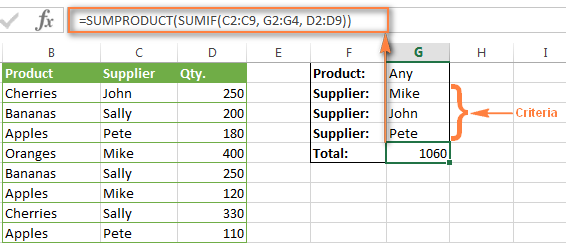
Excel is a powerful tool that helps people perform various calculations and data analysis operations. One of the most useful functions in Excel is SUMIFS. This function allows users to sum values based on multiple criteria, making it easy to filter and analyze data efficiently. In this article, we’ll explore the basics of SUMIFS and show you how to use it to sum only values that meet multiple criteria.

What is SUMIFS in Excel?

SUMIFS is a function in Excel that allows users to add values together based on multiple criteria. By using the SUMIFS function, users can create complex calculations that filter data based on various conditions. This function is especially helpful when dealing with large datasets, where it can be challenging to sift through the data manually.

To use the SUMIFS function, users must specify the range of cells to sum, followed by the criteria they want to use to filter the data. The function requires at least one range and one criteria, but users can add additional ranges and criteria based on their needs.

How to use SUMIFS to Sum Only Values Meeting Multiple Criteria

The SUMIFS function is incredibly versatile and can be used in many different ways. One common way people use this function is to add values together based on multiple criteria. Here are the steps to follow to use SUMIFS to sum only values meeting multiple criteria:

1. Define the ranges

The first thing you need to do is to define the ranges you want to use in the function. For example, if you have a dataset with columns A, B, and C, you may want to sum the values in column C, based on criteria in columns A and B. In this case, you would define the ranges as follows:

=SUMIFS(C:C, A:A, criteria1, B:B, criteria2)

2. Set the criteria

Next, you need to set the criteria for each range. Criteria are the conditions you want to use to filter the data. For example, you might want to sum only the values in column C where the values in column A are equal to “Apples,” and the values in column B are equal to “Red.”

In this case, you would set the criteria as follows:

=SUMIFS(C:C, A:A,”Apples”, B:B,”Red”)

This would tell Excel to sum only the values in column C where the values in column A are “Apples,” and the values in column B are “Red.”

3. Add additional criteria (optional)

You can add additional criteria as needed to further filter the data. For example, if you wanted to add a third criterion, such as a date range, you would add an additional range and criteria to the function:

=SUMIFS(C:C, A:A,”Apples”, B:B,”Red”, D:D,”>=1/1/2022″, D:D,”<=6/30/2022″)

This would tell Excel to sum only the values in column C where the values in column A are “Apples,” the values in column B are “Red,” and the values in column D fall between 1/1/2022 and 6/30/2022.

Conclusion

The SUMIFS function is an incredibly powerful tool that can save users time and effort when working with large datasets. By using the function to filter data based on multiple criteria, users can quickly perform complex calculations and analysis. With the steps outlined in this article, you can use the SUMIFS function to sum only values meeting multiple criteria, making it easier to analyze your data and draw meaningful insights.


Previous Article

How to See Message Requests on Instagram

Next Article

Overview of a Personal Area Network (PAN)

Matthew Lynch

Related articles More from author

  • Digital & Mobile Technology

    How Much Money Do YouTubers Make?

    August 5, 2023
    By Matthew Lynch
  • Digital & Mobile Technology

    How to Disable JavaScript in Google Chrome

    June 2, 2023
    By Matthew Lynch
  • Digital & Mobile Technology

    Google Maps Alternatives That Actually Respect Your Privacy

    June 21, 2023
    By Matthew Lynch
  • Digital & Mobile Technology

    How to Hide and Unhide a Slide in PowerPoint

    June 3, 2023
    By Matthew Lynch
  • Digital & Mobile Technology

    How to Turn Off Auto Brightness on iPhone

    May 29, 2023
    By Matthew Lynch
  • Digital & Mobile Technology

    How to Turn on the Keyboard Light on an HP Laptop

    September 7, 2023
    By Matthew Lynch

Search

Login & Registration

  • Log in
  • Entries feed
  • Comments feed
  • WordPress.org

Newsletter

Signup for The Tech Edvocate Newsletter and have the latest in EdTech news and opinion delivered to your email address!

About Us

Since technology is not going anywhere and does more good than harm, adapting is the best course of action. That is where The Tech Edvocate comes in. We plan to cover the PreK-12 and Higher Education EdTech sectors and provide our readers with the latest news and opinion on the subject. From time to time, I will invite other voices to weigh in on important issues in EdTech. We hope to provide a well-rounded, multi-faceted look at the past, present, the future of EdTech in the US and internationally.

We started this journey back in June 2016, and we plan to continue it for many more years to come. I hope that you will join us in this discussion of the past, present and future of EdTech and lend your own insight to the issues that are discussed.

Newsletter

Signup for The Tech Edvocate Newsletter and have the latest in EdTech news and opinion delivered to your email address!

Contact Us

The Tech Edvocate
910 Goddin Street
Richmond, VA 23231
(601) 630-5238
[email protected]

Copyright © 2026 Matthew Lynch. All rights reserved.