The Tech Edvocate

Top Menu

  • Advertisement
  • Apps
  • Home Page
  • Home Page Five (No Sidebar)
  • Home Page Four
  • Home Page Three
  • Home Page Two
  • Home Tech2
  • Icons [No Sidebar]
  • Left Sidbear Page
  • Lynch Educational Consulting
  • My Account
  • My Speaking Page
  • Newsletter Sign Up Confirmation
  • Newsletter Unsubscription
  • Our Brands
  • Page Example
  • Privacy Policy
  • Protected Content
  • Register
  • Request a Product Review
  • Shop
  • Shortcodes Examples
  • Signup
  • Start Here
    • Governance
    • Careers
    • Contact Us
  • Terms and Conditions
  • The Edvocate
  • The Tech Edvocate Product Guide
  • Topics
  • Write For Us
  • Advertise

Main Menu

  • Start Here
    • Our Brands
    • Governance
      • Lynch Educational Consulting, LLC.
      • Dr. Lynch’s Personal Website
      • Careers
    • Write For Us
    • The Tech Edvocate Product Guide
    • Contact Us
    • Books
    • Edupedia
    • Post a Job
    • The Edvocate Podcast
    • Terms and Conditions
    • Privacy Policy
  • Topics
    • Assistive Technology
    • Child Development Tech
    • Early Childhood & K-12 EdTech
    • EdTech Futures
    • EdTech News
    • EdTech Policy & Reform
    • EdTech Startups & Businesses
    • Higher Education EdTech
    • Online Learning & eLearning
    • Parent & Family Tech
    • Personalized Learning
    • Product Reviews
  • Advertise
  • Tech Edvocate Awards
  • The Edvocate
  • Pedagogue
  • School Ratings

logo

The Tech Edvocate

  • Start Here
    • Our Brands
    • Governance
      • Lynch Educational Consulting, LLC.
      • Dr. Lynch’s Personal Website
        • My Speaking Page
      • Careers
    • Write For Us
    • The Tech Edvocate Product Guide
    • Contact Us
    • Books
    • Edupedia
    • Post a Job
    • The Edvocate Podcast
    • Terms and Conditions
    • Privacy Policy
  • Topics
    • Assistive Technology
    • Child Development Tech
    • Early Childhood & K-12 EdTech
    • EdTech Futures
    • EdTech News
    • EdTech Policy & Reform
    • EdTech Startups & Businesses
    • Higher Education EdTech
    • Online Learning & eLearning
    • Parent & Family Tech
    • Personalized Learning
    • Product Reviews
  • Advertise
  • Tech Edvocate Awards
  • The Edvocate
  • Pedagogue
  • School Ratings
  • The Silent Revolution: How AI Property Valuation Is Quietly Reshaping Real Estate

  • The Astonishing Truth: Why Your Dream Car Is Now a $52,000 Illusion

  • Toxic Algorithms: Why Your Bank’s AI Could Cost You Everything

  • OpenAI’s GPT-6 Cyber: A Dangerous New AI Threat or Our Ultimate Digital Guardian?

  • This Game-Changing Natural Ozempic Alternative Just Blew Up on Social Media

  • Bónuszösszeg, ingyen pörgetés és befizetési feltétel: üdvözlő és befizetés nélküli kaszinóajánlatok magyar játékosoknak

  • 9 Critical Reasons Why Athexio Might Be The Investment You Need (Or Should Avoid)

  • A Single Breakthrough Could Finally Kill Range Anxiety for Millions of EV Owners

  • Your Money, Their AI: The Secret Agents Invading Bank Accounts

  • US Battery as a Service Market Shifts Toward Fleet-Based Energy

Tech News
Home›Tech News›Stunning Auroras Expected: Two CMEs to Hit Earth March 19 & 21

Stunning Auroras Expected: Two CMEs to Hit Earth March 19 & 21
By Matthew Lynch
March 19, 2026
0
Spread the love

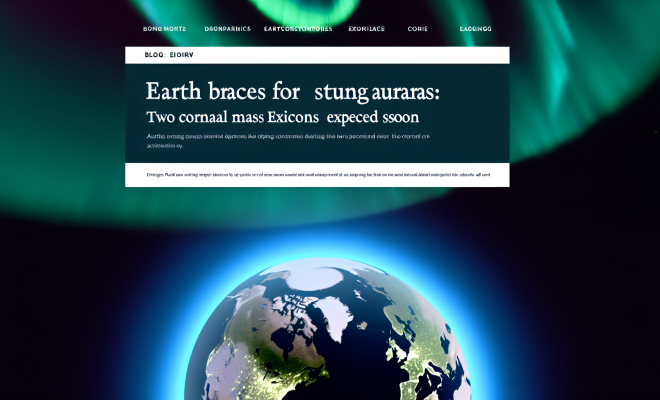
The cosmic dance between the Sun and Earth is set to create a spectacular light show for skywatchers. According to reports from Spaceweather.com and the National Oceanic and Atmospheric Administration (NOAA) Space Weather Prediction Center, Earth is poised to experience the impact of two coronal mass ejections (CMEs) originating from the Sun. The first CME is expected to reach our planet on March 19, followed closely by another on March 21. This celestial event has the potential to trigger vibrant auroras, captivating stargazers across various regions.

Understanding Coronal Mass Ejections

Coronal mass ejections are large expulsions of plasma and magnetic field from the Sun’s corona. These explosive events can unleash billions of tons of solar material into space, traveling at speeds of up to 3 million miles per hour. When directed toward Earth, CMEs can interact with our planet’s magnetic field, leading to geomagnetic storms.

Typically, these storms can manifest as stunning auroras, commonly known as the Northern and Southern Lights. The intensity and visibility of these auroras depend on the strength of the CME and the conditions of Earth’s magnetic field at the time of impact.

What to Expect: Timing and Visibility

The first CME is predicted to strike on March 19, with skywatchers advised to keep an eye out for auroras in the evening sky. The second CME will follow shortly, arriving on March 21. In the days leading up to these events, the chances for enhanced auroral activity will increase, particularly in regions closer to the poles.

For those situated in areas like Traverse City, Michigan, residents can anticipate approximately 12 hours and 6 minutes of daylight on March 19, with sunset occurring at 7:54 p.m.. The Moon, just one day past its new phase, will set at 9:02 p.m., providing an ideal backdrop for aurora viewing as the sky darkens.

Auroras: Nature’s Light Show

Auroras occur when charged particles from the Sun collide with gases in Earth’s atmosphere. These interactions create bursts of light that can display a range of colors, predominantly greens, pinks, reds, and purples. The resulting spectacle is not only a stunning visual phenomenon but also a reminder of the dynamic nature of our solar system.

  • Green: The most common color, produced by oxygen molecules at lower altitudes.
  • Red: Caused by high-altitude oxygen, these hues are less common.
  • Pink and Purple: Resulting from interactions between nitrogen and oxygen.

Predictive Precision: Astronomy vs. Weather Forecasting

One intriguing aspect of this CME prediction is the remarkable precision of astronomical forecasts compared to traditional weather predictions. As the vernal equinox approaches, which falls on March 20 this year, the reliability of astronomical events remains high. This contrasts with the often-variable nature of terrestrial weather forecasting.

While meteorologists may struggle with predicting rain or shine days in advance, astronomers can accurately predict celestial events long before they occur. This is due to the predictable nature of planetary and solar movements governed by the laws of physics. The upcoming CMEs serve as a testament to this reliability, showcasing the power of science in understanding the cosmos.

Preparing for the Auroras

For those eager to witness the potential auroras brought on by these CMEs, preparation is key. Here are some tips for optimal viewing:

  • Find a Dark Location: Move away from city lights to reduce light pollution.
  • Check the Weather: Clear skies are essential for the best viewing conditions.
  • Stay Informed: Follow updates from space weather sources to know when to look up.
  • Dress Warmly: Temperatures can drop significantly at night, especially in March.

Conclusion

The impending arrival of two coronal mass ejections from the Sun heralds an exciting opportunity for skywatchers to witness the beauty of auroras. With the precise predictions from reputable sources, enthusiasts have ample time to prepare for what could be a mesmerizing display of nature’s artistry. As we look forward to these celestial events, it’s a reminder of the intricate relationship between our planet and the cosmos.

Previous Article

Artemis II Rollout Set for March 19: ...

Next Article

See the Youngest Crescent Moon & Venus ...

Matthew Lynch

Related articles More from author

  • Tech News

    CISA Mandates Urgent Citrix Patch for Critical CVE-2026-3055 Flaw

    March 31, 2026
    By Matthew Lynch
  • Tech News

    Repair Your Boot Sector: Fix Boot Failures & Data Loss

    June 17, 2026
    By Matthew Lynch
  • Tech News

    Utilities Stocks: Your Portfolio’s Safe Harbor Amid Rising Tensions

    May 4, 2026
    By Matthew Lynch
  • Tech News

    ChatGPT’s AI Marketing Pilot Hits $100M Revenue in 2026

    March 30, 2026
    By Matthew Lynch
  • Tech News

    Zoomking Elevates Hainan Science Museum with 84 Aerospace Exhibits

    April 3, 2026
    By Matthew Lynch
  • Tech News

    Google Play’s Best Apps and Games of 2024

    March 4, 2024
    By Matthew Lynch

Search

Login & Registration

  • Log in
  • Entries feed
  • Comments feed
  • WordPress.org

Newsletter

Signup for The Tech Edvocate Newsletter and have the latest in EdTech news and opinion delivered to your email address!

About Us

Since technology is not going anywhere and does more good than harm, adapting is the best course of action. That is where The Tech Edvocate comes in. We plan to cover the PreK-12 and Higher Education EdTech sectors and provide our readers with the latest news and opinion on the subject. From time to time, I will invite other voices to weigh in on important issues in EdTech. We hope to provide a well-rounded, multi-faceted look at the past, present, the future of EdTech in the US and internationally.

We started this journey back in June 2016, and we plan to continue it for many more years to come. I hope that you will join us in this discussion of the past, present and future of EdTech and lend your own insight to the issues that are discussed.

Newsletter

Signup for The Tech Edvocate Newsletter and have the latest in EdTech news and opinion delivered to your email address!

Contact Us

The Tech Edvocate
910 Goddin Street
Richmond, VA 23231
(601) 630-5238
[email protected]

Copyright © 2026 Matthew Lynch. All rights reserved.