The Tech Edvocate

Top Menu

  • Advertisement
  • Apps
  • Home Page
  • Home Page Five (No Sidebar)
  • Home Page Four
  • Home Page Three
  • Home Page Two
  • Home Tech2
  • Icons [No Sidebar]
  • Left Sidbear Page
  • Lynch Educational Consulting
  • My Account
  • My Speaking Page
  • Newsletter Sign Up Confirmation
  • Newsletter Unsubscription
  • Our Brands
  • Page Example
  • Privacy Policy
  • Protected Content
  • Register
  • Request a Product Review
  • Shop
  • Shortcodes Examples
  • Signup
  • Start Here
    • Governance
    • Careers
    • Contact Us
  • Terms and Conditions
  • The Edvocate
  • The Tech Edvocate Product Guide
  • Topics
  • Write For Us
  • Advertise

Main Menu

  • Start Here
    • Our Brands
    • Governance
      • Lynch Educational Consulting, LLC.
      • Dr. Lynch’s Personal Website
      • Careers
    • Write For Us
    • The Tech Edvocate Product Guide
    • Contact Us
    • Books
    • Edupedia
    • Post a Job
    • The Edvocate Podcast
    • Terms and Conditions
    • Privacy Policy
  • Topics
    • Assistive Technology
    • Child Development Tech
    • Early Childhood & K-12 EdTech
    • EdTech Futures
    • EdTech News
    • EdTech Policy & Reform
    • EdTech Startups & Businesses
    • Higher Education EdTech
    • Online Learning & eLearning
    • Parent & Family Tech
    • Personalized Learning
    • Product Reviews
  • Advertise
  • Tech Edvocate Awards
  • The Edvocate
  • Pedagogue
  • School Ratings

logo

The Tech Edvocate

  • Start Here
    • Our Brands
    • Governance
      • Lynch Educational Consulting, LLC.
      • Dr. Lynch’s Personal Website
        • My Speaking Page
      • Careers
    • Write For Us
    • The Tech Edvocate Product Guide
    • Contact Us
    • Books
    • Edupedia
    • Post a Job
    • The Edvocate Podcast
    • Terms and Conditions
    • Privacy Policy
  • Topics
    • Assistive Technology
    • Child Development Tech
    • Early Childhood & K-12 EdTech
    • EdTech Futures
    • EdTech News
    • EdTech Policy & Reform
    • EdTech Startups & Businesses
    • Higher Education EdTech
    • Online Learning & eLearning
    • Parent & Family Tech
    • Personalized Learning
    • Product Reviews
  • Advertise
  • Tech Edvocate Awards
  • The Edvocate
  • Pedagogue
  • School Ratings
  • 100 Best Resource Management Apps

  • The Startling Truth About Viral Weight Loss Drugs You Need to Know

  • 57% Failure Rate: The Unsettling Truth About AI Financial Advice You Need to Know

  • AI’s Quiet Takeover: 179,542 Tech Layoffs 2023 Signal a Troubling Future

  • The Billion-Dollar Race: Why U.S. Tech Giants Are Scrambling for Israeli Startups

  • The Secret Way Activision Blizzard May Be Exploiting Kids for Millions

  • This One AI Change Could Cost You Thousands in Medical Bills

  • The Billion-Dollar AI Learning Boom: Why Experts Are Sounding the Alarm

  • Your Student Loans Just Got a Massive Overhaul — Here’s What It Means For Your Future

  • Identity Theft Nightmare: Johnson Investment Counsel Data Breach Exposes SSNs

Digital & Mobile Technology
Home›Digital & Mobile Technology›E-Ink: What Is It and How Does It Work?

E-Ink: What Is It and How Does It Work?
By Matthew Lynch
June 11, 2023
0
Spread the love

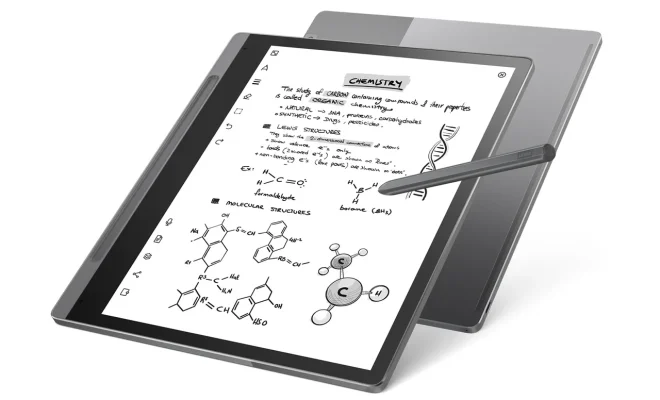
E-ink is a technology that holds the potential to revolutionize the way we read and interact with digital content. It is gaining popularity because of its distinctive features like low power consumption, low eye-strain, and high readability in direct sunlight. Wondering what E-ink exactly is and how it works? In this article, we will delve into the details of E-ink technology.

What Is E-Ink?

E-ink stands for Electronic Ink. It is a digital display technology that resembles traditional paper, utilizing tiny microcapsules filled with positively charged white particles and negatively charged black particles embedded in a transparent fluid. These microcapsules are sandwiched between two electrodes, and when an electric field is applied, the particles move to the top, and the surface appears white or black, depending on the direction of the electricity.

How Does E-Ink Work?

E-ink displays rely on a process called electrophoresis, which is the movement of electrically charged particles in a suspension. The main component of E-ink display is micro-encapsulated electronic ink. The ink consists of microcapsules that contain white particles or black particles suspended in a clear fluid. The particles are electrically charged. The microcapsules are sandwiched between two thin electrodes, and each electrode is powered by its own circuit.

The electrodes are transparent and create an electric field when activated. When the electric field is active, the white or black particles in the capsules are attracted to the electrode surface that matches their charge. This causes the microcapsule to display the desired color – either black or white. The result is a display that appears very similar to ink on paper.

E-ink displays have several advantages over LCD displays. One of the advantages of E-ink displays is low power consumption. Unlike LCD screens, E-ink displays do not require a backlight, which is a significant drain on the device’s battery life. E-ink displays are also less likely to cause eyestrain as they do not emit light or flicker. They are easy to read in direct sunlight, and their contrast ratio is excellent, making them ideal for reading books and other forms of text-based content.

In conclusion, E-ink technology is an innovative display system that mimics the appearance of ink on paper. It is based on electrophoresis, whereby electrically charged particles suspended in a fluid move toward their corresponding electrode to create a black or white pixel. E-ink is a low-power, easy-to-read, and user-friendly technology that is widely used in electronic book readers, digital signage, and other applications requiring low-power displays.

Previous Article

How to Update PowerPoint on Windows and ...

Next Article

How to Tag Files in Windows 10

Matthew Lynch

Related articles More from author

  • Digital & Mobile Technology

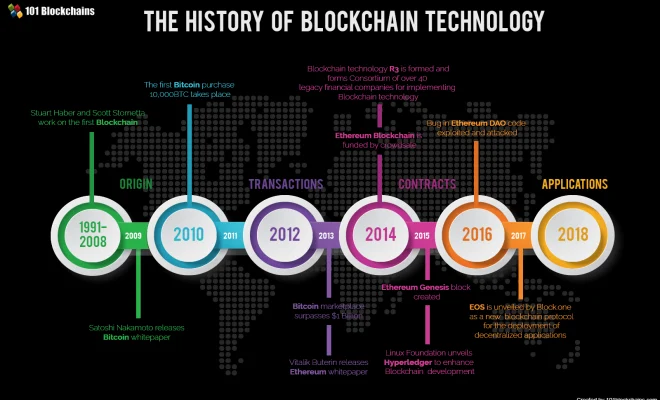
    A Timeline And History Of Blockchain Technology

    April 10, 2023
    By Matthew Lynch
  • Digital & Mobile Technology

    How to Apply a Screen Protector: 3 Methods

    August 5, 2023
    By Matthew Lynch
  • Digital & Mobile Technology

    What Happened to IPv5?

    June 3, 2023
    By Matthew Lynch
  • Digital & Mobile Technology

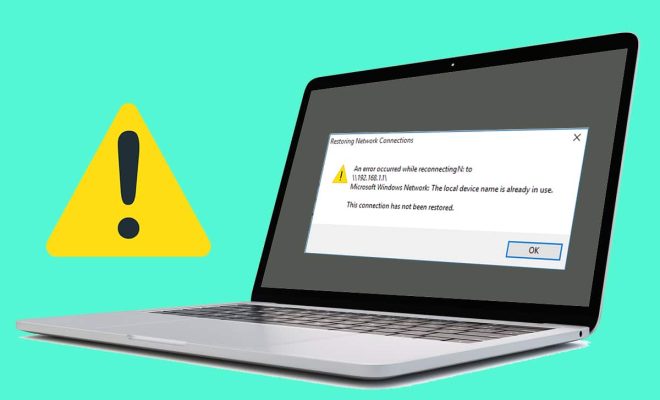
    Ways to Fix the “Local Device Name Is Already in Use” Error on Windows

    June 14, 2023
    By Matthew Lynch
  • Digital & Mobile Technology

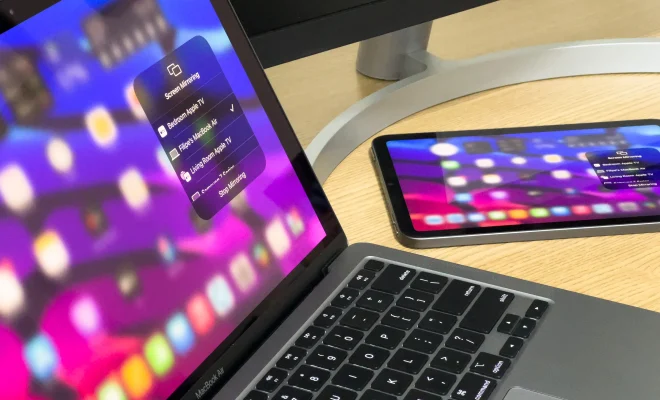
    How to AirPlay to Mac From iPhone

    May 18, 2023
    By Matthew Lynch
  • Digital & Mobile Technology

    Essential CSS Tips and Tricks Every Developer Should Know

    August 5, 2023
    By Matthew Lynch

Search

Login & Registration

  • Log in
  • Entries feed
  • Comments feed
  • WordPress.org

Newsletter

Signup for The Tech Edvocate Newsletter and have the latest in EdTech news and opinion delivered to your email address!

About Us

Since technology is not going anywhere and does more good than harm, adapting is the best course of action. That is where The Tech Edvocate comes in. We plan to cover the PreK-12 and Higher Education EdTech sectors and provide our readers with the latest news and opinion on the subject. From time to time, I will invite other voices to weigh in on important issues in EdTech. We hope to provide a well-rounded, multi-faceted look at the past, present, the future of EdTech in the US and internationally.

We started this journey back in June 2016, and we plan to continue it for many more years to come. I hope that you will join us in this discussion of the past, present and future of EdTech and lend your own insight to the issues that are discussed.

Newsletter

Signup for The Tech Edvocate Newsletter and have the latest in EdTech news and opinion delivered to your email address!

Contact Us

The Tech Edvocate
910 Goddin Street
Richmond, VA 23231
(601) 630-5238
[email protected]

Copyright © 2026 Matthew Lynch. All rights reserved.