The Tech Edvocate

Top Menu

  • Advertisement
  • Apps
  • Home Page
  • Home Page Five (No Sidebar)
  • Home Page Four
  • Home Page Three
  • Home Page Two
  • Home Tech2
  • Icons [No Sidebar]
  • Left Sidbear Page
  • Lynch Educational Consulting
  • My Account
  • My Speaking Page
  • Newsletter Sign Up Confirmation
  • Newsletter Unsubscription
  • Our Brands
  • Page Example
  • Privacy Policy
  • Protected Content
  • Register
  • Request a Product Review
  • Shop
  • Shortcodes Examples
  • Signup
  • Start Here
    • Governance
    • Careers
    • Contact Us
  • Terms and Conditions
  • The Edvocate
  • The Tech Edvocate Product Guide
  • Topics
  • Write For Us
  • Advertise

Main Menu

  • Start Here
    • Our Brands
    • Governance
      • Lynch Educational Consulting, LLC.
      • Dr. Lynch’s Personal Website
      • Careers
    • Write For Us
    • The Tech Edvocate Product Guide
    • Contact Us
    • Books
    • Edupedia
    • Post a Job
    • The Edvocate Podcast
    • Terms and Conditions
    • Privacy Policy
  • Topics
    • Assistive Technology
    • Child Development Tech
    • Early Childhood & K-12 EdTech
    • EdTech Futures
    • EdTech News
    • EdTech Policy & Reform
    • EdTech Startups & Businesses
    • Higher Education EdTech
    • Online Learning & eLearning
    • Parent & Family Tech
    • Personalized Learning
    • Product Reviews
  • Advertise
  • Tech Edvocate Awards
  • The Edvocate
  • Pedagogue
  • School Ratings

logo

The Tech Edvocate

  • Start Here
    • Our Brands
    • Governance
      • Lynch Educational Consulting, LLC.
      • Dr. Lynch’s Personal Website
        • My Speaking Page
      • Careers
    • Write For Us
    • The Tech Edvocate Product Guide
    • Contact Us
    • Books
    • Edupedia
    • Post a Job
    • The Edvocate Podcast
    • Terms and Conditions
    • Privacy Policy
  • Topics
    • Assistive Technology
    • Child Development Tech
    • Early Childhood & K-12 EdTech
    • EdTech Futures
    • EdTech News
    • EdTech Policy & Reform
    • EdTech Startups & Businesses
    • Higher Education EdTech
    • Online Learning & eLearning
    • Parent & Family Tech
    • Personalized Learning
    • Product Reviews
  • Advertise
  • Tech Edvocate Awards
  • The Edvocate
  • Pedagogue
  • School Ratings
  • The Chew That Changed My Training: Why Nitraflex Pre-Workout Chews Deliver Unbelievable Pumps

  • The Brutal Truth: Why Your AI Skills Training Is Failing (And How to Fix It)

  • 8 Essential AI Upskilling Programs Your Business Needs to Thrive Now

  • One Critical Mistake Companies Make With AI Skills Training

  • The AI Career Showdown: Which Path Pays More And Fits You Best?

  • The Shocking Truth About the Highest Paying AI Jobs in 2026

  • The Staggering Truth About 5 AI Job Roles That Will Redefine Your Career by 2026

  • Crypto Crackdown: Is the FCA’s Iron Fist Crushing Innovation, or Just Protecting You?

  • 7 Critical Steps to Survive the Crypto Crackdown: How to Navigate FCA Regulations

  • This One Thing Is Quietly Reshaping Illegal Crypto Trading — And Regulators Are Panicking

Tech Advice
Home›Tech Advice›Don’t Throw Out Your Old TV Before You Read This

Don’t Throw Out Your Old TV Before You Read This

By Matthew Lynch
July 16, 2023
0
Spread the love

Introduction

Dolby Atmos has become a buzzword in the audio world, promising to deliver an immersive, next-generation listening experience that puts you right in the center of the sound action. But what exactly is Dolby Atmos, and why should you be excited about it? In this article, we’ll break down everything you need to know about this revolutionary spatial audio format.

What is Dolby Atmos?

Dolby Atmos is an advanced audio technology that delivers three-dimensional sound, creating an immersive and realistic listening experience. Unlike traditional surround sound systems where audio channels are confined to specific speakers, Dolby Atmos allows sound engineers to place individual sounds anywhere within a 3D space. This precision placement enables listeners to hear sounds coming from all directions—including above and behind.
Originally released for cinema applications, Dolby Atmos has since expanded into home entertainment systems, headphones, gaming, smartphones and tablets.

How Does Dolby Atmos Work?

Unlike conventional channel-based audio systems like 5.1 or 7.1 surround sound, Dolby Atmos uses object-based audio technology. Sound engineers create ‘audio objects’—individual sounds that can be positioned anywhere within the 3D space of a room.

A Dolby Atmos-enabled device then renders these objects in real-time based on the setup of the specific playback system. This means that whether you have a traditional 5.1 speaker configuration or a full-blown home theater with overhead speakers, Dolby Atmos will adapt its spatial positioning to optimally suit your setup.

What Do You Need for a Dolby Atmos Setup?
To experience Dolby Atmos at home, you will need:

1. A Dolby Atmos-compatible playback device: This includes devices like Blu-ray players, game consoles (Xbox One/PlayStation 4), select streaming devices (Apple TV 4K/Fire TV Cube) or premium Windows 10 laptops with Dolby Atmos software installed.

2. A Dolby Atmos-enabled content/source: Not all movies and games support Dolby Atmos. Look for the Dolby Atmos logo on Blu-rays, digital storefronts (like iTunes), and streaming services (Netflix, Amazon Prime Video).

3. A Dolby Atmos-enabled audio system: You have several options here, including dedicated Atmos surround sound systems, soundbars with upward-firing speakers, or adding overhead or upward-firing speakers to your existing surround sound setup.

4. A proper room configuration: Ensure your listening environment is optimized for the best possible audio experience by arranging and calibrating your speakers according to Dolby’s guidelines.

Benefits of Dolby Atmos

Some of the advantages of Dolby Atmos include:

– Enhanced realism and immersion: By accurately positioning sounds in a 3D space, Dolby Atmos creates a more engaging and believable auditory experience that can make you feel like you’re right in the middle of the action.

– Scalability: Whether you have a simple stereo setup or a full-fledged home theater, Dolby Atmos will adapt to your system configuration, ensuring an optimal listening experience.

– Future-proof compatibility: As more content creators adopt spatial audio formats like Dolby Atmos, investing in compatible hardware ensures that you’ll stay ahead of the curve in enjoying next-generation audio experiences.

Conclusion

Dolby Atmos has set a new standard for immersive and realistic audio experiences, and it’s easy to see why it has quickly become a must-have feature for home entertainment enthusiasts. By understanding its technology and investing in compatible hardware, you too can enjoy the unparalleled spatial audio experience that Dolby Atmos has to offer.


Previous Article

Chromecast with Google TV review: A worthy ...

Next Article

Bose SoundLink Flex review: Best mini Bluetooth ...

Matthew Lynch

Related articles More from author

  • Tech Advice

    2024 BMW iX3 price and specs

    September 20, 2023
    By Matthew Lynch
  • Tech Advice

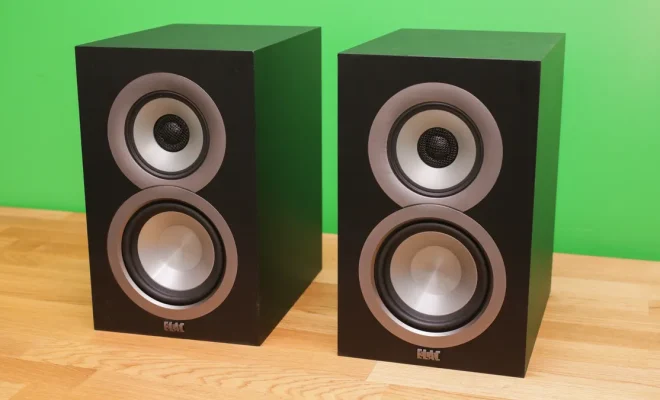
    ELAC Uni-Fi UB5 review: ELAC Uni-Fi UB5 speakers belt out insanely good sound for the money

    July 12, 2023
    By Matthew Lynch
  • Tech Advice

    How to Share Spotify Premium with Your Family

    July 17, 2023
    By Matthew Lynch
  • Tech Advice

    5 Best Smartwatches With Blood Pressure Monitoring

    August 11, 2023
    By Matthew Lynch
  • Tech Advice

    Best Chromebook Deals: Save on Budget, Detachable and Gaming Chromebooks

    July 5, 2023
    By Matthew Lynch
  • Tech Advice

    Samsung Galaxy Z Fold 4 vs. Galaxy Z Fold 3 vs. Galaxy Z Fold 2: What’s Changed Over The Years

    July 17, 2023
    By Matthew Lynch

Search

Login & Registration

  • Log in
  • Entries feed
  • Comments feed
  • WordPress.org

Newsletter

Signup for The Tech Edvocate Newsletter and have the latest in EdTech news and opinion delivered to your email address!

About Us

Since technology is not going anywhere and does more good than harm, adapting is the best course of action. That is where The Tech Edvocate comes in. We plan to cover the PreK-12 and Higher Education EdTech sectors and provide our readers with the latest news and opinion on the subject. From time to time, I will invite other voices to weigh in on important issues in EdTech. We hope to provide a well-rounded, multi-faceted look at the past, present, the future of EdTech in the US and internationally.

We started this journey back in June 2016, and we plan to continue it for many more years to come. I hope that you will join us in this discussion of the past, present and future of EdTech and lend your own insight to the issues that are discussed.

Newsletter

Signup for The Tech Edvocate Newsletter and have the latest in EdTech news and opinion delivered to your email address!

Contact Us

The Tech Edvocate
910 Goddin Street
Richmond, VA 23231
(601) 630-5238
[email protected]

Copyright © 2026 Matthew Lynch. All rights reserved.