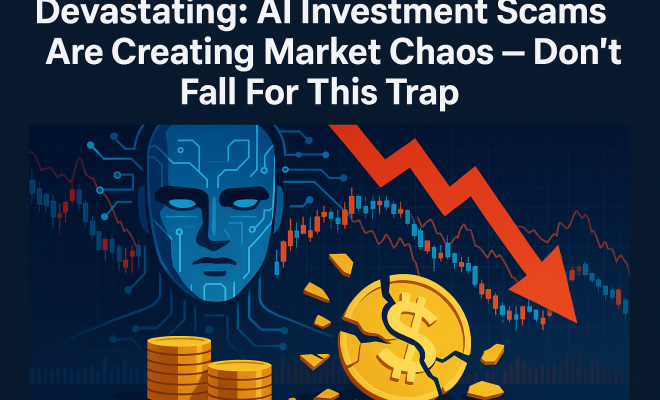
AI Investment Scams Fuel Market Chaos: Protect Your Investments
You’ve probably seen the headlines, or maybe even an ad pop up on your social media feed: promises of incredible, guaranteed returns from an AI-powered investment platform. It sounds almost too good to be true, doesn’t it? Well, in many cases, that gut feeling is spot on. We’re living through a peculiar moment where the promise of artificial intelligence is clashing head-on with a harsh reality: rampant AI investment scams and the unsettling instability they’re helping to inject into financial markets.
It’s a dual threat that should make any investor sit up and pay attention. On one side, you have outright fraudsters leveraging the buzz around AI to trick unsuspecting individuals out of their hard-earned money. On the other, you have legitimate financial firms grappling with the very real, and sometimes unpredictable, impact of AI on market dynamics, leading to phenomena like withdrawal limits. It’s a turbulent landscape, and understanding both facets is crucial if you want to protect your investments and avoid becoming another victim of AI investment scams.
1. The Quantum AI Phenomenon: A Familiar Scam in New Clothing
Let’s start with a particularly notorious example that has been making the rounds again: ‘Quantum AI’. If that name sounds familiar, it’s because this isn’t its first rodeo. Financial authorities and consumer protection groups globally have repeatedly flagged Quantum AI as a blatant fraudulent scheme. It’s a classic wolf-in-sheep’s-clothing situation, preying on the public’s fascination with advanced technology and the desire for quick wealth.
The scam’s modus operandi is remarkably consistent. They promise unrealistic, often guaranteed, returns that no legitimate investment can offer. Think 100% or even 1000% profits in a matter of weeks – numbers that should immediately trigger alarm bells. They often back these outlandish claims with slick, professional-looking websites and marketing materials, all designed to create an illusion of credibility. But peel back that veneer, and you’ll find nothing but smoke and mirrors.
2. The Lure of Fake Celebrity Endorsements: A Deceptive Marketing Tactic
One of the most insidious tactics employed by schemes like Quantum AI is the use of fake celebrity endorsements. You might scroll through your news feed and suddenly see a familiar face – perhaps a tech mogul, a well-known actor, or even a respected financial pundit – seemingly raving about this ‘revolutionary’ AI investment platform. These endorsements are, almost without exception, entirely fabricated.
Scammers use deepfake technology, manipulated images, and doctored quotes to create highly convincing but completely false testimonials. They understand that trust is a powerful motivator. If a prominent figure appears to endorse something, it lends an air of legitimacy that can override an individual’s natural skepticism. It’s a cynical exploitation of public trust, and it’s incredibly effective at drawing in unsuspecting investors who believe they’re following the advice of someone credible.
3. Unrealistic, Guaranteed Returns: The Ultimate Red Flag for AI Investment Scams
Let’s be blunt: there’s no such thing as a guaranteed return in legitimate investing, especially not one that’s astronomically high. Any platform, AI-driven or otherwise, that promises you a risk-free path to massive wealth is almost certainly a scam. Financial markets are inherently volatile, and even the most sophisticated algorithms cannot predict the future with 100% accuracy, let alone guarantee profits. If they could, everyone would be a billionaire, and the global economy would collapse.
These promises are designed to bypass your rational thinking and appeal directly to your aspirations for financial freedom. They create a sense of urgency, often implying that this ‘opportunity’ is limited or exclusive. Don’t fall for it. Legitimate investments come with risks, and their returns are never guaranteed. Always approach any investment offering with a healthy dose of skepticism, especially when the promised returns sound too good to be true.
4. The Opacity of ‘AI-Driven’ Tools: Where Trust Breaks Down
A significant part of the problem with AI investment scams lies in the inherent complexity and opacity of the technology itself. For many people, AI feels like a black box – a sophisticated system that operates beyond their full comprehension. Scammers exploit this lack of understanding, using buzzwords and technical jargon to create a façade of advanced technology.
When an investment platform claims to be ‘AI-driven,’ it often becomes difficult for the average person to scrutinize its methods. How does the AI actually work? What algorithms is it using? What are its historical performance metrics (not just the cherry-picked successes)? Legitimate AI financial tools can be incredibly powerful, but they are also transparent about their methodologies, risks, and limitations. If a platform is vague about its AI’s inner workings, or if it refuses to provide verifiable, third-party audited performance data, that’s a major red flag. (See: financial fraud prevention resources.)
5. Real-World Market Instability: The Blue Owl Capital Example
While outright fraud like Quantum AI is a direct threat, there’s a more nuanced, yet equally unsettling, impact of AI reverberating through legitimate financial markets. Investor worries about AI’s disruptive potential are creating real jitters, particularly in sectors heavily reliant on software and technology. Consider the recent situation with Blue Owl Capital, a prominent alternative asset manager.
Blue Owl Capital recently implemented withdrawal limits on some of its funds. Why? A historic surge in redemption requests. Investors, it seems, were getting nervous about the future of the software sector in the face of rapid AI advancements. They began pulling their money out at an accelerated pace, fearing that AI could fundamentally alter the competitive landscape, making some established software companies obsolete or significantly less profitable. This isn’t a scam; it’s a genuine market reaction to perceived AI risk, and it underscores how profoundly AI is already shaping investor behavior and market stability.
6. Navigating Withdrawal Limits and Redemption Requests: A Sign of Stress
When a fund implements withdrawal limits, it’s rarely a good sign. It often indicates that the fund is facing liquidity challenges, meaning it doesn’t have enough readily available cash to meet all the redemption requests from investors who want their money back. While it can be a protective measure to prevent a complete fire sale of assets, it also signals underlying stress or uncertainty within the fund or the market segments it invests in.
In the context of AI, these limits at firms like Blue Owl Capital highlight how rapidly investor sentiment can shift. The mere *fear* of AI disruption, even if its full impact is years away, can trigger significant capital outflows. For individual investors, understanding this dynamic is crucial. It means that even in legitimate investment vehicles, the broader narrative around AI can influence your ability to access your money, reinforcing the need for diversification and careful due diligence, even on established players.
7. Protecting Your Investments: Practical Steps Against AI Investment Scams
So, what can you do to protect yourself in this complex environment? The first and most critical step is education. Understanding how AI investment scams operate is your best defense. Here are some actionable tips:
- Be Skeptical of Unrealistic Returns: If an investment promises guaranteed high returns with little to no risk, it’s almost certainly a scam. Real investing involves risk.
- Verify Endorsements: Never trust a celebrity endorsement you see online without cross-referencing it through official, reputable news sources. Deepfakes are becoming incredibly sophisticated.
- Research Thoroughly: Before investing a single penny, research the platform and the company behind it. Check for regulatory warnings from financial authorities in your country (e.g., the SEC in the US, the FCA in the UK, ASIC in Australia). A quick Google search for the platform’s name plus ‘scam’ or ‘review’ can often reveal red flags.
- Understand the Technology: If a platform claims to use AI, try to understand, at a basic level, how it works. If they are vague, secretive, or use overly complex jargon without clear explanation, be wary.
- Start Small (or Not at All): If you’re truly curious about a new platform and have done your due diligence, consider investing only a very small amount that you can afford to lose. But honestly, with blatant scams, it’s best to avoid them entirely.
- Beware of Pressure Tactics: Scammers often create a sense of urgency, pushing you to invest quickly before the ‘opportunity’ disappears. Legitimate investments allow you time to make informed decisions.
- Secure Your Digital Footprint: Use strong, unique passwords for all financial accounts. Enable two-factor authentication wherever possible. Scammers often target individuals whose personal information has been compromised.
- Seek Professional Advice: If you’re unsure about an investment, consult with a legitimate, licensed financial advisor. They can help you discern genuine opportunities from scams.
- Report Suspected Scams: If you encounter what you believe to be an AI investment scam, report it to your local financial regulator and consumer protection agencies. This helps protect others.
The Broader Implications of AI Investment Scams and Market Jitters
The rise of AI investment scams isn’t just about individual financial loss; it has broader implications for trust in technology and financial markets. When people are repeatedly defrauded, it erodes confidence, making them wary of even legitimate innovations. This can slow down the adoption of genuinely beneficial AI tools that could help investors make better decisions.
Moreover, the instability seen at firms like Blue Owl Capital demonstrates that AI is already a significant factor in market sentiment. This means that staying informed about AI’s capabilities, its ethical considerations, and its potential impact on various industries is no longer just for tech enthusiasts – it’s essential for anyone with investments in the market. The financial world is changing rapidly, and vigilance is more important than ever. Related reading: top schools for financial forensics.
It’s a challenging period, no doubt. The allure of AI’s transformative power is strong, but so is the potential for exploitation. By understanding the common tactics of AI investment scams and recognizing the subtle ways AI is influencing market stability, you can better position yourself to navigate these turbulent waters and protect your financial future. Don’t let the hype or the fear overshadow your critical judgment.
8. The Evolution of AI Investment Scams: From Boiler Rooms to Deepfakes
AI investment scams aren’t a completely new phenomenon, but they’ve certainly evolved. Back in the day, investment fraudsters often relied on “boiler room” operations – high-pressure sales calls from shady offices. The internet brought us phishing emails and fake websites. Now, AI has added a terrifying new dimension to these tactics. It’s not just about convincing text anymore; it’s about convincing visuals and audio, too.
Deepfake technology, which we touched on earlier with celebrity endorsements, is a game-changer for scammers. Imagine a video call where you believe you’re speaking with a representative from a legitimate financial institution, but it’s actually an AI-generated avatar. The voice, the facial expressions, even the subtle mannerisms can be eerily realistic. This makes it incredibly hard for the average person to detect fraud, especially if they’re not explicitly looking for the tell-tale signs of a deepfake. The sophistication of these tools means that even savvy investors can be caught off guard, highlighting the need for vigilance beyond just checking for typos on a website.
Another evolution is the use of AI to personalize scams at scale. AI algorithms can analyze vast amounts of public data – your social media posts, your online purchases, even your professional network – to craft highly targeted messages. Instead of generic spam, you might receive an email that seems to know your interests, your financial situation, or even your recent life events. This personalization makes the scam feel more legitimate and harder to dismiss as mass marketing. It preys on our inherent human desire for connection and recognition, turning it into a vulnerability. (See: AI investment scams in the news.)
9. The Role of Social Media in Amplifying Scams
Social media platforms have become fertile ground for AI investment scams. Their algorithms, designed to keep you engaged, can inadvertently amplify fraudulent content. A sponsored ad for a fake AI investment platform might appear right alongside legitimate news, blurring the lines of credibility. These platforms also provide scammers with direct access to a massive audience, often segmented by interests, making it easier to target potential victims.
Think about how many times you’ve seen an ad that pops up because you recently searched for something similar. Scammers leverage this. If you’ve shown interest in cryptocurrency, investing, or even just personal finance tips, you might be targeted with ads for “AI trading bots” or “guaranteed crypto profits” that are, in reality, elaborate schemes. The casual nature of social media interaction also lowers people’s guard. A message from a seemingly friendly new connection, recommending an “amazing AI investment opportunity,” can quickly turn into a financial nightmare.
The challenge for social media companies is immense. While they implement measures to combat fraud, the sheer volume of content and the evolving sophistication of AI-powered scams make it a constant battle. As users, our responsibility is to approach anything that promises easy money on these platforms with extreme caution, regardless of how many likes or shares it has received.
10. Understanding AI in Legitimate Finance: Beyond the Hype
It’s important to distinguish between AI investment scams and the genuine, transformative role AI plays in legitimate finance. Real AI applications in investing are about enhancing decision-making, not guaranteeing returns. Here’s what legitimate AI tools in finance often do:
- Data Analysis: AI can process and analyze vast datasets – market trends, economic indicators, news sentiment – far faster and more comprehensively than humans, identifying patterns that might be missed.
- Risk Management: AI models can assess and quantify various risks, helping portfolio managers make more informed decisions about asset allocation and hedging strategies.
- Algorithmic Trading: High-frequency trading firms use AI to execute trades at lightning speed, capitalizing on tiny price discrepancies. This is highly complex and not something offered to retail investors for guaranteed returns.
- Personalized Financial Advice: Robo-advisors use AI to build diversified portfolios tailored to an individual’s risk tolerance and financial goals, offering a more affordable alternative to traditional advisors.
- Fraud Detection: Ironically, AI is also a powerful tool for detecting and preventing financial fraud, by identifying unusual transaction patterns or suspicious activities.
The key difference is that legitimate AI tools in finance are transparent about their limitations and risks. They are designed to *assist* human decision-making, not replace it with an infallible money-making machine. They don’t promise unrealistic returns, and they operate within regulated frameworks.
11. The Psychological Vulnerabilities Exploited by Scammers
AI investment scams aren’t just about technology; they’re about psychology. Scammers skillfully exploit several common human psychological vulnerabilities:
- Fear of Missing Out (FOMO): The idea that everyone else is getting rich from this “secret AI method” creates a powerful urge to participate, even if it feels risky.
- Confirmation Bias: Once someone is interested, they tend to seek out information that confirms their belief in the scam, ignoring red flags.
- Authority Bias: Fake celebrity endorsements or claims of “expert AI algorithms” leverage our tendency to trust perceived authorities.
- Greed: The promise of extraordinary returns can override rational judgment and a healthy dose of skepticism.
- Trust: Scammers build rapport, often through personalized interactions, making victims feel like they’re dealing with a trustworthy individual or entity.
Recognizing these psychological triggers can be as important as understanding the technical red flags. If you feel an intense emotional pull towards an investment, pause and question why. A clear head is your best defense against these manipulative tactics.
Frequently Asked Questions About AI Investment Scams
Navigating the world of AI and investments can be confusing, so let’s tackle some common questions you might have.
Q1: How can I tell if an AI investment platform is legitimate or a scam?
Look for several key indicators. Legitimate platforms are regulated by financial authorities (like the SEC or FCA) and will clearly state their regulatory status. They offer realistic returns, acknowledging that all investments carry risk. They also have transparent fee structures and clear explanations of how their AI works. Scams, on the other hand, promise guaranteed, high returns with no risk, use vague language about their AI, lack regulatory information, and often employ high-pressure sales tactics or fake endorsements. (See: impact of AI on financial markets.)
Q2: Are all investment platforms that use AI fraudulent?
Absolutely not. AI is a powerful tool genuinely used by many legitimate financial institutions, from large hedge funds to robo-advisors. It helps with data analysis, risk management, personalized portfolio construction, and even fraud detection. The distinction lies in transparency, realistic expectations, and adherence to financial regulations. Don’t let scams scare you away from beneficial AI tools, but always exercise extreme caution and do your due diligence.
Q3: What should I do if I think I’ve fallen victim to an AI investment scam?
Act quickly. First, stop all contact with the scammers. Gather all relevant information, including transaction records, communication logs, and website screenshots. Report the scam immediately to your local financial regulatory authority (e.g., the SEC in the US, the FCA in the UK) and law enforcement. Inform your bank or credit card company to see if any funds can be recovered. Be wary of “recovery scams” where new fraudsters promise to get your money back for a fee.
Q4: Can AI help me detect scams?
Yes, ironically! AI is increasingly used by banks, cybersecurity firms, and social media platforms to detect fraudulent activity. AI algorithms can analyze patterns in communication, identify deepfakes, and flag suspicious transactions. While it’s a powerful tool, it’s not foolproof, so personal vigilance remains crucial. Consider using AI-powered cybersecurity tools on your devices, but don’t rely solely on them to protect your investments.
Q5: Is it safe to invest in cryptocurrency with AI platforms?
Investing in cryptocurrency is inherently volatile and carries significant risks, regardless of whether AI is involved. When you combine this with opaque AI platforms promising high returns, the risk skyrockets. Many AI investment scams specifically target the crypto space due to its perceived complexity and the allure of rapid gains. Treat any “AI crypto trading bot” with extreme skepticism. Stick to well-established, regulated cryptocurrency exchanges if you choose to invest in crypto, and never trust a platform that promises guaranteed profits.
Q6: How can I educate myself further about AI and financial security?
Stay informed by following reputable financial news outlets, consumer protection agencies, and government financial regulators. Many of these organizations publish alerts and educational materials on current scam trends. Look for courses or resources on basic financial literacy and digital security. A strong understanding of how legitimate investments work and how to secure your online presence is your best defense.
Q7: Why do governments and regulators struggle to stop these scams?
Scammers are incredibly adaptable and often operate across international borders, making jurisdiction complex. They frequently change their names, websites, and tactics, making them hard to track. The rapid advancement of AI technology also means regulators are constantly playing catch-up. While efforts are being made to strengthen regulations and improve international cooperation, the sheer volume and sophistication of scams pose a persistent challenge. For more on this, see leading institutions in fraud investigation.
The financial world is changing rapidly, and vigilance is more important than ever. It’s a challenging period, no doubt. The allure of AI’s transformative power is strong, but so is the potential for exploitation. By understanding the common tactics of AI investment scams and recognizing the subtle ways AI is influencing market stability, you can better position yourself to navigate these turbulent waters and protect your financial future. Don’t let the hype or the fear overshadow your critical judgment.
Trending Now
Frequently Asked Questions
What are AI investment scams?
AI investment scams are fraudulent schemes that exploit the hype around artificial intelligence to deceive individuals into investing money with promises of unrealistic returns. These scams often present themselves through slick marketing and fake platforms, luring victims with the allure of quick wealth.
How can I identify an AI investment scam?
Identifying an AI investment scam involves looking for red flags such as promises of guaranteed returns, high profit percentages in short time frames, and unverified testimonials. Legitimate investments do not guarantee profits, so any claim that sounds too good to be true should raise concerns.
What should I do if I fall for an AI investment scam?
If you fall for an AI investment scam, it's crucial to act quickly. Report the scam to financial authorities, contact your bank to try and recover funds, and seek legal advice if necessary. Additionally, share your experience to help raise awareness and prevent others from falling victim.
Are all AI investment platforms scams?
Not all AI investment platforms are scams, but many fraudulent schemes use AI as a lure. It's essential to research and verify any platform before investing, looking for regulatory approvals, customer reviews, and transparent business practices to distinguish legitimate opportunities from scams.
What impact do AI investment scams have on the market?
AI investment scams create market chaos by undermining investor confidence, leading to increased volatility and unpredictable market dynamics. Legitimate firms may struggle to navigate the fallout from these scams, which can result in withdrawal limits and other financial instability.
Agree or disagree? Drop a comment and tell us what you think.