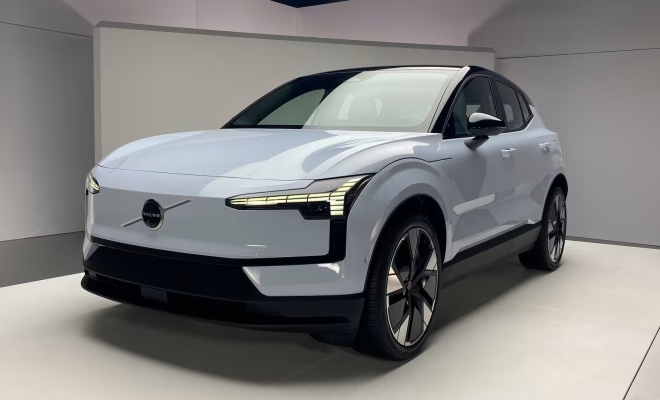
BMW’s i Hydrogen Next fuel cell vehicle starts testing in public

BMW has embarked on a revolutionary approach to sustainable mobility with its i Hydrogen Next project, marking a new era in the automotive industry. As the company rolls out the vehicle for extensive testing on public roads, it becomes clear that BMW is making strides toward an alternative powertrain technology that may complement its already strong lineup of electric vehicles.
The i Hydrogen Next is not merely a concept — it’s a cutting-edge vehicle with hydrogen fuel cell technology that only emits water vapor as its byproduct. This reaffirms BMW’s commitment to creating environmentally friendly vehicles while maintaining its trademark driving pleasure.
Hydrogen fuel cell vehicles are unique; they generate electricity by combining hydrogen from their fuel tanks with oxygen from the air. This reaction powers an electric motor, making the system highly efficient and clean. The i Hydrogen Next takes this innovation further by integrating it into a sports activity vehicle (SAV) platform, showcasing this innovative technology without compromising functionality or luxury.
Public testing is crucial as it takes the vehicle out of the laboratory and onto road conditions experienced by everyday drivers. It allows BMW’s engineers to assess how the vehicle performs in various climates, traffic conditions, and terrains. These tests are necessary for fine-tuning the vehicle’s performance, ensuring reliability, and optimizing the comfort and safety features characteristic of BMW’s brand.
The deployment of the i Hydrogen Next SAV comes at a time when global conversations about reducing carbon footprints are more critical than ever. By renewing efforts in hydrogen technology — an area explored since 1979 with the BMW 520h — BMW is positioning itself as a leader in sustainable premium mobility.
By embracing hydrogen fuel cell technology, BMW diversifies its approach to achieving zero emissions. This strategy indicates that while battery electric vehicles (BEVs) are gaining popularity, there is merit in pursuing various forms of e-mobility tailored to customers’ differing needs.
As drivers anticipate getting behind the wheel of these futuristic vehicles, BMW continues to collaborate with partners like Toyota — another proponent of hybrid and fuel cell technologies. Such partnerships foster innovation exchange and promote quicker development cycles for these complex technologies.
The journey toward greener mobility involves significant challenges but having established automakers like BMW invest time, resources, and expertise into projects like the i Hydrogen Next inspires confidence that sustainable solutions can be both practical and desirable. With public testing underway, we move one step closer to a future where our roads are dominated by clean energy vehicles — ensuring a healthier planet for generations to come.