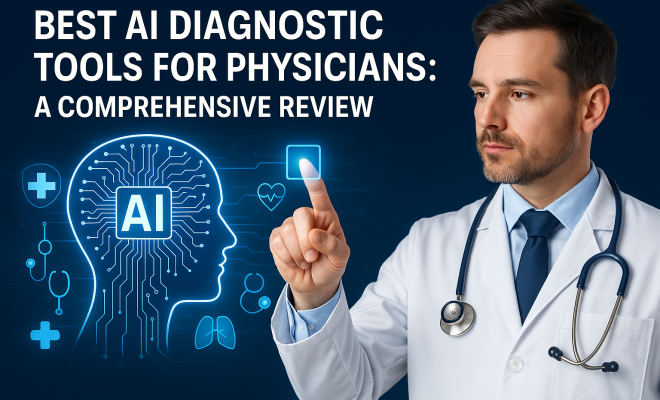
Best AI Diagnostic Tools for Physicians: A Comprehensive Review
“`json
{
“title”: “Microsoft’s AI Stuns Doctors: 83.2% Accuracy in Complex Cases”,
“content”: “
Imagine a world where the most perplexing medical mysteries are unraveled not just by brilliant human minds, but by artificial intelligence. It sounds like science fiction, doesn’t it? Yet, a recent study published in the prestigious journal Science on October 22, 2026, has thrown the medical community into a fascinating, and at times contentious, debate. The spotlight is firmly on Microsoft’s Diagnostic Orchestrator (DxO), an AI system powered by OpenAI’s GPT-5, which demonstrated an astounding 83.2% diagnostic accuracy in complex medical cases. This performance didn’t just meet expectations; it dramatically surpassed them, leaving generalist physicians, who scored 36.1% on the same cases, in its wake.
\n\n
This isn’t just another incremental improvement in medical technology; it’s a potential paradigm shift. For years, the promise of AI in diagnostics has been tempered by concerns about its reliability and the nuances of real-world patient interactions. Indeed, other recent studies have highlighted significant shortcomings, with AI chatbots reportedly failing over 80% of the time in providing appropriate early diagnoses for ambiguous symptoms presented by patients. This stark contrast between AI’s stellar performance in controlled diagnostic scenarios and its documented struggles in direct patient-facing roles creates a tension that’s impossible to ignore. It sparks an emotionally charged discussion about the future of healthcare, the ethical implications of AI making critical medical decisions, and, crucially, what the best AI diagnostic tools for physicians really look like.
\n\n
The potential for these advanced AI diagnostic tools for physicians to revolutionize clinical practice is immense. They promise to enhance diagnostic accuracy, reduce diagnostic errors, and ultimately improve patient outcomes. But how do they work? What sets DxO apart? And what are the leading contenders in this rapidly evolving field? Let’s dive into the specifics, exploring the top AI diagnostic tools that are redefining what’s possible in medicine.
\n\n
1. Microsoft Diagnostic Orchestrator (DxO): The New Gold Standard?
\n\n
The star of the recent Science study, Microsoft’s Diagnostic Orchestrator (DxO), powered by OpenAI’s GPT-5, represents a significant leap forward in AI diagnostics. What makes DxO so compelling isn’t just its high accuracy rate – an incredible 83.2% in complex medical cases – but the methodology behind its success. Unlike many AI systems that often operate as ‘black boxes,’ DxO was designed to mimic human clinical reasoning, working through cases step-by-step. This transparency in its diagnostic process is a critical factor, offering insights into how it arrives at its conclusions rather than simply presenting an answer.
\n\n
This step-by-step approach allows physicians to understand the AI’s logic, fostering trust and facilitating its integration into clinical workflows. Imagine a complex patient presentation: a mosaic of vague symptoms, conflicting lab results, and an elusive history. A human clinician meticulously pieces together this puzzle, forming hypotheses, ruling out possibilities, and refining the diagnosis. DxO mirrors this cognitive process, making its recommendations more interpretable and less like an inscrutable oracle. This interpretability is vital for gaining widespread adoption among physicians who, quite rightly, demand to understand the basis of any tool that influences patient care.
\n\n
The Power of GPT-5 Integration
\n\n
The integration of OpenAI’s GPT-5 is undoubtedly a key to DxO’s formidable capabilities. GPT-5, a large language model, brings an unparalleled ability to process and understand vast amounts of medical literature, patient data, and clinical guidelines. It can synthesize information from disparate sources, identify subtle patterns that might escape human observation, and generate coherent diagnostic pathways. This isn’t just about pattern recognition; it’s about contextual understanding and the ability to reason through complex narratives, a hallmark of advanced human intelligence. The sheer volume of medical knowledge that GPT-5 can access and intelligently apply is staggering, providing DxO with a comprehensive foundation for its diagnostic prowess.
\n\n
The DxO’s performance, particularly its stark contrast with the 36.1% accuracy of generalist physicians in the study, highlights a critical point: AI isn’t here to replace human clinicians, but to augment their capabilities. Think of it as an expert consultant available 24/7, providing a highly accurate second opinion or helping to narrow down a challenging differential diagnosis. This tool could significantly reduce diagnostic delays and errors, especially in rare diseases or cases with atypical presentations, ultimately leading to faster and more effective treatment for patients.
\n\n
2. IBM Watson Health: Pioneering AI in Medicine
\n\n
Before DxO captured headlines, IBM Watson Health was arguably the most prominent name in AI-driven medical diagnostics. Launched with significant fanfare, Watson Health aimed to leverage IBM’s cognitive computing capabilities to assist physicians in areas like oncology, genomics, and diagnostic imaging. Its premise was revolutionary: to ingest and analyze massive datasets, including medical journals, textbooks, clinical trials, and patient records, to provide evidence-based recommendations.
\n\n
Watson for Oncology, for instance, was designed to assist oncologists by sifting through millions of pages of medical literature to suggest personalized treatment options based on a patient’s specific cancer, genetics, and medical history. The idea was to bring the collective knowledge of the world’s leading cancer experts to every physician’s fingertips. While its journey has been marked by both successes and challenges, IBM Watson Health certainly paved the way for many of the AI diagnostic tools for physicians we see today, proving the concept that AI could indeed handle the complexity of medical information.
\n\n
Challenges and Evolution
\n\n
Despite its ambitious goals, IBM Watson Health faced hurdles, including issues with data integration, the complexity of real-world clinical data, and the high cost of implementation. The promise of immediate, transformative impact didn’t always materialize as quickly or smoothly as anticipated. However, the lessons learned from Watson’s development and deployment have been invaluable, shaping the evolution of subsequent AI diagnostic tools. These challenges underscored the need for AI systems to be not only accurate but also highly adaptable, user-friendly, and seamlessly integrated into existing healthcare IT infrastructure. (See: AI in medical diagnostics overview.)
\n\n
Today, IBM continues to evolve its AI offerings in healthcare, focusing on more specialized applications and collaborating with healthcare providers to refine its technologies. The early pioneering efforts of Watson Health demonstrated both the immense potential and the inherent complexities of bringing advanced AI into the demanding world of clinical practice, setting the stage for the rigorous development and testing of tools like DxO.
\n\n
3. Google Health’s Diagnostic Initiatives: Broadening the Scope
\n\n
Google, with its vast resources and expertise in AI and machine learning, has been a significant player in medical diagnostics, albeit with a slightly different focus than systems like DxO. Google Health has concentrated heavily on areas like medical imaging – dermatology, ophthalmology, and pathology – where AI can excel at pattern recognition in visual data. Their algorithms have shown remarkable accuracy in detecting conditions like diabetic retinopathy from retinal scans, identifying skin cancers from dermatoscopic images, and even assisting pathologists in detecting metastatic breast cancer in lymph node biopsies. For more context, see Why Millions Are Finally Using AI to Master High-Demand Skills.
\n\n
The strength of Google’s approach lies in its ability to leverage massive datasets for training its deep learning models. By analyzing millions of images labeled by expert clinicians, Google’s AI can learn to spot subtle indicators of disease that might be missed by the human eye, particularly in high-volume screening scenarios. This is where AI truly shines, providing consistent, tireless analysis that can significantly improve early detection rates and reduce the workload on human specialists.
\n\n
Impact on Screening and Early Detection
\n\n
Consider the potential impact on public health. In regions with limited access to specialists, AI-powered diagnostic tools for physicians focusing on imaging can act as a force multiplier. A primary care physician, using a smartphone attachment for retinal imaging, could potentially screen for diabetic retinopathy with AI assistance, ensuring that patients who need specialist intervention are identified promptly. This democratizes access to high-quality diagnostic capabilities and addresses health disparities. Similarly, AI in dermatology could help identify suspicious lesions, prompting earlier biopsies and improving outcomes for skin cancer patients.
\n\n
While DxO focuses on complex differential diagnoses from textual and numerical data, Google Health’s initiatives demonstrate the parallel power of AI in visual diagnostics. Both approaches are critical components of a comprehensive AI-enhanced healthcare ecosystem, tackling different facets of the diagnostic challenge but sharing the common goal of improving patient care through advanced technology.
\n\n
4. PathAI: Revolutionizing Pathology with Precision
\n\n
Pathology is a field ripe for AI transformation, and PathAI is at the forefront of this revolution. Traditional pathology relies heavily on expert human interpretation of tissue samples under a microscope – a demanding, time-consuming, and sometimes subjective process. PathAI develops AI-powered technology to assist pathologists in making more accurate and consistent diagnoses, particularly in cancer detection and characterization.
\n\n
Their platform leverages deep learning to analyze digitized biopsy slides, identifying cancerous cells, grading tumor aggressiveness, and even predicting patient response to certain therapies. By automating aspects of this analysis and providing quantitative metrics, PathAI helps pathologists reduce diagnostic variability and increase efficiency. This is particularly crucial in cancer diagnosis, where subtle cellular features can have significant implications for treatment planning and prognosis.
\n\n
Beyond Detection: Prognosis and Treatment Prediction
\n\n
What makes PathAI stand out is its ambition to move beyond simple detection. The company aims to provide insights into disease prognosis and predict treatment response by analyzing complex patterns within tissue samples that might be invisible to the human eye. For instance, understanding the tumor microenvironment or specific molecular markers from histopathology slides could guide oncologists in selecting the most effective targeted therapies for individual patients.
\n\n
This level of precision medicine, enabled by AI diagnostic tools for physicians, represents a significant step towards truly personalized cancer care. By integrating AI into the pathology workflow, PathAI not only enhances diagnostic accuracy but also contributes to a deeper understanding of disease biology, ultimately leading to more effective and tailored patient management strategies.
\n\n
5. Zebra Medical Vision (now Nanox AI): AI for Imaging Efficiency
\n\n
Zebra Medical Vision, now part of Nanox AI, has made significant strides in applying AI to medical imaging, offering a suite of AI solutions designed to assist radiologists. Their focus is on automating the detection of various medical conditions from CT scans, X-rays, and mammograms, ranging from early signs of osteoporosis to detecting acute intracranial hemorrhage, fatty liver, and even lung nodules.
\n\n
The company’s algorithms work by sifting through imaging studies to flag abnormalities and provide quantitative measurements, helping radiologists prioritize cases and identify incidental findings that might otherwise go unnoticed. This not only speeds up the diagnostic process but also improves the consistency and comprehensiveness of radiological interpretations. In busy imaging departments, where radiologists face an ever-increasing caseload, AI tools like those from Nanox AI can be invaluable for maintaining high standards of care while managing workflow demands.
\n\n
Addressing Radiologist Burnout and Incidental Findings
\n\n
Radiologist burnout is a growing concern, driven by the sheer volume and complexity of imaging studies requiring interpretation. AI can act as a crucial support system, automating the detection of common conditions and highlighting areas of concern, thereby allowing radiologists to focus their expertise on the most challenging cases. Moreover, AI’s ability to consistently identify incidental findings – those unexpected abnormalities discovered during an imaging study performed for another reason – can be life-saving. For example, an AI algorithm could detect early signs of a severe cardiovascular condition on a CT scan ordered for abdominal pain, prompting timely intervention. (See: CDC report on diagnostic accuracy.)
\n\n
The integration of these AI diagnostic tools for physicians into existing PACS (Picture Archiving and Communication System) and EMR (Electronic Medical Record) systems is crucial for their adoption. Nanox AI has prioritized seamless integration, ensuring that their tools are practical and easy for clinicians to use, minimizing disruption to established workflows. This focus on usability and clinical relevance is key to their success in the competitive landscape of medical AI.
\n\n
6. Qure.ai: Democratizing AI-Powered Radiology
\n\n
Qure.ai is another prominent player in AI-powered radiology, with a mission to make advanced diagnostic capabilities accessible globally. They develop deep learning solutions for interpreting medical images, particularly X-rays and CT scans, to detect a wide range of abnormalities. Their flagship products focus on critical areas like chest X-ray analysis for conditions such as tuberculosis, pneumonia, and lung cancer, as well as head CT scans for detecting intracranial hemorrhages and fractures. For more context, see The Gold Rush: Why AI Governance Careers Will Eclipse Traditional Compliance.
\n\n
One of Qure.ai’s significant contributions is its focus on developing AI solutions that perform effectively even in resource-constrained settings. Their algorithms are designed to work with varying image qualities and can be deployed on a range of hardware, from high-end workstations to more basic setups. This democratizes access to AI diagnostics, making it a powerful tool for improving healthcare in underserved communities where specialist radiologists might be scarce.
\n\n
Emergency Care and Global Health Impact
\n\n
In emergency departments, where rapid and accurate diagnosis is paramount, Qure.ai’s solutions for head CT interpretation can be game-changing. Identifying life-threatening conditions like intracranial hemorrhage quickly can significantly impact patient outcomes. Their AI can automatically flag these critical findings, ensuring that radiologists and emergency physicians are alerted promptly, potentially saving lives by accelerating treatment decisions.
\n\n
Beyond emergency care, Qure.ai’s work in chest X-ray analysis has enormous implications for global health, especially in the fight against diseases like tuberculosis. By providing an automated, accurate screening tool, AI can help identify cases earlier, facilitate treatment, and curb disease transmission, particularly in high-burden countries. These AI diagnostic tools for physicians are not just about technological prowess; they’re about tangible improvements in public health on a global scale.
\n\n
7. Aidoc: Real-time AI for Radiology Workflow
\n\n
Aidoc specializes in providing AI solutions that integrate directly into the radiologist’s workflow, offering real-time analysis of medical images. Their platform uses AI to analyze CT scans and X-rays for various pathologies, automatically flagging critical findings and communicating them to radiologists within minutes of the scan being performed. This ‘always-on’ AI acts as an intelligent assistant, ensuring that urgent cases are identified and prioritized immediately.
\n\n
The key differentiator for Aidoc is its focus on workflow optimization. Instead of simply providing a diagnosis, Aidoc’s AI is designed to enhance efficiency and reduce turnaround times for critical diagnoses. For example, if an Aidoc algorithm detects an acute pulmonary embolism or a cervical spine fracture on a CT scan, it immediately notifies the radiologist, potentially before they have even opened the study. This proactive approach ensures that patients with life-threatening conditions receive prompt attention.
\n\n
Enhancing Efficiency and Reducing Diagnostic Delays
\n\n
Diagnostic delays can have severe consequences, especially in acute care settings. By providing real-time alerts for critical findings, Aidoc’s AI diagnostic tools for physicians help streamline the diagnostic pathway, allowing for faster intervention and improved patient outcomes. This isn’t just about speed; it’s about minimizing the risk of a critical finding being overlooked in a busy environment or getting lost in a queue of less urgent cases.
\n\n
Furthermore, Aidoc’s AI can help reduce the cognitive load on radiologists by highlighting areas of concern, allowing them to focus their expert attention more precisely. This collaborative model, where AI assists human clinicians rather than replacing them, is proving to be highly effective in improving both accuracy and efficiency in modern radiology departments.
\n\n
8. Tempus: AI for Precision Oncology and Genomics
\n\n
Tempus takes a different but equally vital approach to AI diagnostics, focusing on precision oncology and genomics. While many AI tools analyze images or symptoms, Tempus integrates vast amounts of clinical and molecular data – including genomic sequencing, clinical histories, and treatment outcomes – to provide actionable insights for cancer patients. Their platform uses AI to analyze this complex, multi-modal data to help physicians make more informed treatment decisions. For more context, see The AI Governance Gold Rush: Why This New Role Is Suddenly Exploding. (See: Study on AI diagnostic tools.)
\n\n
For cancer patients, understanding the specific genomic alterations driving their tumor is crucial for selecting targeted therapies. Tempus’s AI can analyze a patient’s tumor genome, identify relevant mutations, and then cross-reference this with a massive database of clinical trials, real-world evidence, and published literature to suggest personalized treatment options. This moves beyond ‘one-size-fits-all’ medicine towards truly individualized care, significantly improving the chances of successful treatment.
\n\n
Unlocking Genomic Insights for Personalized Medicine
\n\n
The field of genomics is incredibly complex, with a dizzying array of mutations, pathways, and drug interactions. It’s simply too much for any single human clinician to keep track of comprehensively. This is where AI excels. Tempus’s platform can rapidly process and interpret genomic data, identifying clinically relevant alterations and linking them to potential therapies or clinical trials that a patient might be eligible for. This capability transforms raw genomic data into actionable clinical intelligence.
\n\n
By leveraging these advanced AI diagnostic tools for physicians, oncologists can make more precise treatment choices, potentially reducing the need for trial-and-error approaches and improving patient responses to therapy. Tempus embodies the promise of precision medicine, using AI to unlock the full potential of genomic data for personalized cancer care, thereby offering hope and better outcomes for countless patients.
\n\n
The Broader Implications and The Human Element
\n\n
The emergence of highly accurate AI diagnostic tools for physicians, particularly the impressive performance of Microsoft’s DxO, undoubtedly marks a pivotal moment in healthcare. Yet, the viral debate surrounding these advancements isn’t just about numbers; it’s deeply emotional and profoundly human. On one hand, the prospect of an AI system achieving 83.2% accuracy in complex cases, far outperforming generalist physicians, offers a tantalizing vision of a future with fewer diagnostic errors and improved patient outcomes. Think of the relief for families who have spent years seeking an elusive diagnosis, or the lives saved by earlier, more accurate detection of critical illnesses.
\n\n
On the other hand, the documented failures of AI chatbots in providing appropriate early diagnoses for ambiguous real-world symptoms – failing over 80% of the time in some studies – throws a stark contrast into the debate. This juxtaposition fuels legitimate concerns: Can AI truly grasp the nuances of human interaction, the subtleties of a patient’s pain, or the unspoken anxieties that often accompany illness? The art of medicine often involves more than just processing data; it requires empathy, intuition, and the ability to connect with another human being in distress. This is where the ‘human element’ becomes indispensable, and where AI, at least for now, falls short.
\n\n
Navigating the Ethical Landscape
\n\n
The ethical implications of AI making critical medical decisions are vast and complex. Who is ultimately responsible if an AI makes an incorrect diagnosis? How do we ensure fairness and prevent algorithmic bias, especially in diverse patient populations? These aren’t just theoretical questions; they are pressing concerns that healthcare systems, policymakers, and ethicists are grappling with right now. The development and deployment of these powerful AI diagnostic tools for physicians must be accompanied by robust ethical frameworks, clear regulatory guidelines, and ongoing research into their real-world impact.
\n\n
The future of healthcare, it seems, will not be a choice between human doctors or AI. Instead, it will be a dynamic collaboration. Imagine a physician, armed with DxO’s powerful diagnostic capabilities, using AI as a sophisticated co-pilot to navigate the most challenging cases. The AI provides highly accurate potential diagnoses and supporting evidence, while the physician brings the invaluable human touch: the ability to listen, comfort, explain, and build trust. This partnership could lead to a golden age of diagnostics, where the best of human compassion and intelligence is amplified by the precision and analytical power of artificial intelligence. It’s an exciting, if sometimes daunting, prospect that promises to reshape medicine as we know it.
“`
Trending Now
Frequently Asked Questions
What are the best AI diagnostic tools for physicians?
Some of the best AI diagnostic tools for physicians include Microsoft's Diagnostic Orchestrator (DxO), which has shown remarkable accuracy in complex cases. Other notable tools also leverage advanced machine learning algorithms to enhance diagnostic precision, reduce errors, and improve patient outcomes.
How accurate are AI diagnostic tools compared to doctors?
AI diagnostic tools, such as Microsoft's DxO, have demonstrated accuracy rates of up to 83.2% in complex cases, significantly outperforming generalist physicians, who averaged 36.1%. This highlights the potential of AI to assist in diagnostics, though its effectiveness may vary in real-world settings.
What challenges do AI diagnostic tools face in healthcare?
AI diagnostic tools struggle with reliability in real-world patient interactions, as evidenced by studies showing that AI chatbots often fail to provide appropriate early diagnoses. These challenges raise concerns about the ethical implications of AI in making critical medical decisions.
How do AI diagnostic tools improve patient outcomes?
AI diagnostic tools enhance patient outcomes by increasing diagnostic accuracy and reducing errors. By integrating advanced algorithms, these tools assist physicians in making informed decisions, ultimately leading to better treatment plans and improved patient care.
What is the significance of Microsoft's Diagnostic Orchestrator (DxO)?
Microsoft's Diagnostic Orchestrator (DxO) represents a significant advancement in AI diagnostics, with an impressive accuracy rate of 83.2% in complex cases. This performance not only sets a new benchmark for AI in healthcare but also sparks discussions about the future role of AI in clinical practice.
What did we miss? Let us know in the comments and join the conversation.